Do Ferrets Live in the Wild? Feral and Wild Ferret Facts
By Dr. Zubair Khalid, DVM, MS, PhD ·
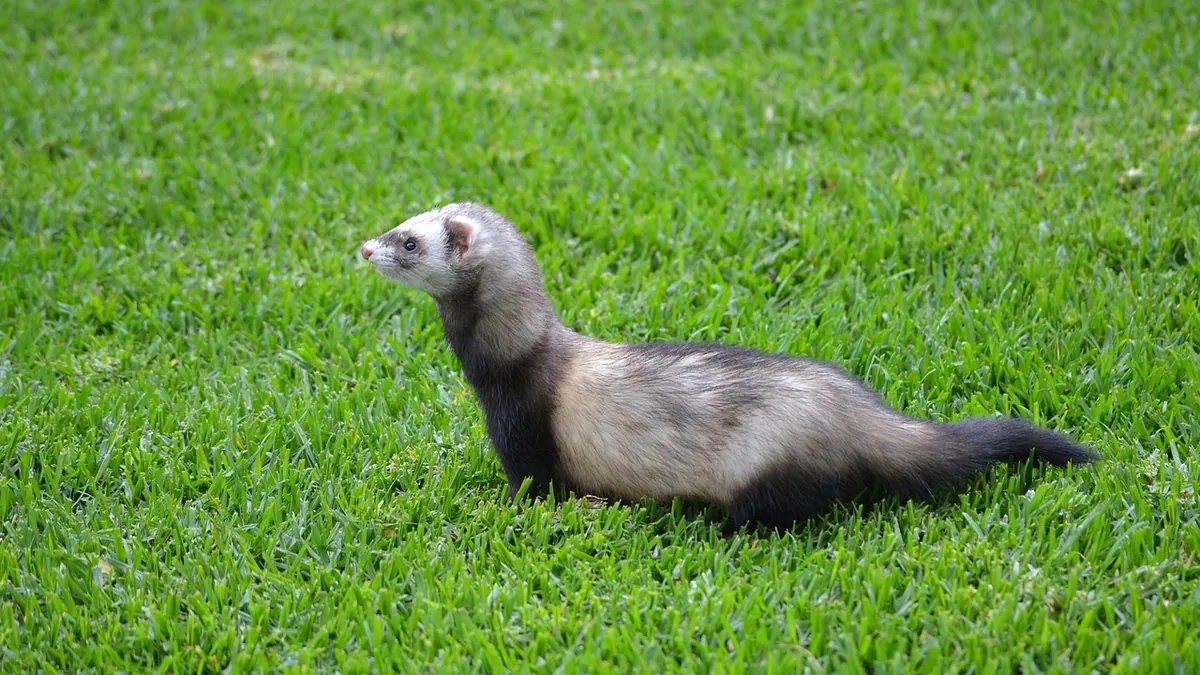
Do ferrets live in the wild? No, not as a self-sustaining species. The ferret curled up in your home is a domesticated animal, Mustela putorius furo, that has lived in captivity for more than 2,000 years [1]. It is not the same animal as the endangered black-footed ferret that still lives on the North American plains, and it is not built to survive on its own outdoors.
This article is educational and is not a substitute for veterinary diagnosis or treatment.
Quick Answer
- Pet ferrets are domesticated. They are not a wild species, and a ferret loose outdoors is a lost pet, not a wild animal [1].
- The wild ferret people ask about is the black-footed ferret (Mustela nigripes), an endangered North American mustelid that depends on conservation breeding to survive [2].
- Escaped or released pet ferrets can form short-lived feral groups in some places, but these are not native wildlife and usually do not last.
- A pet ferret outdoors faces heatstroke, predators, traffic, and starvation. Ferrets cannot sweat, so direct sun and high heat are dangerous [3].
- If your ferret gets out, search close to home right away, at dawn and dusk, and call your veterinarian if it is injured or has been missing more than a day.
Do Ferrets Exist in the Wild? Domesticated Versus Wild Ferrets
The short answer is that your pet ferret does not exist in the wild as a species. The domestic ferret descends from the European polecat and has been shaped by humans for hunting and companionship for over two millennia [1]. It belongs to the order Carnivora and the family Mustelidae, the same family as weasels, stoats, and badgers [1]. That body plan, long and slender with a seasonal coat, is built for burrows and tunnels, not for life as a free-ranging predator in a modern suburb [1].
Pet ferrets reach full size at 5 to 6 months and are considered adults at 1 year [1]. They are sexually mature in the first spring after birth, at 4 to 8 months of age [3]. In the United States, the vast majority are spayed or neutered before 6 weeks of age, which is far earlier than in most other countries [3]. A ferret that has never learned to hunt, has no established territory, and has been surgically altered is poorly equipped for survival outside a home.
What About Feral Ferrets?
A feral animal is a domesticated animal living wild. Ferrets can and do turn up loose, and in a few regions they have established temporary feral populations. New Zealand is the clearest example, where introduced ferrets (Mustela furo) are considered invasive mammals and a risk to native wildlife [4]. That situation reflects a deliberate introduction into an environment with abundant prey and few competitors. It does not describe what happens when a pet ferret slips out a door in Ohio.
In the United States, a loose ferret is almost always a recent escape. Most do not survive long. They are vulnerable to hawks, owls, dogs, coyotes, and cars, and they cannot tolerate heat [3]. If you find a ferret outdoors, assume it is someone's pet and contact local animal control or a ferret rescue.
The Black-Footed Ferret: A Different Animal
The black-footed ferret is the only ferret native to North America, and it is endangered [2]. It is a separate species from the pet ferret, with different genetics, behavior, and habitat needs. It depends on prairie dogs for food and on prairie dog burrows for shelter, which is why its recovery is tied to grassland conservation.
Because so few remain, the species relies on managed breeding programs to rebuild wild populations [2]. Ferrets in these programs do not all reproduce successfully, and researchers have looked at hormone patterns to understand why. Females that successfully gave birth had higher fecal progesterone metabolite levels in the late luteal phase than females that did not [2]. Other work has found that black-footed ferrets raised in managed care show differences in sperm DNA methylation compared with ferrets living in the wild, with more than 500 differentially methylated regions between the two groups [5]. These findings matter for conservation, and they also remind us that wild ferrets and pet ferrets live under very different conditions.
How to Keep a Pet Ferret Safe and Healthy at Home
Ferrets are popular pets, and most live indoors. In a survey of 495 ferret caregivers across France, Italy, the United States, the United Kingdom, and Belgium, 87.3% housed their ferrets indoors and 70.7% were neutered [6]. Indoor housing protects ferrets from heat, predators, and escape.
Step-by-Step: Setting Up for a Ferret That Cannot Go Wild
- Choose climate-controlled indoor space. Ferrets are highly susceptible to heatstroke because they cannot sweat, so never place housing in direct sunlight [3]. If your ferret lives outdoors part of the time, it needs protection from the elements and shade at all hours [3].
- Ferret-proof the room before free roam. Ferrets squeeze into gaps, chew soft materials, and hide food. In the same international survey, 79.0% of caregivers reported inappropriate elimination and 75.4% reported food hiding [6]. See Ferret-Proofing Your Home for a room-by-room checklist.
- Plan for daily free roam and enrichment. Most caregivers in the survey provided daily free-roaming time and environmental enrichment [6]. Tunnels, dig boxes, and supervised exploration meet that need without outdoor risk.
- Feed a carnivore-appropriate diet. Ferrets are obligate carnivores. A ferret diet built around animal protein supports long-term health. Our Ferret Diet and Nutrition Guide covers portioning and treats.
- Schedule preventive care. Vaccination and parasite prevention are common among ferret owners [6]. Your veterinarian will set the schedule based on your ferret's age, lifestyle, and local disease risk. See Ferret Veterinary Care: What to Expect and How to Prepare.
- Decide on neutering with your veterinarian. In the U.S., most ferrets are altered before 6 weeks of age [3]. Outside the U.S., surgery is often done in winter just before sexual maturity, and a deslorelin implant is a common alternative in Europe [3]. Unspayed females are induced ovulators and can develop severe estrogen-related pancytopenia if they are not bred or spayed [3]. That is a life-threatening emergency, not a wait-and-see problem.
Ferret Care Checklist by Life Stage
| Life stage | Age | What to focus on |
|---|---|---|
| Kit | Birth to 8 weeks | Early spay or neuter in the U.S. [3], first vet visit, small frequent meals |
| Juvenile | 2 to 6 months | Full size reached at 5 to 6 months [1], vaccine series, ferret-proofing |
| Young adult | 6 months to 3 years | Annual exam, dental checks, daily free roam, enrichment [6] |
| Adult | 3 to 6 years | Twice-yearly exams as risks rise, weight and coat monitoring |
| Senior | 6 years and older | Typical lifespan is 6 to 10 years [1], watch for weight loss and lethargy |
Signs Something Is Wrong With Your Ferret
Ferrets hide illness well, so subtle changes matter. Call your veterinarian if you see any of these.
- Heavy panting, drooling, or collapse in warm weather. This can be heatstroke, which is an emergency [3].
- A female ferret in prolonged heat that becomes weak or pale. This can be estrogen-related pancytopenia from persistent estrus [3].
- Not eating for 12 to 24 hours, or dropping weight quickly.
- Vomiting, diarrhea, or straining to urinate.
- Sudden hind limb weakness or wobbling.
- A coat that stays thin or patchy outside normal seasonal shedding. Coat color and density normally darken and thicken in winter, then lighten and shed in summer [1].
- Any wound, limp, or breathing change after an escape outdoors.
Common Mistakes Owners Make
- Assuming a pet ferret can "go back to the wild." It cannot. A released ferret is a domesticated animal in danger, not a wild one finding its place.
- Confusing pet ferrets with black-footed ferrets. They are different species with different needs, and the wild one is endangered [2].
- Leaving a ferret in a sunny window or garage. Ferrets cannot sweat and overheat quickly [3].
- Skipping spay or neuter planning for females. An unspayed female that stays in heat can develop severe, potentially fatal blood changes [3].
- Housing a ferret alone without enrichment. Social housing is a basic welfare need for social animals, and paired housing does not interfere with common research measures in ferrets [7]. A single ferret needs more human interaction and play time to compensate.
- Ignoring behavior problems. Inappropriate elimination and food hiding are extremely common [6]. These usually point to setup or health issues, not a "bad" ferret.
Supplies and Setup Details That Affect Health
Temperature control is the single most important setup factor. Ferrets cannot sweat, so housing must never sit in direct sunlight, and outdoor housing needs full protection from the elements [3]. A room that feels warm to you can be dangerous to a ferret.
Housing style matters less than safety. Most owners keep ferrets indoors [6], which makes escape prevention the main job. Check window screens, dryer vents, gaps under doors, and reclining furniture.
Neutering status affects health and odor. Early neutering tends to reduce the musky odor typical of mustelids [3]. If you adopt an intact ferret, talk to your veterinarian about timing and options, including chemical neutering with a deslorelin implant where available [3].
Diet and body condition go together. Weigh your ferret monthly on a kitchen scale and track the number. A ferret that reaches full size at 5 to 6 months [1] should hold a stable adult weight, with seasonal coat changes but not seasonal weight loss.
If you are adding a ferret to your home, plan the setup before you bring one in. Our guide to Ferret Adoption: What to Expect and How to Prepare walks through what to ask a rescue and what to buy first.
Limitations and When to Contact a Veterinarian
This article covers general information only. Individual ferrets need a veterinarian who can examine them, run tests, and calculate any treatment or dose based on weight and health status.
Contact a veterinarian the same day if your ferret stops eating, vomits repeatedly, has diarrhea, strains to urinate, or seems weak or wobbly.
Go to an emergency clinic now if your ferret is panting heavily in warm conditions, has collapsed, is having trouble breathing, has a deep wound, or is a female in prolonged heat who has become pale or lethargic [3].
Call for a routine visit if you notice gradual weight loss, a dull or patchy coat, new behavior problems such as inappropriate elimination [6], or if you have just adopted a ferret and need a baseline exam and preventive care plan [6].
If your ferret escapes outdoors, search at dawn and dusk when ferrets are most active, check warm sheltered spots and burrow-like spaces, and notify neighbors, animal control, and local ferret groups. Call your veterinarian if it returns with any injury, limp, or breathing change.
Frequently Asked Questions
Can a pet ferret survive if it escapes outdoors?
Usually not for long. Pet ferrets lack hunting experience, cannot tolerate heat, and are easy prey for dogs, hawks, and coyotes. Treat an escape as an urgent search, not a waiting game.
Are there wild ferrets in the United States?
The only ferret native to North America is the endangered black-footed ferret, which survives mainly through managed breeding and reintroduction programs. Pet ferrets are domesticated animals and are not part of wild ecosystems here.
Do ferrets live in the wild in other countries?
In a few places, introduced ferrets have become established as invasive mammals, such as in New Zealand, where they pose ecological risks and can carry viruses. These populations came from human introduction, not from pet ferrets naturally going wild.
Is a black-footed ferret the same as a pet ferret?
No. They are separate species with different genetics, diets, and habitat needs. The black-footed ferret is endangered and depends on prairie dog ecosystems, while the pet ferret has been domesticated for thousands of years.
Should I let my ferret play outside?
Only in a secure, supervised enclosure with shade and constant access to cool shelter, and never in direct sun or high heat. For most homes, indoor free roam with tunnels and enrichment is safer and meets the same needs.
Related Articles
- Ferret-Proofing Your Home
- Ferret Veterinary Care: What to Expect and How to Prepare
- Ferret Adoption: What to Expect and How to Prepare
- Ferret Diet and Nutrition Guide
- Ferret Care Guide for Beginners
- Do Ferrets Carry Rabies? Vaccination and Risk Explained
- Do Ferrets Carry Diseases? Zoonoses Owners Should Know
- Do Ferrets Make Good Pets? Honest Pros and Cons
References
- Overview of Ferrets - Exotic and Laboratory Animals. Merck Veterinary Manual.
- Reproductive endocrinology of endangered black-footed ferrets: implications for conservation breeding. Conservation physiology, 2025.
- Management of Ferrets - Exotic and Laboratory Animals. Merck Veterinary Manual.
- Viral surveillance of invasive mammals in New Zealand reveals unique viral lineages reflecting their introduction history. Journal of virology, 2026.
- Ex situ reared black-footed ferrets exhibit altered sperm DNA methylation. The Journal of heredity, 2026.
- Feeding and Husbandry Practices in Pet Ferrets (Mustela putorius furo): A Cross-Sectional International Study. Veterinary medicine and science, 2026.
- Paired versus Single Housing of Ferrets (Mustela putorius furo) Does Not Influence Experimental Outcomes of Influenza A Virus Pathogenesis Studies. Journal of the American Association for Laboratory Animal Science : JAALAS, 2026.