Do Guinea Pigs Live in the Wild? Origins Explained
By Dr. Zubair Khalid, DVM, MS, PhD ·
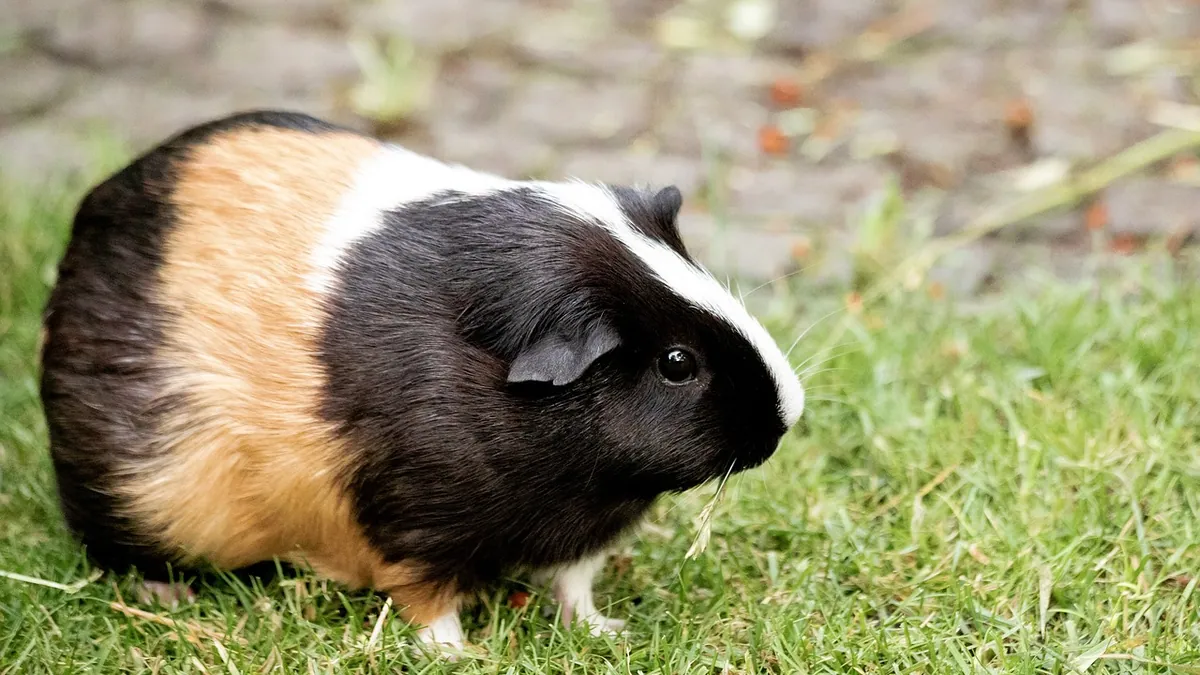
Do guinea pigs live in the wild? No. Domestic guinea pigs (Cavia porcellus) do not exist as a wild population anywhere in the world. Every guinea pig alive today is a domesticated animal, descended from a wild South American species called Cavia tschudii [1]. That wild ancestor still lives in parts of South America, but your pet is not the same animal and cannot survive outdoors on its own.
This article is educational and is not a substitute for veterinary diagnosis or treatment.
Quick Answer
- Domestic guinea pigs have no wild population. They exist only as pets and laboratory animals.
- Their closest wild relative is Cavia tschudii, a smaller rodent native to South America [1].
- Cavia tschudii and Cavia porcellus are separate species with different chromosome banding patterns, even though both have 64 chromosomes [1].
- A pet guinea pig released outdoors will not adapt. It lacks the instincts, coat, and foraging skills of its wild cousin.
- Wild guinea pigs live in family groups, graze on grasses, and stay hidden from predators. Your pet needs you to provide all of that.
What Do Guinea Pigs Do in the Wild?
The question "what do guinea pigs do in the wild" really has two answers, because there are two different animals to talk about.
Wild Cavia tschudii
Cavia tschudii is the wild guinea pig species that genetic analysis identifies as the closest wild form of the domestic guinea pig [1]. These animals live in South America. They are smaller and leaner than pet guinea pigs. They spend their days grazing on grasses and low vegetation, resting in cover, and staying alert for predators. They live in social groups and communicate with squeaks, rumbles, and body language, much like your pet does at home.
Domestic Cavia porcellus
Domestic guinea pigs are Cavia porcellus. They have been bred by humans for so long that they no longer resemble their wild ancestor in body shape, size, or behavior. A 2014 cytogenetic study compared the chromosomes of the two species directly. Both have 64 chromosomes of similar morphology, but Cavia tschudii has four medium-sized submetacentric chromosome pairs that do not appear in the Cavia porcellus karyotype [1]. The two species also differ in the size of their C bands and in the average number of AgNOR bands [1]. In plain terms, these are genetically distinct animals, not the same creature living in two settings.
Most of their chromosomes still show total G band correspondence, which suggests large blocks of genetic material have been conserved over time [1]. That shared history is why the two species look related. It does not mean your pet could slot back into a wild niche.
Do Guinea Pigs Exist in the Wild Today?
No. There is no wild population of Cavia porcellus anywhere. If you see a guinea pig running loose in a park or backyard, it is an escaped or abandoned pet, not a wild animal. It will not join a wild colony because none exists.
This matters for a practical reason. People sometimes assume that because an animal has a wild cousin, it can fend for itself outdoors. That logic fails for guinea pigs. Domestication changed them in ways that make independent survival close to impossible.
Why Domestic Guinea Pigs Cannot Survive Outdoors
They lost the survival toolkit
Wild Cavia tschudii evolved to avoid predators, find safe cover, and select the right plants to eat. Domestic guinea pigs were bred for temperament, coat variety, and body size, not for survival skills. A pet guinea pig does not know which plants are safe, where to hide, or how to avoid a hawk.
Their bodies are not built for it
Pet guinea pigs have long coats, floppy ears, and rounded bodies that make them easy targets. They cannot climb, dig quickly, or run fast enough to escape most predators. They also cannot tolerate temperature extremes. Heat stress and cold stress can kill a guinea pig in hours.
They depend on you for food and water
Guinea pigs cannot make their own vitamin C. They need a steady dietary supply, either from fresh vegetables or from guinea pig pellets formulated with vitamin C. A guinea pig foraging outdoors will not reliably find enough. Vitamin C deficiency leads to scurvy, which causes joint pain, poor wound healing, and weakness.
Predators are everywhere
Cats, dogs, hawks, owls, raccoons, foxes, and snakes all view a guinea pig as prey. Even a brief encounter with a neighborhood cat can be fatal, either from the attack itself or from the stress that follows.
How Long Do Guinea Pigs Live in the Wild?
This is a common search, and the honest answer is that no reliable data exists for domestic guinea pigs in the wild, because they do not live there. For wild Cavia tschudii, lifespan in nature is not well documented in published veterinary research.
What we do know is that pet guinea pigs can live for years with good care. If you want a realistic picture of how long your pet might be with you, see How Long Do Guinea Pigs Live? Lifespan and Care. The takeaway is simple. A guinea pig's lifespan depends on the care you provide, not on any wild instinct.
A Practical Checklist for Keeping Your Guinea Pig Safe and Healthy
Use this as a starting point. Adjust based on your veterinarian's advice and your individual pet.
| Item | What to do | Why it matters |
|---|---|---|
| Housing | Keep indoors in a solid-bottom cage with plenty of floor space | Outdoor housing exposes guinea pigs to predators, heat, and cold |
| Companionship | House in pairs or small groups when possible | Guinea pigs are social animals and stress easily when isolated |
| Diet | Unlimited grass hay, guinea pig pellets with vitamin C, fresh vegetables | Supports digestion and prevents vitamin C deficiency |
| Water | Fresh water daily in a bottle or bowl | Dehydration worsens quickly in small mammals |
| Exercise | Daily floor time in a safe, enclosed area | Supports weight control and mental health |
| Veterinary care | Annual wellness exam with an exotics-experienced vet | Catches problems early when they are easier to treat |
| Grooming | Brush long-haired breeds and check nails monthly | Prevents mats and overgrown nails |
For more on housing and social needs, see Guinea Pig Companionship and Housing Needs and Cages for Guinea Pigs: The Complete Housing Guide.
Step-by-Step: What to Do If You Find a Guinea Pig Outdoors
- Approach calmly and quietly. A loose guinea pig is frightened. Move slowly and use a towel or box to scoop it up.
- Bring it indoors immediately. Do not leave it outside while you make phone calls. Heat, cold, and predators are immediate risks.
- Place it in a quiet, secure enclosure. A carrier or box with bedding, hay, and a water source works for the short term.
- Check for injuries. Look for wounds, limping, labored breathing, or discharge from the eyes or nose.
- Contact a veterinarian who treats exotic pets. Even if the guinea pig looks fine, a stress-related illness can appear within days.
- Do not release it back outside. A domestic guinea pig cannot survive on its own.
- Contact local shelters or rescue groups. They can help with placement or reuniting the pet with an owner.
Signs That Something Is Wrong
Guinea pigs hide illness well. By the time you notice symptoms, the problem may already be serious. Watch for these signs.
- Not eating or drinking
- Weight loss you can feel along the spine and hips
- Labored breathing or noisy breathing
- Discharge from the eyes or nose
- Diarrhea or no droppings
- Drooling or difficulty chewing
- Limping or reluctance to move
- Hair loss, crusting, or itchy skin
- A lump anywhere on the body
- Sudden change in behavior or hiding more than usual
Skin problems are common in guinea pigs. A 2026 study of shelter and rescue guinea pigs in Southern California found that one of 85 animals (1.18%) tested positive for Trichophyton benhamiae, a dermatophyte fungus that can spread to people [2]. That study also found dermatophyte DNA in 54 of 85 animals (63.5%) by PCR and in six of 85 (7.06%) by next-generation sequencing, with four of 85 (4.71%) positive on both methods [2]. The practical point is that skin issues in guinea pigs deserve a veterinary workup, not just a home remedy.
Reproductive and skin conditions are also frequent reasons guinea pigs see a vet. A 2026 biopsy review from an exotic animal clinic in Tokyo found that the most common condition in guinea pigs was integumentary (skin) disorders, at 83 of 134 cases (61.9%), with mammary carcinoma the most prevalent at 41 cases (49.1%) [3]. The second most common category was female reproductive disorders, at 43 of 134 cases (32.1%), with ovarian cysts the most frequent at 11 cases (25.6%) [3]. These numbers are a reminder that routine exams matter, especially for female guinea pigs and for any pet with a lump or skin change.
Common Mistakes Owners Make
Thinking a guinea pig can live outside. It cannot. Outdoor hutches expose guinea pigs to predators, parasites, and temperature swings that can be deadly.
Releasing a guinea pig into the wild. This is abandonment, not liberation. The animal will not survive.
Assuming wild guinea pigs are the same as pets. Cavia tschudii and Cavia porcellus are different species with measurable genetic differences [1]. Your pet is not a tamed version of a wild animal you could return to nature.
Skipping vitamin C. Guinea pigs cannot synthesize it. A diet without a reliable source leads to deficiency.
Ignoring a lump or skin change. Mammary tumors and ovarian disease are common in guinea pigs [3]. Early detection gives your vet more options.
Keeping a single guinea pig in a bare cage. Guinea pigs are social and need companionship and enrichment. See Guinea Pig vs Rabbit: Which Pet Is Right for You? if you are comparing species.
Supplies and Setup That Matter for Health
Cage. Solid floor, no wire bottom. Enough room for a hide box, a food area, a water bottle, and space to walk.
Bedding. Paper-based or aspen bedding works well. Avoid cedar and pine shavings, which can irritate the respiratory tract.
Hay. Unlimited grass hay (timothy, orchard, or meadow) supports digestion and wears down teeth.
Pellets. Choose a plain guinea pig pellet with stabilized vitamin C. Avoid mixes with seeds, nuts, and dried fruit.
Fresh vegetables. Bell peppers, leafy greens, and small amounts of other guinea pig-safe vegetables.
Hide box. Every guinea pig needs a place to retreat. A simple igloo or cardboard box works.
Water bottle or bowl. Check it daily. A clogged bottle is a common cause of dehydration.
Nail clippers and brush. Routine grooming prevents mats and overgrown nails.
Carrier. For vet visits and emergencies. A hard-sided carrier with a towel inside is ideal.
Limitations and When to Contact a Veterinarian
This article covers general information. Individual guinea pigs have individual needs, and only a veterinarian who examines your pet can give you a diagnosis or treatment plan.
Contact a veterinarian the same day if your guinea pig:
- Stops eating or drinking
- Has diarrhea or no droppings for several hours
- Is breathing hard or making noise when breathing
- Has a wound, a swollen area, or a new lump
- Is drooling or having trouble chewing
- Shows sudden weakness or reluctance to move
Go to an emergency clinic now if your guinea pig:
- Is gasping, open-mouth breathing, or collapsing
- Has seizures or sudden paralysis
- Is bleeding heavily
- Has been attacked by another animal
- Is unresponsive or limp
Schedule a routine visit if your guinea pig:
- Has not seen a vet in the past year
- Has a skin problem that is not improving
- Is losing weight slowly
- Is a female with any change in behavior or belly size
- Is a new pet with an unknown health history
If you are unsure whether a symptom is urgent, call your veterinarian. It is always better to ask.
Frequently Asked Questions
Are there any wild guinea pigs in the United States?
No. There is no wild population of domestic guinea pigs in the United States or anywhere else. Any guinea pig found outdoors is an escaped or abandoned pet.
Can a pet guinea pig survive if it escapes outside?
Usually not for long. Domestic guinea pigs lack survival instincts, cannot tolerate temperature extremes, and are easy prey for cats, dogs, hawks, and other predators.
Is Cavia tschudii the same animal as my pet guinea pig?
No. Cavia tschudii is a separate wild species and the closest wild relative of the domestic guinea pig [1]. The two have different chromosome banding patterns even though both have 64 chromosomes [1].
Do wild guinea pigs make good pets?
No. Cavia tschudii is a wild animal, not a domesticated pet. It is not bred for handling and would be stressed in a home setting.
What should I feed a guinea pig to replace what it would eat in the wild?
Offer unlimited grass hay, plain guinea pig pellets with vitamin C, and fresh guinea pig-safe vegetables daily. Wild guinea pigs graze on grasses, and hay is the closest domestic equivalent for digestion and dental health.
Related Articles
- How Long Do Guinea Pigs Live? Lifespan and Care
- Guinea Pig Companionship and Housing Needs
- Cages for Guinea Pigs: The Complete Housing Guide
- Guinea Pig vs Rabbit: Which Pet Is Right for You?
References
- Similarities and differences among the chromosomes of the wild guinea pig Cavia tschudii and the domestic guinea pig Cavia porcellus (Rodentia, Caviidae). Comparative cytogenetics, 2014.
- Prevalence of Lesional and Nonlesional Dermatophytosis in Shelter/Rescue Guinea Pigs (Cavia porcellus) in Southern California, USA. Veterinary dermatology, 2026.
- A retrospective study (2006-2020) of biopsy cases in pet guinea pigs (Cavia porcellus), degus (Octodon degus) and chinchillas (Chinchilla lanigera) at an exotic animal clinic in Tokyo, Japan. Journal of comparative pathology, 2026.