Do Ferrets Make Good Pets? Honest Pros and Cons
By Dr. Zubair Khalid, DVM, MS, PhD ·
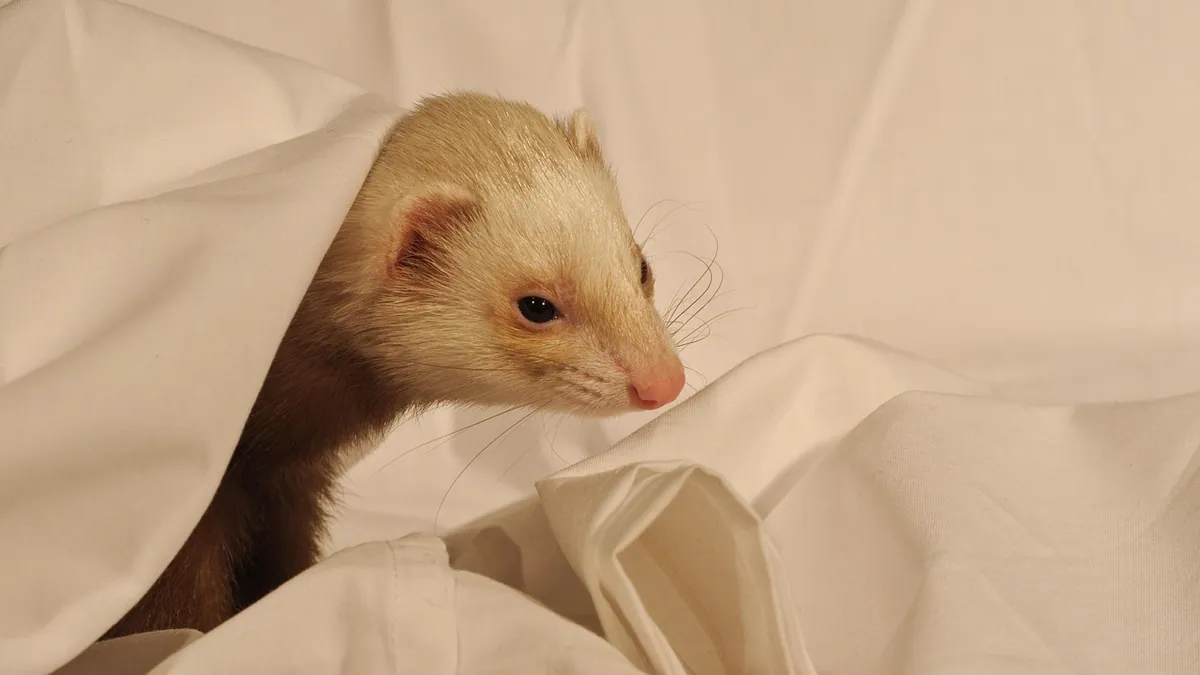
Do ferrets make good pets? For the right household, yes. Ferrets are playful, social, and quiet, and they can live happily in an apartment. But they are not low-maintenance, and they need daily supervision, careful home proofing, and veterinary care throughout their lives.
This article is educational and is not a substitute for veterinary diagnosis or treatment.
Quick Answer
- Ferrets are social, curious, high-energy pets that need daily play time outside the cage and safe housing when you cannot watch them [1].
- They are escape artists. They squeeze through small openings and chew soft or plastic objects, which can cause a fatal intestinal blockage [2].
- They need a high-quality diet, good hygiene, and regular exercise and attention to stay healthy [1].
- Most pet ferrets live 6 to 10 years, though accidents and illness shorten many lives [3].
- Ferrets are a poor fit for homes with unsupervised young children or pets that see a ferret as prey.
What Ferrets Are Really Like as Pets
The domestic ferret (Mustela putorius furo) has lived in captivity for more than 2,000 years. It started as a hunting animal and is now a common pet worldwide [3]. Ferrets have a long, slender body, and their coat color and thickness change with the season, darkening and thickening in winter and lightening and shedding in summer [3].
Ferrets reach full size at 5 to 6 months and are considered adults at 1 year [3]. They stay playful well into adulthood, which is one reason people enjoy them. In one behavioral study, adult ferrets showed more play and positive-affect behavior than juveniles, mostly because of increased dook vocalizations, the happy chattering sound ferrets make [4].
That playfulness comes with a catch. Ferrets are intensely curious, nearly fearless, and highly persistent. They can squeeze into very small openings, and those traits can lead to serious injury or death [2]. A ferret is not a pet you can leave to its own devices all day.
Do Ferrets Make Good House Pets? Housing and Setup
Ferrets do not need much space, so they work in apartments and small homes. But you must provide appropriate housing for the times they are alone or unsupervised [1].
The cage
Most ferrets prefer to sleep in a small, confined space. Hammocks and fabric huts are popular sleeping spots [1]. For bedding, a clean towel or small blanket works well. If you use fabric, check that it will not unravel and that your ferret does not eat it [1].
Do not use newspaper or wood chips. They can harbor bacteria or create dust that irritates the respiratory tract. Cedar releases an oil that may be toxic to ferrets [1].
Free-roaming time
Ferrets need daily time out of the cage to exercise and explore. In an international survey of 495 ferret caregivers, most ferrets were housed indoors and most households provided daily free-roaming time and environmental enrichment [5]. That is the standard to aim for.
Free-roaming is only safe in a proofed space. Ferrets have crawled into refrigerators and stoves while the door was open and been trapped inside. They have also fallen asleep in laundry and ended up in the washer or dryer [2]. Before you let your ferret out, walk the room and close off every hazard. For a room-by-room plan, see Ferret-Proofing Your Home.
Enrichment
Bored ferrets get into trouble. Tunnels, dig boxes, and rotating toys help burn energy and reduce unwanted behavior. For safe, low-cost options, see Ferret Enrichment: DIY Ideas and Toys for a Happy, Healthy Pet.
Ferrets as Family Pets: Children and Other Animals
Ferrets can be good family pets when the adults take responsibility. They are not a good match for a home where a young child is expected to be the primary caregiver.
Ferrets are small, fast, and fragile. A child who squeezes or drops one can cause injury, and a ferret that feels trapped may nip. Supervise every interaction, teach gentle handling, and keep the cage off-limits to children.
Other pets are a bigger question. Ferrets are predators by nature, and they are also small enough to be prey for dogs and cats. A dog with a strong chase drive is a serious risk. Even a friendly cat can injure a ferret during play. If you already have other animals, plan for separate rooms, secure cages, and constant supervision during any introduction.
Daily and Weekly Care Schedule
| Task | How often | Notes |
|---|---|---|
| Fresh water and food | Daily | Dry ferret food is the mainstay for healthy ferrets [1] |
| Cage cleaning and bedding change | Daily to every few days | Replace soiled towels or blankets, check fabric for unraveling [1] |
| Out-of-cage play and exercise | Daily | Supervised, in a proofed space [1] |
| Litter box scooping | Daily | Inappropriate elimination is common, so keep boxes clean [5] |
| Full cage scrub | Weekly | Use pet-safe cleaners and rinse well |
| Nail trim and ear check | Every 2 to 4 weeks | Ask your vet to show you how |
| Weight check | Monthly | Track it so you notice early weight loss |
| Wellness exam | Once or twice a year | More often for seniors |
Feeding a Pet Ferret
Healthy ferrets should mainly eat a diet of dry ferret food [1]. Ferrets are carnivores, so choose a diet made for ferrets instead of a generic small-mammal mix.
Here is a point many new owners miss. Because healthy ferrets eat dry food, they may be unaccustomed to moist or semi-moist foods. Softer foods are often recommended for sick ferrets, but do not wait until your ferret is sick and cannot eat on its own to introduce them. Ferrets need to take in nutrients when they are sick to avoid added complications [1]. Offer a small taste of a soft food now and then so it is familiar later.
Food hiding is common. In the survey of ferret caregivers, 75.4 percent reported food hiding, and 79 percent reported inappropriate elimination [5]. Neither is a sign of a bad ferret. It is normal ferret behavior, and it means you should check hiding spots and clean litter boxes often.
Common Mistakes New Ferret Owners Make
- Underestimating escape ability. Ferrets get into dangerous situations quickly because they are curious, fearless, and persistent, and they can squeeze into very small openings [2]. Assume any gap is passable until proven otherwise.
- Leaving chewable objects within reach. Ferrets chew soft or plastic items such as foam, pencil erasers, rubber bands, and buttons. These are choking hazards and can cause an intestinal blockage, which can be fatal and usually requires emergency surgery [2].
- Skipping laundry and appliance checks. Ferrets have been trapped inside washers, dryers, refrigerators, and stoves [2]. Check before you close a door or start a machine.
- Using the wrong bedding. Newspaper, wood chips, and cedar are all poor choices for ferret bedding [1].
- Waiting on soft food. Introduce it while your ferret is healthy so it will eat when it is sick [1].
- Skipping preventive care. Preventive veterinary care was common among surveyed ferret owners, and it should be part of your routine from day one [5].
Signs That Something Is Wrong
Ferrets hide illness well. By the time a ferret looks obviously sick, it may have been unwell for a while. Watch for these signs and act early.
- Not eating or dropping weight
- Vomiting, retching, or pawing at the mouth
- Diarrhea or a change in stool
- Lethargy or sleeping far more than usual
- Trouble breathing, coughing, or noisy breathing
- Straining to urinate or defecate
- Weakness in the back legs
- A sudden change in coat or a dull, rough coat
- Collapse or a seizure
Any of these warrants a call to your veterinarian. A ferret that stops eating can decline fast, and ferrets need nutrients when they are sick to avoid added complications [1].
Supplies and Setup That Matter for Health
You do not need a lot of gear, but the items you choose affect your ferret's health.
- A secure cage with a solid floor and no gaps wider than your ferret's head
- Hammocks or fabric huts for sleeping, since most ferrets prefer a small, confined sleeping space [1]
- Towels or small blankets for bedding, checked for unraveling threads [1]
- Litter boxes placed in corners, scooped daily
- Food and water bowls that attach to the cage so they cannot be tipped
- A ferret-specific dry food as the base diet [1]
- A soft food introduced while healthy [1]
- Tunnels, dig boxes, and rotating toys for enrichment
- A carrier for vet visits
- A scale for monthly weight checks
Before your first vet visit, it helps to know what to expect. See Ferret Veterinary Care: What to Expect and How to Prepare. Ferrets need a veterinarian who treats exotic pets, and not every clinic does. For help choosing one, see Selecting a Ferret Veterinarian: What to Look For and Questions to Ask.
Limitations and When to Contact a Veterinarian
This article gives general guidance. Your ferret is an individual, and individual cases need a veterinarian who can examine the animal, ask questions, and run tests.
Call an emergency clinic now if your ferret:
- Collapses, has a seizure, or cannot stand
- Is struggling to breathe
- Has swallowed foam, rubber, plastic, or another object, or is retching without producing anything
- Has been trapped in an appliance, a recliner, or a tight space
- Is bleeding heavily or has a visible wound
- Cannot urinate
Call your veterinarian the same day if your ferret:
- Refuses food for more than a few hours
- Vomits more than once
- Has diarrhea or a sudden change in stool
- Seems weak, wobbly, or unusually quiet
- Has a swollen belly or seems painful when handled
Schedule a routine visit if your ferret:
- Is due for a wellness exam or vaccination
- Has gradual weight loss or a dull coat
- Has developed a new behavior problem
- Is a senior and has not been seen in six months
Ferrets have a typical life span of 6 to 10 years, but many have a shortened life expectancy because of accidents or illnesses [3]. Good housing, daily supervision, and regular veterinary care are the best tools you have.
Frequently Asked Questions
Are ferrets good pets for beginners?
Ferrets can work for a first-time owner who is willing to learn. They need daily supervision, a proofed home, and a vet who treats exotic pets. If you want a pet you can leave alone for long stretches, a ferret is a poor choice.
Do ferrets smell bad?
Ferrets have a natural musky odor, and neutering is common in the United States [5]. Most of the smell people notice comes from a dirty cage, soiled bedding, or an unclean litter box. Daily cleaning does more for odor than anything else.
Can ferrets live with cats and dogs?
It depends on the individual animals. Ferrets are small enough to be injured by a dog or cat, and they can also bite. Keep them separated unless you are actively supervising, and never leave a ferret loose with a larger pet.
How much time do ferrets need each day?
Plan on at least one to two hours of supervised out-of-cage time daily, plus time for feeding, cleaning, and handling. Most surveyed owners provided daily free-roaming and enrichment [5]. A ferret that sits in a cage all day will develop behavior problems.
Do ferrets need a companion ferret?
Ferrets are social animals, and many do well in pairs. Social housing is recognized as a basic part of well-being for social animals [6]. That said, a single ferret with a lot of daily human interaction can also thrive. If you add a second ferret, introduce them carefully and expect an adjustment period.
Related Articles
- Ferret Enrichment: DIY Ideas and Toys for a Happy, Healthy Pet
- Ferret-Proofing Your Home
- Ferret Veterinary Care: What to Expect and How to Prepare
- DIY Ferret Enrichment: Safe and Affordable Ideas for Your Furry Friend
- Selecting a Ferret Veterinarian: What to Look For and Questions to Ask
- Ferret Adoption: What to Expect and How to Prepare
- Do Ferrets and Cats Get Along? Safe Introductions
- Can Ferrets Eat Cat Food? What's Safe and What's Not
- Do Ferrets Overheat Easily? Heat Safety for Ferrets
References
- Providing a Home for a Ferret - All Other Pets. Merck Veterinary Manual.
- Special Considerations for Ferrets - All Other Pets. Merck Veterinary Manual.
- Overview of Ferrets - Exotic and Laboratory Animals. Merck Veterinary Manual.
- Behavioral assessment of well-being in the naïve laboratory ferret (Mustela putorius furo). Scientific reports, 2024.
- Feeding and Husbandry Practices in Pet Ferrets (Mustela putorius furo): A Cross-Sectional International Study. Veterinary medicine and science, 2026.
- Paired versus Single Housing of Ferrets (Mustela putorius furo) Does Not Influence Experimental Outcomes of Influenza A Virus Pathogenesis Studies. Journal of the American Association for Laboratory Animal Science : JAALAS, 2026.