Do Ferrets and Cats Get Along? Safe Introductions
By Dr. Zubair Khalid, DVM, MS, PhD ·
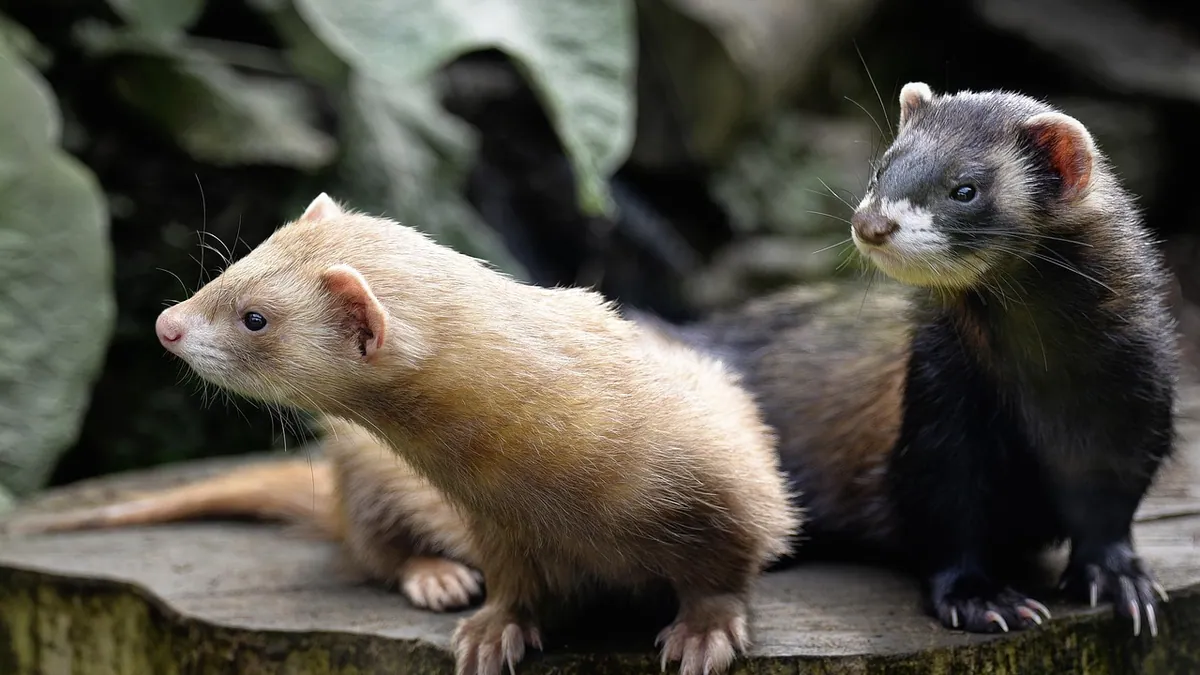
Do ferrets and cats get along? In many homes, yes, but only with supervision and a slow introduction. Ferrets are social, curious predators, and cats are predators too, so the pairing can work when both animals are calm and the setup is right. It can also fail badly when a cat sees a ferret as prey or a ferret treats a cat as a toy.
This article is educational and is not a substitute for veterinary diagnosis or treatment.
Quick Answer
- Ferrets are fully domesticated and social animals, so most do best with company, but that company does not have to be a cat [1][2].
- Cats and ferrets can often share a home, but they should never be left loose together unsupervised, especially at first.
- A ferret's hunting drive is instinctive and can be triggered by small, fast-moving animals, so a cat that runs may get chased [3].
- Some cats are calm and tolerant, while others are fearful or predatory. Personality matters more than species.
- Always give each animal its own safe space, separate food, and separate litter or litter box areas.
Why Ferrets and Cats React the Way They Do
Ferrets are predators with a strong chase instinct
The domestic ferret belongs to the Mustelidae family, which includes weasels, badgers, and minks [1]. Unlike those wild relatives, ferrets have been kept in captivity for more than 2,000 years and are fully domesticated [1][4]. They would likely starve if released outside [1].
That long history with people did not erase their predatory wiring. Prey-catching behavior in ferrets is mainly instinctive and gets triggered by certain cues, then performed in a fairly fixed pattern [3]. In plain terms, a ferret may chase and nip at anything that darts, wiggles, or squeaks. A cat's tail flicking across the floor can look a lot like prey.
Ferrets are also social animals that are commonly pair-housed [2]. They often enjoy wrestling, chasing, and pouncing on each other. When a ferret tries to play this way with a cat, the cat may not read it as play.
Cats are predators and prey-sized to a ferret
Cats are hunters, and a ferret is roughly the size of a large rat. A cat with a strong hunting drive may stalk or swat a ferret. A cat that is anxious or cornered may also swat or bite in self-defense.
Most adult cats weigh far more than a ferret. A ferret typically reaches full size at 5 to 6 months and is considered an adult at 1 year [4]. Even a full-grown ferret is small and light compared with most cats, so a single serious bite can cause real damage.
Play styles do not match
Ferrets play rough and fast. They tumble, nip, and chase. Cats usually prefer stalking, batting, and short bursts of activity. A ferret that keeps pouncing after a cat has said "stop" can turn a friendly meeting into a fight.
Ferrets are also inactive for most of the day. In one study of pair-housed female ferrets, inactivity made up about 89% of their activity budget [2]. That means a ferret may sleep through much of the time a cat wants to interact, and then wake up ready to play hard.
Medical Causes to Rule Out First
Before you blame personality, check health on both sides.
In ferrets, pain, dental disease, adrenal disease, and other illnesses can make an animal irritable or less tolerant of handling. Juvenile ferrets are vulnerable to several infectious diseases, including canine distemper virus, rotavirus, coccidiosis, and Toxoplasma-like disease [5]. All juvenile ferrets should be vaccinated against canine distemper and rabies [5]. A ferret that suddenly becomes aggressive or withdrawn needs a veterinary exam.
In cats, pain, hyperthyroidism, vision loss, and arthritis can change behavior. An older cat that never used to swat may start swatting when a ferret bumps a sore joint.
Ferrets are highly susceptible to heatstroke because they cannot sweat, so housing should never sit in direct sunlight [6]. A hot, uncomfortable ferret is a cranky ferret. Keep the room cool and shaded.
When Ferret and Cat Contact Becomes a Problem
Some chasing and hissing during the first meetings is normal. Real problems look different.
Warning signs in the cat:
- Flattened ears, dilated pupils, growling, or a stiff, low crouch
- Hiding for hours after a ferret is out
- Refusing food or litter box use when the ferret is loose
- Swatting with claws out or biting
Warning signs in the ferret:
- Repeatedly targeting the cat even when the cat is still
- Biting and not letting go
- Trembling, hiding, or refusing to come out
- Limping, drooling, or pawing at the mouth after a scuffle
Any bite that breaks skin is a problem. Cat bites carry bacteria deep into tissue, and ferret bites can crush small bones. Both need same-day veterinary attention.
How to Introduce a Ferret and a Cat Step by Step
Step 1: Set up separate spaces first
Give the ferret a secure cage or enclosure and the cat full run of the home. Ferrets need daily free-roaming time and environmental enrichment, and most pet ferrets are housed indoors [7]. That free time should happen with the cat closed in another room at first.
Before any meeting, make the ferret's area safe. Ferrets squeeze into small gaps, chew cords, and get into cabinets. Review Ferret-Proofing Your Home before you let a ferret loose anywhere a cat also lives.
Step 2: Swap scents before faces
Rub a cloth on the ferret and place it near the cat's resting spot. Do the same in reverse. Let each animal smell the other without seeing each other. Repeat for several days.
This is the same principle used when introducing cats to each other. If you already have multiple cats, the steps in Introducing a New Cat to Resident Cats: Safe Room Scent Swap Protocol apply here too.
Step 3: Meet through a barrier
Use a baby gate, a screen door, or a carrier with a secure latch. Let them see and smell each other for 5 to 10 minutes. Watch both animals the whole time.
End the session while both are still calm. Short, positive meetings beat long, stressful ones.
Step 4: Supervised face-to-face meetings
Pick a neutral room. Trim the cat's nails first. Have one person hold or closely watch each animal. Keep the first meeting under 5 minutes.
If the cat hisses and walks away, that is fine. Let the cat leave. Never force contact.
If the ferret charges the cat, scoop the ferret up and end the session. Try again another day with a shorter session.
Step 5: Build up slowly
Increase time together only when both animals stay relaxed. Some pairs reach a point where they nap in the same room. Others never get past tolerant coexistence, and that is okay.
Keep food, water, litter boxes, and sleeping spots separate. A cat should never have to guard its litter box from a ferret.
Step 6: Supervise forever
Even a bonded pair should not be left alone together when you are gone. Ferret and cat play can escalate in seconds. When you cannot watch, separate them.
What Not to Do
- Do not punish either animal. Yelling, spraying, or hitting creates fear and makes bites more likely.
- Do not hold the cat while the ferret runs loose. A cat that feels trapped may bite you.
- Do not assume a hissing cat is "just being dramatic." Hissing is a warning.
- Do not assume a ferret that nips is "playing." Ferret play bites hurt, and cats do not enjoy them.
- Do not skip vaccinations. Juvenile ferrets should be vaccinated against canine distemper and rabies [5].
- Do not leave a ferret and a cat alone together, even after months of peace.
- Do not introduce a ferret to a cat that has a known history of killing rodents or birds.
If you are adding a ferret to a home that already has cats, plan ahead. Ferret Adoption: What to Expect and How to Prepare walks through the supplies and setup you need before the ferret comes home.
Enrichment That Reduces Conflict
Bored animals cause trouble. Both species need outlets.
For ferrets:
- Daily free-roaming time in a ferret-proofed room [7]
- Tunnels, dig boxes, and puzzle feeders
- Rotating toys so the environment stays interesting
- A sleeping buddy if the ferret is social with other ferrets
For cats:
- Vertical space, cat trees, and shelves the ferret cannot reach
- Scheduled play with wand toys
- Quiet hiding spots away from the ferret's area
- Separate feeding stations
Ferrets are social and often do well in pairs [2]. If your ferret has a ferret companion, it may bother the cat far less. If you are adding another cat instead, see Introducing A New Cat To A Cat for the cat-to-cat version of this process.
When to Bring In a Veterinarian or Behavior Professional
Call your veterinarian if either animal shows sudden behavior changes, stops eating, or hides constantly after a meeting. Call sooner if there was a bite, a scratch near an eye, or any limping.
A veterinarian can check for pain, illness, and injuries that are driving the behavior. If both animals are healthy and the conflict continues, ask for a referral to a veterinarian who treats behavior problems or a certified applied animal behaviorist. Do not rely on advice from pet store staff or internet forums for aggression cases.
Limitations and When to Contact a Veterinarian
No article can tell you whether your specific ferret and cat will get along. Temperament, age, health, and past experiences all matter. Individual cases need a veterinarian who can examine the animals and watch the behavior.
Contact a veterinarian the same day if:
- A cat bite or ferret bite breaks the skin
- Either animal is limping, drooling, or holding a limb oddly
- An eye looks cloudy, red, or partially closed
- Either animal stops eating or drinking
Go to an emergency clinic now if:
- There is heavy bleeding or a deep puncture
- Either animal is having trouble breathing
- A ferret is limp, unresponsive, or feels very hot
- A cat is vomiting repeatedly or cannot stand
Schedule a routine visit if:
- The ferret has not been vaccinated against canine distemper and rabies
- The cat is due for a wellness exam
- You want help planning a safe introduction
Ferrets are prone to accidents and illnesses that shorten their typical 6 to 10 year lifespan, so regular veterinary care matters [4].
Frequently Asked Questions
Can a ferret and a cat live in the same house?
Yes, many do, as long as they are supervised and have separate spaces. The arrangement works best when the cat is calm and the ferret has its own secure enclosure. Never leave them loose together when you are not home.
Will my cat hurt my ferret?
Some cats will try. A cat with a strong hunting drive may stalk or bite a ferret, and a ferret's small size makes injuries serious. Watch for stalking, flattened ears, and growling, and separate them at the first sign.
Do ferrets get along with cats right away?
Usually not. Most pairs need days to weeks of scent swapping and short, supervised meetings. Rushing the process raises the risk of a bite that sets the relationship back.
Is it safe to let my ferret and cat play together?
Supervised play is fine if both animals stay relaxed and take turns. Stop the session if either one hides, hisses, or refuses to disengage. Rough ferret play is normal between ferrets but often too much for a cat.
Should I get a ferret if I already have a cat?
It depends on your cat. A confident, easygoing cat may adjust well. A fearful cat or one that hunts small animals is a poor match. Talk to your veterinarian before adding a ferret to a home with cats.
Related Articles
- Ferret Adoption: What to Expect and How to Prepare
- Ferret-Proofing Your Home
- Ferret Care Guide for Beginners
- Do Ferrets Fight or Play Fight? Telling the Difference
- Can Ferrets Eat Cat Food? What's Safe and What's Not
- Do Ferrets Make Good Pets? Honest Pros and Cons
References
- Introduction to Ferrets - All Other Pets. Merck Veterinary Manual.
- Behavioral Evaluation of Laboratory-housed Ferrets (Mustela Putorius Furo) in Different Enclosure Sizes. Journal of the American Association for Laboratory Animal Science : JAALAS, 2023.
- Psychopharmacological influence on the prey catching behavior of ferrets (Putorius furo L.) (author's transl). Psychopharmacology, 1977.
- Overview of Ferrets - Exotic and Laboratory Animals. Merck Veterinary Manual.
- Ferret Pediatrics. The veterinary clinics of North America. Exotic animal practice, 2024.
- Management of Ferrets - Exotic and Laboratory Animals. Merck Veterinary Manual.
- Feeding and Husbandry Practices in Pet Ferrets (Mustela putorius furo): A Cross-Sectional International Study. Veterinary medicine and science, 2026.