Can Rabbits Get Rabies? Risk, Signs, and Bite Guidance
By Dr. Zubair Khalid, DVM, MS, PhD ·
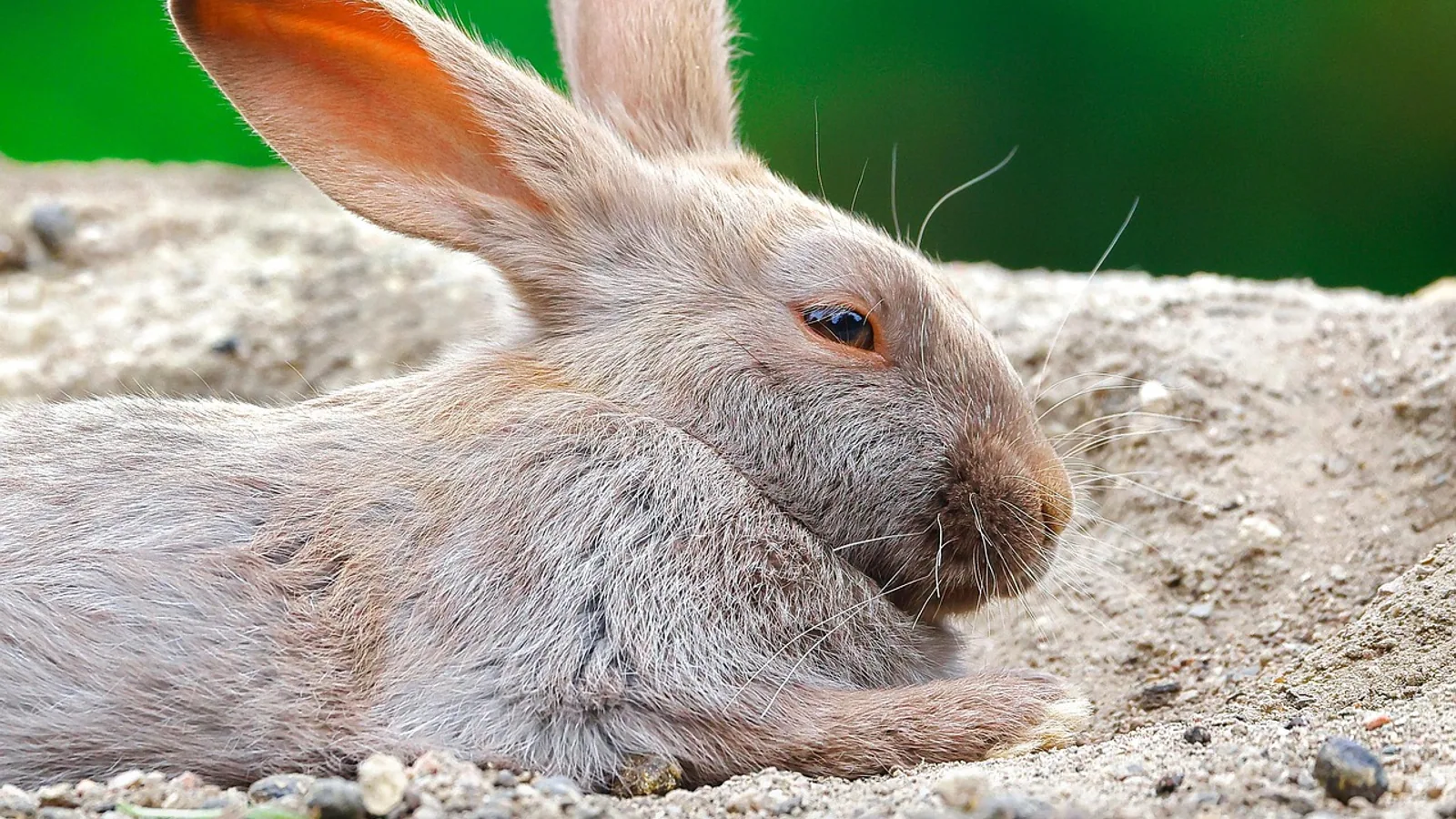
Yes, rabbits can get rabies, but it is a rare event. All mammals are susceptible to rabies virus, and rabbits are mammals, so they are not immune [1]. The reason rabbit rabies is so uncommon is not that rabbits resist the virus. It is that a rabid predator usually kills a rabbit outright rather than leaving it alive long enough to develop and transmit the disease. When rabbit rabies does happen, it is almost always a spillover infection from the raccoon rabies variant, and it is seen most often in outdoor-hutch rabbits that were exposed to a rabid raccoon [2].
For owners, the practical questions are narrower. Does a rabbit bite mean I need rabies shots? Almost never, according to federal surveillance data and public health guidance. Should I still call someone? Yes, because the decision is made case by case by a health department, not by a webpage. This article explains the biology, the documented cases, the signs to watch for, and the exact steps to take after a rabbit bite or scratch.
This article is educational and is not a substitute for veterinary diagnosis or treatment.
The Short Answer on Rabbit Rabies
Rabies is an acute, progressive encephalitis caused by infection with a rabies virus. The classic reservoirs in the United States are bats and mesocarnivores such as raccoons, skunks, foxes, and coyotes [1]. Rabbits are not a reservoir species. They do not maintain rabies in a population the way raccoons do. They are incidental hosts, meaning they can be infected when a rabid animal bites them, but they do not drive the cycle of transmission.
That distinction matters for public health. When a species is a reservoir, every encounter with that species carries meaningful risk and triggers a standard response. When a species is an incidental host with a very low infection rate, the response is individualized. Surveillance from 2011 to 2020 found that in any given year, the percent positivity of rabies in rodents and lagomorphs (the group that includes rabbits, hares, and pikas) was less than 2.5 percent, and that rate was stable across the decade [1]. In plain terms, when laboratories tested rodents and lagomorphs for rabies, more than 97 out of every 100 came back negative.
So the answer to "can rabbits get rabies" is yes. The answer to "do rabbits carry rabies" is that they can be infected but are not carriers in the epidemiological sense, and the odds that any given pet rabbit is rabid are extremely low.
Why Rabies Is Rare in Rabbits
The Predator Problem
Rabies is transmitted through saliva, most often via a bite. For a rabbit to become rabid, a rabid animal has to bite it and the rabbit has to survive long enough for the virus to travel from the wound to the brain and then back out to the salivary glands. That survival requirement is the bottleneck.
Raccoons, foxes, coyotes, and dogs are much larger and more powerful than a domestic rabbit. A rabid raccoon that attacks a rabbit in a hutch typically kills it. The rabbit dies of trauma before rabies has any chance to incubate, so it never becomes a confirmed rabies case and never becomes a transmission risk. This is the single biggest reason rabbit rabies is rare, and it is also why the cases that do get documented tend to involve a specific set of circumstances.
The Raccoon Variant Connection
The documented cases cluster tightly around raccoon rabies. A 1997 analysis of surveillance data from 1985 to 1994 found 368 cases of rabies in rodents and lagomorphs reported to the CDC from 22 states, with woodchucks accounting for the large majority. Those woodchuck cases were temporally and spatially associated with the raccoon rabies epizootic in the eastern United States, and genetic characterization of the viruses matched the raccoon variant circulating in the region where each animal was found [3]. An earlier review covering 1971 to 1984 found the same pattern, with most woodchuck cases tied to the mid-Atlantic raccoon epizootic [4].
The pattern held in later decades. An analysis of cases from 1995 to 2010 identified 737 rabid rodents and lagomorphs, again dominated by groundhogs, and every animal submitted for viral characterization was positive for the raccoon rabies virus variant [5]. The 2011 to 2020 update reported 401 cases, with groundhogs making up more than 90 percent and the trend closely tracking rabies in raccoons [1]. Most of these cases occurred from May through September, the months when wildlife activity and human outdoor contact peak [1].
The takeaway is that rabbit rabies in the United States is overwhelmingly a raccoon-rabies story. If you live in an area where raccoon rabies is enzootic, your outdoor rabbit has a nonzero risk. If you live outside that range, the risk is even lower.
Documented Cases in Pet Rabbits
The clearest published account of pet rabbit rabies comes from New York State, where raccoon-variant rabies was confirmed in seven pet rabbits and one pet guinea pig. Post-exposure treatment was required for several adults and children who had contact with those animals [2]. These were not wild rabbits. They were pets, and the exposure route was contact with wild animals, which is why the authors recommended protecting domestic rabbits and pet rodents from wildlife contact and using double-cage housing when animals are kept outside [2].
That case series is the reason public health agencies treat outdoor-hutch rabbits differently from indoor-only rabbits. It is also the reason a rabbit with a wound of unknown origin is handled cautiously rather than dismissed.
What Rabies Looks Like in a Rabbit
The Clinical Picture
Rabies in rabbits symptoms are not dramatically different from rabies in other mammals, but they are easy to miss or to attribute to something else. The virus causes encephalitis, so the signs are neurologic and behavioral. Documented and experimental accounts describe:
- Sudden behavioral change, including uncharacteristic aggression
- Weakness, incoordination, or an unsteady hop
- Paresis, meaning partial loss of movement in the limbs
- Difficulty eating or drinking
- Excessive salivation or difficulty swallowing
- Seizures or tremors
- Progressive paralysis
- Death
Aggression is a notable feature in the surveillance literature. In a Maryland review of rodent and lagomorph rabies from 1981 to 1986, the majority of cases showed aggressive behavior, and woodchucks accounted for the large majority of exposures to people [6]. A normally calm rabbit that suddenly attacks is a red flag, though it is far more often caused by pain, fear, or illness than by rabies.
Experimental work adds a detail owners will never see but veterinarians should know. Rabbits with experimentally induced rabies developed myocardial lesions, including degeneration and necrosis of heart muscle cells with contraction band necrosis and inflammatory infiltration. Rabies virus antigen was not found in the hearts, so the cardiac damage was classified as neurogenic cardiomyopathy, meaning it was a downstream consequence of the brain lesions rather than direct viral invasion of the heart [7]. This is a reminder that rabies is a whole-body neurologic disease, not just a brain infection.
Why the Signs Are Hard to Use
Rabies in rabbits symptoms overlap heavily with other conditions. Head tilt, loss of balance, and weakness can come from ear infections, Encephalitozoon cuniculi, trauma, or toxin exposure. Aggression can come from pain, hormonal behavior, or a stressful environment. Salivation can come from dental disease, which is common in rabbits.
This overlap is exactly why you should not try to diagnose rabies at home. If a rabbit has neurologic signs and any possible wildlife exposure, the animal needs veterinary and public health involvement, not a wait-and-see approach.
The Table: Key Facts at a Glance
| Question | Answer | Basis |
|---|---|---|
| Can rabbits get rabies? | Yes. All mammals are susceptible. | Rabies affects all mammals [1] |
| Are rabbits a rabies reservoir? | No. They are incidental hosts. | Rabies is rare in rodents and lagomorphs [5][1] |
| How common is it? | Under 2.5 percent positivity in any given year among tested rodents and lagomorphs | 2011 to 2020 surveillance [1] |
| Which variant causes it? | Almost always the raccoon rabies virus variant | Viral characterization of submitted cases [3][5] |
| Which rabbits are at risk? | Outdoor-hutch rabbits exposed to wildlife | Documented pet rabbit cases in New York [2] |
| What are the signs? | Behavioral change, aggression, weakness, incoordination, paresis, salivation, paralysis | Surveillance and case reports [7][6] |
| Is there a licensed rabbit rabies vaccine in the US? | No | No licensed product for rabbits [2][8] |
| Does a rabbit bite need rabies shots? | Almost never, but consult public health | CDC guidance on rodent and lagomorph exposures [3][1][8] |
Rabies Transmission and the Rabbit
How the Virus Moves
Rabies virus lives in saliva and nervous tissue. Transmission requires that infectious saliva or tissue contact a break in the skin or a mucous membrane. The most efficient route is a bite from a rabid animal. The virus then travels along peripheral nerves toward the central nervous system, which is why the incubation period can be long and why the location of the wound matters.
An analysis of rabid rodents found that infectious virus or viral RNA was detected in salivary glands or oral cavity tissues in 11 of 13 animals tested [5]. That finding confirms that rabid rabbits and rodents can carry virus in their saliva and therefore can transmit rabies through a bite. It also explains why a bite from a confirmed rabid rabbit is treated as a real exposure.
Can a Rabbit Transmit Rabies to a Human?
Yes, in theory, and it has happened in the sense that people exposed to rabid pet rabbits required post-exposure treatment [2]. The key word is exposed. In the New York case series, several adults and children needed treatment after contact with the infected rabbits [2]. That does not mean rabbit bites routinely transmit rabies. It means that when a rabbit is confirmed rabid, the people who had contact with it are managed as exposures.
The practical framing is this. A rabbit that has never had contact with wildlife and lives indoors is an extraordinarily unlikely rabies source. A rabbit that lives outdoors in a raccoon-rabies area and has a fresh wound of unknown origin is a different situation entirely.
Rabbit Bites and Scratches: What To Do
The General Rule
Rabbit bites and scratches are common, and most have nothing to do with rabies. The CDC's position, reflected in the surveillance literature, is that human contact with rodents and lagomorphs rarely requires post-exposure treatment, but that appropriate health authorities need to evaluate the individual circumstances of each exposure [3]. A later analysis put it the same way, noting that familiarity with current rabies prevalence data is important for informed decisions about post-exposure prophylaxis after rodent and lagomorph bites [1].
So the rule is not "never worry." The rule is "almost never, but let public health decide."
The Questions a Health Department Will Ask
When you call, expect to answer these:
- What kind of animal was it, and is it a pet or wild?
- Was the rabbit kept outdoors or allowed outdoors unsupervised?
- Did the rabbit have any possible contact with a wild animal?
- Does the rabbit have any wound of unknown origin?
- Was the bite a provoked bite or an unprovoked attack?
- Is the rabbit alive and available for observation or testing?
- Was the bite a true bite that broke skin, or a scratch or nip?
The outdoor and unsupervised-outdoors questions are not incidental. Published guidance specifically recommends evaluating bites and scratches from rodents and lagomorphs on an individual basis with consideration of whether the animal was caged outside or permitted outdoors unsupervised [2].
Wound Care First
Rabies is not the only concern after a rabbit bite. Rabbit teeth are sharp and the wounds can be deep, and animal bites can introduce bacteria. Immediate wound care matters regardless of rabies risk. Wash the wound thoroughly with soap and water, control bleeding with pressure, and seek medical care for deep wounds, wounds on the hands or face, wounds that will not stop bleeding, or any sign of infection such as increasing redness, swelling, warmth, or pus.
Then address the rabies question. The two are not in competition. You can clean a wound and call public health in the same afternoon.
When Post-Exposure Prophylaxis Is Considered
Post-exposure prophylaxis, often shortened to PEP, is the series of rabies vaccinations given after a possible exposure. It is highly effective when started promptly. It is also not free of cost or inconvenience, which is why public health agencies try to avoid giving it unnecessarily.
Historical data show that PEP has been given far out of proportion to the actual rabies risk from rodents and lagomorphs. A surveillance study of PEP from 1980 to 1981 found that domestic animals and rodents and lagomorphs accounted for post-exposure treatment far out of proportion to their small role in animal rabies, and that many cases could be prevented by not keeping wild animals as pets and by having physicians consult with state or local health departments before starting treatment [9]. That finding is decades old, but the underlying logic has not changed. Consultation prevents unnecessary treatment.
For a rabbit bite, PEP is generally considered only when there is a credible exposure history, such as a rabbit that was outdoors and had contact with a known or suspected rabid animal, or a rabbit that is showing neurologic signs and cannot be observed or tested. A bite from a healthy indoor rabbit with no wildlife exposure is not a standard indication for PEP.
Quarantine and Observation
When a pet rabbit or rodent has had any possible contact with a wild animal, published guidance recommends a six-month quarantine for observation, to prevent escape, and to avoid contact with humans who would need treatment if the animal develops rabies [2]. Six months is a long time, and it reflects the reality that rabies can incubate for an extended period. This is a public health decision, not a decision an owner should make alone.
If the rabbit is not available for observation or testing, the calculus changes. In rabies-endemic areas, people exposed to woodchucks should receive post-exposure prophylaxis if the animal is not available for testing, and decisions for other rodents and lagomorphs should account for the epidemiology of rabies in the exposing species [4]. Availability for testing is often the pivot point.
Is There a Rabies Vaccine for Rabbits?
There is no rabies vaccine licensed for rabbits in the United States. This is a practical gap that owners discover when they ask their veterinarian to vaccinate a rabbit before an outdoor season. The vaccine simply is not labeled for the species, and there is no standard veterinary recommendation to vaccinate pet rabbits against rabies.
This does not mean rabbits cannot mount an immune response to rabies antigens. They can, and they are used as laboratory animals in rabies vaccine research precisely because they respond. Studies have compared intradermal and intramuscular rabies vaccination regimens in New Zealand White rabbits and found that intradermal regimens produced higher antibody titers than the conventional intramuscular schedule [10]. Other work has shown that dietary supplementation with vitamin A and probiotics enhanced the humoral response to cell culture rabies vaccine in rabbits [11], and DNA-based immunization with plasmids encoding rabies virus glycoproteins produced robust antibody responses in rabbits and guinea pigs [12]. Rabbits have also been used to test the immunogenicity of commercial anti-rabies vaccines marketed for dogs [13].
None of this translates into a licensed rabbit product. These studies are about producing antibodies, often for reagent or antiserum purposes, not about protecting pet rabbits from field exposure. The absence of a licensed vaccine is one more reason prevention has to focus on housing and wildlife exclusion rather than vaccination.
Prevention: Housing and Wildlife Exclusion
Indoor Housing
The most effective way to prevent rabbit rabies is to prevent contact with wildlife. Indoor housing accomplishes this directly. A rabbit that lives indoors and never goes outside unsupervised has essentially no rabies exposure route. According to the House Rabbit Society and the Merck Veterinary Manual, indoor housing is the standard recommendation for pet rabbits, and it also protects against predators, parasites, and extreme weather.
Routine rabbit care guidance from veterinary teaching hospitals emphasizes a safe, secure enclosure and protection from predators as core husbandry requirements [14]. Rabies prevention is one more reason to follow that advice.
Predator-Proof Outdoor Housing
Some owners keep rabbits outdoors, and some rabbits do well with supervised outdoor time. If a rabbit is housed outside, the enclosure has to exclude predators, not just contain the rabbit. Published guidance specifically recommends double-cage housing when rabbits or rodents are housed outside, meaning a cage within a secure enclosure, to prevent direct contact with wild animals [2].
Practical elements of predator-proofing include:
- A solid roof and floor, not just wire
- Hardware cloth rather than chicken wire, secured at all edges
- Buried apron or floor to prevent digging under
- Latches that raccoons cannot open (raccoons are dexterous)
- No gaps larger than a raccoon can reach through
- Housing that keeps the rabbit out of reach of wildlife even if an animal gets into the yard
A raccoon can reach through wire and grab an animal. A double-cage setup prevents that. This is not a theoretical concern. The documented pet rabbit rabies cases involved outdoor exposure to raccoons [2].
Supervised Outdoor Time
If you let a rabbit out in a yard, supervise it. Unsupervised outdoor access is one of the specific factors public health guidance flags when evaluating bite risk [2]. A rabbit on the ground in a yard with raccoon activity is a rabbit that can be bitten.
Wildlife Contact and Wounds of Unknown Origin
Any rabbit with a wound of unknown origin should be treated as a possible exposure until proven otherwise. The published recommendation is that a pet rabbit or rodent with any possible contact with a wild animal, particularly if it has wounds of unknown origin, should be quarantined for six months for observation [2]. If your outdoor rabbit comes in with a fresh wound and you did not see what caused it, call your veterinarian and your local health department.
Keeping Wildlife Away
Reducing raccoon traffic around your home reduces risk. Secure trash cans, do not leave pet food outside, and do not feed wildlife. Raccoons that are habituated to human food sources are more likely to linger near rabbit hutches.
The Biology in Plain Language
Rabies is a virus that attacks the nervous system. After a bite, the virus replicates in muscle tissue near the wound and then enters peripheral nerves. It travels toward the spinal cord and brain at a rate of roughly a few centimeters per day, which is why a bite on the face produces symptoms faster than a bite on the foot. Once the virus reaches the brain, it causes encephalitis, and the animal develops the neurologic and behavioral signs described earlier. The virus then spreads outward along nerves to the salivary glands, where it enters saliva and can be transmitted to the next victim.
This journey explains several things. It explains why the incubation period varies. It explains why a wound that seems minor can still be dangerous. It explains why the virus is found in saliva and why the 11 of 13 finding matters [5]. And it explains why an animal that is killed quickly by a predator never becomes a rabies case. The virus never completes the trip.
It also explains why there is no treatment once signs appear. By the time an animal is showing neurologic signs, the virus is in the brain. Rabies is effectively always fatal once clinical disease develops. This is why prevention and post-exposure management are the entire strategy, and why waiting to see what happens is the wrong approach.
Common Myths and Questions
Myth: Rabbits are rodents, so they cannot get rabies
Rabbits are lagomorphs, not rodents, but the distinction does not matter for rabies susceptibility. Both rodents and lagomorphs can be infected. The surveillance literature groups them together precisely because their rabies epidemiology is similar [3][5][1].
Myth: A rabbit with rabies will always be foaming at the mouth
Foaming at the mouth is a dramatic image, but it is not a reliable sign. Excessive salivation and difficulty swallowing can occur, but so can weakness, incoordination, and behavioral change. Some rabid animals show paralysis rather than aggression. You cannot rule rabies in or out by looking for one sign.
Myth: My indoor rabbit bit me, so I need rabies shots
A bite from a healthy indoor rabbit with no wildlife exposure is not a standard indication for post-exposure prophylaxis. That said, any bite that breaks skin deserves wound care, and you should contact your health department if you have any doubt. The decision belongs to public health, not to a self-assessment.
Myth: Rabbits are a major rabies risk in the US
They are not. Rabies in rodents and lagomorphs is rare, and rabbits are a small fraction of that small fraction. The major reservoirs are raccoons, skunks, bats, and foxes [1][15][16].
Myth: There is a rabbit rabies vaccine, so I can just vaccinate
There is no rabies vaccine licensed for rabbits in the United States. Prevention depends on housing and wildlife exclusion.
Myth: If a rabbit survives a raccoon attack, it is fine
Survival of the attack does not mean survival of the exposure. A rabbit that was bitten by a raccoon and lived needs veterinary evaluation and public health consultation. The six-month quarantine recommendation exists for exactly this scenario [2].
What Is Still Uncertain
Rabies in rabbits is rare enough that the literature is built from surveillance and case reports rather than large clinical studies. Several questions remain open.
The true incidence of rabies in pet rabbits is unknown because testing is not universal and mild exposures may go unrecognized. The proportion of exposed rabbits that survive long enough to develop disease is not well quantified. The incubation period in naturally infected rabbits is not precisely established, which is why quarantine periods are set conservatively. The role of non-bite transmission, such as saliva contacting a wound or mucous membrane, is plausible but not well documented in rabbits specifically.
What is clear is the direction of the evidence. Rabbits can get rabies, they get it almost exclusively from raccoon-variant spillover, they can carry virus in their saliva, and the cases that have been documented involved outdoor-housed pets with wildlife contact [3][5][1][2]. The uncertainty is in the details, not in the overall picture.
Limitations and When to Contact a Veterinarian
This article is educational and is not a substitute for veterinary diagnosis or treatment. Individual cases need a veterinarian and, for exposure questions, a public health authority.
Contact a veterinarian promptly if your rabbit:
- Has a wound of unknown origin, especially if it lives outdoors
- Has had any possible contact with a wild animal, particularly a raccoon, skunk, fox, or bat
- Shows sudden behavioral change, uncharacteristic aggression, weakness, incoordination, difficulty eating or drinking, excessive salivation, tremors, or paralysis
- Was found near a dead or sick wild animal
- Is not eating or is showing any neurologic sign
Contact your physician or local health department promptly if you:
- Were bitten or scratched by a rabbit that lives outdoors or had wildlife contact
- Were bitten or scratched by a rabbit with a wound of unknown origin
- Were bitten or scratched by a rabbit showing neurologic signs
- Had saliva or nervous tissue contact a break in your skin or a mucous membrane
- Have any doubt about whether an exposure occurred
Do not wait for symptoms in the rabbit to decide. Do not wait for symptoms in yourself. Rabies is preventable before symptoms and effectively untreatable after them. That asymmetry is the entire reason public health takes every credible exposure seriously.
Frequently Asked Questions
Can rabbits get rabies?
Yes. Rabbits are mammals, and all mammals are susceptible to rabies virus [1]. It is rare because rabid predators usually kill rabbits rather than leaving them alive long enough to develop the disease, but infection is possible and has been documented in pet rabbits [2].
Do rabbits carry rabies?
Rabbits can be infected with rabies, but they are not a reservoir species. They do not maintain the virus in their populations the way raccoons, skunks, and bats do. Rabies in rodents and lagomorphs is rare, with less than 2.5 percent positivity among tested animals in any given year from 2011 to 2020 [1].
What are rabies in rabbits symptoms?
Signs include sudden behavioral change, uncharacteristic aggression, weakness, incoordination, paresis, difficulty eating or drinking, excessive salivation, tremors, seizures, and progressive paralysis. Aggression was a prominent feature in a Maryland review of rodent and lagomorph rabies cases [6].
Can you get rabies from a rabbit bite?
It is possible but very rare. Human contact with rodents and lagomorphs rarely requires post-exposure treatment, but health authorities need to evaluate each exposure individually [3]. Documented pet rabbit rabies cases did result in post-exposure treatment for several adults and children [2].
Does a rabbit bite always require rabies shots?
No. A bite from a healthy indoor rabbit with no wildlife exposure is not a standard indication for post-exposure prophylaxis. The decision should be made with your local health department, which will consider whether the rabbit was housed outside or allowed outdoors unsupervised [2].
Is there a rabies vaccine for rabbits?
There is no rabies vaccine licensed for rabbits in the United States. Rabbits are used in rabies vaccine research and can mount immune responses to rabies antigens [10][11][12], but that research does not translate into a licensed product for pet rabbits.
How do pet rabbits get rabies?
Almost always through contact with a rabid wild animal, most commonly a raccoon. Documented cases in pet rabbits involved raccoon-variant rabies, and the animals were housed in ways that allowed wildlife contact [2]. Genetic characterization of rabid rodents and lagomorphs has consistently matched the raccoon rabies virus variant [3][5].
What should I do if my outdoor rabbit was exposed to a raccoon?
Contact your veterinarian and your local health department immediately. Published guidance recommends a six-month quarantine for observation, to prevent escape, and to avoid contact with humans for a pet rabbit or rodent with any possible contact with a wild animal, particularly if it has a wound of unknown origin [2]. People who had contact with the rabbit may need post-exposure treatment if the rabbit develops rabies.
Related Articles
- Do Rabbits Get Ear Infections
- Rabbit GI Stasis Symptoms
- Rabbit GI Stasis Signs
- Symptoms Of Ear Infection In Rabbits
- Ear Mites In Rabbits Symptoms
- Rex Rabbit Enrichment: Expert Veterinary Guidance on Safe & Stimulating Options
- Rabbit Poop Guide: Normal Droppings, Cecotropes, and Warning Signs
- Rabbits With Tentacles or Horns: Shope Papillomavirus Explained
- Rabbit Dewlap: What It Is, What Is Normal, and Problems
Sources
- RABIES IN RODENTS AND LAGOMORPHS IN THE USA, 2011-20.
- Rabies virus infection in a pet guinea pig and seven pet rabbits.
- Surveillance and spatiotemporal associations of rabies in rodents and lagomorphs in the United States, 1985-1994.
- Rabies in rodents and lagomorphs in the United States, 1971-1984: increased cases in the woodchuck (Marmota monax) in mid-Atlantic states.
- Rabies in rodents and lagomorphs in the United States, 1995-2010.
- The epidemiology of rodent and lagomorph rabies in Maryland, 1981 to 1986.
- Neurogenic cardiomyopathy in rabbits with experimentally induced rabies.
- Information for Veterinarians - Rabies (cdc.gov)
- The epidemiology of human rabies postexposure prophylaxis, 1980-1981.
- Comparing Intradermal (ID) Rabies Vaccination with Conventional IM Regimen on Humoral Response of New Zealand White Rabbits for the Production of Animal-Derived Polyclonal Antibodies.
- Immune-adjuvant effect of vitamin A and probiotics supplementation on humoral response to cell culture rabies vaccine in rabbits.
- Robust humoral immune response against rabies virus in rabbits and guinea pigs immunized with plasmid DNA vectors encoding rabies virus glycoproteins - An approach to the production of polyclonal antibody reagents.
- Immunogenicity of anti-rabies vaccines (ARVs) marketed in Sri Lanka: a comparative study.
- How to care for your pet rabbit - UF Small Animal Hospital (smallanimal.vethospital.ufl.edu)
- Rabies surveillance in the United States during 2002.
- Rabies surveillance in the United States during 2001.