Chinchillas and Cats: Can They Live Together Safely?
By Dr. Zubair Khalid, DVM, MS, PhD ·
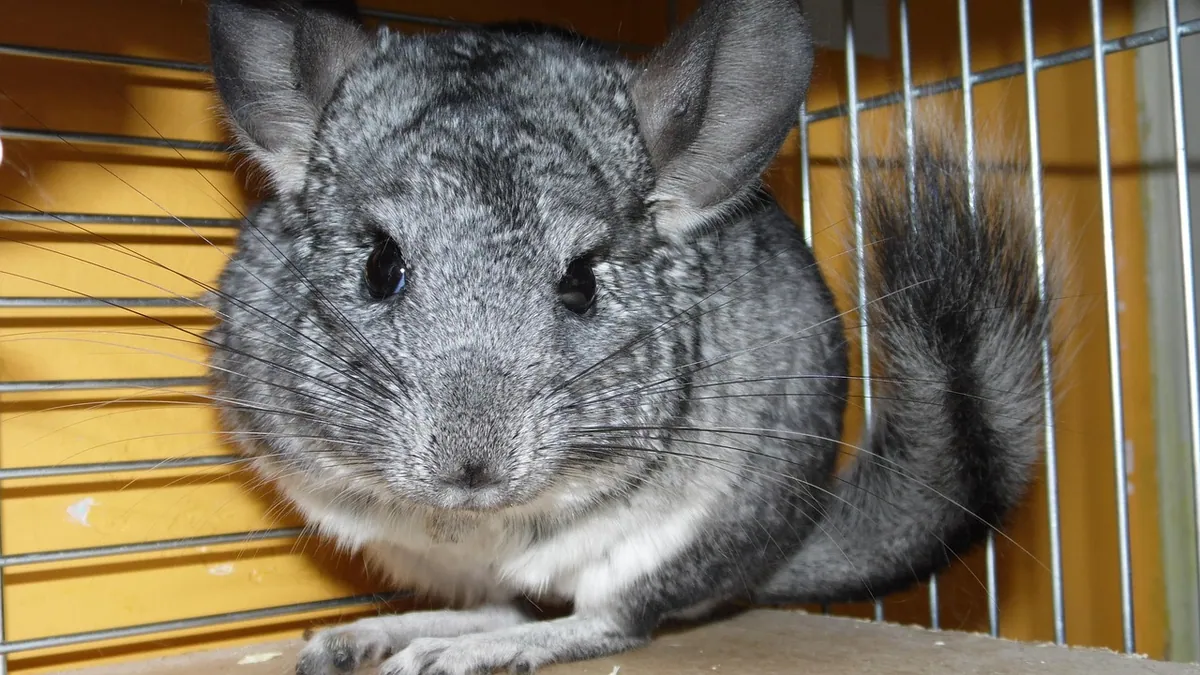
Do chinchillas get along with cats? No. A chinchilla is a prey animal, a cat is a predator, and the two should never be allowed to interact, even through a cage bar. The goal in a mixed household is not friendship, it is total separation with layered safety.
This article is educational and is not a substitute for veterinary diagnosis or treatment.
Quick Answer
- Assume every cat will try to hunt a chinchilla. Size does not matter. A calm house cat can kill or injure a chinchilla in seconds.
- Never allow supervised "meet and greets." There is no safe version of this for a chinchilla.
- House the chinchilla in a room the cat cannot enter, with a locking door, not just a closed one.
- Keep the chinchilla's cage chew-proof and secure. Cats can reach through bars with a paw or knock a lightweight cage off a stand.
- Watch the chinchilla for stress signs (hiding, fur slip, reduced eating) and the cat for fixation on the cage. Both need management.
Why Do Chinchillas and Cats Not Get Along?
Chinchillas are slender rodents with long muscular hindlimbs built for running and escaping [1]. In the wild they live in burrows and rock crevices in the Andes and rely on speed and hiding to survive predators [1]. They also have a specific defense when grabbed: they release large patches of fur from the skin, a reaction called "fur slip," which helps them escape a predator [2]. The lost fur takes months to grow back and might come back a different color [2].
That tells you what a chinchilla is wired to expect from a larger animal. A cat is a predator with claws, sharp teeth, and hunting instincts. Even a well-fed, gentle cat can swat, pounce, or grab. A single bite carries a high risk of infection and internal injury. A single grab can cause fur slip, skin wounds, or a broken bone.
Chinchillas also communicate with a range of sounds tied to predator avoidance and social contact [1]. A chinchilla that is barking, squealing, or freezing around a cat is not being dramatic. It is frightened, and chronic fear harms welfare.
Do Chinchillas and Cats Get Along? The Honest Answer
Some owners describe their cat and chinchilla as "friends." What is usually happening is tolerance at a distance, or a cat watching a cage. That is not the same as a safe bond, and it can change in a heartbeat. Cats are individuals, and prey drive can appear suddenly in a cat that seemed indifferent for years.
There is also a health angle. Chinchillas are prone to stress-related problems, and stress can show up as fur biting, reduced eating, or illness. A survey of 336 pet chinchilla caretakers found that repetitive and unwanted behaviors such as fur biting were reported as occurring "never" in 82.9% of animals, which means a meaningful minority do show these signs [3]. A predator in the room is a common trigger.
If you want to understand how domestication changed chinchilla behavior and needs, see Chinchilla Wild vs Domestic: Behavioral and Physiological Differences.
Step-by-Step: Setting Up a Cat and Chinchilla Household
Step 1: Choose a cat-free room
Pick one room for the chinchilla and make it off limits to the cat. A closed door is not enough if your cat can open it or if children or guests leave it open. Use a latch, a door prop, or a lock. This room should also be quiet, because chinchillas are sensitive to stress and handling should be gentle and calm [2].
Step 2: Make the cage predator-proof
The cage must be sturdy, chew-proof, and heavy enough that a cat cannot tip it. Cats can reach through wide bar spacing, so choose a cage with narrow spacing or solid panels on the lower half. Place the cage on a stable stand or the floor against a wall, not on a shelf a cat can jump onto. For setup details, see Chinchilla Cage Setup: Space, Enrichment, and Safety Standards.
Step 3: Control scent and sound
Cats and chinchillas both use scent and sound to read their world. Keep the cat's litter box, food, and bedding away from the chinchilla room. Do not carry the cat into the chinchilla room on your clothes if you can avoid it. Wash your hands between handling the cat and handling the chinchilla.
Step 4: Manage the cat's access
If your cat scratches at the door, meows, or waits outside the chinchilla room, that is a sign of interest, not a sign of friendship. Redirect the cat with play, food puzzles, or a separate resting spot far from the door. If the behavior continues, talk to your veterinarian about the cat's environment and enrichment.
Step 5: Handle the chinchilla correctly
Pick up a tame chinchilla by holding the base of its tail and supporting its body underneath with your other hand [2]. Handle gently and calmly to reduce stress, because rough grabbing causes fur slip [2]. Never let a cat be present during handling. If the chinchilla is pregnant, handle only when necessary to reduce stress and the risk of miscarriage [2].
Step 6: Plan for travel and sitters
Travel is stressful for chinchillas and is not recommended [2]. If you must travel, use a reliable pet sitter or a boarding facility that knows chinchillas, and avoid boarding near barking dogs or predators [2]. Leave detailed care instructions, emergency contacts, and plenty of food, hay, bedding, and toys, and have the sitter practice care before you leave [2]. For car travel, use a hard plastic, chew-proof, well-ventilated carrier, keep it out of the sun, and prevent overheating [2].
Daily and Weekly Safety Checklist
| Task | Frequency | Why it matters |
|---|---|---|
| Check the chinchilla room door and latch | Daily | A cat that gets in can injure or kill the chinchilla |
| Inspect the cage for bent bars, loose panels, or chew damage | Weekly | Cats can exploit weak points |
| Watch the chinchilla eat, drink, and pass droppings | Daily | Reduced intake or output is an early illness sign |
| Look for fur slip, bald patches, or fur biting | Daily | Stress and skin problems show up here [2][3] |
| Observe the cat's behavior near the door | Daily | Fixation means the setup needs adjusting |
| Weigh the chinchilla if you have a small scale | Weekly | Weight loss is a sensitive early warning |
| Refresh hay, water, and dust bath access | Daily | Basic needs should be met consistently [3] |
| Clean and disinfect the cage and accessories | Weekly | Reduces bacteria and parasite buildup |
Signs Something Is Wrong
In the chinchilla
- Fur slip, bald patches, or chewed fur [2][3]
- Hiding more than usual, freezing, or barking repeatedly [1]
- Not eating, not drinking, or producing fewer droppings
- Weight loss
- Drooling, head tilt, or trouble moving
- Wounds, limping, or swelling after any contact with a cat
In the cat
- Pacing, vocalizing, or scratching at the chinchilla room door
- Sitting on top of or beside the cage for long periods
- Trying to reach through bars with a paw
- Refusing to leave the area
- Any actual contact with the chinchilla, even a quick swat
Any direct contact between a cat and a chinchilla is a medical event for the chinchilla, even if you see no wound. Cat claws and teeth carry bacteria, and small prey animals hide pain well.
Common Mistakes Owners Make
- Letting them "meet" while you watch. Supervision does not stop a cat's reflexes. A pounce takes less than a second.
- Trusting a calm cat. Prey drive is not the same as aggression. A cat can be affectionate with you and still hunt a small rodent.
- Using a cage with wide bar spacing. A cat can hook a paw through and grab or scratch.
- Leaving the chinchilla room door unlocked. Cats learn to push doors, and guests forget to close them.
- Ignoring stress signs. Fur slip and fur biting are not quirks. They are signs the animal is not coping [2][3].
- Assuming the chinchilla needs a cat for company. Chinchillas are social animals, but their social needs are met by other chinchillas, not by predators [3].
- Skipping the vet after a near miss. A chinchilla that was chased or grabbed should be examined even if it looks fine.
Setup Details That Protect Health
Chinchillas are long-lived rodents, with a lifespan up to 20 years [1], so a safe setup has to work for decades, not weeks. Basic needs include constant access to water and hay, a dust bath, and ideally housing with other chinchillas [3]. A survey of pet chinchilla caretakers found that individual keeping was reported in 14.3% of cases and undersized cages or enclosures were reported by 27.6% of Austrian respondents, both potential welfare issues [3]. If your chinchilla lives alone, that is one more reason to keep the environment calm and predictable.
Temperature and ventilation matter too. Chinchillas come from high, arid Andean habitat and are adapted to cool, dry conditions [1]. A hot room plus a stressed animal is a bad combination. Keep the chinchilla room cool, quiet, and away from the cat's main territory.
For enrichment ideas that do not involve the cat, see Chinchilla Habitat: Recreating a Safe and Enriching Environment and Chinchilla Enclosure Design: Meeting Behavioral and Health Needs. A well-enriched chinchilla is less likely to develop repetitive behaviors, and a busy cat is less likely to fixate on the chinchilla room.
Limitations and When to Contact a Veterinarian
No article can assess your specific animals. Individual cases need a veterinarian who can examine the chinchilla and, if needed, the cat.
Emergency now: Any direct contact between a cat and a chinchilla, a chinchilla that is limp, gasping, bleeding, or unable to stand, or a chinchilla that was grabbed or shaken. Go to an exotic or emergency veterinarian immediately.
Same day: Fur slip over a large area, a wound or puncture you can see, drooling, head tilt, sudden refusal to eat, or a chinchilla that is hiding and unresponsive to food. Call your veterinarian.
Routine visit: New fur biting, gradual weight loss, changes in droppings, or ongoing stress behaviors around the cat. Book an appointment and bring a description of the home setup.
If you are in the United States and you suspect a poisoning or toxin exposure, call the ASPCA Animal Poison Control Center at (888) 426-4435 or the Pet Poison Helpline at (855) 764-7661. These lines may charge a consultation fee.
Frequently Asked Questions
Can a chinchilla and a cat ever be friends?
No, not in the way people mean. A chinchilla sees a cat as a predator, and a cat sees a chinchilla as prey. Any calm behavior you observe is tolerance or disinterest, and it can change without warning.
Can they live in the same house if they never meet?
Yes, with strict separation. The chinchilla needs a cat-free room, a secure cage, and daily monitoring for stress signs. The cat needs enrichment and a clear boundary so it does not fixate on the chinchilla.
Will my cat hurt my chinchilla if it is just playing?
Yes, play for a cat is hunting practice. A swat or bite can cause wounds, infection, or internal injury, and the chase alone can trigger fur slip and severe stress in the chinchilla.
Does a chinchilla need another pet for company?
A chinchilla benefits from living with other chinchillas, not with a cat or dog. If your chinchilla lives alone, focus on enrichment, gentle handling, and a predictable routine instead of adding a predator to the home.
What should I do if my cat got into the chinchilla room?
Separate them immediately, put the cat in another room, and check the chinchilla for wounds, fur loss, and breathing problems. Call your veterinarian the same day, even if the chinchilla looks normal, because hidden injuries are common in prey animals.
Related Articles
- Chinchilla Wild vs Domestic: Behavioral and Physiological Differences
- Chinchilla Care Guide
- Chinchilla Habitat: Recreating a Safe and Enriching Environment
- Chinchilla Enclosure Design: Meeting Behavioral and Health Needs
- Chinchilla Cage Setup: Space, Enrichment, and Safety Standards
- Chinchilla Care: Pyramiding & Shell Health Management
References
- Chinchillas - Exotic and Laboratory Animals. Merck Veterinary Manual.
- Special Considerations for Chinchillas - All Other Pets. Merck Veterinary Manual.
- Husbandry Conditions and Welfare State of Pet Chinchillas (Chinchilla lanigera) and Caretakers' Perceptions of Stress and Emotional Closeness to Their Animals. Animals : an open access journal from MDPI, 2024.