Do Guinea Pigs and Dogs Get Along Safely?
By Dr. Zubair Khalid, DVM, MS, PhD ·
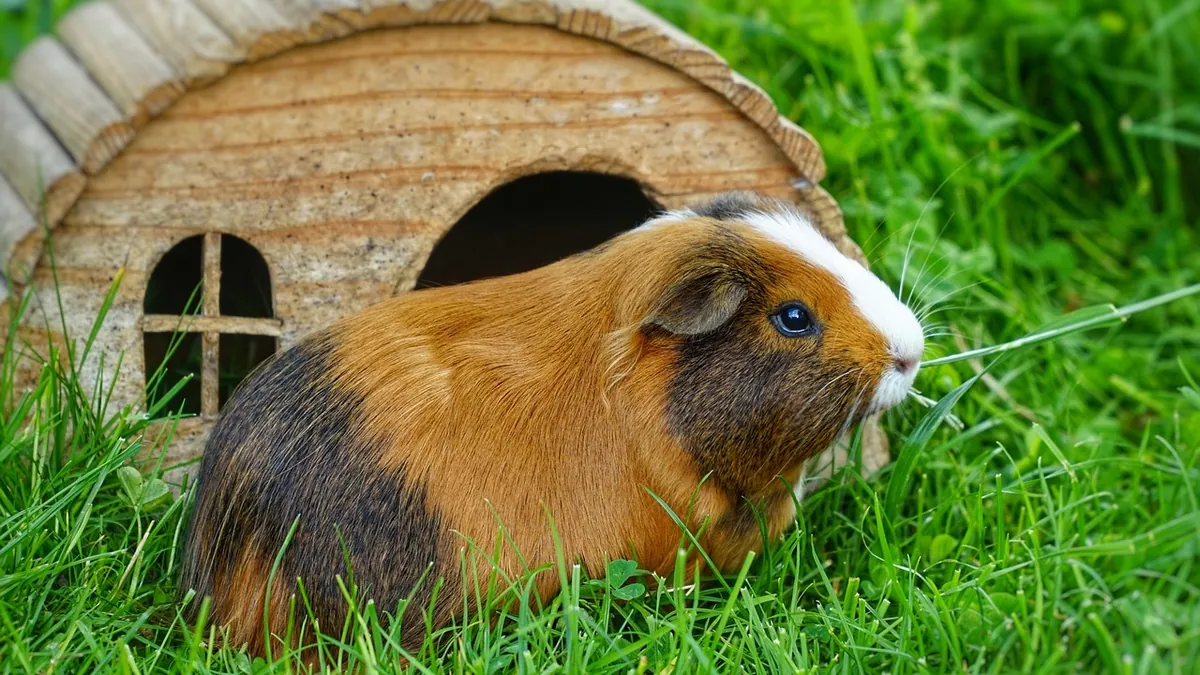
Guinea pigs and dogs can live in the same home, but they should never be left together or treated as playmates. Dogs are predators and guinea pigs are prey animals, so even a friendly dog can seriously injure or kill a guinea pig in seconds. If you want to know do guinea pigs get along with dogs, the honest answer is that peaceful coexistence is possible only with strict separation and supervision.
This article is educational and is not a substitute for veterinary diagnosis or treatment.
Quick Answer
- Assume every dog, no matter how gentle, can harm a guinea pig. Other pets including dogs can seriously harm guinea pigs, so always supervise a guinea pig outside of its cage [1].
- Keep guinea pigs in a cage or enclosure the dog cannot open, tip, or reach into. A lid is not always needed for guinea pigs, but it is wise when other pets or small children are a concern [2].
- Never let a dog and guinea pig share floor time, a bed, or a lap, even for a photo.
- Give the guinea pig a solid hiding box and a room or zone the dog cannot enter [2].
- Watch for stress in the guinea pig (freezing, hiding, not eating) and in the dog (staring, whining, pawing at the cage), and separate them at the first sign.
Why Dogs and Guinea Pigs Behave This Way
Predator and prey instincts are built in
Dogs descend from hunters. Guinea pigs are small rodents that evolved to avoid being caught. That mismatch does not disappear because your dog is sweet at home. A guinea pig's natural response to a large animal is fear, and a dog's natural response to a small, fast-moving animal is interest that can escalate to chasing or grabbing.
Guinea pigs are also easily injured outside their cages. They can be stepped on or fall from heights, and they like to chew, which means they may gnaw electrical cords or toxic houseplants [1]. A dog crossing the room is one more hazard in a space that is already risky for a small pet.
Guinea pigs are social, but not with dogs
Guinea pigs are social animals that often do well in pairs or small groups [1]. Their social needs are met by other guinea pigs, not by dogs. Research on guinea pig pairs shows that living together affects hormone levels and sociopositive behavior such as side-by-side contact [3]. That is the companionship a guinea pig actually needs. For more on this, see Guinea Pig Companionship and Housing Needs and Guinea Pig Social Needs: Pair Housing, Introductions, and Signs of Conflict.
Some dogs have a stronger chase drive
Herding and hunting breeds may stare, stalk, or nip at moving animals. Terriers and sighthounds often react strongly to small prey. This does not mean these dogs are bad pets. It means the risk is higher and your management has to be tighter. A dog that ignores the guinea pig completely is the best-case scenario, and even then, you still separate them.
Medical and Behavior Problems to Rule Out
In the guinea pig
A guinea pig that seems "fine" with a dog may actually be shut down. Signs of chronic stress include hiding more, eating less, and staying still. Guinea pigs are sensitive to temperature and humidity, with a comfortable range of about 65 to 75°F (18 to 24°C) and low relative humidity preferred [1]. A stressful environment plus a temperature outside that range can push a guinea pig into real illness.
Any guinea pig that stops eating, breathes noisily, or sits hunched needs a veterinary exam. Guinea pigs hide illness well, so subtle changes matter.
In the dog
Sudden new aggression toward a small pet can have a medical cause. Pain, vision loss, hearing loss, thyroid disease, and cognitive changes in older dogs can all change behavior. If your dog has never cared about the guinea pig and now fixates on the cage, book a veterinary visit.
Anxiety is another factor. Some dogs pace, drool, or bark when they can see or smell a small animal. That is distress, not just bad manners, and it deserves a plan.
When Guinea Pig and Dog Contact Becomes a Problem
The line between "okay" and "dangerous" is thinner than most owners think.
- The dog paws at, noses, or licks the cage for long stretches.
- The dog whines, trembles, or stares at the guinea pig.
- The guinea pig freezes, thumps, or stops coming out of its hiding box.
- The guinea pig stops eating or drinking normally.
- The dog has ever caught, mouthed, or chased any small animal.
Any one of these is a signal to change the setup now. Do not wait for a bite to happen. A single bite from a medium or large dog can be fatal to a guinea pig, and even a playful paw swipe can break bones.
How to Keep Both Pets Safe: Step by Step
Step 1: Set up a dog-proof enclosure
Choose a cage or enclosure with a secure top if your dog is large or determined. Guinea pigs usually do not jump, so a lid is not always necessary unless other pets or small children are a concern [2]. With a dog in the home, a lid is a sensible default.
Avoid wire-mesh floors because guinea pigs have delicate feet and tiny toes. Provide a smooth bottom instead [2]. Add a small wood or cardboard box as a hiding place for security and sleeping [2].
Step 2: Pick the right room
Place the cage where the temperature stays between 65 and 75°F, out of direct sunlight and drafts [2]. Avoid a spot next to a door the dog charges through or a window that heats up in the afternoon. Temperatures above about 85°F (29°C) can cause heatstroke [1].
If you can, give the guinea pig a room the dog never enters. A bedroom with a closed door works well. This removes daily stress and lowers the chance of an accident.
Step 3: Control the dog's access
Use baby gates, closed doors, and crate time to keep the dog away from the cage when you cannot watch. Train a solid "leave it" and a reliable recall. Practice these away from the guinea pig first, then at a distance, and only then near the cage.
Never use the guinea pig as a training prop. Keep training sessions short and reward calm behavior. If your dog cannot settle near the cage, increase the distance until it can.
Step 4: Meet the guinea pig's real needs
A bored, lonely guinea pig is more stressed by a dog in the house. Guinea pigs are mostly diurnal, so they are active when you are awake and can be handled without disrupting their sleep [1]. Use that window for gentle handling and cage cleaning.
Provide hay at all times, a balanced diet, enrichment, and a same-sex companion or a spayed or neutered pair. In a survey of 1,181 guinea pig caretakers, most kept their animals in self-built enclosures or fenced floor areas with enrichment, and eating and resting next to other guinea pigs happened several times a day for most animals [4]. That is the kind of setup that buffers stress.
For help choosing and bonding a companion, see Guinea Pig Companionship: How to Introduce and Bond Pairs.
Step 5: Supervise every out-of-cage moment
Always supervise a guinea pig outside of its cage, and make sure the area is safe and free of hazards [1]. That means the dog is behind a gate or in another room, not lying on the same floor "being good." Floor time is for the guinea pig, not for a mixed-species meet and greet.
What Not to Do
Do not punish either pet
Yelling at the dog for looking at the cage teaches nothing useful and can raise everyone's stress. Punishing the guinea pig is never appropriate. Guinea pigs do not misbehave on purpose, and rough handling can injure them.
Do not rely on "he would never hurt a fly"
Every dog owner says this. It is not a safety plan. Predator-prey risk does not depend on your dog's personality alone. It depends on size, instinct, arousal level, and the split second you look away.
Do not believe these myths
- "They will become friends if I introduce them young." Guinea pigs do not need dog friends, and early introductions do not remove instinct.
- "A dog that lives with a guinea pig is safe with all small animals." Not true. Prey drive can show up with a different animal or on a different day.
- "The cage is heavy, so the dog cannot knock it over." A determined dog can move or tip many cages. Secure the setup and separate the rooms.
- "The guinea pig would squeak if it were scared." Guinea pigs often freeze instead. Silence is not comfort.
Do not house guinea pigs with other species
Do not keep guinea pigs and rabbits in the same cage, because some diseases can spread between species [2]. The same principle applies to dogs. Sharing a home is fine. Sharing a cage or play space is not.
When to Involve a Veterinarian or Behavior Professional
Call your veterinarian if the guinea pig shows any change in eating, breathing, droppings, or activity level. Guinea pigs are small and decline quickly. A same-day visit is reasonable for a guinea pig that has had any contact with a dog, even if you see no wound. Puncture wounds and internal injuries are easy to miss under fur.
Ask your veterinarian about a referral to a certified behavior professional if your dog fixates on the guinea pig, cannot be redirected, or shows new aggression. Behavior problems in dogs often have a medical component, and a veterinarian can rule that out first.
For general guinea pig care questions, your veterinarian is also the right person to ask about diet, housing, and companionship. Individual cases need a veterinarian who can examine the animal.
Limitations and When to Contact a Veterinarian
No article can tell you whether your specific dog is safe around your specific guinea pig. That judgment requires seeing both animals, their environment, and their history.
Contact a veterinarian the same day if:
- The guinea pig had any physical contact with the dog, even briefly.
- The guinea pig is not eating, is breathing fast or noisily, or is sitting hunched.
- The guinea pig is limping, dragging a limb, or has any wound, drooling, or swelling.
- The dog broke into or tipped the cage.
Go to an emergency clinic now if:
- The guinea pig is bleeding, gasping, collapsed, or unresponsive.
- The guinea pig was shaken, squeezed, or thrown by a dog.
- The guinea pig's temperature was likely above 85°F (29°C) for a prolonged period, which can cause heatstroke [1].
Schedule a routine visit if:
- Your dog's behavior toward the guinea pig changed suddenly.
- The guinea pig hides constantly, eats less, or seems withdrawn.
- You want help planning a safer housing setup.
Frequently Asked Questions
Can a dog and a guinea pig ever be friends?
No, not in the way people hope. A dog and guinea pig can coexist calmly in the same home, but they are predator and prey, and they should never be left loose together. The closest thing to "friends" is a dog that ignores the guinea pig while you keep them separated.
Will my guinea pig be stressed if it can smell my dog?
It can be. Guinea pigs are sensitive to their surroundings, and the sight, sound, or smell of a dog can keep them hiding. If your guinea pig stays in its box, eats less, or freezes when the dog is nearby, move the cage to a dog-free room.
Is it safe to let my dog watch the guinea pig through the cage bars?
Watching is not safe if the dog is aroused. Staring, whining, pawing, or barking means the dog is fixated, and that is stressful for the guinea pig. Put a solid barrier or a closed door between them instead.
Do guinea pigs need a dog for company?
No. Guinea pigs are social animals that do best with other guinea pigs, usually in same-sex pairs or small groups [1]. A dog cannot meet that need and adds risk. If your guinea pig is alone, ask your veterinarian about adding a compatible companion.
What if my dog has never shown interest in small animals?
That is a good sign, but it is not a guarantee. Keep the cage secure, keep the dog out of the guinea pig's room when you are not watching, and supervise all out-of-cage time [1]. Safety comes from management, not from trusting a dog's history.
Related Articles
- Guinea Pig vs Rabbit: Which Pet Is Right for You?
- Guinea Pig Companionship and Housing Needs
- Guinea Pig Social Needs: Pair Housing, Introductions, and Signs of Conflict
- Guinea Pig Companionship: How to Introduce and Bond Pairs
- Guinea Pig Behavior: Understanding Sounds and Actions
- Guinea Pig Squeaking Noise
- Do Guinea Pigs Need to Be in Pairs? Social Needs
- Do Guinea Pigs Bond With Their Owners?
- Do Guinea Pigs Like to Be Held? Handling Guide
References
- Unique Needs of Guinea Pigs - All Other Pets. Merck Veterinary Manual.
- Providing a Home for a Guinea Pig - All Other Pets. Merck Veterinary Manual.
- Social stimuli cause changes of plasma oxytocin and behavior in guinea pigs. Biological research, 2006.
- Guinea Pig (Cavia porcellus) Welfare: Associations Between Husbandry Practices, Human-Animal Interactions, and Animal Behaviour. Animals : an open access journal from MDPI, 2025.