Do Ball Pythons Like to Climb? Enrichment Explained
By Dr. Zubair Khalid, DVM, MS, PhD ·
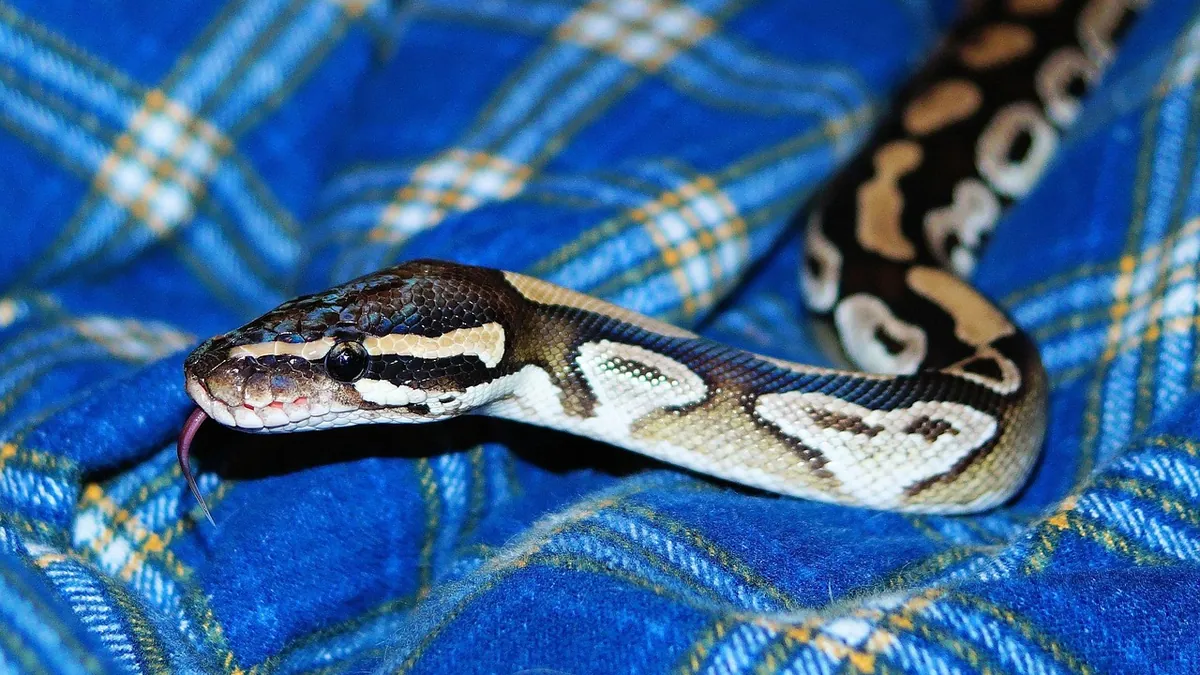
Do ball pythons like to climb? Yes, many ball pythons do climb when they are given the chance. They are not strictly ground-dwelling snakes, and offering safe branches, ledges, and clutter can improve their welfare without increasing the risk of falls or escapes when the setup is built correctly. This article is educational and is not a substitute for veterinary diagnosis or treatment.
Quick Answer
- Ball pythons are capable climbers and many will use branches, especially at night when they are most active.
- Climbing is a form of structural enrichment, one of the most common enrichment types used for reptiles in zoos [1].
- Enrichment supports healthy brain development. Snakes housed in enriched environments had significantly larger brain volumes than snakes in standard housing [2].
- Climbing gear must be stable, smooth enough to prevent abrasions, and placed so the snake cannot reach heat lamps, cords, or gaps in the lid.
- A climbing ball python still needs a secure, escape-proof enclosure with correct heat, humidity, and hiding spots at ground level.
Do Ball Pythons Climb? What the Evidence Says
Ball pythons come from West and Central Africa, where they spend time in burrows, termite mounds, and low vegetation. Wild snakes of many species use vertical space when it is available. In captivity, keepers often report that their ball python climbs at night, wraps around branches, or perches on ledges near the top of the enclosure.
That behavior is normal. It does not mean your snake is stressed or trying to escape. It usually means the enclosure offers something worth exploring.
Enrichment research in reptiles is still catching up to what we know about mammals and birds. A survey of European zoos found that structural and habitat design was one of the most used enrichment types across reptile taxa, though venomous snakes were the least enriched group [1]. Pet ball pythons are not zoo animals, but the same principle applies. Giving a snake things to do is part of good care.
There is also evidence that enrichment changes the brain. Western hognose snakes housed in enriched environments for one year had significantly larger brain volumes than snakes in standard environments, with the biggest differences in posterior brain regions [2]. That study looked at a different species, so we cannot say the exact same result applies to ball pythons. Still, it supports the idea that environmental complexity matters for snake welfare.
If you want to build a fuller enrichment plan, see Designing Environmental Enrichment Programs for Captive Reptiles.
How to Add Climbing Enrichment Safely: Step by Step
Step 1: Check the enclosure first
Before you add anything, confirm the basics. The enclosure must close and lock securely. Screen tops need clips or locks because ball pythons are strong for their size. Any gap wider than your snake's head is an escape route.
Heat sources should be outside the enclosure or behind a guard so the snake cannot wrap around them. A climbing snake that reaches a hot bulb or ceramic heat emitter can burn itself badly.
Step 2: Pick the right branches
Use branches that are sturdy enough to hold your snake's full body weight without bending or snapping. Good options include cork bark tubes, driftwood, and hardwood branches from safe, pesticide-free sources. Avoid branches with sharp stubs, splinters, or sticky sap.
Branch diameter matters. A branch that is too thin gives poor grip. A branch that is too thick is hard to wrap around. Aim for a diameter close to your snake's mid-body thickness, and offer a few different sizes.
Step 3: Secure every branch
A branch that shifts under your snake can cause a fall or a pinch injury. Anchor branches into the substrate, wedge them between enclosure walls, or attach them with reptile-safe silicone or mounting hardware. Test each branch by pressing down firmly with your hand. If it moves, redo it.
Step 4: Add ledges and platforms
Ball pythons often use flat surfaces near the top of the enclosure. A secured ledge or magnetic shelf gives your snake a place to rest without hanging its full weight. Keep ledges low enough that a fall lands on soft substrate, not on a water bowl or hide.
Step 5: Build clutter at every level
Clutter is not decoration. It gives your snake cover while it moves. Add fake plants, cork flats, and extra hides at ground level and mid-level. A snake that feels exposed will often stay hidden instead of climbing.
Step 6: Keep the floor plan intact
Climbing does not replace the basics. Your ball python still needs a warm hide, a cool hide, a water bowl, and a temperature gradient. Do not remove ground hides to make room for branches.
Step 7: Watch and adjust
For the first week after you add climbing gear, check the enclosure daily. Look for shifted branches, knocked-over decor, and any sign your snake is stuck. Adjust as needed.
Ball Python Climbing Enrichment Schedule and Checklist
| Task | How often | What to check |
|---|---|---|
| Inspect branches and mounts | Weekly | Wobble, cracks, sharp edges, mold |
| Clean decor | Every 2 to 4 weeks, or sooner if soiled | Feces, urates, stuck shed |
| Check temperatures | Daily | Warm side, cool side, basking spot |
| Check humidity | Daily | Shed quality, water bowl level |
| Rotate one new item in | Every 2 to 4 weeks | New texture, height, or shape |
| Full enclosure safety check | Monthly | Lid security, cord placement, heat guards |
| Weigh your snake | Monthly | Steady growth or unexplained loss |
Rotation keeps things interesting without overwhelming your snake. Swap one branch for a cork tube, move a ledge to a new height, or add a new hide. Do not change everything at once.
Signs Something Is Wrong
Climbing is normal. Climbing that comes with other signs is not.
Watch for these problems:
- Repeated falling or slipping off branches
- A branch that has collapsed or shifted
- Your snake pressing its nose against the lid for long periods
- Refusing food for more than a few weeks during the active season
- Wheezing, bubbling around the mouth, or open-mouth breathing
- Retained shed, especially around the eyes or tail tip
- Sudden weight loss
- Burns, cuts, or scrapes on the belly or sides
- Lethargy that lasts more than a day or two
Some of these signs point to husbandry problems. Others point to illness. A snake that climbs constantly and ignores food may be stressed by temperatures that are too high, hides that are too exposed, or an enclosure that is too small.
Stress in captive snakes can be measured in different ways. One study looked at corticosterone levels in shed skins from three common pet snake species, including ball pythons, kept in low-stimulus rack systems or enriched terraria [3]. The results varied by species, and ball pythons in enriched terraria had higher corticosterone concentrations than those in rack systems [3]. That finding does not mean enrichment is bad. It means stress hormones are complex, and a single number does not tell the whole story. Behavior, appetite, shedding, and body condition matter too.
If you see several warning signs at once, treat it as a welfare problem and review the whole setup.
Common Mistakes With Ball Python Climbing Enrichment
Using unstable branches
A branch that looks fine can shift when a 3-pound snake wraps around it. Always test mounts by hand.
Putting climbing gear too close to heat
A perch directly under a heat lamp can overheat your snake. Keep climbing spots away from the hottest zone unless you have measured the surface temperature with a temp gun.
Skipping ground hides
Climbing does not replace hiding. Ball pythons need tight, dark hides at ground level. Removing them to add branches is a mistake.
Making the enclosure too open
A tall, empty enclosure feels exposed. Add plants and cover so your snake can move without being seen.
Forgetting the lid
Ball pythons are escape artists. A climbing snake will find any loose screen or unclipped corner. Secure the lid before you add anything.
Overcleaning
Reptiles rely on scent cues. A full scrub every week removes familiar smells and can stress your snake. Spot clean often, deep clean less often.
Assuming all ball pythons climb the same
Some ball pythons climb every night. Others stay on the ground most of the time. Both can be normal. Offer the option and let your snake choose.
If you keep other pets, the same enrichment principles apply in different ways. See Enrichment Activities For Dogs and Indoor Enrichment Dogs for comparisons in mammals.
Setup Details That Matter for Health
Enclosure size and height
A taller enclosure gives more climbing room, but floor space still matters. Adult ball pythons need enough room to stretch out along at least one side. A 4x2x2 foot enclosure works for many adults, and taller versions give more vertical options.
Substrate
Use a substrate that holds humidity and cushions a fall. Coconut husk, cypress mulch, and topsoil mixes are common choices. Avoid cedar and pine shavings, which can irritate the respiratory tract.
Temperature and humidity
Ball pythons need a warm side, a cool side, and a humidity range that supports clean sheds. Measure with digital thermometers and a hygrometer, not stick-on dials. Climbing gear should not block airflow or trap heat.
Lighting
A day and night light cycle supports normal behavior. If you use UVB, follow the bulb manufacturer's distance and replacement schedule. Branches placed under UVB let your snake self-regulate exposure.
Water
Keep a water bowl large enough for soaking but shallow enough to climb out of. A climbing snake that falls into a deep bowl can struggle.
Quarantine and new items
New branches and decor should be cleaned and inspected before they go in. If you have more than one reptile, keep new arrivals separate during quarantine.
Handling
Climbing enrichment does not replace gentle handling. Support your snake's body, keep sessions short, and avoid handling right after feeding.
Limitations and When to Contact a Veterinarian
No article can assess your individual snake. Ball pythons vary in age, size, health history, and temperament, and only a veterinarian who examines your pet can give specific advice.
Contact an emergency veterinary hospital right away if your snake has:
- A burn, deep cut, or suspected fracture
- Trouble breathing, open-mouth breathing, or bubbles from the mouth or nose
- A prolapse (tissue protruding from the vent)
- Severe bleeding
- A fall from height with weakness, wobbling, or paralysis
Contact your veterinarian the same day if you see:
- Repeated regurgitation
- Refusal to eat for several weeks during the active season
- Sudden weight loss
- Stuck shed around the eyes, tail, or vent
- Swelling, redness, or discharge anywhere on the body
- A branch collapse that may have injured your snake
Schedule a routine visit if:
- You are not sure your temperatures or humidity are correct
- Your snake has never had a wellness exam
- You are setting up a new enclosure and want it reviewed
- Your snake's behavior has changed and you cannot find a cause
For dosing questions, your veterinarian calculates the dose from your pet's weight and health. Never give medication without veterinary guidance.
Frequently Asked Questions
Do ball pythons climb in the wild?
Yes, ball pythons use vertical space in the wild when it is available. They spend time in burrows, termite mounds, and low vegetation, and they will climb into shrubs and branches. Climbing is part of their natural behavioral range, not a sign of stress.
My ball python likes to climb. Is that a problem?
No, it is usually a good sign. A ball python that climbs is using its enclosure and staying active. The main risks are unstable branches, hot surfaces, and escape gaps. Fix those and let your snake climb.
How high should branches be in a ball python enclosure?
Branches can reach most of the way up the enclosure as long as they are secure and the landing zone is soft. Keep the highest perch away from heat sources and cords. Leave enough space at the top so your snake cannot press against the lid.
Can a ball python fall and get hurt?
Yes, any snake can fall. Most falls onto soft substrate from a low height cause no injury, but a fall onto a hard surface, water bowl, or hide can cause trauma. Secure every branch and keep perches at safe heights.
Does climbing enrichment stress ball pythons?
For most ball pythons, no. Structural enrichment is widely used for reptiles and supports natural behavior [1]. Stress responses vary by species and individual, and one study found higher corticosterone in ball pythons kept in enriched terraria compared with rack systems [3]. Watch your snake's appetite, shedding, and activity, and adjust if something seems off.
Related Articles
- Designing Environmental Enrichment Programs for Captive Reptiles
- Ball Python Care: Pyramiding & Shell Health Management
- Why Is My Ball Python Glass Surfing? Reptile Behavior Guide
- Why Is My Ball Python So Active or Not Active?
- Why Is My Ball Python Trying to Escape?
References
- Environmental enrichment for reptiles in European zoos: Current status and perspectives. Animal welfare (South Mimms, England), 2023.
- Environmental Enrichment Increases Brain Volume in Snakes. The Journal of comparative neurology, 2025.
- Species-specific variations in corticosterone concentrations in captive snake shed skins: implications for housing systems and welfare. BMC veterinary research, 2026.