Do Ball Pythons Bite? Why and How to Avoid It
By Dr. Zubair Khalid, DVM, MS, PhD ·
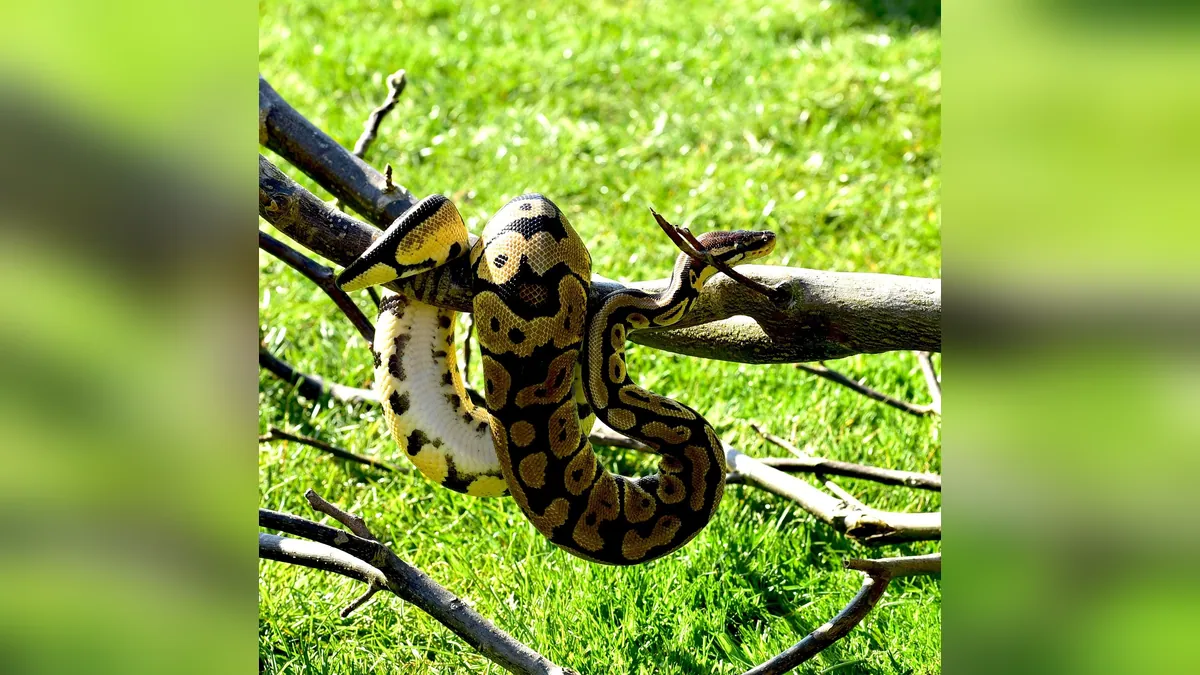
Do ball pythons bite? Yes, they can, but bites are uncommon in this species and almost always happen for a reason you can prevent. Ball pythons are small, shy constrictors that would rather hide or ball up than fight. Most owners go years without a bite, and when bites do happen, they are usually quick, minor, and easy to avoid once you learn to read your snake.
This article is educational and is not a substitute for veterinary diagnosis or treatment.
Quick Answer
- Ball pythons typically bite only when they feel threatened, are handled roughly, or mistake a hand for food.
- A scared ball python usually balls up or hides its head first. A hungry or hunting snake is the one most likely to strike.
- Most bites are superficial scratches from small, rear-curving teeth. They rarely need more than washing with soap and water.
- Learn the warning signs: a tense S-shaped neck, a staring fixed gaze, and a quick flicking tongue pointed at your hand.
- Never handle a snake right after feeding or while it is in shed, and always wash your hands before and after handling.
Do Ball Pythons Typically Bite?
No, ball pythons do not typically bite. They are known as one of the calmest, most handleable pet snakes, and biting is not a normal part of their daily behavior. When a ball python feels scared, its first instinct is to curl into a tight ball with its head tucked in the middle, which is where the name comes from.
That said, any snake with a mouth can bite. The question is what triggers it. For ball pythons, the triggers are narrow and predictable: fear, pain, poor handling, or a feeding response. Understanding those triggers is most of the battle.
Why Does My Ball Python Bite?
Fear and Defensive Bites
A defensive bite is the most common type. It happens when a snake feels cornered, grabbed in published veterinary research, or startled. Ball pythons are prey animals in the wild, so a large hand coming down from overhead can look like a predator. These bites are usually quick strikes followed by a fast retreat or a tight ball.
Feeding Response Bites
This is the other big category. Ball pythons have heat-sensing pits and a strong feeding drive. If your hand is warm, moving fast, and smells like a rodent, the snake may strike first and figure out the mistake second. This is why feeding with tongs matters, and why you should never reach into the enclosure with fingers that smell like prey.
Handling Stress and Overhandling
Snakes do not enjoy being held the way a dog enjoys a walk. Frequent, long, or rough handling raises stress. A stressed snake is more likely to strike. Short, calm, supported handling sessions work better than long ones.
Shedding and Sickness
A snake in shed has cloudy eyes and reduced vision, which makes it jumpy. A sick or injured snake may also bite out of pain or discomfort. If your snake's temperament changes suddenly, health is worth checking. Skin problems during shed are common and treatable, and you can read more in this guide to Ball Python Stuck Shed Help.
How to Tell If My Ball Python Is Going to Bite
Ball pythons give warning signs, but they are subtle compared to a dog's growl. Watch for these.
Body Language Warning Signs
- The S-shape. The neck pulls back into a tight S or coil. This is a loaded spring, ready to strike.
- A fixed stare. The snake locks its eyes on your hand or face and stops moving.
- Rapid tongue flicks aimed at you. A snake tasting the air in your direction may be checking if you are food.
- A raised head. A head lifted and pointed forward is a striking posture. A head tucked down or hidden is not.
- Hissing or a puffed throat. Less common in ball pythons, but it means back off.
- Tight coiling around your hand. The snake is bracing, not relaxing.
Calm Versus Alert Behavior
A relaxed ball python moves slowly, explores with a steady tongue, and drapes loosely over your hand. An alert snake freezes, tenses, and tracks your movement. If you see the tense version, pause and give the snake a moment. If it stays tense, put it back.
Medical Causes to Rule Out
Behavior changes in reptiles often trace back to husbandry or health problems. A ball python that suddenly starts striking may be in pain, too hot, too cold, or living in the wrong setup.
Temperature and Humidity Problems
Ball pythons need a proper temperature gradient and humidity range. When the enclosure is too hot, a snake may act agitated. When it is too cold, digestion slows and the snake may refuse food, which owners sometimes misread as aggression. Poor humidity leads to bad sheds, which makes a snake irritable and defensive.
Pain, Injury, or Illness
Mouth injuries, burns, retained shed around the eyes, and respiratory infections can all make a snake strike when touched. If your snake is wheezing, has bubbles around the nose, or has visible wounds, see a veterinarian.
Hunger and Feeding Issues
A hungry ball python is more likely to mistake your hand for dinner. If your snake is missing meals or you recently changed its feeding routine, review its diet. This Ball Python Feeding Guide and Refusing to Eat covers feeding schedules and what to do when a snake goes off food.
Reproductive Cycling in Females
Female ball pythons go through reproductive cycles that can change appetite and behavior. In captive females, ovulation occurs mainly between April and August, with egg laying from June to November [1]. A gravid or cycling female may be more defensive or refuse food. This is normal biology, not a behavior problem, but it is worth knowing so you do not misread it.
When Ball Python Biting Behavior Becomes a Problem
An occasional defensive strike in a startled snake is normal. It becomes a problem when:
- The snake strikes every time you open the enclosure.
- Bites happen without any obvious trigger.
- The snake stops eating, hides constantly, or shows other signs of illness.
- You feel afraid to handle or care for your snake.
A snake that bites every time is usually telling you something about its environment, its health, or how it is being handled. Fix the cause and the behavior usually improves.
What to Do Step by Step
Handling Safely
- Wash your hands first. This removes food smells and keeps you from transferring oils or chemicals to the snake.
- Approach from the side, not above. Slide your hand under the snake's body, supporting the middle third.
- Support the body. Let the snake move through your hands. Never grab the head or tail.
- Keep sessions short. Ten to fifteen minutes is plenty for most ball pythons.
- Use a hook if needed. A snake hook lets you lift a defensive snake without putting your fingers in range.
- Wash your hands after. Reptiles can carry bacteria such as Salmonella, so hand washing protects you.
Feeding Safely
- Always use tongs. Never hand-feed.
- Feed in the enclosure or a separate container, whichever your snake does best with, and stay consistent.
- Do not handle for at least 24 to 48 hours after a meal.
- If your snake is in feeding mode (head out, tongue flicking fast, tracking movement), wait until it settles before reaching in.
Enrichment and Environment
A ball python with proper hides, correct temperatures, and a good humidity range is calmer. Provide at least two hides, one on the warm side and one on the cool side. Add clutter so the snake feels secure. A secure snake is a relaxed snake.
Reading Your Snake Before You Reach In
Tap training helps. Gently tap the enclosure with a hook or your knuckle before opening it. Over time, the snake learns that a tap means handling, not feeding. This reduces feeding-response bites.
What Not to Do
Never Punish a Snake
Do not tap, flick, spray, or yell at a snake that bites. Punishment does not teach a reptile anything except that hands are dangerous. It makes biting more likely, not less.
Myths to Ignore
- "Snakes bite for no reason." There is almost always a reason, even if you missed it.
- "You should hold a biting snake until it calms down." This raises stress and risks more bites.
- "A bite means the snake is aggressive and cannot be handled." Most ball pythons that bite are scared or hungry, not aggressive.
- "Ball python bites are dangerous." Ball pythons are non-venomous. Their teeth are small and rear-curving, so bites are usually minor. For comparison, serious bite injuries in the medical literature come from large predators like crocodiles, which cause deep tissue avulsion and tendon damage [2]. A ball python bite is nothing like that.
Do Not Ignore a Bite Wound
Wash any bite with soap and water. If the skin is broken, watch for redness, swelling, or pus. Reptile bites can introduce bacteria, so a wound that worsens needs medical attention.
When to Involve a Veterinarian or Behavior Professional
Call a reptile-experienced veterinarian if:
- Your snake bites and then refuses food for more than a few weeks.
- You see signs of illness: wheezing, mucus, lethargy, or weight loss.
- The snake has a wound, burn, or retained shed around the eyes.
- Behavior changes suddenly with no clear cause.
For handling problems without a health cause, a certified behavior professional who works with reptiles can help you build a safe routine. Many general practice vets do not treat reptiles, so ask for a referral to an exotics or reptile vet.
Limitations and When to Contact a Veterinarian
This article covers typical ball python behavior. Every snake is an individual, and a veterinarian who examines your pet is the only one who can diagnose a medical problem.
Contact a veterinarian the same day if:
- Your snake has a bite wound from a prey animal (live feeding injuries happen).
- You see discharge from the mouth or nose, or hear wheezing.
- Your snake has not eaten for several weeks and is losing weight.
Seek emergency care now if:
- Your snake has a prolapse (tissue protruding from the vent).
- Your snake is unresponsive, limp, or has trouble righting itself.
- Your snake has a severe burn or open wound.
Schedule a routine visit if:
- Your snake's temperament changes and you cannot find an environmental cause.
- You are unsure whether your setup meets your snake's needs.
- Your snake has never had a wellness exam.
Frequently Asked Questions
Are ball python bites painful?
Most ball python bites feel like a quick scratch or a pinch. Their teeth are small and angled backward, so they usually leave tiny punctures instead of deep wounds. The surprise is often worse than the pain.
Do ball pythons bite when they are hungry?
Yes, hunger is one of the main reasons a ball python bites. A hungry snake in hunting mode may strike at a warm hand that smells like food. Using tongs and feeding on a consistent schedule greatly reduces this risk.
How do I stop my ball python from biting?
Start by ruling out health and husbandry problems, then improve your handling. Approach from the side, support the body, keep sessions short, and tap train before opening the enclosure. Never punish the snake, because that makes the behavior worse.
Can a ball python bite through a glove?
A thin glove may reduce scratches, but a determined strike can still reach skin. Gloves also block your ability to feel the snake's body language. Good handling technique and reading warning signs work better than gloves.
Do baby ball pythons bite more than adults?
Baby ball pythons are small and more likely to feel threatened, so they may strike defensively more often. As they grow and get used to calm handling, most settle down. Adults are generally more predictable, though any snake can bite if stressed.
Will a ball python bite hurt my child?
A ball python bite on a child is usually minor, but children should always be supervised around snakes. Teach kids to move slowly, keep hands away from the snake's head, and wash their hands afterward. If a bite breaks the skin, clean it and call your pediatrician if you have concerns.
What should I do right after a ball python bite?
Let go of the snake gently and place it back in its enclosure. Wash the wound with soap and water, apply pressure if it bleeds, and cover it with a bandage. Watch for signs of infection over the next few days and see a doctor if redness or swelling develops.
Related Articles
- Ball Python Feeding Guide and Refusing to Eat
- Ball Python Care: Overgrown Dental Spurs & Tooth Trimming Guide
- Ball Python Stuck Shed Help
- Ball Python Respiratory Infections: Symptoms, Humidity Control, and Veterinary Care
- Why Is My Ball Python Striking or Biting Me?
- My Ball Python Bit Me: Why It Happens and What to Do
- Do Ball Pythons Have Teeth? Facts and Regrowth
References
- Follicular Growth Evaluation, Oviposition and Egg Hatching in the Ball Python (Python regius). Animals : an open access journal from MDPI, 2026.
- Crocodile bite scalp avulsion and hand extensor tendons injury: A rare case reconstructed in a tertiary hospital, in Tanzania. International journal of surgery case reports, 2025.