Why Is My Ball Python So Active or Not Active?
By Dr. Zubair Khalid, DVM, MS, PhD ·
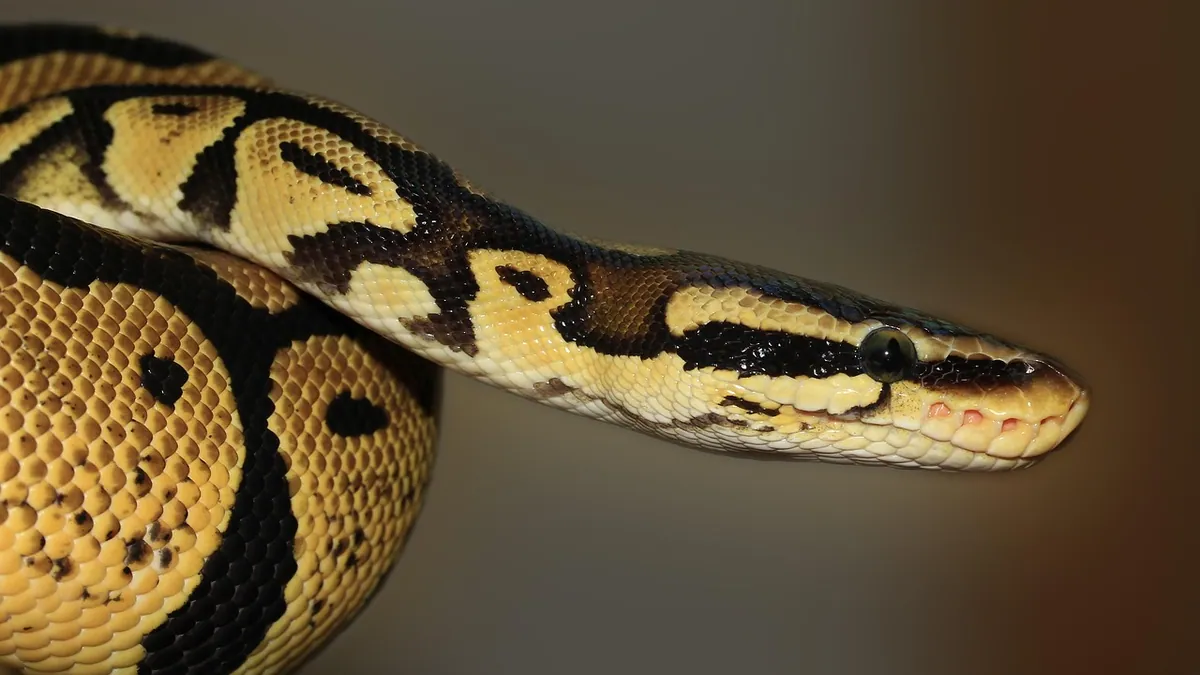
Ball pythons are crepuscular and nocturnal, so most healthy activity happens around dusk and after dark, and a python that hides all day is often behaving normally. When you ask "why is my ball python so active," the answer usually comes down to temperature, hunger, breeding season, or stress, and a sudden drop in activity can point to the same list plus illness. This article is educational and is not a substitute for veterinary diagnosis or treatment.
Quick Answer
- A ball python that moves mostly at night, explores after lights out, and hides during the day is likely normal.
- A python that paces, pushes at the lid, or roams all day is often too warm, too cool, hungry, or stressed by its enclosure.
- A python that stops moving, stays on the cool side, or refuses food may be too cold, shedding, or sick.
- Check your temperatures, hides, and feeding schedule before you assume something is wrong.
- Any python with open-mouth breathing, mucus, a prolapse, or sudden collapse needs a veterinarian now.
Normal Activity Cycles in Ball Pythons
Ball pythons are not the busy, day-cruising snakes some people expect. In the wild and in captivity, they spend much of the day in burrows, termite mounds, or hides, then become more active in low light. That pattern is normal, and it is why a python that seems "lazy" during the day is usually fine.
Body temperature drives a lot of this. Snakes are ectotherms, meaning they rely on behavior to control their body temperature, and that temperature affects nearly every physiological function [1]. A snake that has warmed up enough may move to explore or hunt. A snake that is digesting a meal tends to stay put on the warm side.
Feeding status changes activity too. Snakes with food in their stomachs maintained higher body temperatures than snakes that had not eaten [1]. That makes sense, because digestion needs warmth. So a python that ate two days ago and is now parked in a hide is doing exactly what its body wants.
Shedding is another normal reason for a slowdown. In one snake species, body temperature was significantly affected by shedding phase, along with season, time of day, air temperature, and feeding status [1]. A ball python in the blue phase often hides more, eats less, and moves less until the shed is complete. If your snake is dull-eyed and hiding, check for a stuck shed before you worry about illness.
Sleep matters as well. Reptiles have measurable sleep-wake cycles, and researchers can now record brain activity in freely moving reptiles without restraint [2]. That tells us a resting, inactive python may simply be sleeping, not sick.
Why Is My Ball Python So Active? Common Reasons
If your ball python is very active, start with the basics.
Temperature Is Off
A python that is too warm will often roam, try to escape the hot zone, or press against the cool side of the enclosure. A python that is too cool may also move around looking for warmth. Because body temperature is tied to air temperature and behavior [1], a small thermostat error can change activity a lot. Check your warm-side and cool-side readings with a reliable digital thermometer, not a stick-on gauge.
Hunger
A hungry ball python is a searching ball python. If your snake is cruising the enclosure near feeding day, that is often appetite, not distress. Make sure prey size is appropriate for the snake's body weight and that you are not underfeeding.
Breeding Season
Adult males may become restless during breeding season, sometimes refusing food and roaming for weeks. Females can also shift behavior around follicle development. If you plan to breed, review genetics, pairing, and incubation carefully in our guide to Ball Python Breeding: Genetics, Pairing, and Incubation.
Stress or an Enclosure That Feels Wrong
A snake with too little cover, a tank that is too open, or a busy, high-traffic location may pace. Handling at the wrong time, a new enclosure, or a recent move can also trigger restless behavior. Give the snake time to settle and add clutter and hides.
Normal Exploration
Some ball pythons are simply more outgoing than others. A snake that explores calmly at night, tongue-flicks, and returns to a hide is likely fine.
Why Is My Ball Python Not Active? Common Reasons
A quiet ball python is often a normal ball python. Still, a change from the snake's usual pattern deserves a look.
Cool Temperatures
If the enclosure is too cool, a python may become sluggish and stay on the warm side or refuse to move much at all. Since body temperature depends on behavior and air temperature [1], a cold enclosure can flatten activity.
Digestion
After eating, many pythons stay hidden for a day or more. Feeding raises plasma uric acid concentrations in ball pythons, with peak values between 24 and 72 hours after a meal [3]. That is a normal metabolic shift, and it often comes with a quiet, hidden snake.
Shedding
As noted above, shedding phase affects body temperature and behavior in snakes [1]. A python in shed may hide, refuse food, and move very little. Check humidity and look for a stuck shed, which you can read about in Ball Python Stuck Shed Help.
Illness or Pain
A python that is suddenly much less active, or that stays in one spot and will not move even when nudged, may be sick. Respiratory infection, mouth rot, internal parasites, and kidney problems can all cause lethargy. Hyperuricemia, or high uric acid, is a common problem in captive reptiles and is linked to gout and kidney disease [3]. That is a medical issue, not a husbandry tweak.
Stress From Housing
Housing density and social pressure change behavior in reptiles. In one study of red-footed tortoises, agonistic behaviors were higher when four tortoises shared space than when two did, and social inactivity decreased when only two were present [4]. Ball pythons are solitary, so cohabiting them is a common source of stress and inactivity. House one snake per enclosure.
When Activity Becomes a Problem
Activity is a problem when it changes suddenly, lasts more than a few days, or comes with other signs.
Watch for these patterns:
- Constant daytime pacing that does not stop at night.
- Pushing the nose against the lid or screen until the snout is raw.
- Refusing food for more than a few weeks in an adult that normally eats.
- Staying on the cool side all the time.
- Breathing with the mouth open, wheezing, or bubbles around the nose.
- Any swelling, prolapse, or wound.
A python that is active because it is too warm needs a temperature fix. A python that is active because it is stressed needs an enclosure fix. A python that is active and also losing weight, breathing oddly, or has discharge needs a veterinarian.
What to Do: Step by Step
Step 1: Measure the Enclosure
Use a digital thermometer and hygrometer. Check the warm side, the cool side, and the hide. Ball pythons need a temperature gradient so they can choose their body temperature, because behavior is how they regulate it [1]. If your readings are off, adjust the thermostat and recheck in a few hours.
Step 2: Check Humidity and Substrate
Low humidity can cause stuck shed and restless behavior. Wet, dirty substrate can cause skin and respiratory problems. Review safe options in Ball Python Substrate Selection: Evaluating Safety, Humidity Retention, and Ease of Cleaning.
Step 3: Review Feeding
Weigh your snake and its prey. Feed an appropriate size on a consistent schedule. Do not power-feed to stop roaming, and do not withhold food to calm a snake down.
Step 4: Add Cover and Enrichment
Add at least two hides, one on the warm side and one on the cool side. Add branches, cork bark, and leaf litter. A cluttered enclosure is a calm enclosure. If you want a naturalistic setup, see Bioactive Ball Python Enclosures: Soil Mixes, Live Vegetation, and Mold Prevention.
Step 5: Keep Handling Calm
Handle briefly, support the body, and avoid the head. Do not handle during shed or right after a meal. If your snake is pacing, more handling usually makes it worse, not better.
Step 6: Track Behavior
Write down activity, feeding, shedding, and stool. Patterns are easier to see on paper than in memory. Bring your notes to the vet visit.
What Not to Do
Do not punish a snake. Snakes do not learn from punishment the way mammals do, and spraying, tapping, or chilling a snake causes stress and can cause injury.
Do not assume a hiding python is sick. Hiding is normal, especially during the day, during shed, and after eating.
Do not cohabitate ball pythons to "keep them company." They are solitary, and shared housing is a known stressor in reptiles [4].
Do not use heat rocks. They cause burns. Use a thermostat-controlled heat source instead.
Do not ignore a stuck shed or a retained eye cap. These can lead to infection. Our guide to Ball Python Stuck Shed Help walks through safe steps.
Do not treat a lethargic snake with a warm bath and hope for the best. If the snake is truly ill, warmth alone will not fix it.
When to Involve a Veterinarian or Behavior Professional
Call an exotics veterinarian if activity changes last more than a few days, if your snake refuses food for several weeks, or if you see any sign of respiratory or skin disease. A veterinarian can examine the snake, check for hyperuricemia and kidney problems [3], and calculate any medication dose from your pet's weight and health. Never guess a dose on your own.
A certified behavior professional can help if the problem is enrichment, handling, or enclosure design. For a ball python, most behavior problems improve with correct temperatures, proper hides, and a calm routine.
Limitations and When to Contact a Veterinarian
This article cannot tell you what is wrong with your individual snake. Only a veterinarian who examines your pet can do that.
Contact a veterinarian the same day if your ball python has:
- Open-mouth breathing, wheezing, or bubbles from the nose or mouth.
- A prolapse (tissue sticking out of the vent).
- A wound, burn, or swollen area.
- Repeated regurgitation.
- Sudden severe lethargy that does not improve when you warm the enclosure.
Go to an emergency clinic now if your snake is unresponsive, limp, having trouble righting itself, or has been exposed to a toxin or extreme heat.
Schedule a routine visit if your snake has lost weight, has not eaten for several weeks, has a retained shed around the tail or eyes, or has a change in activity that you cannot explain with temperature, feeding, or shedding.
Frequently Asked Questions
Is it normal for a ball python to be active at night?
Yes, night activity is normal. Ball pythons are crepuscular and nocturnal, so they often explore, climb, and hunt after dark. A snake that is calm and hidden during the day and busy at night is behaving the way the species should.
Why is my ball python suddenly very active after eating?
A snake that ate recently may move to find a warm spot for digestion. Snakes with food in the stomach keep higher body temperatures than snakes that have not eaten [1]. If the enclosure has a proper gradient, the snake can choose what it needs.
Can stress make a ball python more active?
Yes. Stress often shows up as pacing, pushing at the lid, or constant roaming. Common causes include an enclosure that is too small, too open, too hot, or shared with another snake. Solitary reptiles housed together show more agonistic behavior and less social inactivity [4].
Does shedding change how active my ball python is?
Yes. Shedding phase is one of the factors that significantly affects body temperature and behavior in snakes [1]. Many ball pythons hide more, eat less, and move less during the blue phase, then return to normal after a complete shed.
How do I know if my ball python is sick or just calm?
Look at the whole picture. A calm snake that eats, sheds, defecates, and moves normally at night is likely healthy. A snake that stops eating, loses weight, breathes oddly, or will not move even when warmed needs a veterinary exam. When in doubt, have an exotics veterinarian check your snake.
Related Articles
- Bioactive Ball Python Enclosures: Soil Mixes, Live Vegetation, and Mold Prevention
- Ball Python Care: Pyramiding & Shell Health Management
- Ball Python Substrate Selection: Evaluating Safety, Humidity Retention, and Ease of Cleaning
- Ball Python Breeding: Genetics, Pairing, and Incubation
- Ball Python Stuck Shed Help
- Ball Python Care: Respiratory Infection Symptoms & Antibiotic Protocol
- Why Is My Ball Python Out During the Day?
- Why Is My Ball Python Glass Surfing? Reptile Behavior Guide
- Why Is My Ball Python Trying to Escape?
References
- Thermal biology characteristics of the Caspian whipsnake (Dolichophis caspius, Gmelin, 1789) under natural and laboratory conditions. Journal of comparative physiology. B, Biochemical, systemic, and environmental physiology, 2026.
- Non-invasive wireless electroencephalographic recording of the sleep-wake cycle in freely moving reptiles, birds, and mammals: a novel methodology compatible with animal welfare. Frontiers in veterinary science, 2026.
- Effects of a Single Intramuscular Dose of Rasburicase on Plasma Uric Acid Concentrations in Fasted and Fed Ball Pythons (Python regius). Veterinary sciences, 2026.
- Social dynamics and behavior of zoo-housed red-footed tortoises at different housing densities. Behavioural processes, 2025.