Cat Food for Food Sensitivities
By Dr. Zubair Khalid, DVM, MS, PhD ·
If your cat is constantly scratching, overgrooming, or struggling with chronic vomiting and diarrhea, food sensitivities may be the cause. Adverse food reactions affect an estimated 1% to 2% of cats and are a common trigger for both skin and digestive problems [1]. The single most effective way to diagnose and manage this condition is to change the cat's diet. There is no quick blood test or skin test that can reliably identify the offending ingredient [2]. Instead, the gold standard is a carefully structured elimination diet trial using a cat food designed for food sensitivities, followed by a dietary challenge to confirm the diagnosis [1][3].
This guide explains exactly how food sensitivities work, what the science says about different hypoallergenic diets, and how to run a successful elimination trial at home.
At a Glance: Managing Food Sensitivities in Cats
| Step | Action | Duration |
|---|---|---|
| 1 | Schedule a veterinary exam to rule out other causes like fleas or infections | Day 0 |
| 2 | Select an appropriate elimination diet (hydrolyzed or novel protein) with your vet | Day 0 |
| 3 | Feed the trial diet exclusively. No treats, table scraps, or flavored medications | 8 weeks [4] |
| 4 | Track your cat's pruritus (itching) and skin lesions weekly | Week 1 to 8 |
| 5 | If signs improve, perform a provocation challenge with the old diet to confirm the diagnosis | Week 8 [1][5] |
| 6 | Choose a long-term maintenance diet based on the challenge results | Week 9 onward [6] |
What Are Food Sensitivities in Cats?
Adverse food reactions (AFRs) are divided into two categories: true food allergies and food intolerances [3]. A true food allergy is an immunologic reaction. The cat's immune system mistakenly identifies a food protein as a threat and mounts an attack. A food intolerance is a nonimmunologic reaction. It does not involve the immune system and may be caused by metabolic disorders, enzyme deficiencies, or toxic compounds in the food [7].
In both cases, the clinical signs can look identical. The most common culprits are proteins. Beef, dairy, fish, and chicken are frequently reported triggers in cats [5][8]. Most basic food ingredients have the potential to induce an allergic response, but proteins are the primary offenders [5].
Which Cats Are Affected?
There is no clear breed or sex predisposition for food sensitivities in cats [6][9]. However, some evidence suggests that Siamese cats and their crosses may be at an increased risk of developing food allergies [6]. The age of onset can vary widely. One retrospective study of 17 cats with cutaneous adverse food reactions found that the age of onset ranged from 3 months to 9 years, with a mean age of 3.5 years [8]. Cats may also develop signs later in life compared to dogs [9].
Recognizing the Signs of Food Sensitivities
Food sensitivities in cats can affect multiple body systems. The skin is the most common target.
Dermatologic signs:
- Non-seasonal pruritus (itching) that does not resolve with seasonal allergy treatment
- Miliary dermatitis (small crusty bumps, often on the back and neck)
- Eosinophilic granuloma complex (ulcers on the lips or chin, linear lesions on the hind legs)
- Self-induced alopecia (hair loss from excessive grooming)
- Lesions concentrated on the face, head, neck, and ventral abdomen [8]
Gastrointestinal signs [10]:
- Chronic vomiting
- Diarrhea
- Increased frequency of defecation
Other signs:
- Conjunctivitis
- Sneezing or other respiratory signs
- Hyperactive behavior
A cat may have only skin signs, only gastrointestinal signs, or a combination of both. In one older review, skin lesions accounted for 70% to 80% of food allergy cases, while gastrointestinal signs occurred in only 10% to 15% of cases [11]. However, more recent evidence emphasizes that chronic vomiting and diarrhea are frequently diet-responsive in cats [10].
Why Diet Is the Cornerstone of Diagnosis and Management
Diagnosing a food sensitivity is not a straightforward process. Many owners ask about blood tests for food allergies. Unfortunately, the science is clear that these tests are not reliable. Serum tests for food-specific IgE and IgG show low repeatability and highly variable accuracy [2]. Intradermal skin testing, patch testing, and basophil degranulation tests are also not sensitive enough to confirm or refute a diagnosis of adverse food reaction [1].
The only reliable method is an elimination diet trial [1][2][3]. This involves feeding a strict, limited-ingredient diet for a set period, typically 8 weeks [4]. If the cat's clinical signs resolve during this period, the next step is a provocation challenge. The cat is re-exposed to the original diet, and if the signs return, the diagnosis of an adverse food reaction is confirmed [1][4][5].
This process is demanding. It requires strict owner compliance and patience. However, it is the only evidence-based pathway to a definitive diagnosis and long-term relief for the cat [6][3].
How to Choose a Cat Food for Food Sensitivities
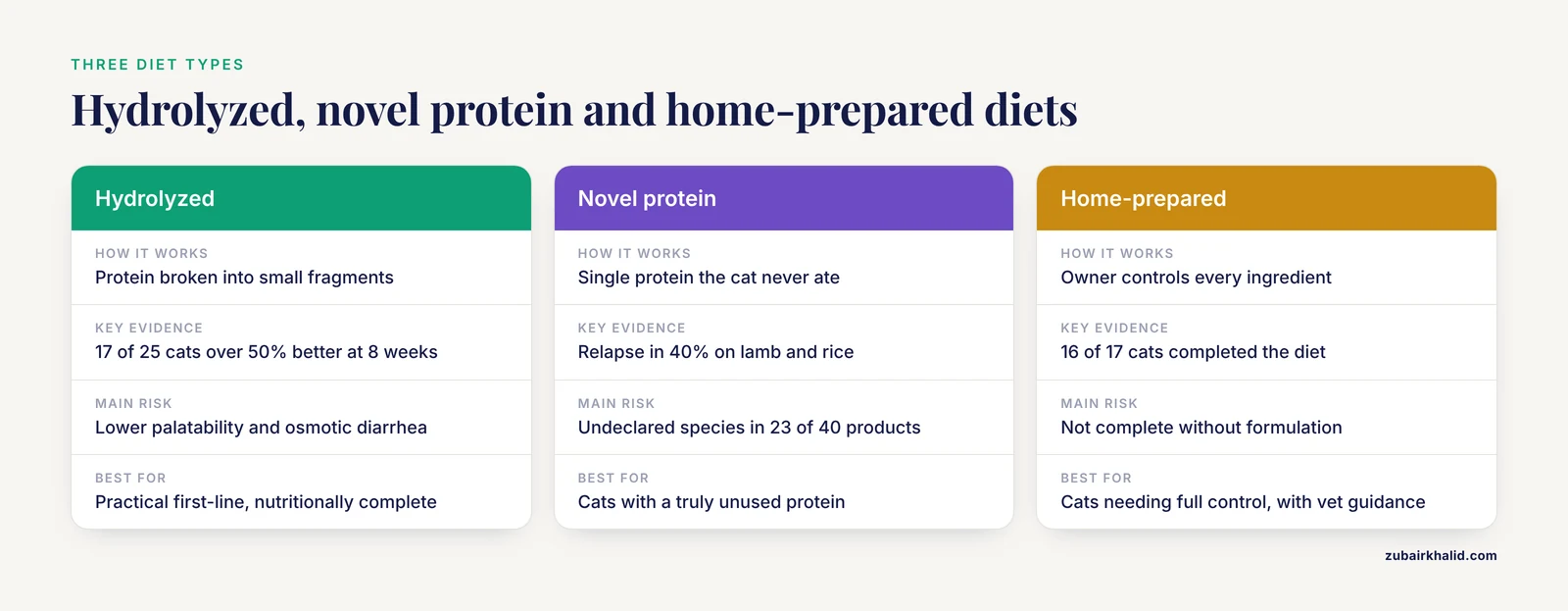
Selecting the right diet is the most critical decision in this process. There are three main categories of diets used for feline food sensitivities: hydrolyzed protein diets, novel protein diets, and home-prepared diets. Each has distinct advantages and limitations.
Hydrolyzed Protein Diets
Hydrolyzed protein diets are formulated to break down intact food proteins into smaller components, such as amino acids and small oligopeptides [12][13]. The goal is to disrupt the protein structure enough to hide the allergic sites from the cat's immune system [13].
Clinical evidence for hydrolyzed diets:
- A study of a hydrolyzed salmon and pea diet evaluated 12 cats with cutaneous adverse food reactions. After four weeks, the cats showed a significant decrease in both pruritus scores and the Scoring Feline Allergic Dermatitis (SCORFAD) index [1].
- Another study used a hydrolyzed protein diet as the sole therapy for eight cats with inflammatory bowel disease or adverse reactions to food. Clinical signs resolved within 4 to 8 days in all eight cats, and the cats gained weight after two months [14].
- A more recent open clinical trial evaluated a hydrolyzed fish and rice starch diet in 25 pruritic cats. Seventeen cats showed more than 50% improvement in pruritus after eight weeks, and nine of those cats were ultimately diagnosed with an adverse food reaction after dietary challenges [4].
Potential limitations of hydrolyzed diets:
- Palatability: Some cats refuse to eat hydrolyzed diets because the protein fragments taste different from intact proteins [13].
- Gastrointestinal upset: Hydrolyzed diets can cause osmotic diarrhea in some cats [13].
- Residual allergenicity: Hydrolysis does not always destroy every antigenic site. Some cats may still react to the diet [13].
- Contamination risk: While hydrolyzed diets generally have a lower risk of cross-contamination than novel protein diets, no commercial product is completely immune to this issue [15].
Novel Protein Diets
Novel protein diets, also called limited-ingredient diets, use a single protein source that the cat has never eaten before. Common options include lamb, rabbit, venison, or duck [5]. The theory is that the immune system cannot react to a protein it has never encountered.
Clinical evidence for novel protein diets:
- A double-blind study evaluated two commercial hypoallergenic diets (lamb and rice, and chicken and rice) in 20 cats with confirmed adverse food reactions. Relapse of clinical signs occurred in 40% of cats on the lamb and rice diet and in 65% of cats on the chicken and rice diet [16].
- Importantly, neither commercial diet was as effective as a home-cooked elimination diet at controlling skin problems [16].
Potential limitations of novel protein diets:
- Cross-contamination: A 2018 study analyzed 40 commercial novel protein and hydrolyzed protein diets. Twenty-three of the products revealed the presence of undeclared animal species. The most frequently detected contaminants were pork, chicken, and turkey [15].
- Prior exposure: Many cats have eaten a wide variety of proteins over their lifetime. Finding a truly novel protein can be difficult.
- Mislabeling: The same study found that five products did not contain the declared animal species at all [15].
Home-Prepared Elimination Diets
Home-prepared diets give the owner complete control over every ingredient. In the retrospective study of 17 cats, 16 cats successfully completed a home-prepared elimination diet [8]. Home-cooked diets were also shown to be more effective than commercial hypoallergenic diets in a double-blind trial [16].
However, home-prepared diets carry significant responsibility. A diet consisting solely of one meat and one carbohydrate is not nutritionally complete for long-term feeding. If a home-prepared diet is used, it must be carefully formulated to meet all of the cat's nutritional requirements. This requires the guidance of a veterinarian or a board-certified veterinary nutritionist to avoid deficiencies.
Step-by-Step Guide to an Elimination Diet Trial
A successful elimination diet trial requires precision and consistency. Follow these steps to maximize the chances of an accurate diagnosis.
Step 1: Veterinary Consultation and Baseline Assessment
Before starting any diet trial, your cat must have a full veterinary examination. Many other conditions can mimic food sensitivities, including flea allergy dermatitis, atopic dermatitis, and parasitic infections [6]. Your veterinarian will help rule out these conditions first. They may also recommend treating any secondary bacterial or fungal skin infections before starting the trial, as these can interfere with your assessment of the diet.
Step 2: Selecting the Trial Diet
Work with your veterinarian to select the most appropriate trial diet. Hydrolyzed protein diets are often recommended as a practical first-line option because they are nutritionally complete and have a lower contamination risk [3][15]. If a hydrolyzed diet is not tolerated, a novel protein diet or a home-prepared diet may be considered.
Step 3: Strict Adherence for Eight Weeks
The elimination diet must be fed exclusively for a minimum of 8 weeks [4]. This means:
- No treats, including dental treats and catnip
- No table scraps
- No flavored medications or supplements
- No access to other pets' food
- No hunting or scavenging outdoors
Even a single bite of an offending protein can reset the clock and invalidate the trial. If you have multiple cats, you may need to feed the trial cat in a separate room to ensure strict compliance.
Step 4: Monitoring and Symptom Scoring
Keep a weekly log of your cat's clinical signs. Track the severity of pruritus, the appearance of skin lesions, and any gastrointestinal signs. In clinical studies, veterinarians use tools like the Pruritus Visual Analog Scale (PVAS) and the Scoring Feline Allergic Dermatitis (SCORFAD) index to measure progress objectively [1]. You can create a simple version of this at home by rating your cat's itching on a scale of 0 to 10 each week.
Step 5: The Provocation Challenge
If your cat shows significant improvement after 8 weeks, the next step is a provocation challenge. This involves reintroducing the cat's previous diet to see if the clinical signs return [1][5]. A positive challenge, where the signs relapse, confirms the diagnosis of an adverse food reaction [1][4].
The challenge should be done under veterinary supervision, as some reactions can be severe. If signs return, stop the challenge immediately and return to the elimination diet. The signs should resolve again within a few days [14].
Step 6: Selecting a Maintenance Diet
Once the diagnosis is confirmed, you must choose a long-term maintenance diet. For cats with a confirmed food allergy, a suitable diet must be fed for the remainder of the cat's life [6]. This may be the same elimination diet, or you may gradually introduce other novel proteins to find a wider range of acceptable foods.
Common Mistakes and How to Avoid Them
Many elimination diet trials fail due to preventable errors. Here are the most common pitfalls.
Giving treats or flavored medications. This is the most frequent cause of trial failure. Many owners do not realize that flavored heartworm preventives, antibiotics, or joint supplements contain meat proteins. Ask your veterinarian for unflavored or compounded alternatives during the trial.
Stopping the trial too early. Some cats show improvement within 4 weeks, but many require the full 8 weeks to demonstrate a clear response [1][4]. Stopping early can lead to a false negative result.
Using a diet with ingredients the cat has eaten before. If your cat has previously eaten chicken, a "chicken and rice" novel diet is not truly novel. The immune system may still react to the chicken protein [5].
Switching brands mid-trial. Different brands use different manufacturing processes. Switching brands introduces new variables and can contaminate the trial.
Ignoring the possibility of cross-contamination. Even commercial hypoallergenic diets can contain undeclared animal species [15]. If a cat does not respond to one hydrolyzed diet, it may respond to a different one with stricter quality control.
Troubleshooting: When the Elimination Diet Does Not Seem to Work
Despite your best efforts, some cats do not improve as expected. Here are the most common reasons and solutions.
The cat refuses to eat the diet. Palatability is a known issue with hydrolyzed protein diets [13]. If your cat refuses the food, do not force it to eat. Contact your veterinarian. They may recommend a different hydrolyzed diet, a novel protein diet, or a home-prepared diet.
The cat develops vomiting or diarrhea. In one study, four out of 25 cats dropped out of an elimination trial due to vomiting and diarrhea [4]. Gastrointestinal upset can occur when switching foods abruptly. Your veterinarian may recommend a gradual transition or a different diet formulation.
The cat improves but does not fully resolve. Many cats with food sensitivities also have concurrent allergies, such as flea allergy dermatitis or atopy [6][8]. In one study, concurrent hypersensitivities were confirmed in 6 of 17 cats and suspected in another 5 [8]. Management of these other allergies may be necessary in addition to the dietary change.
The cat shows no response after 8 weeks. If there is no improvement after a strict 8-week trial, an adverse food reaction is unlikely to be the sole cause of the clinical signs [4]. Your veterinarian may recommend a second elimination diet with a different protein source, or further diagnostic testing to investigate other underlying conditions [4][8].
Long-Term Management and Monitoring
Once a food sensitivity is confirmed, long-term management is straightforward but requires discipline. The cat must remain on a diet that avoids the offending ingredients permanently [6]. Regular veterinary check-ups are essential to monitor the cat's weight, body condition, and overall health.
Some owners choose to gradually reintroduce other protein sources to determine which foods are safe and which trigger a reaction. This process, known as serial provocation testing, should be done slowly and under veterinary guidance. It allows for a more varied diet while still avoiding harmful ingredients.
In some cases, a nutraceutical diet may provide additional support. One study found that a specific nutraceutical diet significantly reduced pruritus intensity and skin lesion severity in cats with cutaneous adverse food reactions after 60 days [7]. Discuss these options with your veterinarian to determine if they are appropriate for your cat.
Limitations and When to Contact a Veterinarian
This article is educational and is not a substitute for veterinary diagnosis or treatment. Food sensitivity management should always be conducted under the supervision of a licensed veterinarian.
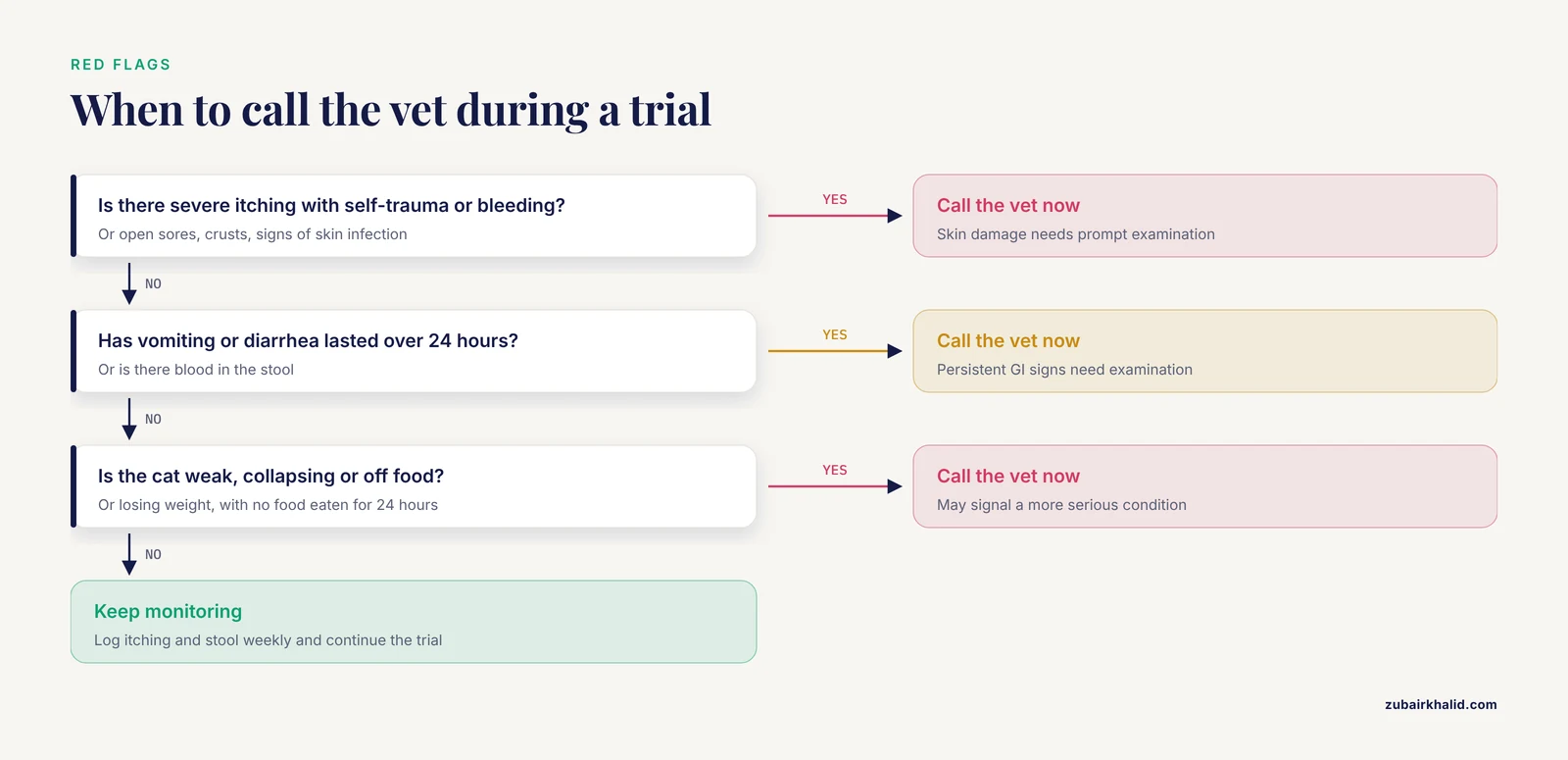
Contact your veterinarian immediately if your cat experiences any of the following during an elimination trial:
- Severe, uncontrollable itching that leads to self-trauma or bleeding
- Open sores, crusts, or signs of skin infection
- Vomiting or diarrhea lasting more than 24 hours
- Lethargy, weakness, or collapse
- Significant weight loss or refusal to eat for more than 24 hours
These signs may indicate a more serious underlying condition that requires prompt medical attention.
Transitioning Your Cat to a Hypoallergenic Diet Without GI Upset
A hypoallergenic diet differs in protein source, texture, and smell. A sudden switch can cause vomiting or diarrhea even when the diet is suitable. GI upset is a documented reason cats drop out of elimination trials [4]. Plan the change instead of pouring the new food into the old bowl.
Use a Gradual Mix
Unless your veterinarian advises otherwise, replace the old food over 7 to 10 days:
| Days | Old food | New food |
|---|---|---|
| 1 to 2 | 75% | 25% |
| 3 to 4 | 50% | 50% |
| 5 to 6 | 25% | 75% |
| 7 to 10 | 0% | 100% |
Mix thoroughly so the cat cannot pick out preferred pieces. Move more slowly for a cat with a sensitive stomach. If the cat has skin signs but no GI signs, your veterinarian may advise a shorter transition so the elimination trial begins sooner. Some hydrolyzed diets can cause loose stool through osmotic effects [13], so gradual mixing also helps you tell transition upset from a diet that does not suit the cat.
Improve Palatability Without Breaking the Trial
Hydrolyzed diets are less palatable to some cats because protein fragments taste different [13]. Serve wet food at room temperature or slightly warm, not hot. Offer small meals in a quiet place away from other cats, using a shallow dish. Keep the same texture, wet or dry, during the first week if the new diet comes in both forms. Do not add broth, gravy, treats, or flavored toppers unless your veterinarian confirms they are compatible with the trial. If the cat eats around the new food, mix smaller amounts more thoroughly and increase the proportion more slowly.
Keep a Feeding Routine and Watch the Gut
Feed at fixed times so you can track appetite and stool. Scheduled meals are easier to monitor than free feeding. Wash bowls between meals and keep the cat away from other pets' food. Mild soft stool can occur in the first day or two. Contact your veterinarian if vomiting is repeated, diarrhea lasts more than 24 hours, you see blood, the cat refuses food for more than 24 hours, or there is lethargy, weight loss, or dehydration. Persistent GI signs need examination, not another blind diet change.
Reading Cat Food Labels for Food Sensitivities
A cat food label describes what the manufacturer intends to put in the bag, not what the cat's immune system will tolerate. The ingredient list is still the only practical way to identify known protein sources.
Ingredient Lists
Ingredients are listed in descending order by weight, but weights are measured before cooking. Fresh meat and poultry contain a large amount of water, so an ingredient listed first may contribute less protein after processing than the order suggests. For a sensitive cat, look for the specific protein source. Beef, dairy, fish, and chicken are the most commonly reported triggers [5]. Avoid any ingredient that names those protein sources, such as "chicken by-product meal." Fish oil may be acceptable if highly refined, but confirm with your veterinarian. If the label says "meat by-products" or "animal derivatives" without naming the species, the source is unknown and unsuitable for an elimination trial.
Hydrolyzed protein diets list ingredients such as "hydrolyzed soy protein" or "hydrolyzed chicken liver." Hydrolysis breaks down proteins into smaller fragments but does not always destroy every antigenic site, so a hydrolyzed diet can still trigger a reaction in some cats [13].
Guaranteed Analysis
The guaranteed analysis lists minimum crude protein, minimum crude fat, maximum crude fiber, and maximum moisture. It does not identify which proteins are present. A diet with a high protein percentage may still contain a protein the cat cannot tolerate.
Limited-Ingredient Claims
"Limited ingredient" is not a regulated term. A product can carry this claim and still contain several protein sources or be made in a facility that processes other diets. Read the full ingredient list rather than relying on the front of the package.
Cross-Contamination Risks
In one study of 40 novel and hydrolyzed protein diets, 23 products contained undeclared animal species, and five did not contain the declared species at all [15]. Extensively hydrolyzed diets have been shown to lack detectable cross-contamination in DNA and protein analyses [12], but no label wording can guarantee a diet is free of trace proteins.
For this reason, label reading is a starting point, not a guarantee. The only way to confirm that a diet is safe for an allergic cat is a supervised elimination diet trial. Work with your veterinarian to interpret the label in the context of your cat's history.
Food Sensitivity or Inflammatory Bowel Disease? When GI Signs Need More Testing
Chronic vomiting and diarrhea are common reasons for veterinary visits, and food sensitivity is one possible explanation. However, the same signs can also reflect inflammatory bowel disease (IBD), alimentary lymphoma, pancreatitis, hyperthyroidism, or chronic kidney disease. Because these conditions produce overlapping signs, a response to diet alone does not always reveal which process is driving the problem.
Why the Distinction Matters
IBD is a group of chronic gastrointestinal disorders marked by inflammatory cells infiltrating the intestinal wall. Alimentary lymphoma is a cancer of lymphocytes in the gut. The treatments are different. Food-responsive enteropathy is managed with diet, IBD often requires immunosuppressive medication, and lymphoma typically requires chemotherapy. Using the wrong approach delays effective treatment. In older cats, lymphoma becomes a more important consideration.
When a Diet Trial Is Not Enough
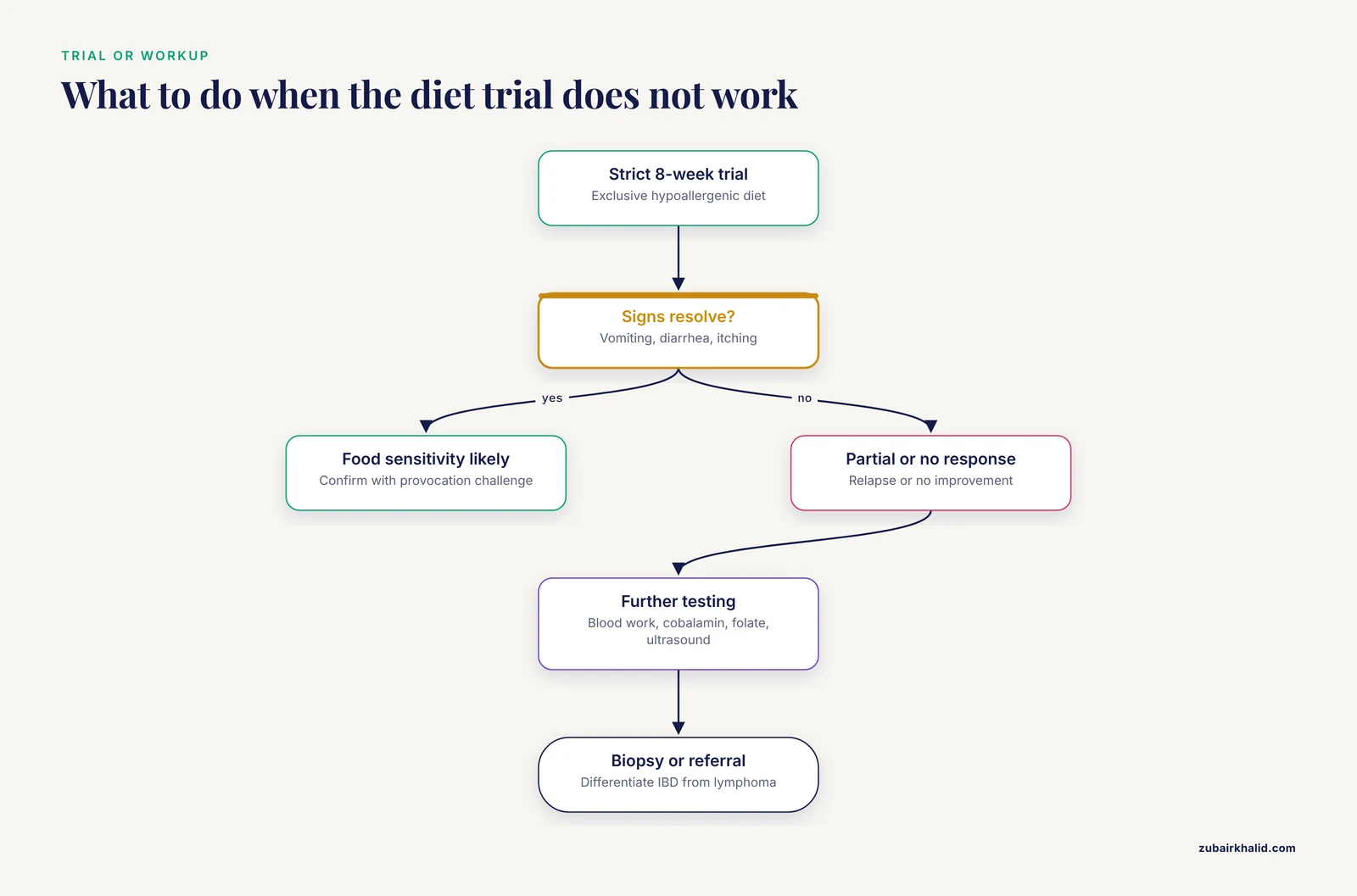
A strict 8-week elimination diet is the diagnostic test for an adverse food reaction [4]. If chronic vomiting and diarrhea resolve completely and stay resolved, food sensitivity is the likely diagnosis. In one study, a hydrolyzed protein diet resolved clinical signs in eight cats with IBD or adverse reactions to food [14], which illustrates how closely these conditions overlap. But not every cat responds. Partial improvement, relapse during the trial, or no improvement at all suggests the disease may not be diet-responsive.
What Further Testing Looks Like
If a cat fails to improve on a properly conducted elimination trial, or if weight loss, lethargy, or poor appetite accompany the GI signs, further workup is needed. Your veterinarian may recommend:
- Fecal examination and blood work to screen for parasites, infection, and malabsorption
- Serum cobalamin and folate levels to assess small intestinal function
- Abdominal ultrasound to evaluate bowel wall thickness and abdominal lymph nodes
- Endoscopic or full-thickness intestinal biopsy to differentiate IBD from lymphoma
- Referral to a veterinary internal medicine specialist
Ultrasound can raise suspicion for IBD or lymphoma, but it cannot reliably distinguish them. Biopsy is the definitive test. A normal ultrasound does not rule out microscopic disease, so biopsy may still be needed. Cats that do not respond to an elimination diet should not be assumed to have a stubborn food allergy; they need a diagnostic workup [4].
Take-Home
Do not continue dietary trials indefinitely when a cat is not clearly improving. Chronic GI signs that persist despite a strict hypoallergenic diet warrant imaging, biopsy, or specialist referral to identify the true underlying condition.
Related Guides
- Cat Skin Rash from Food: How to Identify and Manage: Visual guide to identifying and managing food-related skin rash
- Dental Treats and Food for Cats: What Actually Helps: Explains why dental treats must be excluded during elimination trials
- Cat Diarrhea After New Food or a New Home: What to Do: Helps distinguish transition diarrhea from a true diet reaction
- Cat Diarrhea After Changing Food: Causes and Fixes: Practical causes and fixes for diarrhea after changing food
- Why Is My Cat having loose stools with mucus? IBD vs Giardia vs Food Intolerance: Compares IBD, Giardia, and food intolerance as GI causes
- How to Give a Cat Medicine: Tips, Tricks, and Food: Medication tips that may help avoid flavored food during trials
- Why Is My Cat Not Finishing Its Food?: Explains poor appetite and refusal of a new elimination diet
- Cat Allergic to Wet Food: Signs and Elimination Diets: Wet-food allergy signs and elimination diet guidance
Frequently Asked Questions
How long does it take for a food sensitivity to resolve?
Most cats show significant improvement within 4 to 8 weeks of starting an appropriate elimination diet [14][4]. In one study, pruritus scores decreased significantly after just four weeks [1]. However, the full 8-week trial is recommended to confirm the diagnosis [4].
Can I test my cat for food allergies with a blood test?
No. Serum tests for food-specific IgE and IgG have low repeatability and highly variable accuracy [2]. Intradermal skin testing and patch testing are also not sensitive enough to diagnose food allergies [1]. The elimination diet trial followed by a provocation challenge remains the gold standard [1][2][3].
What is the difference between a hydrolyzed diet and a limited-ingredient diet?
A hydrolyzed diet breaks down protein molecules into smaller fragments so the immune system no longer recognizes them [13]. A limited-ingredient (novel protein) diet uses a single protein source that the cat has never eaten before [5]. Hydrolyzed diets may have a lower risk of cross-contamination [15].
Can I give my cat treats during an elimination trial?
No. Any other food source, including treats, table scraps, and flavored medications, can invalidate the trial [6]. Even a small amount of an offending protein can trigger a reaction and require you to start over.
What foods are cats most commonly allergic to?
Beef, dairy, fish, and chicken are the most commonly reported food allergens in cats [5][8]. These proteins are found in many commercial cat foods, making them common sensitizers.
Can food sensitivities cause vomiting and diarrhea?
Yes. Gastrointestinal signs are a well-documented manifestation of adverse food reactions in cats [10]. Chronic vomiting and diarrhea are the most frequently reported diet-responsive gastrointestinal signs [10].
Will my cat have to be on a special diet forever?
Yes. Once a food allergy is confirmed, a suitable maintenance diet must be fed for the rest of the cat's life [6]. Reintroducing the offending ingredient will typically cause the clinical signs to return.
Are homemade diets better than commercial hypoallergenic diets?
In one double-blind study, a home-cooked elimination diet was more effective at controlling skin problems than two commercial hypoallergenic diets [16]. However, homemade diets must be carefully formulated to ensure they are nutritionally complete and balanced. Always work with a veterinarian when using a home-prepared diet.
Sources
- Evaluation of a hydrolysed salmon and pea hypoallergenic diet application in dogs and cats with cutaneous adverse food reaction.
- Critically appraised topic on adverse food reactions of companion animals (4): can we diagnose adverse food reactions in dogs and cats with in vivo or in vitro tests?
- Adverse Food Reactions in Dogs and Cats.
- The usefulness of a hydrolysed fish and rice starch elimination diet for the diagnosis of adverse food reactions in cats: an open clinical trial.
- Diagnosis and management of food allergy and intolerance in dogs and cats.
- Food allergy in the cat: a diagnosis by elimination.
- Clinical efficacy of nutraceutical diet for cats with clinical signs of cutaneus adverse food reaction (CAFR).
- Cutaneous adverse food reactions in cats: retrospective evaluation of 17 cases in a dermatology referral population (2001-2011).
- Critically appraised topic on adverse food reactions of companion animals (7): signalment and cutaneous manifestations of dogs and cats with adverse food reactions.
- Critically appraised topic on adverse food reactions of companion animals (6): prevalence of noncutaneous manifestations of adverse food reactions in dogs and cats.
- [[Feed allergy in dogs and cats--not only a gastrointestinal problem].](https://pubmed.ncbi.nlm.nih.gov/8470106/)
- DNA and Protein Analyses to Confirm the Absence of Cross-Contamination and Support the Clinical Reliability of Extensively Hydrolysed Diets for Adverse Food Reaction-Pets.
- Hydrolyzed protein diets for dogs and cats.
- Efficacy of a commercial hydrolysate diet in eight cats suffering from inflammatory bowel disease or adverse reaction to food.
- Undeclared animal species in dry and wet novel and hydrolyzed protein diets for dogs and cats detected by microarray analysis.
- Double-blind evaluation of two commercial hypoallergenic diets in cats with adverse food reactions.