Allergenic Cat Food: Ingredients to Avoid and Alternatives
By Dr. Zubair Khalid, DVM, MS, PhD ·
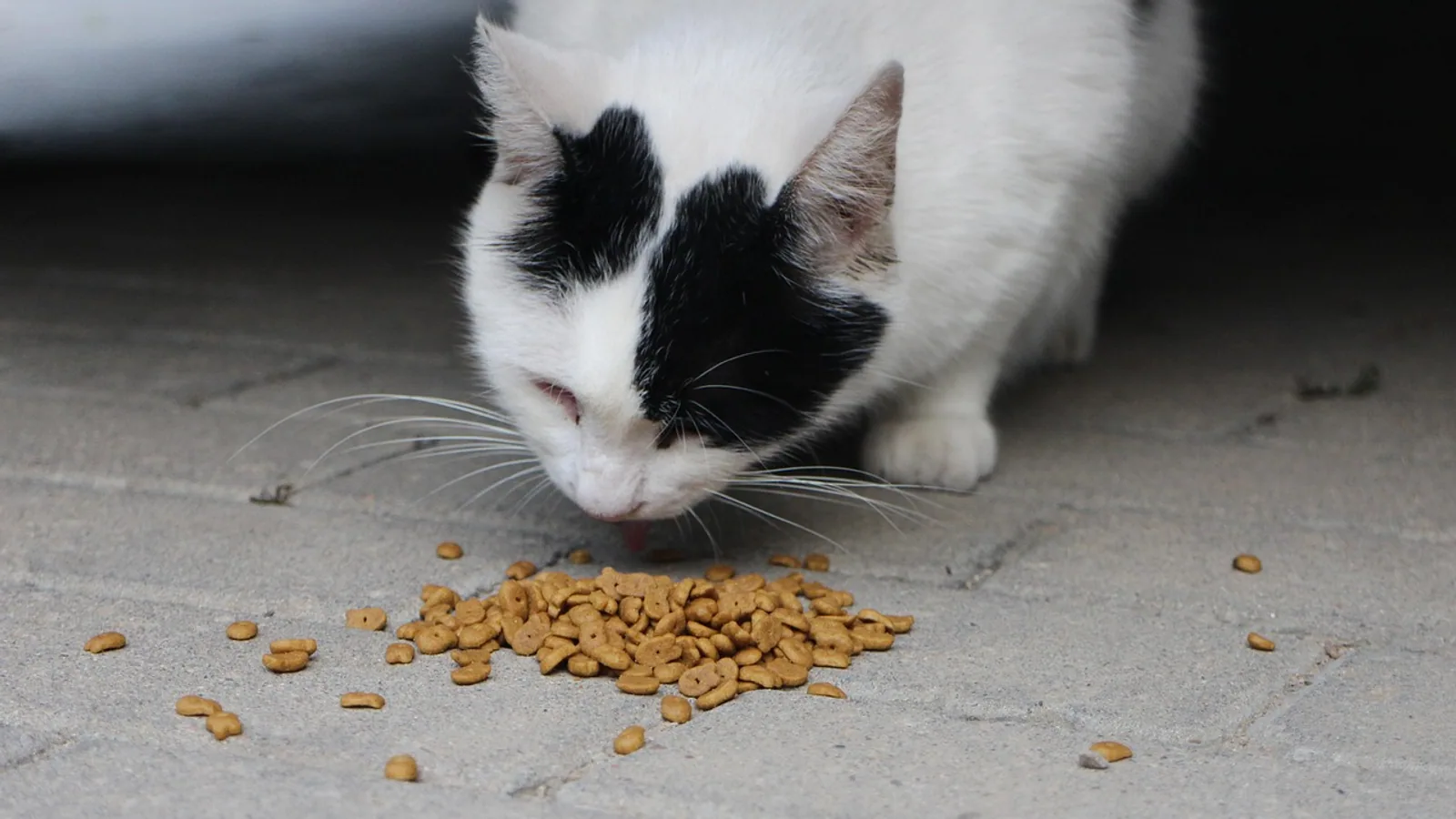
If your cat has been licking, scratching, or chewing itself raw for months and the itch never follows a season, food is one of the few causes you can actually prove and permanently fix. The problem is that no blood test, saliva test, or hair sample can tell you which food is responsible. The only reliable way to identify allergenic cat food is to feed a strict elimination diet for 8 to 12 weeks, watch the skin and gut signs resolve, and then reintroduce the old food to see whether the signs return [1][2][3]. Everything else in this article supports that single process.
The good news is that once you identify the trigger, most cats stay comfortable for life on a diet that avoids it. The hard part is doing the trial correctly, because small mistakes (a flavored treat, a toothpaste, a shared food bowl) can wreck 8 weeks of work.
This article is educational and is not a substitute for veterinary diagnosis or treatment.
At a Glance
| Question | Practical answer |
|---|---|
| Most common feline food allergens | Beef, chicken, fish, dairy, and sometimes lamb or wheat [4][5][6] |
| How food allergy is diagnosed | 8 to 12 week elimination diet, then a deliberate rechallenge [1][7][3] |
| How it is NOT diagnosed | Serum IgE or IgG panels, saliva tests, hair tests, and intradermal food testing are unreliable [2][3] |
| Best first-line diet type | Hydrolyzed protein or a novel protein the cat has never eaten [8][3] |
| Typical time to see improvement | Most cats improve within the trial, and roughly half of food-allergic cats flare within 4 days of rechallenge [9] |
| Biggest cause of failed trials | Cross-contamination from treats, table food, flavored medications, toothpaste, and shared bowls [10][11] |
| Maintenance after diagnosis | Lifelong avoidance of the identified trigger [1][6] |
Why Food Allergy Is Hard to Pin Down
Feline food allergy is an immune-mediated reaction to a food component, almost always a protein [6]. It is one category inside the broader term adverse food reaction, which also includes non-immunologic food intolerance [6][3]. For owners the distinction rarely matters at the start, because both are managed the same way: find the food, remove it.
What makes food allergy confusing is that the signs overlap heavily with flea allergy and environmental allergy (atopy). Cats with food allergy commonly show miliary dermatitis, eosinophilic granuloma complex lesions, or symmetrical hair loss, and those same patterns appear in cats with flea or environmental allergies [1]. Some cats have more than one allergy at the same time, which means treating fleas and environmental triggers still matters even when food is involved [1][5].
There is no breed, sex, or age that rules food allergy in or out, although there is some evidence that Siamese cats and their crosses may be at higher risk [1]. In one dermatology referral population, the age of onset ranged from 3 months to 9 years, with an average around 3.5 years [5]. Food allergy is a year-round problem, not a seasonal one, and the itch is often resistant to corticosteroids [6].
Food allergy can also show up outside the skin. Gastrointestinal signs, conjunctivitis, sneezing, and hyperactive behavior have all been reported in cats with adverse food reactions, and vomiting and diarrhea are the most common diet-responsive gut signs in cats [12]. That matters because a cat with chronic vomiting and no skin disease may still have a food trigger worth investigating with an elimination diet [12].
The Common Allergens in Cat Food
Most basic food ingredients can potentially trigger a reaction, but proteins cause the overwhelming majority [4]. Allergens tend to be glycoproteins with a molecular weight between 10 and 70 kDa that resist heat, acid, and digestive enzymes, which is exactly why cooking does not make them safe [6].
The Short List
- Beef. A long-recognized trigger in both dogs and cats [4][5].
- Chicken. Frequently implicated, and one of the most common proteins in commercial cat food [5][13].
- Fish. Identified as the culprit in multiple confirmed feline cases [7][5].
- Dairy. Cow's milk is a classic trigger in dogs and cats [4].
- Lamb. Often marketed as a "hypoallergenic" protein, but cats can and do react to it [13].
- Wheat and other cereals. Cereals can induce sensitivity, though proteins dominate the picture [4].
A critical point for owners: a food does not have to be new to be a problem. Before signs appear, cats have usually been eating the offending ingredient for a long time, often two years or more, and some cats are under a year old when signs start [6]. Switching from one brand of commercial food to another is not a treatment, because the same proteins appear across brands [14].
Why "Hypoallergenic" on a Label Is Not a Guarantee
Commercial diets marketed for allergic pets have a real reliability problem. When researchers tested pet foods with DNA and protein methods, they found ingredients that were not on the label in 0 to 83 percent of tested diets, with a median of 45 percent [11]. The problem was worst in foods marketed with "novel" or "limited" ingredients, where 33 to 83 percent contained undeclared proteins [11]. In plain terms, a lamb and rice diet may contain traces of chicken or beef that never made it onto the bag.
This is the single strongest argument for using an extensively hydrolyzed diet for the diagnostic trial rather than trusting a novel protein label. Extensively hydrolyzed diets built from very low molecular weight proteins and purified starch have been tested batch after batch, and the DNA threshold for acceptable cross-contaminating protein was not exceeded in 99.9 percent of more than 2,150 batches tested [10].
Table: Common Allergens and Practical Alternatives
| Suspected allergen | Why it is a problem | Alternative to discuss with your veterinarian |
|---|---|---|
| Beef | Classic trigger, appears in many foods and treats [4] | Hydrolyzed diet, or a novel protein never fed before [8][3] |
| Chicken | Very common in cat food, frequent culprit [5][13] | Hydrolyzed feather or chicken liver protein, or a novel protein [10][15] |
| Fish | Confirmed trigger in multiple cats [7][5] | Hydrolyzed fish protein diet, or a non-fish novel protein [7] |
| Dairy | Cow's milk is a recognized trigger [4] | Dairy-free diet and dairy-free treats only |
| Lamb | Marketed as hypoallergenic but cats react to it [13] | Do not assume lamb is safe, use a hydrolyzed diet instead |
| Wheat and cereals | Cereals can induce sensitivity [4] | Purified starch or grain-free hydrolyzed formulas [10] |
| Any previously fed protein | Cats react to foods they have eaten for years [6] | A protein the cat has genuinely never eaten, verified by history |
The word "novel" only means something if you know the cat's full dietary history. A protein is novel only if the cat has never eaten it, including in treats, table scraps, and kitten food [14][6].
Why Blood, Saliva, and Hair Tests Do Not Work
This is the most important section for anyone who has already spent money on testing.
Serum tests for food-specific IgE and IgG show low repeatability, and in cats the accuracy of food-specific IgE testing is low [2]. Intradermal skin testing with food antigens, fecal food-specific IgE, patch testing, and colonoscopic testing have all been evaluated and none are reliable enough for diagnosis [2]. A systematic review of the available in vivo and in vitro tests concluded that the elimination diet with provocation remains the gold standard [2]. A more recent clinical review reached the same conclusion: serum IgE and IgG, saliva, and hair tests lack reliability, and elimination diet trials with dietary provocation remain the standard [3].
Saliva-based antibody panels have been promoted as an alternative to elimination diets, but they are not supported by the diagnostic literature, and the foods they flag do not match the foods confirmed by feeding trials [16]. A test that tells you to avoid rice and potato while clearing chicken is not describing feline food allergy as it is actually diagnosed in practice.
The practical takeaway: if a test result tells you to avoid a long list of ingredients without ever feeding the cat a controlled diet, you have not diagnosed anything. You have a list. The diagnosis is a feeding trial.
How an Elimination Diet Trial Actually Works
The trial has three phases: elimination, assessment, and rechallenge. Skipping the rechallenge leaves you with a suspicion, not a diagnosis [1][14].
Phase 1: Elimination (8 to 12 Weeks)
Feed one single diet exclusively for at least 8 weeks, and ideally 12 if the response is partial [1][7][3]. The diet must be either an extensively hydrolyzed protein diet or a novel protein diet the cat has never eaten [8][3]. During this phase, nothing else enters the mouth. No treats, no table food, no flavored medications, no toothpaste, no dental chews, no food-flavored supplements, and no shared bowls or spoons with other pets.
Some cats show improvement earlier, and some need the full duration. In one clinical trial using a hydrolyzed fish and rice starch diet, 25 cats completed the 8-week trial, and 17 of them improved by more than 50 percent on a pruritus scale [7]. Four cats dropped out because of vomiting or diarrhea, and one because of poor palatability, which is a real risk with hydrolyzed diets [7]. If your cat refuses the diet or develops digestive upset, tell your veterinarian early rather than pushing through for weeks.
Short-acting corticosteroids or oclacitinib were permitted during the first six weeks of that trial to control itch while the diet took effect [7]. This is a decision for your veterinarian, not something to manage at home, but it is worth knowing that short-term itch control does not invalidate the trial.
Phase 2: Assessment
At the end of the elimination period, your veterinarian scores the skin, the itch, and any gut signs against the starting point. A meaningful improvement in itching and lesions is what you are looking for [7]. If there is no improvement at all, the diet may not be the right one, or food may not be the trigger. In the same trial, of eight cats that did not improve, four went on to a second elimination diet with no improvement, which suggests food was not their problem [7].
Phase 3: Rechallenge
If the cat improved, feed the original diet again and watch for relapse. This step is what converts a suspicion into a confirmed diagnosis [1][14]. It is also the step owners most often refuse, and without it you cannot be sure the improvement came from the diet rather than from seasonal change, a new flea product, or coincidence [1].
Timing matters. In a review of 72 challenge events in cats, about 27 percent flared within one day, 29 percent by the end of day two, and the time for 50 percent of cats to flare was 4 days [9]. By 14 days after the challenge, nearly all food-allergic cats had relapsed [9]. That means a rechallenge should run at least 14 days before you conclude the food was innocent.
If the cat relapses on rechallenge, you have your answer. Return to the elimination diet, and if you want to identify the specific trigger, your veterinarian can guide individual ingredient challenges one at a time.
flowchart TD
    A[Chronic itch or gut signs] --> B[Rule out fleas and infection]
    B --> C[Choose hydrolyzed or novel protein diet]
    C --> D[Feed exclusively for 8 to 12 weeks]
    D --> E{Signs improved by half or more}
    E -->|No| F[Try a different elimination diet]
    F --> E
    E -->|Yes| G[Rechallenge with the old food]
    G --> H{Signs return within 14 days}
    H -->|No| I[Food allergy unlikely]
    H -->|Yes| J[Food allergy confirmed]
    J --> K[Lifelong diet avoiding the trigger]
Hydrolyzed Protein Diets: What They Are and What They Do
A hydrolyzed protein diet is made by breaking proteins into fragments small enough that the immune system no longer recognizes them as allergens [8]. The goal is to disrupt the protein structure enough to remove the existing allergen while keeping the diet nutritionally complete [8].
Hydrolyzed diets are the practical first-line choice for a diagnostic trial because they sidestep the label accuracy problem. They also have documented effects beyond allergy. In cats with chronic enteropathy, a hydrolyzed protein diet changed the fecal microbiota and the urinary metabolome, and the abundance of gut bacteria generally decreased with the diet [17][18]. In one study, 15 cats were classified as dietary responders and 18 as non-responders after 6 weeks on the diet, which shows that hydrolyzed diets help some cats and not others [17].
The Limits of Hydrolysis
Hydrolysis is not a guarantee. The most significant potential problem with a hydrolyzed diet is persistent allergenicity, because antigenic sites may not be fully destroyed [8]. This is why the source ingredient still matters: if a cat is allergic to chicken, a partially hydrolyzed chicken-based diet may still provoke a reaction [8]. Extensively hydrolyzed diets using very low molecular weight proteins have been validated more rigorously, with protein analysis showing only amino acids and small oligopeptides remaining in the raw material [10].
Other practical drawbacks include poor palatability, loose stool from the diet's osmotic effects, and reduced nutritional value in some formulations [8]. Newer work on hydrolyzed chicken liver shows that including it at higher protein levels can improve palatability and protein digestibility, which is one reason the category keeps improving [15].
Hydrolyzed Versus Novel Protein
| Feature | Hydrolyzed protein diet | Novel protein diet |
|---|---|---|
| How it avoids allergens | Breaks proteins into small fragments [8] | Uses a protein the cat has never eaten [8] |
| Main risk | Incomplete hydrolysis leaves allergens intact [8] | Undeclared proteins in the bag [11] |
| Palatability | Often lower, can be a trial-killer [7][8] | Usually better |
| Best use | First-line diagnostic trial [3] | When a genuinely novel protein is available |
The Cross-Contamination Trap
Most failed elimination diets fail for one reason: something else got into the cat.
The list of hidden sources is longer than most owners expect.
- Treats. Even "hypoallergenic" treats can contain undeclared proteins [11].
- Flavored medications. Chewable and flavored tablets and liquids often contain animal proteins.
- Toothpaste and dental products. Flavored pet toothpaste is a food product.
- Table food and human food. A single bite of chicken or a lick of ice cream breaks the trial.
- Other pets' food. Shared bowls, stolen kibble, and multi-cat households are common culprits.
- Food-flavored supplements and pill pockets.
- Outdoor hunting. A cat that catches and eats prey is not on an elimination diet.
The underlying problem is that undeclared ingredients are common in commercial pet food, appearing in up to 83 percent of tested diets in one review [11]. If the bag itself may contain something not on the label, then anything else the cat eats is a gamble.
Practical rules for the trial period:
- One diet only, from one source, for the entire trial.
- No treats of any kind unless your veterinarian approves a specific one that matches the trial diet.
- Ask your veterinarian or pharmacist to confirm every medication is unflavored and free of animal proteins.
- Stop all toothpaste and dental chews for the duration.
- Feed the trial cat separately, and pick up all other food.
- Keep the cat indoors, or supervise outdoor time closely.
- Tell everyone in the household, including children and visitors, that the cat is on a strict diet.
Reading a Cat Food Label Without Being Fooled
Labels are a starting point, not proof. The ingredient list tells you what the manufacturer declares, and the guaranteed analysis tells you the nutrient percentages, but neither confirms what is actually in the bag [11].
What to look for:
- A named protein source. "Chicken" is clearer than "poultry" or "meat."
- A single primary protein. Fewer protein sources means fewer variables.
- A statement of nutritional adequacy. This confirms the diet meets life-stage requirements.
- A manufacturer willing to discuss their testing. Extensively hydrolyzed diets with published protein analysis and batch testing are more trustworthy than a "hypoallergenic" claim alone [10].
What not to trust:
- The word "hypoallergenic" by itself. It has no regulatory definition for pet food.
- "Limited ingredient" claims. These diets had the highest rates of undeclared proteins in testing [11].
- "Grain-free" as an allergy solution. Grains are a possible trigger but proteins are far more common [4][6].
- Switching brands as a substitute for a real trial [14].
Home-Prepared Diets
Home-cooked elimination diets have a real place. In one retrospective study of 17 cats with confirmed cutaneous adverse food reactions, 16 completed home-prepared elimination diets, and 8 of them had initially responded poorly to at least 6 weeks of commercial hydrolyzed diets [5]. That is a meaningful signal that some cats need a home-prepared approach.
The catch is that home-prepared diets must be nutritionally complete and correctly formulated. A homemade diet that is unbalanced will cause new problems over 8 to 12 weeks, and a homemade diet that accidentally includes a familiar protein will not work. Work with your veterinarian or a veterinary nutritionist to build the recipe, and keep it strictly to the specified ingredients.
Fleas, Environment, and Other Allergies Do Not Go Away
Food allergy often travels with other allergies. In one case series, concurrent hypersensitivities were confirmed in 6 cats and suspected in another 5 out of 17 [5]. In another review, 20 to 30 percent of dogs and cats with food allergy had concurrent atopic or flea allergy dermatitis [6].
This means the elimination diet is not the only thing you should be doing. Year-round flea control, managing environmental triggers, and treating secondary skin infections all matter. If your cat improves only partially on the diet, the remaining itch may be coming from somewhere else, and that is worth investigating rather than abandoning the trial.
Common Mistakes That Waste 8 Weeks
- Starting the trial before treating fleas and skin infections. You will not be able to tell what improved.
- Using a novel protein the cat has already eaten. Kibble, treats, and kitten food all count [14][6].
- Trusting the label. Undeclared proteins are common [11].
- Allowing treats "just this once." One exposure can restart the clock.
- Skipping the rechallenge. Without it, you have a guess, not a diagnosis [1][14].
- Giving up at 4 weeks. The trial runs 8 to 12 weeks [1][7][3].
- Stopping the rechallenge too early. Most cats flare within 4 days, but some take up to 14 [9].
- Not telling the whole household. Visitors and family members feed cats.
- Forgetting flavored medications and toothpaste.
- Assuming a hydrolyzed diet cannot fail. Incomplete hydrolysis and individual response mean some cats still react [17][8].
What Maintenance Looks Like After Diagnosis
Once food allergy is confirmed, the treatment is avoidance for life [1][6]. There is no desensitization, no cure, and no medication that lets a food-allergic cat eat the trigger safely.
In practice, maintenance means:
- Staying on the diet that worked, permanently.
- Keeping the same strict rules about treats and flavored products.
- Rechecking with your veterinarian if itch returns, because a new allergy can develop.
- Reassessing if the diet manufacturer changes the formula, since reformulation can reintroduce a trigger.
Commercial hypoallergenic diets can work for maintenance, but they are not equal. In a double-blind study of 20 cats with confirmed adverse food reactions, relapse occurred in 8 cats (40 percent) on a lamb and rice diet and 13 cats (65 percent) on a chicken and rice diet, and neither commercial diet controlled skin problems as well as the home-cooked elimination diet [13]. That is a strong argument for confirming your maintenance diet actually works before committing to it long term.
Welfare and Safety During the Trial
An 8 to 12 week trial is a long time for a cat that is itchy and uncomfortable. A few points matter for welfare.
- Itch control is not cheating. Short-acting corticosteroids or oclacitinib may be used early in the trial under veterinary direction to keep the cat comfortable while the diet takes effect [7].
- Watch for food refusal and digestive upset. In one trial, four cats dropped out because of vomiting or diarrhea and one because of poor palatability [7]. If your cat will not eat or is sick, call your veterinarian.
- Do not let a cat lose weight. A cat that refuses a hydrolyzed diet needs a different option, not a starvation trial.
- Keep the cat's routine stable. Stress can worsen itch and make the trial harder to interpret.
- Never restrict food as a punishment or to force acceptance. Palatability problems are a diet problem, not a behavior problem.
Limitations and When to Contact a Veterinarian
Individual cats vary widely in how they present, respond, and recover, so the plan for your cat needs to come from your veterinarian who can examine it [1].
Contact a veterinarian promptly if any of the following occur:
- Your cat stops eating, loses weight, or develops persistent vomiting or diarrhea during the trial.
- Itching gets worse instead of better after 4 to 6 weeks on the trial diet.
- New skin lesions, hair loss, or open sores appear.
- Your cat develops sneezing, eye discharge, or breathing changes.
- You cannot keep the diet strict because of other pets, medications, or household circumstances.
- The cat improved on the trial diet but relapsed and you are unsure whether to rechallenge.
- The cat was diagnosed with food allergy and the current diet is no longer controlling signs.
Frequently Asked Questions
What are the most common allergenic ingredients in cat food?
Beef, chicken, fish, dairy, and sometimes lamb or wheat are the most frequently implicated ingredients [4][5][6]. Proteins cause the vast majority of reactions, though cereals can also trigger sensitivity [4].
Can a blood test tell me what my cat is allergic to?
No. Serum food-specific IgE and IgG tests show low repeatability and low accuracy in cats, and saliva and hair tests are also unreliable [2][3]. An elimination diet followed by a rechallenge is the only reliable way to diagnose food allergy [1][2].
How long does an elimination diet take?
Plan on 8 to 12 weeks of strict feeding before you judge the result [1][7][3]. Some cats improve sooner, but a partial response often needs the full 12 weeks.
What is the difference between a hydrolyzed diet and a novel protein diet?
A hydrolyzed diet breaks proteins into fragments too small to trigger the immune system, while a novel protein diet uses a protein the cat has never eaten [8]. Hydrolyzed diets are usually the first choice for a diagnostic trial because they avoid the undeclared protein problem seen with novel protein foods [11][3].
Can my cat have treats during the elimination diet?
No. Treats, table food, flavored medications, toothpaste, and anything else the cat eats can contain the trigger and invalidate the trial [10][11]. The trial diet must be the only thing the cat eats.
How quickly will my cat react when I rechallenge with the old food?
About 27 percent of cats flare within one day, and 29 percent by the end of day two [9]. Half of cats flare within 4 days, and nearly all have relapsed by 14 days, so run the rechallenge for at least two weeks [9].
What if my cat will not eat the hydrolyzed diet?
Tell your veterinarian. Poor palatability is a recognized reason cats fail to complete elimination trials, and a different hydrolyzed or novel protein diet may work better [7][8]. Do not let the cat go without eating.
Is food allergy in cats curable?
No. Once confirmed, food allergy is managed by lifelong avoidance of the offending ingredient [1][6]. There is no desensitization protocol, and the diet must be maintained permanently.
Related Articles
- Swine Feed Ingredient Substitution and Alternative Feeds
- Cat Food Ingredients
- Swine Feed Ingredient Substitution: Cost-Saving Alternatives
- Feed Ingredient Substitution: Cost-Saving Alternatives Without Sacrificing Nutrition
- Can Cats Eat Dog Ice Cream? Safety and Ingredients to Avoid
- Blue Buffalo Dog Food Review: Ingredients, Safety, and Best Formulas
- Top Dog Food Allergies: Ingredients to Avoid
- Cat Cold Medication: Safe Options and What to Avoid
- Declawing Cats: Procedure, Risks and Alternatives
Sources
- Food allergy in the cat: a diagnosis by elimination.
- Critically appraised topic on adverse food reactions of companion animals (4): can we diagnose adverse food reactions in dogs and cats with in vivo or in vitro tests?
- Adverse Food Reactions in Dogs and Cats.
- Diagnosis and management of food allergy and intolerance in dogs and cats.
- Cutaneous adverse food reactions in cats: retrospective evaluation of 17 cases in a dermatology referral population (2001-2011).
- Food allergy in dogs and cats: a review.
- The usefulness of a hydrolysed fish and rice starch elimination diet for the diagnosis of adverse food reactions in cats: an open clinical trial.
- Hydrolyzed protein diets for dogs and cats.
- Critically appraised topic on adverse food reactions of companion animals (9): time to flare of cutaneous signs after a dietary challenge in dogs and cats with food allergies.
- DNA and Protein Analyses to Confirm the Absence of Cross-Contamination and Support the Clinical Reliability of Extensively Hydrolysed Diets for Adverse Food Reaction-Pets.
- Critically appraised topic on adverse food reactions of companion animals (5): discrepancies between ingredients and labeling in commercial pet foods.
- Critically appraised topic on adverse food reactions of companion animals (6): prevalence of noncutaneous manifestations of adverse food reactions in dogs and cats.
- Double-blind evaluation of two commercial hypoallergenic diets in cats with adverse food reactions.
- [[Feed allergy in dogs and cats--not only a gastrointestinal problem].](https://pubmed.ncbi.nlm.nih.gov/8470106/)
- Hydrolyzed chicken liver and increasing crude protein levels on palatability, digestibility, and intestinal fermentation products of cats.
- Diagnosis of Feline Food Sensitivity and Intolerance Using Saliva: 1000 Cases.
- The effect of a hydrolyzed protein diet on the fecal microbiota in cats with chronic enteropathy.
- The effects of a hydrolyzed protein diet on the plasma, fecal and urine metabolome in cats with chronic enteropathy.