Shorkie and Yorkie Mixes: Traits, Care, and Health
By Dr. Zubair Khalid, DVM, MS, PhD ·

A Shorkie dog is a cross between a Yorkshire Terrier and a Shih Tzu. Because it is a mixed breed, no single health profile fits every Shorkie. The strongest evidence comes from studies of the Yorkshire Terrier parent, and that evidence points to three areas owners should watch: benign skin tumors, skin fold health, and congenital heart disease. This guide translates those studies into a practical care plan for Shorkie and Yorkshire Terrier mix owners.
The Shorkie is also called a Yorkie Shih Tzu mix or a Shorkie Tzu. Whatever name you use, the care priorities are the same: monthly lump checks, skin fold checks when folds are present, early cardiac screening, and regular wellness visits. This article covers the traits you can expect, the care routine that works, and the health conditions with real evidence behind them.
The plan is simple enough for any owner: check the skin, check the lumps, listen to the heart, and keep every wellness appointment. Each step connects directly to a documented health pattern in the Yorkshire Terrier line.
At a Glance: Shorkie Care Checklist
Use this checklist as your weekly and monthly routine. The evidence column shows why each step matters.
| Area | What the evidence shows | Action for owners |
|---|---|---|
| , - | , - | , - |
| Breed background | Shorkie is a Yorkshire Terrier and Shih Tzu cross | Expect individual variation in coat, face, and size |
| Skin health | Yorkshire Terriers had very low odds of skin fold dermatitis [1] | Check any skin folds weekly and keep them clean and dry |
| Tumor risk | Yorkshire Terriers frequently had benign tumor types [2] | Do a monthly full-body lump check |
| Heart health | Yorkshire Terriers can have congenital aortic and pulmonary stenosis [3] | Have every puppy's heart auscultated at wellness visits |
| Dental health | Odontogenic tumors were among the common diagnoses [2] | Schedule veterinary dental exams and discuss home dental care |
| When to call the vet | New lumps, murmurs, skin fold odor, or breathing changes | Seek same-day or next-day evaluation |
This checklist is the minimum. Your veterinarian may add to it based on your dog's age, sex, and examination findings.
What Is a Shorkie Dog?
A Shorkie is a cross between a Yorkshire Terrier and a Shih Tzu. A first-generation Shorkie has one Yorkshire Terrier parent and one Shih Tzu parent. A multi-generation Shorkie has two Shorkie parents. Each generation produces different combinations of traits.
Puppies from the same litter can differ in coat color, coat texture, ear carriage, and facial structure. Some look more like the Yorkshire Terrier parent, with a longer muzzle and a silky coat. Others take after the Shih Tzu parent, with a shorter face and a stockier frame. Body size also varies. The Yorkshire Terrier is a small companion breed, and the Shih Tzu is also a small companion breed, so most Shorkies stay small, but the exact adult size depends on the individual.
For health planning, the Yorkshire Terrier is the better-studied parent. Large veterinary studies have tracked tumor diagnoses, skin disease, and heart disease in Yorkshire Terriers, and those findings give owners of Yorkie mixes a reliable starting point [2][1][3]. Both studies used crossbreed dogs as the comparison group, which is a reminder that mixed-breed dogs like the Shorkie sit between the extremes seen in purebred populations [2][1].
The Shorkie cross brings together two small companion breeds. The health plan should be built on the evidence for the parent breeds rather than on assumptions about the cross.
Questions to Ask a Breeder or Rescue
Before you bring a Shorkie home, ask these questions:
- How old are the parents, and what are their sizes?
- Have the parents had any heart murmurs, skin problems, or lumps?
- Can I see the parents' veterinary records?
- What preventive care do the puppies receive, and when was the last veterinary visit?
- Can I meet the mother and see the environment where the puppies were raised?
The answers give you a baseline for your own veterinarian's first examination.
Traits to Expect in a Shorkie
Size and Body Type
Most Shorkies are small dogs. The Yorkshire Terrier parent is a small companion breed, and the Shih Tzu parent is also small. Adult size varies by generation and by individual, so ask the breeder about the parents' sizes and let your veterinarian track your puppy's growth curve.
Coat and Grooming
Coat type varies. Some Shorkies inherit the long, silky single coat of the Yorkshire Terrier, while others inherit a denser or wavier coat. Whatever the coat type, regular brushing prevents mats, and routine bathing keeps the skin and coat healthy. Grooming needs should be discussed with a veterinarian or a professional groomer.
Temperament
Temperament in mixed-breed dogs is highly individual, and it is shaped by both genetics and early experience. Some Shorkies are active and alert, while others are calm and easygoing. Early socialization, consistent training, and a predictable routine help most dogs settle in. If you have specific behavior questions, work with a veterinarian or a certified trainer.
Facial Structure and Skin
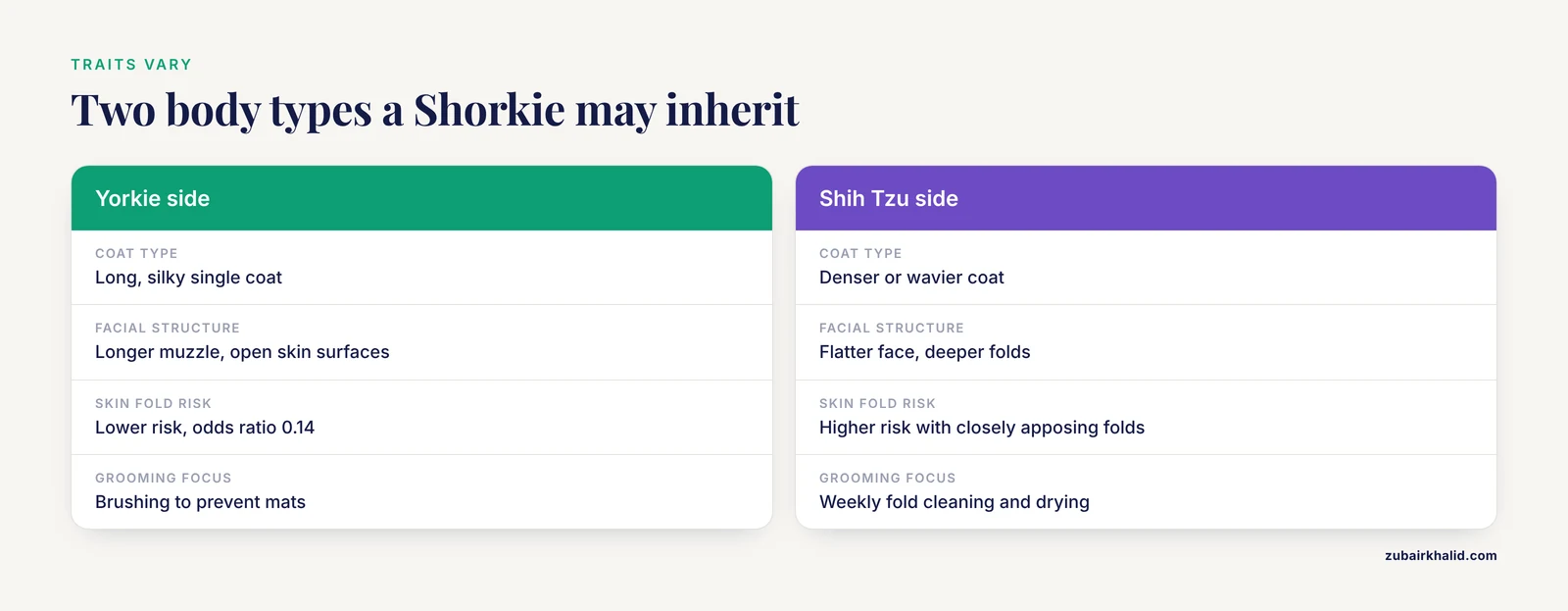
Facial structure is the trait that most affects health. Skin fold dermatitis is an inflammatory process of closely apposing skin surfaces [1]. A Shorkie with a longer muzzle and open skin surfaces sits at the lower-risk end, while a Shorkie with a flat face and deep folds needs regular fold care [1]. Your veterinarian can tell you which category your dog falls into.
Health Evidence for Yorkshire Terrier Mixes
The health conditions with the strongest evidence in the Yorkshire Terrier line are benign tumors, skin fold dermatitis, and congenital heart disease. Each is covered below with the study findings and the practical actions they support.
The studies cited here report breed-level data for Yorkshire Terriers, which is the closest evidence base for the terrier side of the cross. That data points to the conditions worth screening for in a Yorkie mix. Your veterinarian will combine that starting point with a physical examination.
Benign Tumors Are Common in the Yorkshire Terrier Line
A large German study analyzed 109,616 canine tissue samples collected between 2014 and 2019 [2]. Of those, 70,966 samples (64.7%) were neoplasms and 38,650 (35.3%) were non-neoplastic diseases [2]. The most common neoplasms across all breeds were mammary tumors (21.9%), benign epithelial skin tumors (15.4%), mast cell tumors (9.7%), histiocytomas (7.0%), soft tissue sarcomas (5.8%), lipomas (5.8%), melanocytic tumors (5.2%), and odontogenic tumors (4.7%) [2].
The breed-specific finding matters for Yorkie mix owners. Yorkshire Terriers were among the breeds frequently affected by numerous benign tumor types [2]. That means a Shorkie is more likely to develop a benign lump than a malignant one, but every lump still needs a veterinary diagnosis. Benign does not mean ignore. A lipoma or a benign epithelial tumor can grow, become uncomfortable, or look like a more serious lesion.
The same study found that some breeds, including Boxers, Golden Retrievers, Rottweilers, and Schnauzers, were more often affected by malignant neoplasms [2]. The Yorkshire Terrier was not in that group. For a Shorkie with mostly Yorkshire Terrier ancestry, the balance of evidence points toward benign tumors, not malignant ones. Individual risk still varies, and any lump can be sampled and tested.
The German study based its findings on histopathological diagnosis, which means each tissue sample was examined under a microscope [2]. That is the same standard your veterinarian may recommend for a lump on your Shorkie. Some benign tumors can be monitored, while others are removed because of size, location, or discomfort. The decision depends on the tumor type, the dog's age, and the dog's overall health. Your veterinarian will explain the options after a diagnosis is made.
Mammary tumors were the single most common neoplasm in the study population [2]. For a female Shorkie, discuss spay timing and mammary health with your veterinarian. For a male Shorkie, skin tumors and lipomas deserve the same monthly attention.
Skin Fold Dermatitis: Lower Risk for the Yorkshire Terrier Parent
Skin fold dermatitis, also called intertrigo, is an inflammatory process of closely apposing skin surfaces [1]. A UK study using primary-care records from 905,553 dogs found a one-year period prevalence of 0.37% across all dogs [1]. The breeds with the highest odds were English Bulldogs (OR 49.07), French Bulldogs (OR 25.92), and Pugs (OR 16.27) [1]. Yorkshire Terriers were among the most protected breeds, with an odds ratio of 0.14 [1].
For a Shorkie, this is good news with a caveat. The Yorkshire Terrier parent contributes a lower risk of skin fold dermatitis. The Shih Tzu side can contribute a flatter face and deeper folds. The actual risk depends on the individual dog's conformation. Dogs with closely apposing skin folds have a higher risk, and dogs with open skin surfaces have a lower risk [1].
In the UK study, diagnosis was supported by laboratory testing in 4.21% of cases, and systemic antibiotics were used in 42.30% of cases [1]. That tells owners that skin fold dermatitis is a real clinical condition that often requires veterinary treatment rather than home remedies.
What to do: if your Shorkie has facial folds, tail folds, or body folds, check them weekly. Look for redness, moisture, odor, or discharge. Keep the folds clean and dry. If you see inflammation or smell an odor, contact your veterinarian. Do not apply human skin products to the folds.
Congenital Heart Disease: Aortic and Pulmonary Stenosis
A retrospective study of 5,463 dogs referred for cardiological examination between 2004 and 2014 identified 31 dogs with co-occurring congenital aortic stenosis (AS) and pulmonary artery stenosis (PS) [3]. The most commonly affected breed was the Boxer, with 7 dogs, and the Yorkshire Terrier was among the other breeds represented [3].
In all 31 dogs, heart murmurs could be heard, graded from 2 to 5 on a scale of 1 to 6 [3]. Nine dogs had additional congenital defects, including patent ductus arteriosus, mitral valve dysplasia, pulmonary or aortic valve regurgitation, tricuspid valve dysplasia, and ventricular or atrial septal defects [3]. Most dogs had pulmonary valvular stenosis and subvalvular aortic stenosis [3]. The cardiac evaluation in the study included clinical examination, ECG, and echocardiography [3].
The takeaway for Yorkie mix owners is that congenital heart disease is possible even in small mixed-breed dogs. A heart murmur is the most common clue. Every Shorkie puppy should have its heart auscultated during wellness visits, and any murmur should be investigated with the diagnostic tools the veterinarian recommends [3].
A murmur is the sound of turbulent blood flow, and it is the most common reason a congenital defect is found. The study dogs all had audible murmurs, which means a stethoscope is a powerful screening tool [3]. Early detection gives your veterinarian the chance to plan monitoring and further testing before signs become severe.
What to do: schedule a veterinary examination for every new puppy within the first days after adoption. Ask the veterinarian to listen to the heart. If a murmur is detected, ask about further cardiac evaluation. Watch for signs like exercise intolerance, coughing, or rapid breathing, and report them promptly.
Care Essentials for Shorkie and Yorkie Mixes
Care for a Shorkie is not complicated, but it must be consistent. The routine below connects each task to the evidence behind it, so you know why you are doing it and what to look for.
Skin and Coat Care
The coat of a Shorkie varies. Some inherit the long, silky single coat of the Yorkshire Terrier, while others inherit a different texture. Whatever the coat type, daily or weekly brushing prevents mats, and regular bathing keeps the skin clean. The evidence-based priority is skin fold care [1].
Step-by-step skin fold check:
- Gently lift each fold and look at the skin at the base.
- Check for redness, moisture, odor, or discharge.
- Clean the fold with a veterinarian-approved wipe or rinse.
- Dry the fold completely with a soft cloth or cotton pad.
- Repeat weekly, or more often in warm weather.
Never leave moisture trapped in a fold. Moisture and friction are what start the inflammation.
Monthly Lump Checks
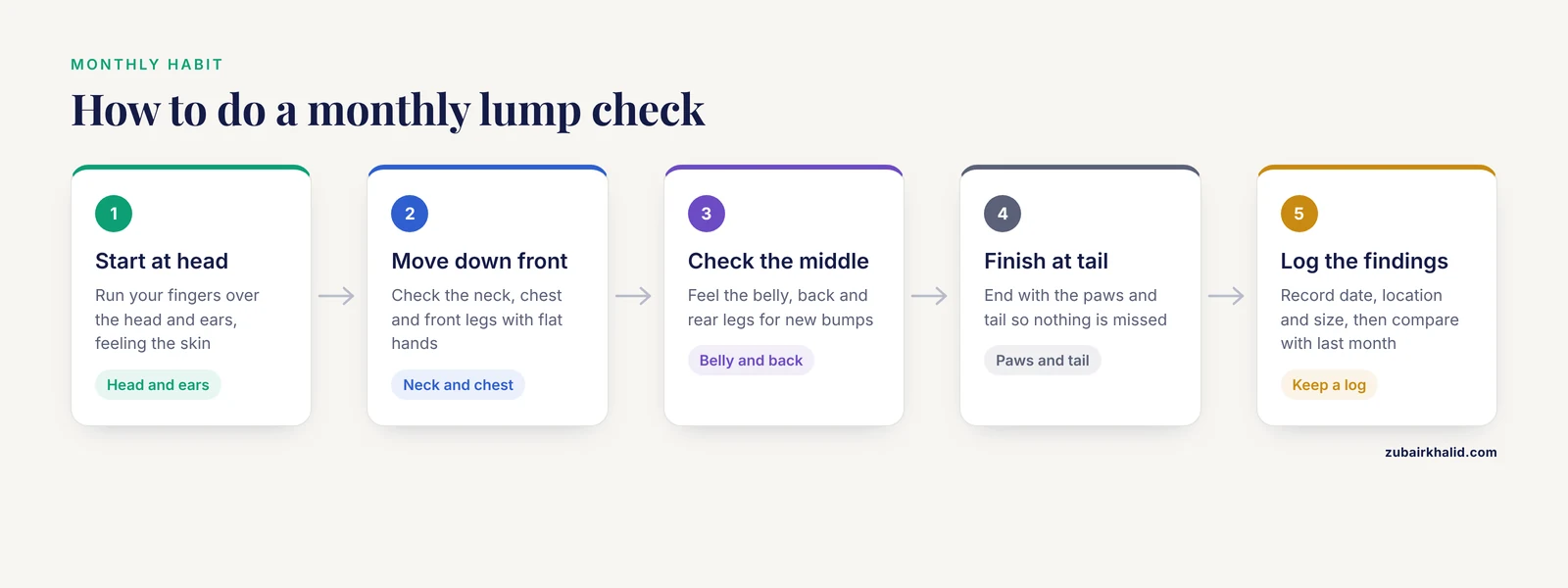
Because benign tumors are common in the Yorkshire Terrier line [2], monthly lump checks should be a habit.
Step-by-step lump check:
- Start at the head and ears, and run your fingers over the skin.
- Move to the neck, chest, and front legs.
- Check the belly, back, and rear legs.
- Finish with the paws and tail.
- Compare findings with the previous month.
A lump that appears suddenly, grows quickly, or changes texture deserves a veterinary visit. Keep a simple log with the date, location, and size of each lump. That log helps your veterinarian decide whether a lump is stable or changing.
Cardiac Screening
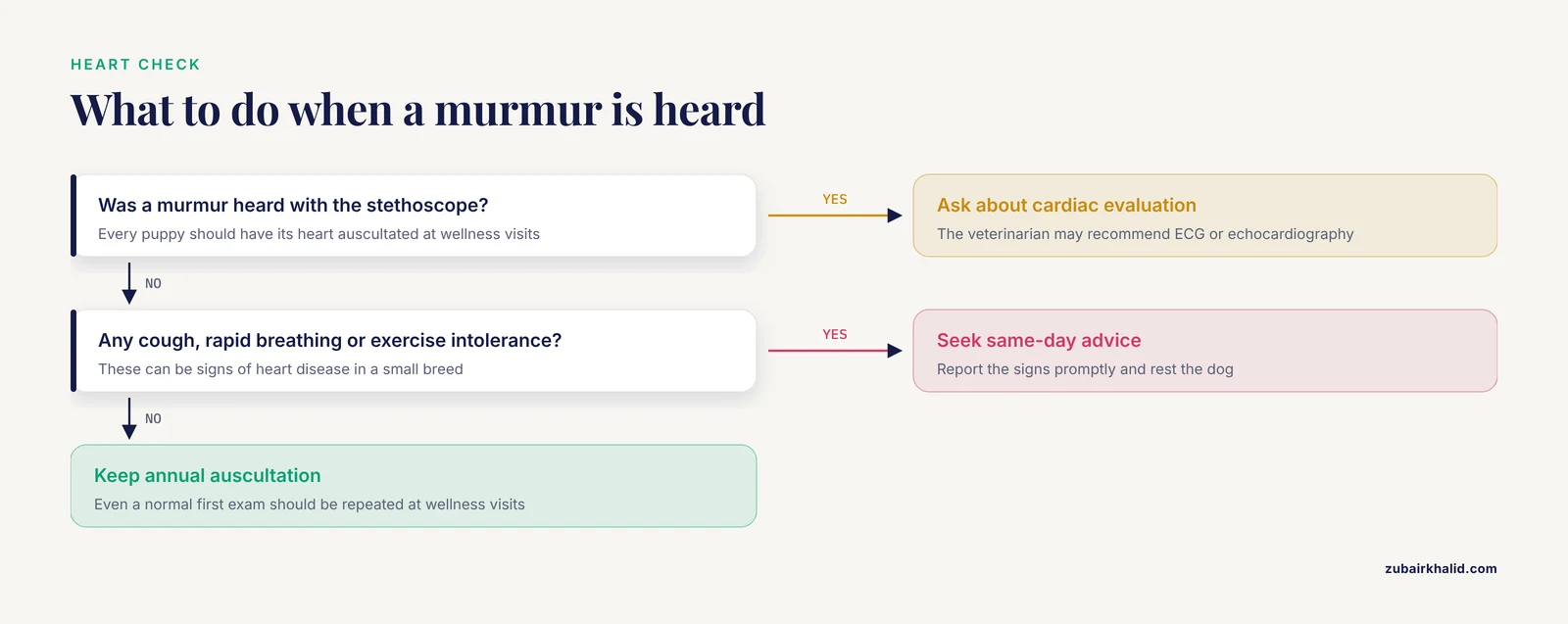
Congenital heart disease can be present from birth [3]. A puppy with a murmur should be examined by a veterinarian, and the veterinarian may recommend ECG or echocardiography [3]. Even if the first examination is normal, annual wellness visits should include heart auscultation.
Dental Health
Odontogenic tumors, which arise from tooth-forming tissues, were among the common diagnoses in the German tumor study [2]. Regular veterinary dental examinations are the standard way to catch oral problems early. Discuss home dental care with your veterinarian.
Preventive Care Schedule
The American Animal Hospital Association (AAHA) and the Companion Animal Parasite Council (CAPC) both emphasize regular wellness examinations and year-round parasite prevention for dogs. Your veterinarian will tailor the schedule to your dog's age, lifestyle, and local disease risk. For a Shorkie, the key preventive visits are the puppy series, the annual wellness exam, and any visit prompted by a new lump, murmur, or skin problem.
Nutrition and Weight
Ask your veterinarian about the right diet, portion size, and weight goal for your dog. Your veterinarian can set a target body condition score and adjust the plan as your dog ages. Excess weight makes every health condition harder to manage, so keep the conversation open at every visit.
Troubleshooting Common Findings
| Finding | What to do | When to call the vet |
|---|---|---|
| , - | , - | , - |
| New small lump | Log it and recheck in a week | If it grows or persists beyond a few days |
| Skin fold redness | Clean and dry the fold | If redness or odor persists after cleaning |
| Heart murmur | Ask about cardiac evaluation | At the next available appointment |
| Bad breath | Continue home dental care | At the next dental exam |
| Cough or rapid breathing | Rest the dog and observe | Same day |
Common Mistakes Owners Make
- Waiting to see if a lump changes. Benign tumors are common in the Yorkshire Terrier line [2], but a veterinarian cannot tell a benign lump from a malignant one by feel alone. Have new lumps examined promptly.
- Assuming a small mixed breed cannot have heart disease. The Yorkshire Terrier was represented in a study of dogs with combined congenital aortic and pulmonary stenosis [3]. Size does not protect against congenital heart defects.
- Ignoring skin folds because the breed is low risk. Yorkshire Terriers had low odds of skin fold dermatitis [1], but a Shorkie with a flat face and folds can still develop the condition. Check the folds.
- Skipping the wellness exam. Congenital heart disease can be silent at first, and a murmur is often the first sign [3]. Annual auscultation is a simple screening step.
- Treating skin fold irritation with human products. The UK study found that systemic antibiotics were used in 42.30% of skin fold dermatitis cases [1]. Many cases need veterinary treatment, and home remedies can delay proper care.
- Skipping dental care. Odontogenic tumors were among the common diagnoses in the German study [2], and oral problems can hide until they cause pain. Regular dental exams are part of the care plan.
Welfare and Safety Points
The UK skin fold study raised welfare concerns about breeds with extreme conformations [1]. For a Shorkie, the welfare picture is generally more favorable because the cross tends to produce moderate facial structure, but individual dogs vary. Choose a puppy whose parents have moderate facial conformation and no excessive skin folds. If your dog has a flat face, ask your veterinarian about the signs of breathing problems to watch for, and keep up with regular wellness visits to catch problems early.
Use grooming and handling time to look at the ears, mouth, and skin. Those moments are a natural reminder to check folds and lumps between veterinary visits.
Limitations and When to Contact a Veterinarian
This article is educational and is not a substitute for veterinary diagnosis or treatment. The evidence base for Shorkie health comes from studies of the Yorkshire Terrier parent breed, and individual Shorkies vary. Your veterinarian is the only person who can diagnose your dog.
Contact a veterinarian promptly if you notice any of the following:
- A new lump that persists for more than a few days, grows, or changes
- A heart murmur, or any new cough, rapid breathing, or exercise intolerance
- Redness, moisture, odor, or discharge in a skin fold
- Difficulty eating, bad breath, or visible oral growths
- Any sudden change in appetite, energy, or behavior
For a puppy, schedule the first veterinary visit within the first days after adoption. For an adult dog, annual wellness exams are the minimum, and many veterinarians recommend more frequent visits for small breeds.
Training and Socialization for Shorkie and Yorkie Mixes
House training a small mixed breed requires consistency and frequent bathroom breaks. A Shorkie puppy has a small bladder and a fast metabolism, so take the puppy out after waking, after eating, after play, and before bed. Choose one outdoor spot, use the same door, and reward every success with praise or a small treat. Do not punish accidents. Clean them with an enzymatic cleaner so the scent does not draw the puppy back to the same spot.
Crate training gives the puppy a safe space and supports house training. Make the crate comfortable, feed meals inside it, and add a chew toy. Keep sessions short and never use the crate as punishment. A puppy under six months should not be confined for more than a few hours at a time. If the puppy whines, wait for a quiet moment before opening the door so the crate does not become a way to get attention.
Early socialization matters most in the first weeks after adoption. Introduce the puppy to different people, friendly vaccinated dogs, new surfaces, household sounds, and gentle handling of the ears, paws, and mouth. Keep each experience positive and end before the puppy becomes overwhelmed. Puppy classes run by certified trainers provide controlled exposure and basic obedience practice.
Separation anxiety is common in small companion breeds. Signs include pacing, drooling, barking, and eliminating only when left alone. Prevent it by practicing short departures, leaving the puppy with a food toy, and avoiding a big emotional goodbye. If the puppy cannot settle after a few minutes alone, or if the behavior worsens, consult a veterinarian to rule out medical causes and a certified trainer or veterinary behaviorist for a treatment plan.
Resource guarding can appear as stiffening, growling, or snapping when a person approaches food, toys, or a resting spot. Do not punish the growl. It is a warning, and punishing it can remove the warning. Teach the puppy that your approach brings something better by tossing a high-value treat near the bowl and walking away. If guarding is frequent or escalates, stop managing it on your own and get help from a certified trainer or veterinary behaviorist.
Contact a veterinarian if training problems appear suddenly, because pain or illness can cause behavior changes. Contact a certified trainer for any behavior that is not improving within a few weeks.
Exercise and Enrichment Needs
Daily Exercise
Most Shorkies do well with roughly 20 to 30 minutes of activity a day, split into two or three short walks plus indoor play. Small legs tire faster than the distance suggests, so short and frequent beats one long outing. Puppies and older dogs need shorter sessions, built up gradually.
Safe Activities
- Two short leash walks a day, using a harness rather than a collar to avoid pressure on a short or sensitive airway.
- Sniff walks: allow stops and investigation, because mental work counts as exercise.
- Indoor fetch, hide-and-seek, and gentle tug in a carpeted area.
- Skip repeated stair climbing, jumping off furniture, long runs, and hard play on hot pavement or in midday heat.
Shorkies with a flat face and narrow nostrils work harder to breathe during exertion. Walk them in cool parts of the day, keep sessions brief, and let them set the pace. Wipe facial folds dry after exercise and check them weekly, since trapped moisture and friction are what start skin fold inflammation [1].
Mental Enrichment
Enrichment prevents boredom-driven barking, chewing, and pacing. Useful options include food puzzles, snuffle mats, stuffed food toys, size-appropriate chew items, and short five-minute trick or scent-game sessions. Rotate toys so they stay interesting. Feeding part of the daily ration through puzzles also slows eating and adds activity.
Weight Control
Ask your veterinarian for a target body condition score and weigh your dog monthly on a kitchen scale. Measure portions with a scoop rather than estimating, and count treats as part of the daily calorie total. Small dogs gain weight quickly on a few extra treats.
When to Stop and Call the Vet
Normal post-play panting settles within a few minutes. Stop the activity and seek same-day veterinary advice if you see labored or noisy breathing, gums that look blue or grey, collapse or weakness, coughing, or panting that does not settle. Reluctance to keep walking, a new cough, or rapid breathing should also prompt a veterinary visit, because these can be signs of heart disease in a small breed [3].
Lifespan, Aging, and Senior Care
The typical lifespan for a Shorkie falls between 12 and 15 years, consistent with the longevity of its small parent breeds. This extended senior period means owners should plan for a gradual shift in care rather than a sudden decline. The goal in these years is to maintain quality of life by detecting age-related conditions early and adjusting the daily routine to match the dog's changing body.
Age-Related Health Priorities
As a Shorkie enters its senior years, usually around age 9 or 10, three conditions deserve particular attention because of their connection to the parent breeds and their tendency to progress silently.
Dental disease is the most common chronic problem in small breed seniors. Odontogenic tumors were among the common diagnoses in the Yorkshire Terrier line [2], and periodontal disease compounds the risk of oral pain and tooth loss. Bad breath, drooling, or difficulty chewing are signs that warrant a veterinary dental exam, not just a home care adjustment.
Heart murmurs should be checked at every visit. The Yorkshire Terrier parent has a documented risk for congenital aortic and pulmonary stenosis [3], and while a murmur may be present from a young age, the heart's workload increases with age. A new murmur or a change in an existing one requires cardiac evaluation. Watch for coughing, especially at night, rapid breathing, or reduced stamina.
Lumps remain a monthly check. The Yorkshire Terrier line has a high frequency of benign tumors [2], but age increases the chance that a new growth is malignant. Any lump that appears after age 9, grows quickly, or changes texture should be aspirated or biopsied rather than monitored. A stable lump that has been present for years still warrants a recheck at each wellness visit.
Adjusting Diet and Exercise
Senior Shorkies often need a diet change to maintain muscle mass while avoiding weight gain. Reduced activity and a slower metabolism mean calorie needs drop, but protein requirements stay high to preserve lean tissue. Ask your veterinarian about a senior or weight management formula and set a target body condition score.
Exercise should continue but with lower impact. Two shorter walks per day are usually better than one long one for an older dog with joint stiffness or heart issues. Watch for signs of fatigue, excessive panting, or lagging behind. Swimming, if the dog enjoys it, provides joint-friendly activity. Avoid stairs and high jumps if arthritis is present.
Veterinary Screening Frequency
Annual wellness visits are no longer sufficient for a senior Shorkie. A semiannual schedule, or a visit every six months, allows your veterinarian to track trends in weight, heart sounds, and dental health before they become emergencies. Blood work, including kidney and liver values, is typically recommended at these visits to catch early organ dysfunction. Bring your lump log to each appointment and report any changes in appetite, thirst, or behavior. Early detection of dental disease, heart murmurs, and lumps is the single most effective way to extend both lifespan and quality of life.
Related Guides
- Best Dog Food for Yorkies and Yorkie Puppies: Food and feeding guidance for Yorkies and Yorkie puppies
- Lab Shepherd Mix: Traits, Health, and Care Guide
- Chihuahua Pom Mix: Traits, Care, and Health
- Pitbull Labrador Mix: Traits, Health, and Care
- Bully Pit Mix: Breed Traits, Health, and Care
Frequently Asked Questions
What is a Shorkie dog?
A Shorkie is a cross between a Yorkshire Terrier and a Shih Tzu. Individual puppies can resemble either parent or show a blend of both.
Are Shorkies prone to skin fold dermatitis?
Yorkshire Terriers have a low risk of skin fold dermatitis, but the actual risk for a Shorkie depends on its facial conformation. Ask your veterinarian to assess any skin folds.
Do Yorkie mixes get cancer?
Yorkshire Terriers are more often diagnosed with benign tumors than with malignant ones. Not all lumps are cancer, but any new lump should be examined by a veterinarian.
Can Yorkie mixes have heart problems?
Yes. Congenital heart defects, including combined aortic stenosis and pulmonary artery stenosis, have been diagnosed in Yorkshire Terriers. A veterinarian should listen to every puppy's heart during wellness visits.
How do I check my Shorkie for lumps?
Run your hands over the entire body once a month, including the head, neck, chest, belly, legs, and tail. Bring any new or changing lump to a veterinarian.
What should I do if my Shorkie has a heart murmur?
Schedule a veterinary evaluation. A murmur can indicate congenital heart disease, and early diagnosis allows better planning.
When should a Shorkie puppy first see a veterinarian?
Within the first days after adoption, and then on the schedule recommended by your veterinarian. Early visits allow heart, skin, and dental screening.
What care does a Shorkie need?
Regular wellness exams, monthly at-home lump checks, skin fold checks if folds are present, and prompt veterinary attention for any new lump, cough, or behavior change.
Sources
- Ironing out the wrinkles and folds in the epidemiology of skin fold dermatitis in dog breeds in the UK.
- Tumour Incidence in Dogs in Germany: a Retrospective Analysis of 109,616 Histopathological Diagnoses (2014-2019).
- Retrospective analysis of co-occurrence of congenital aortic stenosis and pulmonary artery stenosis in dogs.