Lab Shepherd Mix: Traits, Health, and Care Guide
By Dr. Zubair Khalid, DVM, MS, PhD ·
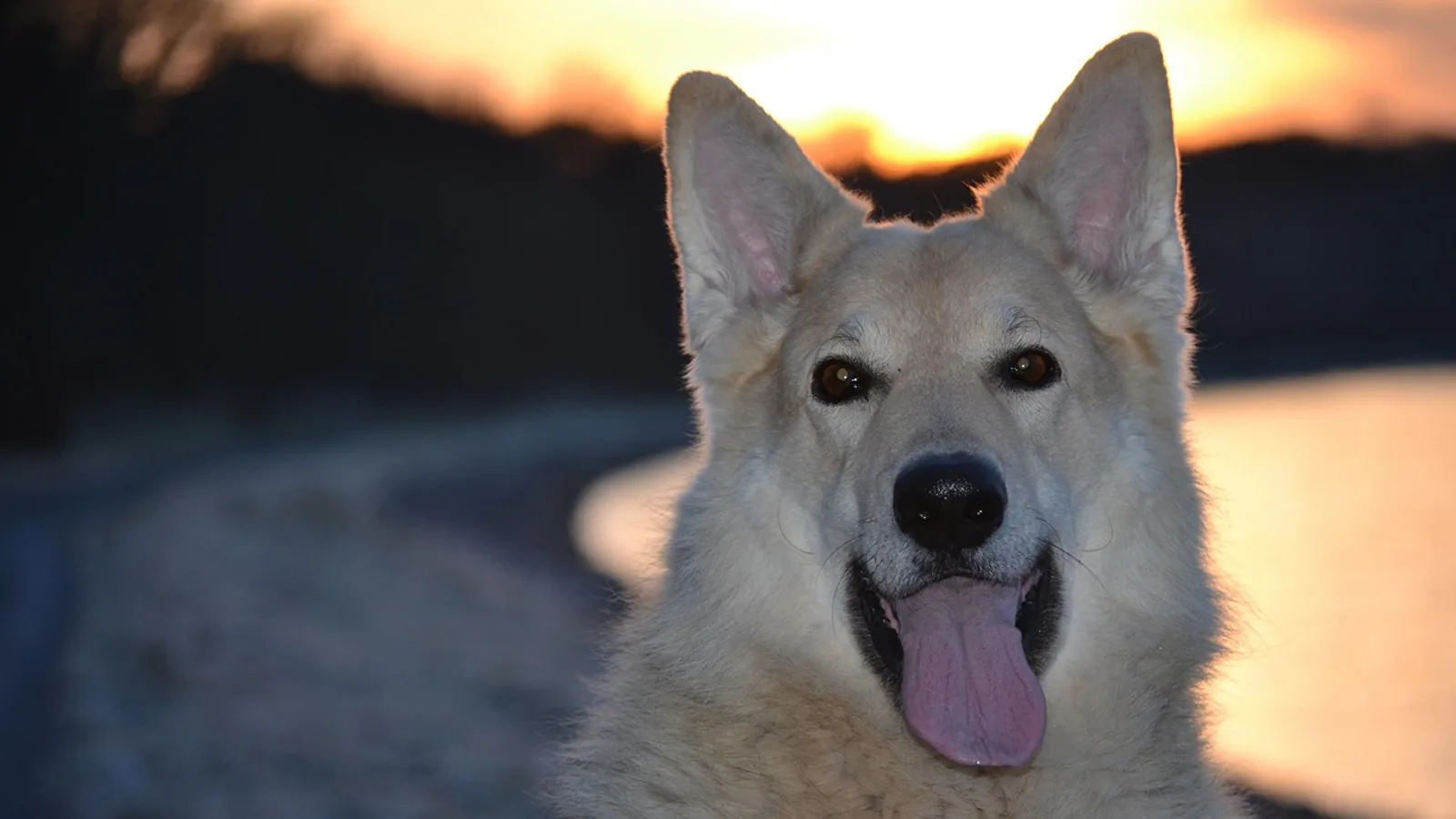
A Lab Shepherd mix is a cross between a Labrador Retriever and a German Shepherd. The cross is also called a shepherd Lab mix, a German Shepherd Lab mix, or a shepherd Labrador mix. These dogs are not a breed. They are a crossbreed, and no registry standard fixes their size, coat, or temperament. What owners can reasonably expect is a large, athletic dog weighing roughly 25 to 40 kg (55 to 88 lb), standing about 55 to 66 cm (22 to 26 inches) at the shoulder, living about 10 to 13 years, and needing 60 to 120 minutes of purposeful activity each day. The temperament usually blends Labrador sociability with German Shepherd drive, which makes these dogs trainable, handler-focused, and often better suited to active homes than to sedentary ones.
This article is educational and is not a substitute for veterinary diagnosis or treatment.
At a Glance
| Trait | Typical range or description |
|---|---|
| Height | 55 to 66 cm (22 to 26 inches) at the shoulder |
| Weight | 25 to 40 kg (55 to 88 lb) |
| Coat | Short to medium double coat, black, yellow, chocolate, or sable |
| Lifespan | 10 to 13 years |
| Energy level | High, 60 to 120 minutes of daily exercise |
| Grooming | Brush two to three times weekly, daily during shedding season |
| Trainability | High, responds to reward-based training and clear structure |
| Good with children | Often yes with supervision and training |
| Good with other pets | Variable, prey drive and herding instinct can be strong |
| Common inherited concerns | Hip dysplasia, elbow dysplasia, degenerative myelopathy, exercise-induced collapse |
History and Purpose
The Labrador Retriever and the German Shepherd both descend from working stock. The Labrador was developed in Newfoundland and Britain as a retrieving gun dog for waterfowl and later became a guide dog, detection dog, and family companion. The German Shepherd was developed in Germany in the late nineteenth century as a herding and working dog, and it became the foundation of many police, military, and service programs.
Crossing the two is not a formal breeding program. It happens by design in the companion market and by accident in mixed households. The result is a dog with retrieving instinct from one parent and herding or protection drive from the other. Because the cross is not standardized, two Lab Shepherd littermates can differ substantially in build, coat, and drive. A black Lab Shepherd mix may look almost entirely Labrador, while a sable-coated German Shepherd Lab mix may look almost entirely Shepherd.
The cross is sometimes marketed as a "designer" dog with the implied promise of hybrid vigor. That promise deserves scrutiny. Hybrid vigor refers to the improved fitness that can appear when two genetically distinct populations are crossed. It is a real phenomenon in some agricultural and laboratory settings. It does not guarantee that an individual crossbred dog will be healthier than either parent breed, and it does not remove the risk of conditions that both parent breeds carry.
Appearance
Lab Shepherd mixes are large dogs with a deep chest, straight or slightly sloping topline, and a tail that may be thick and otter-like or bushy and carried low. Ears may be floppy, semi-erect, or fully erect, and they often change as the dog matures. Eye color ranges from brown to amber. The muzzle may be broad like a Labrador or narrower like a German Shepherd.
Coat type follows the same variability. Most dogs have a short to medium double coat with a dense undercoat. Colors include black, yellow, chocolate, and sable, and many dogs have white markings on the chest or paws. The double coat means shedding is continuous, with two heavy shedding periods each year. A black Lab Shepherd mix tends to show dirt and dander more visibly than a lighter dog, which matters for owners who keep dogs indoors.
Size falls between the two parent breeds. Labrador Retrievers are typically 55 to 62 cm (22 to 24 inches) and 25 to 36 kg (55 to 80 lb). German Shepherds are typically 55 to 65 cm (22 to 26 inches) and 22 to 40 kg (50 to 90 lb). A Lab Shepherd mix usually lands inside that combined range.
Temperament and Behavior
The temperament of a shepherd Lab mix is usually described as friendly but driven. Labrador influence tends to produce a dog that seeks social contact, retrieves, and enjoys water. German Shepherd influence tends to produce a dog that watches its environment, bonds strongly to one or two people, and needs a job.
Most Lab Shepherd mixes are alert without being aggressive. They are often good with children when they have been socialized and trained, but their size and enthusiasm mean interactions with small children need supervision. Their herding and chase instincts can show up as nipping at running children or chasing bicycles, cats, and small animals. Early training that redirects these behaviors is more effective than punishment later.
Separation tolerance varies. Dogs with strong Shepherd influence may become anxious or destructive when left alone for long periods. Dogs with strong Labrador influence may be more adaptable but still need companionship. Crate training, predictable routines, and gradual practice with short absences help most dogs.
Aggression toward other dogs is not typical, but it is possible, especially in dogs that were not socialized during the first year. Same-sex conflict is more common between two males or two females than between a male and a female. Introducing dogs on neutral ground and managing resources such as food and toys reduces risk.
Exercise and Mental Enrichment
Exercise needs are high. A Lab Shepherd mix generally needs 60 to 120 minutes of activity each day, split across at least two sessions. This is not a breed that thrives on a short walk around the block. Suitable activity includes brisk leash walks, hiking, jogging, swimming, fetch, and structured play with other dogs.
Physical exercise alone is not enough. German Shepherd lines were selected for problem-solving and sustained work, and Labrador lines were selected for retrieving and searching. Dogs that do not get mental work often develop nuisance behaviors such as barking, digging, chewing, and pacing. Mental enrichment can include food puzzles, scent games, obedience drills, trick training, and structured tasks such as carrying a backpack on walks.
Puppies and adolescents need modified exercise. Growth plates in large breeds close slowly, and repetitive high-impact activity during growth can stress developing joints. Free play and short training sessions are usually safer than long forced runs before maturity. Adult dogs can build to the full daily range gradually.
Heat tolerance is limited by the double coat. Exercise in the early morning or evening during hot weather, and provide shade and water. Signs of overheating include heavy panting, drooling, wobbling, and collapse. These are emergencies.
Training
Trainability is one of the strongest arguments for this cross. Both parent breeds rank among the most trainable working dogs, and most Lab Shepherd mixes respond well to reward-based training. They learn quickly, remember well, and enjoy working with a handler.
Training should begin in puppyhood and continue through adolescence. Priorities include name recognition, sit, down, stay, come, loose-leash walking, and leave-it. Socialization should expose the puppy to different people, surfaces, sounds, dogs, and environments in a controlled way. Puppy classes run by qualified trainers are a practical way to cover both.
Because these dogs are large and strong, pulling on leash and jumping on people are common problems when training is delayed. A dog that weighs 35 kg can knock over an adult, and the same dog can seriously injure a child. Basic manners are a safety issue, not a luxury.
Advanced training suits this cross well. Many dogs excel at obedience, rally, scent work, tracking, and search-style games. Some are suited to service work, but service dog programs use strict health and temperament screening, and not every crossbred dog will qualify.
Grooming
Grooming needs are moderate. Brush two to three times per week to remove loose hair and distribute skin oils. During spring and fall shedding periods, brush daily. A rubber curry brush or an undercoat rake works well for the double coat. Bathe every four to eight weeks or when the dog is dirty, using a dog-specific shampoo.
Check ears weekly. Dogs with floppy ears, including many Lab Shepherd mixes, have reduced airflow into the ear canal, which can trap moisture. Signs of ear disease include head shaking, scratching, redness, discharge, and odor. A study of 60 dogs with Pseudomonas otitis found that allergies were the most common underlying cause, followed by masses, endocrine disease, and autoimmune disease [1]. That study was not specific to this cross, but the general principle applies: chronic ear problems usually have an underlying cause that needs diagnosis, not just repeated cleaning.
Trim nails every three to four weeks. Long nails change gait and can contribute to paw problems. Brush teeth several times per week with a dog-specific toothpaste. Dental disease is common in large dogs and is often overlooked.
Feeding Considerations
Feed a complete and balanced diet formulated for the dog's life stage. Large-breed puppy food is generally recommended until growth is complete, because it supports controlled growth and joint development. Adult maintenance food is appropriate after maturity. The exact amount depends on body condition, activity level, and the calorie density of the food.
Body condition scoring is more useful than a fixed cup measure. You should be able to feel the ribs under a thin layer of fat and see a waist when viewed from above. Free-feeding a large, food-motivated dog often leads to obesity, which increases stress on dysplastic joints.
Do not feed a single daily meal to a deep-chested dog. Split food into at least two meals. Rapid eating, large meals, and vigorous activity right after eating are associated with bloat, which is a life-threatening emergency. Signs include a distended abdomen, unproductive retching, restlessness, and collapse. These require immediate veterinary care.
Treats should be counted in the daily calorie total. Many training treats are calorie-dense, and a dog in daily training can gain weight quickly if treats are not accounted for.
Inherited and Common Health Problems
Hybrid vigor in this cross is overstated. Both parent breeds carry overlapping genetic risks, and the cross inherits from both sides. A large case-control study of 27,254 dogs found that mixed-breed and purebred dogs did not differ in the expression of 13 of 24 genetic disorders, including hip dysplasia, patellar luxation, and several cancers [2]. Purebred dogs were more likely to have 10 disorders, including elbow dysplasia, dilated cardiomyopathy, cataracts, and hypothyroidism. Mixed-breed dogs had a greater probability of ruptured cranial cruciate ligament [2]. The practical takeaway is that crossbreeding does not eliminate inherited disease risk. It shifts it.
Hip Dysplasia
Hip dysplasia is abnormal development of the hip joint that leads to osteoarthritis. It is common in both Labrador Retrievers and German Shepherds and is one of the conditions that did not differ between mixed-breed and purebred dogs in the large case-control study [2]. Affected dogs may show stiffness after rest, reluctance to climb stairs, bunny-hopping gait, or reduced willingness to exercise. Diagnosis is by veterinary examination and radiographs. Screening of breeding dogs by hip radiograph is standard practice in both parent breeds.
Elbow Dysplasia
Elbow dysplasia is a group of developmental abnormalities of the elbow joint. It is one of the disorders that purebred dogs were more likely to have than mixed-breed dogs in the same study [2]. Signs include front-limb lameness, swelling at the elbow, and reduced range of motion. Diagnosis is by examination and imaging. Breeding dogs should be screened by elbow radiograph.
Degenerative Myelopathy
Degenerative myelopathy is a progressive disease of the spinal cord that causes weakness and incoordination in the hind limbs and eventually affects the front limbs. It is most common in German Shepherds and other large breeds. Onset is usually in middle to older age. Diagnosis is by clinical signs and exclusion of other causes, and genetic testing is available. There is no cure. Management focuses on supportive care, physical rehabilitation, and mobility aids.
Exercise-Induced Collapse
Exercise-induced collapse is a condition in which a dog develops weakness, wobbling, and collapse after intense exercise, then recovers over minutes to hours. It is best known in Labrador Retrievers and has been reported in other breeds. Affected dogs are usually normal between episodes. A veterinarian should evaluate any dog that collapses after exercise, because other serious conditions can cause the same sign.
Other Conditions to Discuss With a Veterinarian
German Shepherds have a documented form of combined pituitary hormone deficiency, a form of dwarfism. Genetic studies have excluded the Pit-1 gene and the PROP1 gene as the primary cause in this breed, which means the underlying mutation remains unidentified [3][4]. This is a breed-specific condition with no routine screening test for the cross.
Inherited retinal disease occurs in both parent breeds. Cone degeneration, also called day blindness, has been identified in Labrador Retrievers, German Shepherds, and crossbreeds, with normal fundoscopic examination and abnormal cone-mediated electroretinography [5]. Congenital stationary night blindness is another inherited retinal disorder studied in dogs [6]. Breeding dogs should have appropriate eye screening by a veterinary ophthalmologist.
Congenital sensorineural deafness occurs in many dog breeds, and candidate genes continue to be studied [7]. Deafness can be present from birth, and puppies should be screened by a veterinarian if there is any concern.
Hepatopathies, including congenital portosystemic shunts and chronic hepatitis, show breed predispositions and can occur in crossbreeds [8]. Labrador Retrievers and German Shepherds are both large breeds with recognized liver conditions. Any dog with poor growth, vomiting, neurological signs after eating, or unexplained weight loss should be evaluated.
Spinal tumors are uncommon but reported in crossbreed dogs. A case report described a spinal nephroblastoma in a three-year-old crossbreed dog that presented with progressive hindlimb paresis [9]. A separate report described multiple spinal nerve sheath tumors in a seven-year-old crossbreed dog with progressive tetraparesis [10]. These are rare diagnoses, but they illustrate why progressive neurological signs need veterinary assessment rather than watchful waiting.
Muscular dystrophy has been reported in a young crossbreed dog with macroglossia, reduced jaw movement, and regurgitation [11]. This is a rare presentation, but it is another example of a condition that can appear in a crossbred dog.
Trait and Inherited Condition Risk Table
| Trait | Range or description | Inherited condition risk |
|---|---|---|
| Weight | 25 to 40 kg (55 to 88 lb) | Hip dysplasia, elbow dysplasia |
| Height | 55 to 66 cm (22 to 26 inches) | Elbow dysplasia |
| Coat | Short to medium double coat | Skin and ear disease |
| Lifespan | 10 to 13 years | Degenerative myelopathy in later years |
| Energy | High, 60 to 120 minutes daily | Exercise-induced collapse |
| Temperament | Sociable, driven, handler-focused | Anxiety-related behavior problems |
| Trainability | High | None specific |
| Eyes | Brown to amber | Cone degeneration, congenital stationary night blindness |
| Ears | Floppy to erect | Congenital sensorineural deafness |
| Liver | Not visible externally | Breed-associated hepatopathies |
Recommended Screening Tests
Screening is for breeding dogs, not for every pet. Owners who are buying a puppy should ask for documentation of the following tests on both parents.
- Hip radiograph evaluated by a recognized screening body.
- Elbow radiograph evaluated by a recognized screening body.
- Eye examination by a veterinary ophthalmologist.
- Genetic testing for degenerative myelopathy.
- Genetic testing for exercise-induced collapse where available.
- Cardiac examination if the breeder reports any history of heart disease.
A responsible breeder will provide these results without pressure and will explain any abnormal findings. A breeder who claims the cross cannot inherit these conditions is not giving accurate information.
Lifespan and Aging
The expected lifespan is 10 to 13 years. Large dogs age faster than small dogs, and the last two to three years often bring visible changes. Watch for reduced activity, difficulty rising, stiffness after rest, changes in appetite or thirst, weight loss, and new lumps. Annual wellness examinations become twice-yearly after about eight years of age.
Arthritis is common in older Lab Shepherd mixes, especially those with hip or elbow dysplasia. Management usually combines weight control, controlled exercise, and veterinary-directed pain management. Do not give human pain medications without veterinary guidance, because several common human drugs are toxic to dogs.
Cognitive changes can occur in older dogs. Signs include disorientation, altered sleep, house soiling, and reduced interaction. These signs should be evaluated by a veterinarian, because other conditions can mimic them.
Finding a Responsible Breeder or Rescue
Rescue is the most direct route to a Lab Shepherd mix. Shelters and breed-specific rescue groups frequently place Lab and Shepherd crosses, and adult dogs often have known temperaments and health histories. Ask about behavior in the home, history with children and other pets, and any known medical conditions.
If buying from a breeder, visit the facility or the home where the puppies were raised. Meet the mother. Ask about the father and request his health screening results. Ask what the breeder does with puppies that are not sold and how many litters the mother has had. A breeder who cannot answer these questions clearly is a risk.
Avoid breeders who sell puppies before eight weeks of age, who cannot show health screening documentation, who offer multiple crossbreeds as a business model, or who will not let you meet the mother. Avoid any breeder who guarantees the puppy will never develop a genetic condition. No one can make that promise.
Puppy contracts should include a health guarantee that allows you to have the puppy examined by your own veterinarian within a few days of purchase. Read the contract before paying a deposit.
Who Should Not Get This Cross
This cross is a poor fit for several situations.
- Households where the dog will be alone for 10 or more hours per day.
- Owners who cannot commit 60 to 120 minutes daily to exercise and training.
- Homes without a secure yard or reliable access to safe outdoor space.
- First-time owners who are not prepared to enroll in training classes.
- Households with very young children and no capacity for supervision.
- Owners who want a low-shedding dog.
- Owners who cannot afford routine preventive care plus the possibility of specialist evaluation for joint, eye, or neurological disease.
- Renters whose lease restricts large dogs or specific breeds.
Limitations and When to Contact a Veterinarian
Individual dogs vary, and no article can replace an examination by a veterinarian who knows the dog. Contact a veterinarian promptly for any of the following.
- Sudden collapse, especially after exercise.
- Difficulty breathing, blue gums, or a distended abdomen with unproductive retching.
- Inability to bear weight on a limb, or sudden hindlimb weakness.
- Progressive wobbling, dragging of the paws, or loss of coordination.
- Seizures, disorientation, or behavior change.
- Vomiting, diarrhea, or refusal to eat for more than 24 hours.
- Increased thirst and urination, or unexplained weight loss.
- New lumps, non-healing wounds, or bleeding from any site.
- Eye redness, cloudiness, or apparent vision loss.
- Ear pain, head shaking, or discharge.
- Any suspected ingestion of a toxin, human medication, or foreign object.
Puppies and seniors should be seen sooner than adult dogs for the same signs, because their reserve is lower.
Frequently Asked Questions
How big does a Lab Shepherd mix get?
Most Lab Shepherd mixes weigh 25 to 40 kg (55 to 88 lb) and stand 55 to 66 cm (22 to 26 inches) at the shoulder. Size varies because the cross is not standardized.
How long do Lab Shepherd mixes live?
The expected lifespan is 10 to 13 years. Large dogs generally age faster than small dogs, and joint and neurological conditions can affect quality of life in later years.
Is a Lab Shepherd mix the same as a German Shepherd Lab mix?
Yes. Lab Shepherd mix, shepherd Lab mix, and German Shepherd Lab mix all describe the same cross between a Labrador Retriever and a German Shepherd.
Do Lab Shepherd mixes shed a lot?
Yes. The double coat sheds year-round, with heavy shedding in spring and fall. Brushing two to three times weekly and daily during shedding periods reduces loose hair in the home.
Are Lab Shepherd mixes good with children?
Many are good with children when they have been socialized and trained. Their size and energy mean interactions with small children need adult supervision.
Do Lab Shepherd mixes have health problems?
Yes. Both parent breeds carry risk for hip dysplasia, elbow dysplasia, degenerative myelopathy, and exercise-induced collapse. Crossbreeding does not remove these risks.
How much exercise does a Lab Shepherd mix need?
Plan on 60 to 120 minutes of activity daily, split across at least two sessions, plus mental enrichment such as training games and food puzzles.
Is a Lab Shepherd mix a good first dog?
It can be, but only for owners who will attend training classes, provide daily exercise, and commit to lifelong management. The cross is not a low-effort dog.
Related Articles
- Australian Shepherd Health Guide: Genetic Risks, Joint Care & Lifespan
- German Shepherd Health Guide: Genetic Risks, Joint Care & Lifespan
- Australian Shepherd Care, Health, Temperament, Training, Size and Lifespan
- German Shepherd Lifespan Diet and Preventive Care Guide
- Australian Shepherd Lifespan Diet and Preventive Care Guide
- Goat Genetics and Breeding: Selection for Production and Health Traits
- Rottweiler Shepherd Mix: Health and Traits
- Golden Shepherd: Breed Traits, Care, and Health
- King Shepherd: Breed Traits, Size, and Health Risks
Sources
- A study to evaluate the primary causes associated with Pseudomonas otitis in 60 dogs.
- Prevalence of inherited disorders among mixed-breed and purebred dogs: 27,254 cases (1995-2010).
- Cloning, characterization, and physical mapping of the canine Prop-1 gene (PROP1): exclusion as a candidate for combined pituitary hormone deficiency in German shepherd dogs.
- Cloning of the canine gene encoding transcription factor Pit-1 and its exclusion as candidate gene in a canine model of pituitary dwarfism.
- Electroretinographic findings in day-blind dogs.
- Extended functional rescue following AAV gene therapy in a canine model of LRIT3-congenital stationary night blindness.
- Chromosomal assignment of 20 candidate genes for canine congenital sensorineural deafness by FISH and RH mapping.
- Canine Breed-Specific Hepatopathies.
- Spinal nephroblastoma in a crossbreed dog.
- Multiple spinal nerve sheath tumors in a dog resembling schwannomatosis in humans.
- Radiographic, MRI, and CT findings in a young dog with Becker-like muscular dystrophy.