Pitbull Labrador Mix: Traits, Health, and Care
By Dr. Zubair Khalid, DVM, MS, PhD ·
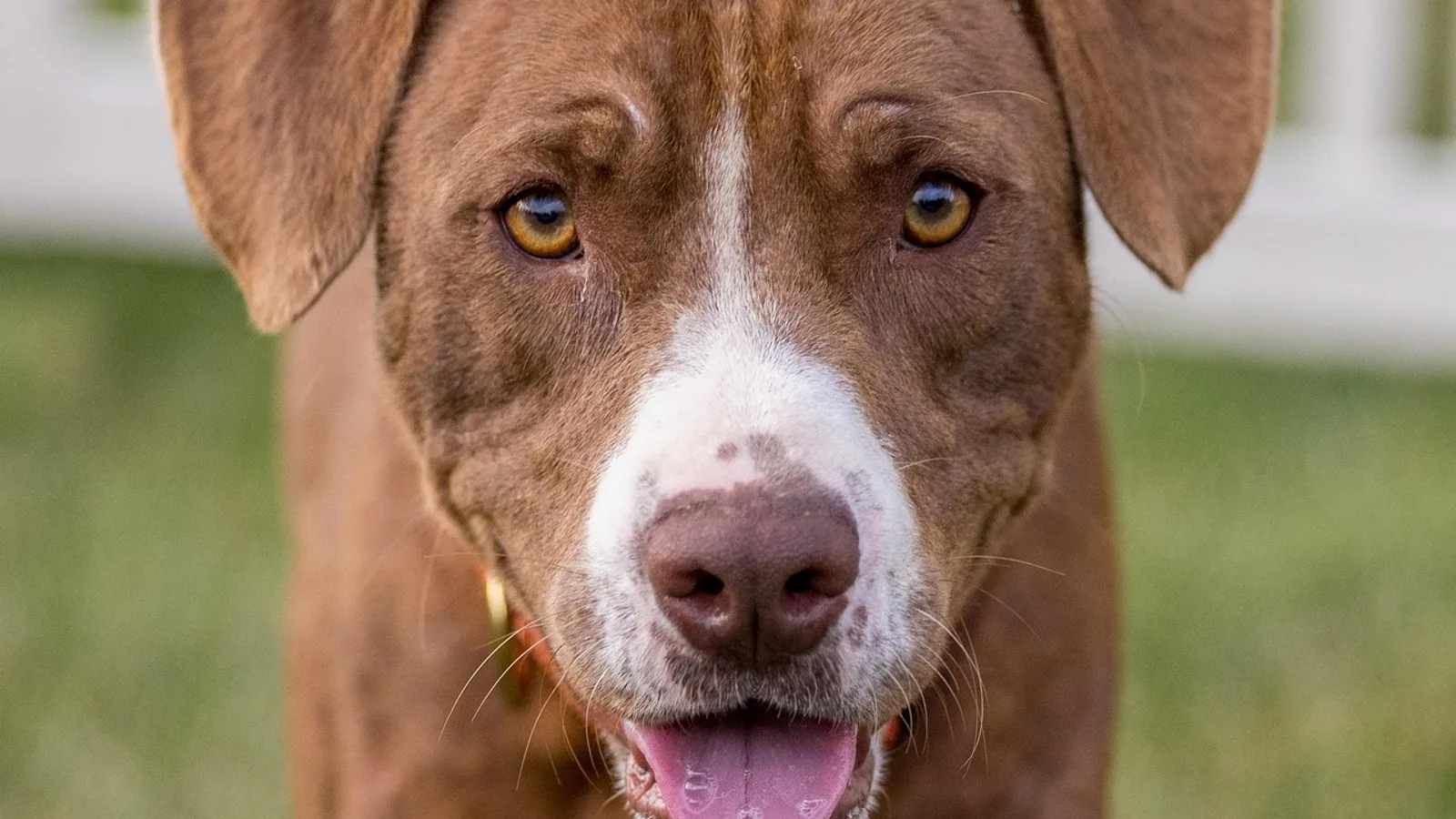
The pitbull Labrador retriever mix is a purpose-bred or accidental cross between a Labrador Retriever and a dog of pit bull type, most often the American Pit Bull Terrier or American Staffordshire Terrier. Because this is a crossbreed and not a pure breed, there is no breed standard, no closed registry, and no predictable litter. A single litter can produce puppies that look and behave more like the Labrador parent, more like the terrier parent, or a blend of both. Adult size generally falls between 20 and 36 kg (45 to 80 lb) and 45 to 70 cm (18 to 28 in) at the withers, though individuals outside that range occur.
This article is educational and is not a substitute for veterinary diagnosis or treatment.
Two working breeds sit behind this cross. The Labrador Retriever is a retrieving gundog selected for biddability, water work, and a soft mouth, and it remains one of the most common breeds in veterinary practice worldwide [1]. Pit bull type dogs are athletic, muscular terriers historically selected for tenacity and dog-directed aggression, and they remain a common breed group in general practice and in infectious disease surveillance [2]. The combination produces a physically capable, high-energy dog that needs structured daily work, early socialization, and a household prepared for a large, strong animal.
At a Glance
| Trait | Typical range or expectation |
|---|---|
| Height at withers | 45 to 70 cm (18 to 28 in) |
| Adult weight | 20 to 36 kg (45 to 80 lb) |
| Coat | Short to medium, dense, single or double, low grooming demand |
| Lifespan | Large-breed range, roughly 10 to 13 years |
| Energy level | High, 60 to 90 minutes of activity daily |
| Trainability | Variable, generally food-motivated and capable of high-level training |
| Grooming | Weekly brushing, more during seasonal shedding |
| Good with children | Depends on individual socialization and supervision |
| Good with other pets | Variable, terrier prey drive and dog-directed aggression are possible |
| Parent screening | OFA or PennHIP hip and elbow evaluation, cardiac evaluation |
History and Purpose
The pitbull Lab mix has no breed history of its own. It exists because two established breeds are crossed, either deliberately by breeders aiming for a sport or companion dog, or incidentally when intact dogs of both types live in the same household.
The Labrador Retriever has a documented working history. It is one of the most frequently registered and most frequently seen breeds in veterinary databases, and it is used extensively as a guide dog, detection dog, and assistance dog. Genetic selection programs in Labrador guide dog populations now integrate health and behavior traits into breeding indices, which reflects how seriously the breed's working role is taken [3]. Genome scanning of Labrador Retrievers in a detection dog breeding program has identified multiple genetic loci associated with behavioral elimination before training, which is a reminder that working aptitude in this breed is partly heritable and partly environmental [4].
Pit bull type dogs have a different history. They descend from bull-and-terrier stock developed for baiting sports and later for dog fighting. That history left a legacy of infectious disease exposure in some populations. In a large North American diagnostic survey, 43 of 48 dogs infected with Babesia vulpes were American Pit Bull Terrier type breeds, and 36 of those had a documented history of involvement in dog fighting [5]. That finding reflects a specific high-risk subpopulation rather than the breed as a whole, but it explains why veterinarians ask about origin and background when a pit bull type dog presents with unexplained anemia or low platelets.
The cross inherits working drive from both sides. Labradors were bred to retrieve for hours in cold water. Pit bull type dogs were bred to be athletic, persistent, and physically powerful. Owners should expect a dog that needs a job, not a dog that is satisfied with a short walk.
Appearance
There is no standard for this cross, so appearance varies widely. Most adults are medium to large, muscular, and athletic.
Size. The range is roughly 20 to 36 kg and 45 to 70 cm at the withers. Dogs leaning toward the Labrador parent tend to be taller and longer in the body. Dogs leaning toward the terrier parent tend to be shorter, stockier, and broader in the chest. Body weight in dogs is strongly tied to breed and conformation, and large-breed dogs sit at the upper end of normal canine body weight distributions [1].
Coat. Both parent breeds carry short, dense coats. Most crosses have a short to medium single or double coat in black, yellow, chocolate, brindle, fawn, white, or any combination. Shedding is moderate to heavy year-round with seasonal peaks.
Head and body. The head may be broad and blocky with a strong jaw, or more moderate with a longer muzzle. Ears may be floppy, semi-pricked, or rose. Tails are usually long and may be carried high. Eye color ranges from dark brown to amber.
Sexual dimorphism. Males are typically larger and heavier than females, with broader heads and thicker necks.
Temperament
Temperament in a crossbreed is the single most misunderstood topic in dog ownership. There is no guaranteed temperament for this cross, and no responsible breeder, rescue, or veterinarian can promise a specific personality from a puppy's appearance or parentage.
What the evidence does show is that crossbreed status does not automatically produce better behavior. In a study of over 9,400 dogs comparing three common designer crossbreeds with their purebred parent breeds, crossbreeds showed more undesirable behaviors than a parent breed in 44.4 percent of behavioral comparisons and fewer undesirable behaviors in only 9.7 percent, with no difference in the remaining 45.8 percent [6]. The same research group found that in 86.6 percent of health comparisons, designer crossbreeds and their parent breeds did not differ significantly, and crossbreeds had higher odds for 7.0 percent of disorders and lower odds for 6.4 percent [7]. Hybrid vigor is not a guarantee. It is a possibility that depends on which genes each parent contributes.
For this specific cross, owners should plan for the following tendencies.
Drive and persistence. Both parent breeds were selected for sustained work. Expect a dog that wants to move, chew, carry, and solve problems. Boredom in a high-drive dog commonly shows up as destructive chewing, digging, barking, or escaping.
Trainability. Labrador Retrievers are selected for biddability, and genetic studies of working Labrador populations show that behavioral traits are heritable and linked to training success [3]. Pit bull type dogs are also highly trainable and often excel at weight pull, obedience, and scent work. The cross is usually food-motivated and capable of advanced training, but individual variation is large.
Dog-directed behavior. Terrier breeds were historically selected for dog-directed aggression. This does not mean every pitbull Lab mix will be dog-aggressive, but it does mean same-sex aggression and leash reactivity are realistic risks. Early, structured socialization and continued neutral exposure to other dogs matter more in this cross than in breeds selected purely for sociability.
Human sociability. Pit bull type dogs are typically strongly human-oriented and affectionate with familiar people. Labrador Retrievers are similarly people-focused. Most crosses are friendly with strangers when socialized, though some individuals are reserved.
Prey drive. Both parent breeds have prey drive. Cats, rabbits, chickens, and small wildlife may be at risk in a household with this cross, particularly if the dog was not raised with them.
Children. There is no breed-level guarantee of safety with children. A large, powerful, high-drive dog requires supervision around young children regardless of temperament, and children should be taught handling rules. Many individuals are excellent family dogs. Some are not suited to homes with toddlers because of body size and exuberance rather than aggression.
Size and Temperament Comparison Table
| Feature | Labrador Retriever influence | Pit bull type influence | Typical cross |
|---|---|---|---|
| Height | Taller, 55 to 62 cm | Shorter, 43 to 53 cm | 45 to 70 cm |
| Weight | 25 to 36 kg | 14 to 27 kg | 20 to 36 kg |
| Build | Athletic, moderate bone | Muscular, heavy bone, broad chest | Muscular, athletic |
| Coat | Short double coat, heavy shed | Short single coat, light shed | Short, moderate shed |
| Energy | High, water and retrieve driven | High, power and play driven | High, 60 to 90 minutes daily |
| Trainability | Very high, soft and biddable | High, firm and consistent handling | High with structure |
| Dog sociability | Generally social | Variable, dog-directed aggression possible | Variable |
| Human sociability | Very high | Very high with familiar people | Generally high |
| Prey drive | Moderate to high | Moderate to high | Moderate to high |
| Common health risks | Hip and elbow dysplasia, atopy, cruciate rupture, obesity | Hip dysplasia, atopy, cruciate rupture, cardiac disease | Combined risk from both sides |
Exercise and Training Needs
This is a working cross and it needs daily structured exercise. Plan for 60 to 90 minutes of activity per day, split into at least two sessions. That is a starting point for a healthy adult, not a maximum.
Exercise plan for a healthy adult.
- Morning: 30 to 45 minutes of brisk walking, jogging, or structured off-leash work. Sniffing walks count and are valuable for mental enrichment.
- Midday or after work: 20 to 30 minutes of fetch, tug, swimming, or flirt pole work.
- Evening: 15 to 30 minutes of training, puzzle feeders, or a second walk.
- Weekly: at least one long hike, swim, or training class to build endurance and mental engagement.
Adjustments by life stage. Puppies should not be run long distances on hard surfaces before growth plate closure. Growing dogs show a forelimb-dominated gait and a shifting pattern of weight support as they mature, which reflects how much their musculoskeletal system is still developing [8]. Keep puppy exercise to free play, short walks, and controlled social exposure. Senior dogs need the same mental engagement with reduced impact. Heat is a real risk. Labrador Retrievers and Staffordshire Bull Terriers are among the breeds identified at elevated risk of heat-related illness, and older dogs are at higher risk [9]. Exercise early in the morning or late in the evening in summer, provide shade and water, and stop at the first sign of heavy panting, stumbling, or reluctance to continue.
Training priorities.
- Recall under distraction. A strong, fast dog that will not come back is a safety problem.
- Leash manners. This cross can weigh more than many adults can physically restrain.
- Crate and settle training. High-drive dogs need to learn to be calm indoors.
- Impulse control around food, toys, and other dogs.
- Muzzle conditioning. Even a friendly dog benefits from being comfortable in a basket muzzle for veterinary visits and emergencies.
Use positive reinforcement with clear, consistent boundaries. Aversive methods increase fear and defensive aggression in powerful breeds and are not recommended by the American Veterinary Medical Association or the American Animal Hospital Association. Enroll in a group class by 12 to 16 weeks of age, and continue training into adulthood.
Grooming
Grooming needs are modest. Brush weekly with a rubber curry or slicker brush, and daily during seasonal shedding. Bathe every four to eight weeks or when the dog is dirty, using a dog-specific shampoo. Check ears weekly and clean with a veterinarian-approved ear cleaner. Trim nails every three to four weeks. Brush teeth daily or at least three times weekly, and schedule professional dental cleaning as recommended by your veterinarian.
Pit bull type dogs and Labrador Retrievers both have short coats and are prone to skin allergies, so routine skin checks matter. Look for redness, hair loss, hotspots, and excessive licking at every grooming session.
Feeding Considerations
Obesity is one of the most common and most preventable problems in this cross. Both parent breeds are prone to weight gain, and mixed-breed dogs are not protected from it. Ruptured cranial cruciate ligament, one of the most common orthopedic problems in this cross, is strongly associated with excess body weight.
Feed a complete and balanced diet formulated for the dog's life stage, measured with a kitchen scale rather than a scoop. Ask your veterinarian for a body condition score at every visit and adjust portions to keep the dog at a lean body condition. Most adult dogs of this size do well on two meals per day. Puppies need three to four meals per day until about six months of age, then two.
Do not free-feed a high-drive crossbreed. Food guarding, rapid eating, and bloat risk are all reasons to use structured meals and slow feeders. Avoid vigorous exercise for one hour before and after meals.
If your dog has skin allergies, discuss a limited ingredient or hydrolyzed diet with your veterinarian. Do not change diets based on internet advice. Canine atopic dermatitis is a chronic, lifelong condition with a genetic component, and Labrador Retrievers are among the breeds with recognized predisposition [10].
Inherited and Common Health Problems
Crossbreed status does not eliminate inherited disease. Both parent breeds carry risk alleles, and a puppy inherits one copy of each gene from each parent. A crossbreed can inherit the disease risks of both sides.
A large case-control study of 27,254 dogs with inherited disorders found that mixed-breed and purebred dogs did not differ in the expression of 13 of 24 disorders, including hip dysplasia, patellar luxation, and several cancers. Purebred dogs were more likely to have 10 disorders, including dilated cardiomyopathy, elbow dysplasia, cataracts, and hypothyroidism. Mixed-breed dogs had a greater probability of ruptured cranial cruciate ligament [11]. That last finding is directly relevant here, because cruciate rupture is one of the most common problems in this cross.
Hip and Elbow Dysplasia
Hip dysplasia is abnormal development of the hip joint that leads to osteoarthritis. Elbow dysplasia is a similar developmental problem in the elbow. Both are polygenic and influenced by body weight, growth rate, and exercise during puppyhood.
Mixed-breed dogs are not protected from hip dysplasia, and purebred dogs are more likely to develop elbow dysplasia [11]. Labrador Retrievers are a large breed with well-documented hip and elbow disease, and pit bull type dogs are also affected.
Signs include difficulty rising, reluctance to jump, bunny-hopping gait, stiffness after rest, and exercise intolerance. Diagnosis is by orthopedic examination and radiographs.
Screening. Ask the breeder for hip and elbow evaluations on both parents through the Orthopedic Foundation for Animals (OFA) or PennHIP. OFA assigns a grade based on radiographs. PennHIP measures hip laxity and reports a distraction index. Both systems are accepted by the American Veterinary Medical Association as valid screening tools. A breeder who cannot or will not provide screening results on both parents is a red flag.
Cranial Cruciate Ligament Rupture
The cranial cruciate ligament stabilizes the knee. When it ruptures, the dog becomes acutely lame on the affected hind limb. Mixed-breed dogs have a higher probability of cruciate rupture than purebred dogs in the largest available case-control dataset [11]. Obesity and hip or knee malalignment increase risk.
Treatment is usually surgical, followed by a structured rehabilitation program. Conservative management is an option for some small dogs but is rarely appropriate for a 30 kg athletic crossbreed. Ask your veterinarian about timing and surgical options.
Obesity
Obesity is a disease, not a cosmetic issue. It worsens every orthopedic problem in this cross, increases anesthetic risk, and shortens lifespan. Body condition scoring at every veterinary visit is the standard of care. Feed measured meals, limit treats to 10 percent of daily calories, and adjust portions as activity changes.
Skin Allergies
Canine atopic dermatitis is a chronic inflammatory skin disease driven by genetics and environment. Labrador Retrievers are among the predisposed breeds, and a recent genome-wide association study of over 28,000 dogs identified a strong candidate variant in the SLAMF1 gene associated with the condition [10]. Pit bull type dogs are also frequently affected.
Signs include itching, paw licking, face rubbing, recurrent ear infections, and secondary bacterial or yeast infections. Treatment is lifelong and may include allergen avoidance, medicated baths, omega-3 fatty acids, and prescription medications. Work with your veterinarian rather than trialing over-the-counter remedies.
Cardiac Disease
Dilated cardiomyopathy, a disease of the heart muscle, is more common in purebred dogs than mixed-breed dogs in the largest case-control study [11]. Labrador Retrievers are a breed of concern. A rare congenital vascular ring anomaly called circumflex left aortic arch has also been described in a Labrador Retriever, though it is uncommon [12].
Signs include exercise intolerance, coughing, fainting, and labored breathing. Annual cardiac auscultation by your veterinarian is the first screening step. If a murmur or arrhythmia is detected, echocardiography is the next step. Ask breeders for cardiac evaluation on both parents.
Other Concerns
Eye disease. Early-onset retinal degeneration has been identified in American Staffordshire Terriers and Pit Bull Terriers, caused by mutations in the IQCB1 and PDE6B genes [13]. Labrador Retrievers also carry inherited eye conditions. Ask about eye screening on both parents.
Hemophilia A. A frameshift deletion in the F8 gene has been identified in Labrador Retrievers with hemophilia A, and a gene test is now available for screening before breeding [14]. This is rare but relevant if the Labrador side of the pedigree has a history of bleeding disorders.
Infectious disease. Pit bull type dogs are overrepresented in some infectious disease datasets. In one North American survey, pit bull type breeds made up the majority of dogs infected with Babesia vulpes, largely reflecting a high-risk subpopulation with a history of dog fighting [5]. Routine parasite prevention and vector-borne disease screening are appropriate for any dog with a high-risk background.
Parvovirus. Canine parvovirus remains a serious risk for puppies. A large retrospective study of nearly 79,000 cases found that pit bull type dogs and Labrador Retrievers were among the most commonly affected breeds, and mortality in diagnosed cases was high [2]. Vaccination is the single most effective prevention. Puppies should complete the full vaccine series before exposure to unknown dogs or public areas.
Heat-related illness. Labrador Retrievers and Staffordshire Bull Terriers are both on the list of breeds at elevated risk of heat-related illness, and older dogs are at higher risk [9]. This cross inherits that risk from both sides.
Lifespan and Aging
Most dogs of this size live roughly 10 to 13 years. Large-breed dogs age faster than small breeds, and Labrador Retrievers show measurable age-related changes in blood analytes around 3 to 6 years and again around 12 years [15]. Those changes are useful for tracking biological age and for detecting early signs of arthritis, lumps, and other age-related conditions.
Schedule twice-yearly wellness exams from age 7 onward. Ask your veterinarian about baseline blood work, blood pressure, and orthopedic assessment at each visit. Watch for changes in appetite, water intake, mobility, and behavior.
Finding a Responsible Breeder or Rescue
There is no registry or breed club for this cross, which means the burden of due diligence falls entirely on the buyer.
If buying from a breeder.
- Ask for OFA or PennHIP hip and elbow evaluations on both parents.
- Ask for cardiac evaluation on both parents.
- Ask for eye screening on both parents.
- Ask whether the Labrador side has been screened for the F8 hemophilia A variant [14].
- Ask to meet the dam, and the sire if possible.
- Ask what socialization the puppies receive before 12 weeks.
- Ask about the breeder's health guarantee and return policy.
- Walk away from any breeder who cannot provide health documentation, who breeds more than two or three litters per year, or who will not let you visit the property.
If adopting from a rescue.
- Ask about the dog's known history, including any bite history or dog-directed aggression.
- Ask whether the dog has been temperament tested and how.
- Ask about known medical conditions and current parasite prevention.
- Ask about the dog's behavior in foster care, not just in the shelter.
- Plan a slow introduction to resident pets and children.
Mixed-breed dogs are the most common category of dog in many national veterinary databases, which means rescue and shelter placement for this cross is common [1] [16]. A well-run foster-based rescue often has better behavioral information than a breeder selling puppies.
Who Should Not Get This Breed
This cross is not a good fit for every household. Reconsider if any of the following apply.
- You cannot commit 60 to 90 minutes per day to exercise, every day, in all weather.
- You live in an apartment with no access to safe outdoor space and no plan for daily structured activity.
- You are not prepared to manage a dog that may weigh more than you can physically control.
- You have young children and cannot supervise every interaction.
- You have small pets and cannot manage prey drive safely.
- You are not willing to pay for hip, elbow, and cardiac screening on a puppy's parents.
- You are not prepared for a possible 12 to 15 year financial and time commitment.
- You want a dog that will be reliably friendly with every dog it meets.
Limitations and When to Contact a Veterinarian
Every dog is an individual. Breed and crossbreed information describes population-level tendencies and cannot predict the health or behavior of a specific animal. Your veterinarian can assess your dog's body condition, joints, heart, skin, and behavior and tailor a plan.
Contact a veterinarian promptly if you observe any of the following.
- Sudden hind limb lameness, especially after exercise or a minor slip.
- Difficulty rising, reluctance to climb stairs, or stiffness that lasts more than a few days.
- Coughing, fainting, exercise intolerance, or labored breathing at rest.
- Persistent itching, hair loss, recurrent ear infections, or skin odor.
- Weight gain of more than 10 percent of body weight, or inability to feel the ribs.
- Vomiting, diarrhea, or refusal to eat for more than 24 hours.
- Any suspected exposure to parvovirus, distemper, or an unvaccinated dog.
- Heat exposure with heavy panting, drooling, wobbling, or collapse. This is an emergency.
- Any bite that breaks skin, or any sudden change in behavior toward people or other animals.
- A new lump, unexplained weight loss, or changes in water intake and urination.
Frequently Asked Questions
How big does a pitbull Labrador mix get?
Most adults weigh 20 to 36 kg (45 to 80 lb) and stand 45 to 70 cm (18 to 28 in) at the withers. Size depends on which parent breed the individual favors, and dogs outside this range occur.
Is the pitbull Lab mix good with children?
Many individuals are excellent family dogs, but there is no breed-level guarantee. Supervision, training, and matching the dog's energy level to the child's age matter more than parentage.
Do pitbull Labrador mixes have health problems?
Yes. They can inherit the health risks of both parent breeds, including hip and elbow dysplasia, cruciate ligament rupture, obesity, skin allergies, and cardiac disease. Crossbreed status does not eliminate inherited disease.
What is the lifespan of a pitbull Lab mix?
Roughly 10 to 13 years for most dogs of this size. Twice-yearly wellness exams from age 7 onward help catch age-related problems early.
How much exercise does a pitbull Lab mix need?
Plan for 60 to 90 minutes of structured activity daily, split into at least two sessions. High-drive individuals may need more, and puppies and seniors need adjusted plans.
Are pitbull Lab mixes aggressive?
There is no reliable way to predict aggression from breed or crossbreed. Temperament varies by individual, socialization, and environment. Early training and structured socialization reduce risk.
What screening should the parents have?
Ask for OFA or PennHIP hip and elbow evaluations, cardiac evaluation, and eye screening on both parents. Labrador Retrievers can also carry a hemophilia A variant, so ask about F8 testing on the Labrador side.
Should I get a pitbull Lab mix from a breeder or a rescue?
Either can work. A responsible breeder provides health screening on both parents and lets you meet the dam. A foster-based rescue often has better behavioral information about adult dogs. Avoid any source that cannot provide health or behavioral history.
Related Articles
- Labrador Retriever Health Guide: Genetic Risks, Joint Care & Lifespan
- Labrador Retriever Lifespan Diet and Preventive Care Guide
- Labrador Retriever Health Problems: Obesity Joint Dysplasia and HNPK Guide
- Labrador Retriever Feeding Guide: Calorie Targets & Sensitive Stomach Food
- Golden Retriever Health Guide: Genetic Risks, Joint Care & Lifespan
- Pitbull Dog: Health, Behavior, and Responsible Ownership
- Bully Pit Mix: Breed Traits, Health, and Care
Sources
- Dog breeds and conformations in the UK in 2019: VetCompass canine demography and some consequent welfare implications.
- Canine parvovirus cases (2010-2023): a retrospective study of 78,977 cases demonstrates declining incidence, but mortality risk remains.
- Breeding values and index creation for health and behavior traits in Labrador Retriever guide dogs.
- Genome scanning of behavioral selection in a canine olfactory detection breeding cohort.
- Prevalence of Babesia spp. and clinical characteristics of Babesia vulpes infections in North American dogs.
- Comparing undesirable behaviours between 'designer' Poodle-cross dogs and their purebred progenitor breeds.
- The doodle dilemma: How the physical health of 'Designer-crossbreed' Cockapoo, Labradoodle and Cavapoo dogs' compares to their purebred progenitor breeds.
- Growing Beagles and Foxhound-Boxer-Ingelheim Labrador Retriever mixed breeds show a forelimb-dominated gait and a cranial shift in weight support over time during a kinetic gait analysis.
- Incidence and risk factors of heat-related illness in dogs from New South Wales, Australia (1997-2017).
- A splice donor variant in SLAMF1 is associated with canine atopic dermatitis.
- Prevalence of inherited disorders among mixed-breed and purebred dogs: 27,254 cases (1995-2010).
- Circumflex left aortic arch: a new vascular ring anomaly in dogs.
- IQCB1 and PDE6B mutations cause similar early onset retinal degenerations in two closely related terrier dog breeds.
- A frameshift deletion in F8 associated with hemophilia A in Labrador Retriever dogs.
- A chronological age prediction model using clinical biochemistry and hematological data identifies features of biological age in healthy Labrador retrievers.
- Socio-geographic and demographic analysis of the official national registry data of dogs' population in Portugal in 2023. Data from SIAC.