Are Frogs Reptiles or Amphibians? A Clear Classification Guide
Key Takeaways
- Frogs are definitively classified as amphibians (Class Amphibia, Order Anura), not reptiles (Class Reptilia), due to fundamental differences in skin physiology, life cycle, and reproductive strategies. Amphibian skin is permeable, facilitating cutaneous respiration and water/ion exchange, necessitating high humidity and careful handling to prevent dehydration and toxicant absorption.
- Reptile skin is characterized by thick, keratinized scales, providing a barrier against water loss and environmental contaminants, enabling adaptation to drier habitats. Their reproductive strategy typically involves amniotic eggs or live birth, circumventing the need for aquatic egg deposition seen in most amphibians.
- The amphibian life cycle typically includes a biphasic existence with an aquatic larval stage (e.g., tadpoles) undergoing metamorphosis into a terrestrial or semi-aquatic adult, a developmental process absent in reptiles, which hatch or are born as miniature adults.
- Environmental requirements diverge significantly: amphibians necessitate high humidity and moist substrates due to their permeable skin, while reptiles generally tolerate drier conditions. UVB lighting is crucial for calcium metabolism in many diurnal reptiles, a requirement not definitively established for amphibians.
- Immune system divergence is evident, with amphibians being particularly susceptible to diseases like chytridiomycosis, a fungal pathogen impacting skin function. Reptiles possess distinct chemokine signaling pathways, influencing their disease susceptibility and response to pathogens.
Frogs are amphibians, not reptiles. They belong to the order Anura within the class Amphibia, alongside salamanders and caecilians. Reptiles form a separate class that includes snakes, lizards, turtles, crocodilians, and tuataras. This distinction matters for animal owners, veterinary students, veterinary technicians, and veterinary professionals because amphibians and reptiles have fundamentally different skin physiology, habitat requirements, life cycles, immune function, and responses to environmental conditions. This article explains the biological basis for the classification, contrasts the two groups across key traits, and translates those differences into practical care decisions and clinical considerations.
At a Glance: Amphibian versus Reptile Classification
The table below summarizes the primary differences between amphibians and reptiles. These distinctions are rooted in evolutionary history, anatomy, and physiology, and they directly influence how each group must be housed, handled, and clinically evaluated.
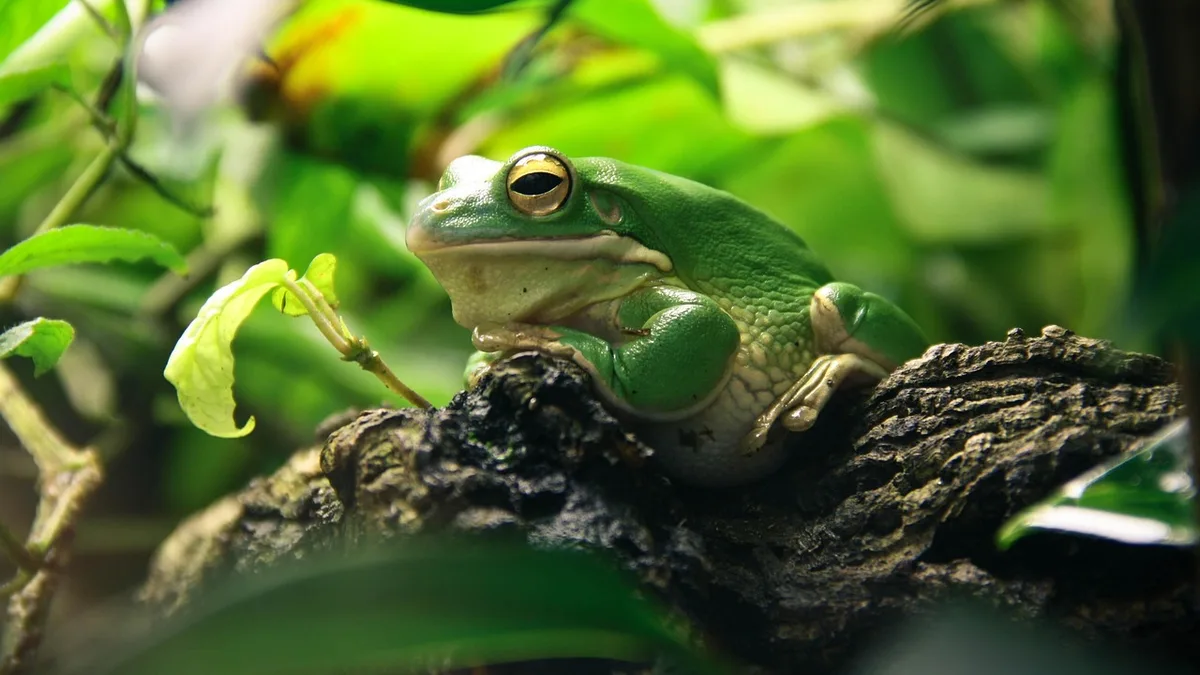 Amphibian skin is permeable, so water chemistry acts directly on the animal. Photo: seth0s via Pixabay.
| Trait | Amphibians (Frogs, Salamanders, Caecilians) | Reptiles (Snakes, Lizards, Turtles, Crocodilians) |
|---|---|---|
| Skin | Permeable to water, ions, and respiratory gases | Thick, keratinized scales that limit water loss |
| Eggs | Typically gelatinous, laid in water or moist environments | Amniotic eggs with leathery or hard shells, or live birth in many species |
| Life cycle | Most undergo metamorphosis from aquatic larva to adult | No metamorphosis, hatchlings resemble miniature adults |
| Respiration | Skin, gills (larval), and lungs depending on life stage | Lungs throughout life |
| Habitat | Require high humidity and moist substrates | Varied, but generally tolerate drier conditions than amphibians |
| Adult diet | Carnivorous, feeding on moving prey | Carnivorous or omnivorous depending on species |
| Immune system | Chemokine families shared with fish and mammals, distinct mucosal immunity | Functional CXCL17 orthologs present, distinct chemokine signaling |
Defining Amphibians: The Class Amphibia
Amphibians are ectothermic vertebrates that occupy a transitional position between aquatic and terrestrial life. Extant amphibians comprise three lineages: salamanders (Urodela or Caudata), frogs and toads (Anura), and caecilians (Gymnophiona, Apoda, or Caecilia), which together contain more than 6,000 species (Amphibian biology and husbandry, ILAR Journal, 2007). The name amphibian derives from Greek roots meaning both kinds of life, reflecting the dual aquatic and terrestrial phases typical of many species.
The defining feature of amphibians is their skin. Amphibian skin is permeable to water, ions, and respiratory gases, which means the skin serves as a respiratory organ and a site of water exchange (Amphibian biology and husbandry, ILAR Journal, 2007). This permeability imposes strict environmental requirements. An amphibian housed in a dry enclosure will lose water through its skin and become dehydrated. The same permeability means amphibians are highly sensitive to contaminants on human hands, including soaps, lotions, and disinfectants, because those substances can be absorbed through the skin.
Most amphibians are secretive and nocturnal. Their essential environmental needs include appropriate humidity, temperature, lighting, and retreat sites. Terrestrial and arboreal species require moist substrates, water dishes, and high relative humidity (Amphibian biology and husbandry, ILAR Journal, 2007). Temperature requirements for most species are poorly documented, so a temperature gradient within the enclosure is advisable to allow the animal to select its preferred temperature.
Defining Reptiles: The Class Reptilia
Reptiles are also ectothermic vertebrates, but they differ from amphibians in several structural and physiological ways. Reptiles possess thick, keratinized skin covered in scales, which provides a barrier against water loss. This integumentary difference allows reptiles to occupy arid environments that would be lethal to most amphibians.
Reptiles reproduce with amniotic eggs or give birth to live young. The amniotic egg contains a series of membranes that protect the embryo from desiccation, allowing reptiles to reproduce away from water. This reproductive strategy contrasts sharply with the typical amphibian pattern of laying gelatinous eggs in water or moist environments.
The immune systems of reptiles and amphibians show evolutionary divergence. Research on immunoglobulins in cold-blooded vertebrates has demonstrated that cartilaginous fishes are the most phylogenetically distant group relative to mammals in which bona fide immunoglobulins have been found, and studies of antibodies in bony fishes, amphibians, and reptiles continue to reveal how adaptive immune features such as isotype switching, somatic hypermutation, and affinity maturation evolved (The immunoglobulins of cold-blooded vertebrates, Biomolecules, 2014). The adaptive immune response in these lineages is complex and sophisticated, but the differences between amphibian and reptile immune function have practical implications for disease susceptibility and clinical management.
Evolutionary History: Why Frogs and Reptiles Are Different Lineages
The evolutionary split between amphibians and reptiles occurred deep in vertebrate history. Early tetrapod relationships have been studied extensively through morphological analysis of cranial and postcranial characters across 90 taxa (Early tetrapod relationships revisited, Biological Reviews of the Cambridge Philosophical Society, 2003). A stem-based definition of Tetrapoda is preferred over apomorphy-based and node-based definitions because it is operational and based on formal character analysis.
Modern amphibians, collectively called lissamphibians, include frogs, salamanders, and caecilians. The fossil record shows that frogs were present on Antarctica approximately 40 million years ago during the Eocene, when that continent supported freshwater ecosystems with mean annual precipitation of at least 900 mm and coldest month mean temperatures of at least 3.75 degrees Celsius (First fossil frog from Antarctica, Scientific Reports, 2020). This finding supports the Gondwanan distribution of the anuran clade Australobatrachia and demonstrates that ectothermic vertebrates inhabited high-latitude environments during warmer climatic intervals.
Reptiles diverged from the amphibian lineage before the appearance of modern amphibians. The two groups share a common tetrapod ancestor, but they have followed separate evolutionary paths for hundreds of millions of years. The classification of frogs as amphibians and not reptiles is therefore a reflection of distinct evolutionary lineages with different body plans, reproductive strategies, and physiological constraints.
Skin Physiology and Permeability
The most consequential difference between amphibians and reptiles for animal care is skin structure and function. Amphibian skin is permeable to water, ions, and respiratory gases (Amphibian biology and husbandry, ILAR Journal, 2007). This permeability enables cutaneous respiration, a process by which oxygen and carbon dioxide are exchanged across the skin surface. For many amphibians, the skin is a significant respiratory organ, supplementing or in some cases replacing lung function.
The practical consequences of permeable skin are substantial. Amphibians must be handled with wet, powder-free gloves or with thoroughly rinsed hands to prevent absorption of chemicals through the skin. Enclosure substrates must remain moist but not waterlogged. Water quality is critical because amphibians absorb ions and gases directly from the water in which they sit. Chlorine, chloramine, heavy metals, and ammonia in tap water can be absorbed through amphibian skin and cause toxicity.
Reptile skin, by contrast, is relatively impermeable. The keratinized scales and lipid layers of reptile skin reduce water loss and protect against environmental contaminants. Reptiles do not absorb water through their skin to the same degree as amphibians, and they are less vulnerable to chemicals on human hands. However, reptile skin is not completely inert, and some compounds can still be absorbed, particularly through thin-skinned areas such as the cloaca or the lining of the mouth.
Life Cycle and Metamorphosis
The amphibian life cycle typically includes an aquatic larval stage followed by metamorphosis into a terrestrial or semi-aquatic adult. Frogs hatch from eggs as tadpoles with gills and tails, then undergo metamorphosis to develop limbs, lungs, and other adult features. This biphasic life cycle is a hallmark of amphibian biology and has no equivalent in reptiles.
Reptiles hatch from eggs or are born live as miniature versions of adults. There is no larval stage and no metamorphosis. A hatchling snake or lizard must feed, thermoregulate, and avoid predators using the same body plan as the adult, just at a smaller size.
The reproductive modes of amphibians and reptiles are extraordinarily diverse and reflect the transition from aquatic to terrestrial life (Reproductive Modes of Amphibians and Reptiles, 2026). Some amphibians brood eggs on their backs or in vocal sacs, while others deposit eggs in foam nests or carry tadpoles to water. Reptiles show similar diversity, with some species laying eggs and others giving birth to live young. Viviparity has evolved repeatedly in both groups, and the complexity of reproductive modes challenges the development of assisted reproductive technologies for conservation.
For animal owners, the life cycle difference means that amphibian care must account for the possibility of aquatic larval stages. A frog keeper who acquires eggs or tadpoles must provide appropriate aquatic conditions until metamorphosis is complete. Reptile keepers generally do not face this requirement because reptile young are terrestrial or semi-aquatic from hatching.
Habitat Requirements and Environmental Control
Amphibians and reptiles have different environmental requirements that stem directly from their skin physiology and life history. The essential characteristics of amphibian environments include appropriate humidity, temperature, lighting, and retreat sites (Amphibian biology and husbandry, ILAR Journal, 2007). Terrestrial and arboreal amphibian species require moist substrates, water dishes, and high relative humidity.
Temperature management differs between the groups. Because temperature requirements for most amphibian species are poorly known, it is advisable to provide a temperature mosaic within the enclosure so the animal can find an appropriate temperature (Amphibian biology and husbandry, ILAR Journal, 2007). This approach is also sound for reptiles, but reptile temperature requirements are generally better documented for common species.
Photoperiod may affect amphibian physiology and behavior, especially reproduction and hibernation. The importance of ultraviolet light for calcium metabolism in amphibians is not yet known, but ecological observations suggest it might be important for some frog species (Amphibian biology and husbandry, ILAR Journal, 2007). Reptiles, particularly diurnal species, generally require UVB lighting for vitamin D synthesis and calcium metabolism. This difference means that a reptile enclosure setup cannot simply be copied for an amphibian enclosure.
Feeding and Nutrition
All amphibians are carnivorous as adults, and the feeding response of many species is elicited by the movement of prey (Amphibian biology and husbandry, ILAR Journal, 2007). Diets should include a mixture of prey species to provide nutritional variety. Common amphibian prey items include crickets, roaches, worms, and appropriately sized feeder fish for aquatic species.
Reptiles show greater dietary diversity. Many snakes eat rodents or other vertebrates, lizards may be insectivorous, omnivorous, or herbivorous, and turtles range from carnivorous to herbivorous depending on species. The feeding response of reptiles is also often movement-based, but some species recognize prey by scent or heat signature.
Gut loading of prey items is a standard practice for both amphibians and reptiles. Prey insects should be fed nutritious diets before being offered to the animal so that the nutrients are passed along. Calcium and vitamin supplementation may be necessary for both groups, but the specific requirements vary by species and life stage.
Intestinal Anatomy and Digestive Physiology
Research on amphibian intestine length has shown that across four large vertebrate groups, including fish, reptiles, birds, and mammals, intestine length scales hyper-allometrically with body mass at an exponent higher than the geometric expectation of 0.33 (Amphibian Intestine Allometry, Journal of Morphology, 2026). A study of 38 amphibian species, 37 of which were anurans, found that intestine length scaled with body mass at an exponent with a 95% confidence interval of 0.39 to 0.53, corroborating the hyper-allometric scaling observed in other vertebrates.
The hypothetical explanation for this pattern is that larger animals require a proportionate intestinal absorptive surface to meet metabolic demands while maintaining short diffusion distances between digestive enzyme secretion sites, nutrient absorption sites, and the digesta. This mechanism results in hypo-allometric scaling of intestine diameter, with hyper-allometric scaling of intestinal length ensuring overall constancy of functional organ surface (Amphibian Intestine Allometry, Journal of Morphology, 2026).
For animal owners and veterinary professionals, this research underscores that digestive capacity scales with body size in predictable ways. Larger frogs and reptiles require proportionally longer intestines to absorb nutrients, and feeding protocols should account for the metabolic demands of larger animals.
Immune Function and Disease Susceptibility
The immune systems of amphibians and reptiles share evolutionary origins but have diverged in important ways. Chemokines are small proteins that control cellular migration, and an extensive family of these molecules has been described in mammals containing nearly 50 members (Chemokines, Developmental and Comparative Immunology, 2004). The chemokine family is not unique to mammals, with several members identified in birds, amphibians, and fish, including a primitive vertebrate, the lamprey. Some microorganisms, particularly viruses, appear to have copied genes for chemokines to confuse the immune system of their hosts.
Research on CXCL17, a mucosal chemoattractant chemokine, has identified functional orthologs in 46 reptilian species, including lizards, snakes, turtles, and alligators, while finding only non-functional gene relics in 22 bird species (Evolutionary Conservation and Divergence of CXCL17 Orthologs, 2026). CXCL17 orthologs have been identified in fishes, amphibians, and mammals, and cross-species activity assays showed that CXCL17s from humans and tropical clawed frogs could activate the reptilian receptor, albeit with lower potency than the native ligand.
The practical implication is that amphibian and reptile immune responses differ in ways that affect disease susceptibility and response to treatment. Amphibians are particularly vulnerable to chytridiomycosis, a fungal disease that has caused population declines worldwide. The chytridiomycosis pandemic has reduced survival post-metamorphosis in many amphibian species so that females do not achieve sexual maturity and reproduce, and disease may cause altered reproductive fitness and terminal investment strategies in reproduction (Reproductive Modes of Amphibians and Reptiles, 2026).
Microbiota and Environmental Sensitivity
Environmental factors influence amphibian microbiotas at the organismal, population, community, ecosystem, and biosphere levels (From the organismal to biosphere levels, FEMS Microbiology Reviews, 2023). At the organismal level, tissue source, disease status, and experimental manipulations are the strongest predictors of variation in amphibian microbiotas. At the population level, habitat quality, disease status, and ancestry are commonly documented drivers of microbiota turnover.
For animal owners, this research means that the microbial community living on and in an amphibian is shaped by the environment in which the animal is kept. Enclosure hygiene, water quality, substrate choice, and diet all influence the microbiota, which in turn affects disease resistance and overall health. Sudden changes in environmental conditions can disrupt the microbiota and predispose the animal to infection.
Reptile microbiotas are similarly influenced by environmental factors, but the differences in skin physiology and habitat requirements mean that the specific environmental drivers differ between the groups.
Parasite Considerations
Amphibians and reptiles host a range of internal and external parasites. Research on helminth parasites has documented nematodes belonging to the family Molineidae that parasitize vertebrates worldwide, with the genera Kentropyxia, Oswaldocruzia, Poekilostrongylus, Schulzia, and Typhlopsia identified as infecting amphibians and reptiles across the Neotropical and Panamanian regions (Molineid nematodes of amphibians and reptiles, Parasitology, 2026). A checklist of 53 species found in the Neotropical and Panamanian regions, including the Caribbean islands, provides updated details on their diversity, host range, and geographic distribution.
For veterinary professionals, the parasite fauna of amphibians and reptiles differs from that of mammals and birds. Fecal examinations must be interpreted with knowledge of the normal parasite load for the species in question. Some parasites are commensal and cause no harm, while others are pathogenic. Treatment decisions should be based on clinical signs, parasite burden, and species-specific knowledge instead of on the mere presence of parasites.
Conservation Status and Legal Considerations
Amphibians and reptiles face significant conservation threats. Identifying and protecting hotspots of endemism and species richness is crucial for mitigating the global biodiversity crisis (Hidden hotspots of amphibian biodiversity in China, PNAS, 2024). A comprehensive analysis of amphibian species diversity in China combined 20 years of field surveys with molecular analyses of 521 described species and identified 100 potential cryptic species. Ten hotspots of amphibian diversity in China encompass 59.6 percent of the country's described amphibian species, 49.0 percent of cryptic species, and 55.6 percent of species endemic to China.
The introduction of alien species represents one of the most important problems in nature conservation (Herping the African Continent, Biology, 2026). A review of alien amphibians and reptiles in sub-Saharan Africa documented 21 amphibian species, including 10 established, and 57 reptile species, including 33 established, introduced to the region since the second half of the 18th century. Most introductions occurred in the last two decades, largely as a result of increases in international trade and the herp pet industry. Stowaway and pet trade are the most common pathways of introduction.
For animal owners, these conservation concerns translate into legal obligations. Many amphibian and reptile species are protected by national and international regulations, and keeping them may require permits. The pet trade is a major pathway for the introduction of alien species, and owners should ensure that any animal they acquire was legally and sustainably sourced.
Practical Assessment Steps for Owners and Veterinary Professionals
When assessing whether an animal is an amphibian or a reptile, or when evaluating the care requirements of a known amphibian or reptile, follow these steps.
First, identify the animal to species level if possible. Species identification is the foundation of appropriate care because husbandry requirements vary widely even within amphibians or within reptiles. Use a reliable field guide or consult a veterinary professional with herpetological experience.
Second, assess the skin. Amphibian skin is smooth, moist, or glandular, while reptile skin is covered in scales and relatively dry. This visual and tactile assessment is usually sufficient to distinguish the groups.
Third, evaluate the life stage. If the animal is an aquatic larva with gills, it is an amphibian. If the animal is a miniature version of the adult, it is a reptile.
Fourth, review the environmental conditions. Amphibians require high humidity and moist substrates. Reptiles may tolerate drier conditions. If the current enclosure does not match the species requirements, adjustments are needed.
Fifth, consult the available literature on the species. The husbandry requirements for the vast majority of amphibians are poorly known, and for these species a review of basic characteristics of amphibian biology supplemented by inferences drawn from the morphological and physiological characteristics of the species provides a basis for decisions about housing and feeding (Amphibian biology and husbandry, ILAR Journal, 2007).
Records and Measurements
Maintain written records for each amphibian or reptile in your care. The following measurements and observations should be recorded at regular intervals.
Body weight should be measured weekly for juveniles and monthly for adults. Weight loss is often the first sign of illness in both amphibians and reptiles. Weight gain should be gradual and steady, rapid weight gain may indicate overfeeding or edema.
Skin condition should be assessed at each handling. In amphibians, look for redness, sloughing, or excessive mucus production. In reptiles, look for retained shed, scale abnormalities, or signs of dysecdysis.
Feeding response should be recorded for each offering. A sudden loss of appetite in an animal that previously fed readily warrants investigation. For amphibians, note whether the animal strikes at moving prey. For reptiles, note whether the animal responds to prey by sight, scent, or heat.
Environmental parameters should be logged daily. Temperature highs and lows, humidity readings, and photoperiod settings should be recorded. Water quality parameters, including temperature, pH, ammonia, nitrite, and nitrate, should be tested regularly for aquatic and semi-aquatic species.
Fecal output should be monitored for frequency and consistency. Changes in fecal character may indicate parasitic infection, dietary problems, or gastrointestinal disease.
Common Failure Patterns in Amphibian and Reptile Care
Several recurring mistakes lead to illness and death in captive amphibians and reptiles. Recognizing these patterns allows owners and veterinary professionals to intervene early.
Dehydration is the most common problem in amphibian care. Amphibians lose water through their permeable skin, and an enclosure with low humidity or a dry substrate will rapidly dehydrate the animal. Signs include lethargy, sunken eyes, and dry, tacky skin. Prevention requires maintaining appropriate humidity and providing a water dish large enough for the animal to soak.
Overhydration is less common but can occur in aquatic species housed in water with poor quality. Ammonia buildup from waste products can be absorbed through amphibian skin and cause toxicity. Regular water changes and filtration are essential.
Thermal stress occurs when an enclosure lacks a temperature gradient. Amphibians and reptiles are ectotherms and cannot regulate their body temperature internally. Without a gradient, the animal cannot select its preferred temperature and may become too hot or too cold. Signs of thermal stress include lethargy, refusal to feed, and abnormal behavior.
Nutritional deficiencies are common in captive amphibians and reptiles fed a monotonous diet. A diet of a single prey species may lack essential vitamins and minerals. Gut loading prey and supplementing with calcium and vitamins can prevent deficiencies, but the specific requirements vary by species.
Improper handling causes injury and stress. Amphibians should be handled with wet gloves or thoroughly rinsed hands. Reptiles should be supported properly and never grasped by the tail. Rough handling can cause spinal injuries in reptiles and skin damage in amphibians.
Welfare and Safety Context
The welfare of captive amphibians and reptiles depends on meeting their species-specific needs. Because the husbandry requirements for the vast majority of amphibians are poorly known, owners must research the natural history of the species and make informed inferences about appropriate housing and feeding (Amphibian biology and husbandry, ILAR Journal, 2007).
Some amphibians are territorial and use olfactory cues to mark their territory and recognize other individuals of their species (Amphibian biology and husbandry, ILAR Journal, 2007). Housing multiple individuals together requires knowledge of the species social structure. Overcrowding can cause stress, injury, and disease transmission.
Safety considerations apply to both the animal and the handler. Some amphibians secrete toxins through their skin, and handlers should wash their hands thoroughly after contact. Reptiles may bite or scratch when frightened, and large constrictors and venomous species require specialized handling equipment and training.
Environmental contamination is a concern for both groups. Anticoagulant rodenticides are regularly used around the world to control pest mammals, and exposure of non-target organisms has been frequently documented (Toxic time bombs, Science of the Total Environment, 2020). A study of three urban reptile species in Perth, Western Australia found frequent exposure to anticoagulant rodenticides in all three species, with 91 percent of dugites, 60 percent of bobtails, and 45 percent of tiger snakes showing exposure. This research highlights the potential for reptiles to be important vectors of rodenticides in the food web and has implications for humans consuming wild reptiles.
Professional Escalation Criteria
Veterinary professionals should be consulted when an amphibian or reptile shows signs of illness that do not resolve with basic husbandry corrections. The following situations warrant urgent veterinary attention.
Respiratory distress, characterized by open-mouth breathing, wheezing, or bubbles from the nostrils, requires immediate evaluation. Both amphibians and reptiles can develop pneumonia, and treatment is time-sensitive.
Skin lesions, including ulcers, abscesses, or unusual discoloration, should be examined by a veterinarian. In amphibians, skin lesions can quickly become systemic because of the skin's permeability. In reptiles, skin infections may indicate underlying immunosuppression.
Neurologic signs, including tremors, seizures, or abnormal posture, require urgent evaluation. These signs may indicate metabolic disease, toxin exposure, or central nervous system infection.
Failure to feed for an extended period warrants veterinary assessment. The acceptable fasting duration varies by species, age, and season, but a sudden loss of appetite in a previously healthy animal is always concerning.
Weight loss of more than 10 percent of body weight should be investigated. Chronic weight loss may indicate parasitic infection, organ disease, or inadequate nutrition.
Abnormal feces, including diarrhea, blood in the stool, or the presence of parasites visible to the naked eye, should be evaluated. Fecal examination by a veterinarian can identify parasite eggs and guide treatment.
Any suspected toxin exposure requires immediate veterinary attention. Amphibians are particularly vulnerable to toxins absorbed through the skin, and rapid intervention is essential.
A Field Decision Framework for Distinguishing Amphibians from Reptiles in Clinical and Husbandry Settings
Veterinary professionals, animal owners, and field researchers frequently encounter animals that present ambiguous visual cues, especially juveniles, stressed individuals, or species with convergent body forms. A structured decision framework reduces misclassification risk and ensures that care protocols match the correct class. The following framework integrates skin assessment, life stage evaluation, habitat context, and behavioral observation into a repeatable process that can be applied in clinical examination rooms, during field surveys, or at intake for captive collections.
Step 1: Skin Integrity and Surface Assessment
Begin with a visual and tactile evaluation of the integument. Amphibian skin is permeable to water, ions, and respiratory gases, and this physiological requirement manifests as skin that appears smooth, moist, or glandular (Amphibian biology and husbandry, ILAR Journal, 2007). When handled with wet gloves or thoroughly rinsed hands, amphibian skin typically feels slick or tacky instead of dry. Reptile skin, by contrast, is covered in keratinized scales that limit water loss, producing a surface that feels dry, firm, or textured even in species that frequent aquatic habitats.
Examine the skin for accessory structures. Amphibians lack the overlapping scale arrays characteristic of reptiles. Some amphibians possess small dermal tubercles or warts, particularly in toad species, but these structures differ from the imbricate scales of lizards or the ventral scutes of snakes. If the animal presents with a complete or partial shed skin, note whether the shed is a single piece, which is common in many reptiles, or fragmented, which is more typical of amphibians.
Moisture status alone is not diagnostic. A dehydrated amphibian may present with dry, tacky skin, while a freshly molted or recently emerged reptile may appear moist. The decision framework therefore requires that skin assessment be combined with the subsequent steps instead of used in isolation.
Step 2: Life Stage and Developmental Morphology
Evaluate whether the animal is in a larval, metamorphic, or adult stage. Amphibians typically undergo metamorphosis from an aquatic larval form to a terrestrial or semi-aquatic adult, and the presence of gills, a tail fin, or limb buds in an aquatic specimen confirms amphibian identity. Reptiles hatch from eggs or are born live as miniature versions of adults, with no larval stage and no metamorphosis.
For adult specimens, examine the digits and limbs. Frogs and toads possess four toes on the forelimbs and five on the hindlimbs, with webbing between the hind toes in many aquatic species. Reptiles show greater variation in digit number and structure, and many lizards have claws on each digit while amphibians typically lack true claws. The absence of claws on a small terrestrial vertebrate with moist skin strongly suggests amphibian classification.
Step 3: Habitat Context and Environmental Association
Consider the environment in which the animal was found or is currently housed. Amphibians require appropriate levels of humidity, temperature, and lighting as well as retreat sites, and terrestrial and arboreal species require moist substrates, water dishes, and high relative humidity (Amphibian biology and husbandry, ILAR Journal, 2007). An animal discovered in a dry, arid environment with no nearby water source is more likely to be a reptile, although some amphibians estivate underground during dry periods and may be encountered during excavation.
For captive animals, review the enclosure conditions at intake. If the animal was housed in a high-humidity enclosure with moist substrate and a water feature, it was likely maintained as an amphibian. If the enclosure featured a basking lamp, dry substrate, and a hide box, the animal was likely maintained as a reptile. Discrepancies between the enclosure setup and the animal's apparent class should trigger a reassessment of both the classification and the adequacy of prior care.
Step 4: Behavioral Observation and Feeding Response
Observe the animal's activity patterns and feeding behavior. Most amphibians are secretive and nocturnal, and all amphibians are carnivorous as adults with feeding responses elicited by the movement of prey (Amphibian biology and husbandry, ILAR Journal, 2007). A small vertebrate that only feeds on live, moving invertebrates and ignores stationary food items is more consistent with amphibian behavior, though many reptiles also prefer live prey.
Note the tongue and feeding mechanism if observation is possible. Frogs typically possess a protrusible tongue attached at the front of the mouth that flips forward to capture prey. Lizards generally have a less protrusible tongue, and snakes lack movable eyelids and possess a forked tongue used for chemosensory sampling. These anatomical differences are reliable indicators when they can be observed.
Step 5: Integration and Escalation
Assign a provisional classification based on the weight of evidence across all four assessment domains. If three or more domains align with amphibian characteristics, classify the animal as an amphibian and apply amphibian-appropriate care protocols. If three or more domains align with reptile characteristics, classify the animal as a reptile. When the evidence is evenly split or contradictory, escalate to a veterinary professional with herpetological experience or consult a regional field guide.
The husbandry requirements for the vast majority of amphibians are poorly known, and for these species a review of basic characteristics of amphibian biology supplemented by inferences drawn from the morphological and physiological characteristics of the species provides a basis for decisions about housing and feeding (Amphibian biology and husbandry, ILAR Journal, 2007). The same principle applies to reptiles with poorly documented captive requirements.
Record System for Classification and Care Decisions
Maintain a standardized intake record for every animal that enters a clinical or captive setting. The record should document the date, location of origin, and the person performing the assessment. Record the findings from each of the four decision framework domains in a checklist format, noting the specific observations that supported each classification.
Include a body condition score and baseline weight at intake. For amphibians, record skin turgor and moisture status, noting any areas of redness, sloughing, or excessive mucus production. For reptiles, record scale condition, presence of retained shed, and any dysecdysis. These baseline measurements allow longitudinal tracking of health status and early detection of deterioration.
Document environmental parameters at intake and at each subsequent assessment. Temperature highs and lows, humidity readings, and photoperiod settings should be logged. For aquatic and semi-aquatic species, water quality parameters including temperature, pH, ammonia, nitrite, and nitrate should be tested and recorded. These records provide the data needed to identify environmental contributors to illness and to evaluate the effectiveness of husbandry corrections.
Troubleshooting Classification Ambiguities
Several scenarios produce persistent classification uncertainty. Juvenile reptiles, particularly small lizards, may have smooth, supple skin that resembles amphibian integument. In these cases, examine the digits for claws and the head for external ear openings, which are present in most lizards but absent in amphibians. The presence of claws and visible tympanic membranes supports reptile classification.
Aquatic reptiles such as turtles and softshell species may present with moist skin and a strong association with water, leading to confusion with aquatic amphibians. Examine the limbs and shell. Turtles possess a bony or leathery shell that is unmistakable, and their limbs are adapted for swimming or walking instead of the webbed hind feet of frogs.
Some amphibians, particularly fully aquatic species such as clawed frogs, may never leave the water and may be mistaken for fish or aquatic reptiles. Examine the limbs and eyes. Frogs possess distinct forelimbs and hindlimbs, while fish lack limbs entirely. Clawed frogs possess small claws on their hind feet, a rare exception to the general rule that amphibians lack claws, so digit examination must be interpreted with species knowledge.
Common Failure Patterns in Classification
Misclassification most often occurs when a single diagnostic feature is overemphasized. Relying solely on skin moisture leads to errors because dehydrated amphibians present with dry skin and freshly emerged reptiles may be moist. Relying solely on habitat leads to errors because some amphibians tolerate arid conditions and some reptiles are strongly aquatic.
Another failure pattern is the assumption that all small, moist-skinned vertebrates are frogs. Salamanders and caecilians are also amphibians and share the permeable skin characteristic, but they differ from frogs in body form, limb structure, and life history. A slender, limbless or short-limbed amphibian is more likely a caecilian or salamander than a frog, and care requirements differ accordingly.
A third failure pattern is the failure to update classification when new information emerges. An animal initially classified as a reptile may later be recognized as an amphibian when it undergoes metamorphosis or when its skin physiology is more carefully evaluated. Records should include a date for classification review and a mechanism for updating the classification when new evidence is obtained.
Welfare and Safety Context for Classification Decisions
Accurate classification is a welfare issue because it determines the environmental conditions, nutritional program, and medical approach applied to the animal. Amphibians housed under reptile protocols are at high risk of dehydration because their permeable skin loses water rapidly in dry conditions (Amphibian biology and husbandry, ILAR Journal, 2007). Reptiles housed under amphibian protocols may develop skin or respiratory infections from excessive humidity and inadequate basking opportunities.
Classification also affects safety protocols for handlers. Some amphibians secrete toxins through their skin, and handlers should wash thoroughly after contact. Venomous reptiles require specialized handling equipment and training. Misclassification of a venomous reptile as a harmless amphibian creates a serious bite risk, while misclassification of a toxic amphibian as a reptile may lead to inadequate hand hygiene after handling.
The immune systems of amphibians and reptiles have diverged evolutionarily, with differences in chemokine signaling and immunoglobulin structure that affect disease susceptibility and response to treatment (The immunoglobulins of cold-blooded vertebrates, Biomolecules, 2014). Treatment protocols developed for reptiles may not be appropriate for amphibians and vice versa. Accurate classification is therefore a prerequisite for evidence-based medical decision making.
Professional Escalation Criteria for Classification Uncertainty
Escalate to a veterinary professional with herpetological experience when the decision framework produces conflicting evidence across domains, when the animal is a juvenile or metamorphic stage that is difficult to identify, or when the species is rare, protected, or legally restricted. Escalate when the animal shows signs of illness that complicate assessment, including severe dehydration, skin lesions, or neurologic signs, because these conditions may obscure normal diagnostic features.
Escalate when the animal originates from a geographic region with high amphibian or reptile diversity and the local species are poorly documented in standard references. Biodiversity assessments in regions such as the Philippines have documented high endemism and the continued discovery of new records, and species identification in these areas requires specialized expertise (Amphibians and reptiles of Samar Island Natural Park, ZooKeys, 2026). Field identification guides may be incomplete, and misclassification of a protected species has legal as well as welfare consequences.
Escalate when the animal has been exposed to environmental contaminants, including anticoagulant rodenticides, which have been detected in urban reptiles at multiple trophic levels and may produce clinical signs that complicate species assessment (Toxic time bombs, Science of the Total Environment, 2020). Toxin exposure can alter behavior, skin condition, and activity patterns, making the animal appear atypical for its class.
Frequently Asked Questions
Is a frog a reptile?
No, a frog is not a reptile. Frogs belong to the order Anura within the class Amphibia. Reptiles form a separate class that includes snakes, lizards, turtles, crocodilians, and tuataras. The two groups diverged from a common tetrapod ancestor hundreds of millions of years ago and have distinct skin physiology, reproductive strategies, and life cycles.
What is the main difference between a reptile and an amphibian?
The main difference is skin structure and permeability. Amphibian skin is permeable to water, ions, and respiratory gases, which means amphibians can breathe through their skin and must live in moist environments (Amphibian biology and husbandry, ILAR Journal, 2007). Reptile skin is covered in keratinized scales that limit water loss, allowing reptiles to occupy drier habitats.
Are frogs amphibians?
Yes, frogs are amphibians. They belong to the order Anura within the class Amphibia, which also includes salamanders and caecilians. Extant amphibians comprise these three lineages and contain more than 6,000 species (Amphibian biology and husbandry, ILAR Journal, 2007).
Do all amphibians undergo metamorphosis?
Most amphibians undergo metamorphosis from an aquatic larval stage to an adult form, but not all species follow this pattern. Some amphibians have direct development, where eggs hatch into miniature adults without a free-living larval stage. However, the capacity for metamorphosis is a defining feature of the amphibian life cycle and has no equivalent in reptiles.
Why do frogs need to stay moist?
Frogs need to stay moist because their skin is permeable to water and respiratory gases (Amphibian biology and husbandry, ILAR Journal, 2007). A dry environment causes water loss through the skin, leading to dehydration. The skin also serves as a respiratory organ, and it must remain moist for gas exchange to occur.
Can a frog and a lizard be housed together?
Housing a frog and a lizard together is not recommended. The two groups have different environmental requirements, with amphibians needing high humidity and reptiles generally tolerating drier conditions. Additionally, many lizards are predators that will eat frogs, and the stress of cohabitation can cause illness in both animals.
How can I tell if an animal is an amphibian or a reptile?
Look at the skin and the life stage. Amphibians have smooth, moist, glandular skin, while reptiles have dry, scaly skin. If the animal is an aquatic larva with gills, it is an amphibian. If the animal is a miniature version of the adult, it is a reptile.
Why does the amphibian versus reptile distinction matter for veterinary care?
The distinction matters because the two groups have different physiology, disease susceptibility, and responses to treatment. Amphibian skin permeability means that topical medications and environmental contaminants are absorbed differently than in reptiles. The immune systems of the two groups have diverged evolutionarily, and disease presentations differ. Veterinary care must be tailored to the specific class and species.
Related Veterinary Guides
- Pacman Frog Care Guide
- Tomato Frog Care Guide
- Tree Frog Care Guide
- African Dwarf Frog Care Guide
- White Tree Frog Care Guide
Related Clinical & Scientific Guides
References and Further Reading
- Merck Veterinary Manual. Merck Veterinary Manual.
- Animal Health and Welfare. World Organisation for Animal Health.
- Chemokines.. Developmental and comparative immunology, 2004.
- Amphibian Intestine Allometry.. Journal of morphology, 2026.
- Amphibian biology and husbandry.. ILAR journal, 2007.
- A genomics revolution in amphibian taxonomy.. Science (New York, N.Y.), 2022.
- The immunoglobulins of cold-blooded vertebrates.. Biomolecules, 2014.
- Hidden hotspots of amphibian biodiversity in China.. Proceedings of the National Academy of Sciences of the United States of America, 2024.
- From the organismal to biosphere levels: environmental impacts on the amphibian microbiota.. FEMS microbiology reviews, 2023.
- Early tetrapod relationships revisited.. Biological reviews of the Cambridge Philosophical Society, 2003.
- Herping the African Continent: Alien Amphibians and Reptiles in Sub-Saharan Africa.. 2026.
- Evolutionary Conservation and Divergence of CXCL17 orthologs: Functional Evidence in Reptiles and Loss in the Avian Lineage. 2026.
- Reproductive Modes of Amphibians and Reptiles: Impacts on Conservation and the Development of Assisted Reproductive Technologies.. 2026.
- Molineid nematodes of amphibians and reptiles: A checklist of Caribbean, Panamanian, and Neotropical species and notes on their biology and host associations.. 2026.
- Amphibians and reptiles of Samar Island Natural Park, Philippines, with an updated checklist, a rediscovery, and new records for Samar Island.. 2026.
- Eye of Newt and Toe of Frog, Adder's Fork and Lizard's Leg: The Lore and Mythology of Amphibians and Reptiles. 2015.
- Toxic time bombs: Frequent detection of anticoagulant rodenticides in urban reptiles at multiple trophic levels.. Science of the Total Environment, 2020.
- First fossil frog from Antarctica: implications for Eocene high latitude climate conditions and Gondwanan cosmopolitanism of Australobatrachia. Scientific Reports, 2020.
- Nodal paralogues underlie distinct mechanisms for visceral left-right asymmetry in reptiles and mammals. Nature Ecology & Evolution, 2020.
- A Northern Range Expansion for the Green Tree Frog (Hyla cinerea) and Trends in Distributions of Illinois Reptiles and Amphibians. 2008.
- Distribution and conservation of frogs and reptiles of Queensland rainforests. Memoirs Queensland Museum, 1993.
- Rare frogs and reptiles of Cape York Peninsula, Australia. Biological Conservation, 1982.
- Play in fishes, frogs and reptiles. Current Biology, 2015.
- Reptile and frog utilisation of rehabilitated bauxite minesites and dieback-affected sites in Western Australia's Jarrah Eucalyptus marginata forest. Biological Conservation, 1985.
This article is educational and is not a substitute for veterinary diagnosis or treatment. Contact a veterinarian for advice about an individual animal.