African Dwarf Frog Care Guide
By Dr. Zubair Khalid, DVM, MS, PhD ·
Key Takeaways
- Aquatic Husbandry Essentials: A minimum 10-gallon (38-liter) aquarium is required for two adult African dwarf frogs, emphasizing a horizontal footprint for swimming space. Water temperature must be maintained between 72-78°F (22-26°C) with a stable pH of 6.5-7.5, and ammonia/nitrite levels must be 0 ppm to prevent bacterial dermatitis and septicaemia.
- Nutritional Requirements: A varied diet of sinking amphibian pellets, supplemented with frozen bloodworms, brine shrimp, and daphnia, is crucial. Juveniles require daily feeding, while adults should be fed every other day. Food should be dusted with calcium and vitamin D3 powder twice weekly to prevent metabolic bone disease.
- Tankmate Compatibility and Social Structure: African dwarf frogs are social and thrive in groups of 3-5. Suitable tankmates include small, peaceful, surface-dwelling fish like neon tetras or guppies; avoid bottom-dwellers or aggressive species that can cause stress or compete for food.
- Common Pathologies and Etiologies: Bacterial dermatitis (red leg syndrome) is often secondary to poor water quality, caused by Aeromonas hydrophila. Mycobacteriosis, caused by Mycobacterium marinum, presents as chronic granulomatous lesions with zoonotic potential. Chytridiomycosis, caused by Batrachochytrium dendrobatidis, is diagnosed via PCR and treated with supervised itraconazole baths.
- Preventive Veterinary Medicine: A 30-day quarantine for newly acquired frogs is essential to prevent the introduction of pathogens like Batrachochytrium dendrobatidis. Annual veterinary wellness exams, including faecal analysis for parasites, are recommended for early detection of health issues.
- Zoonotic Risks and Biosecurity: Mycobacterium marinum poses a zoonotic risk, necessitating strict hand hygiene after handling frogs or their water. Immunocompromised individuals should avoid direct contact. Regional biosecurity protocols, such as reporting suspected chytrid outbreaks in the UK or screening for Bsal in Australia, are critical.
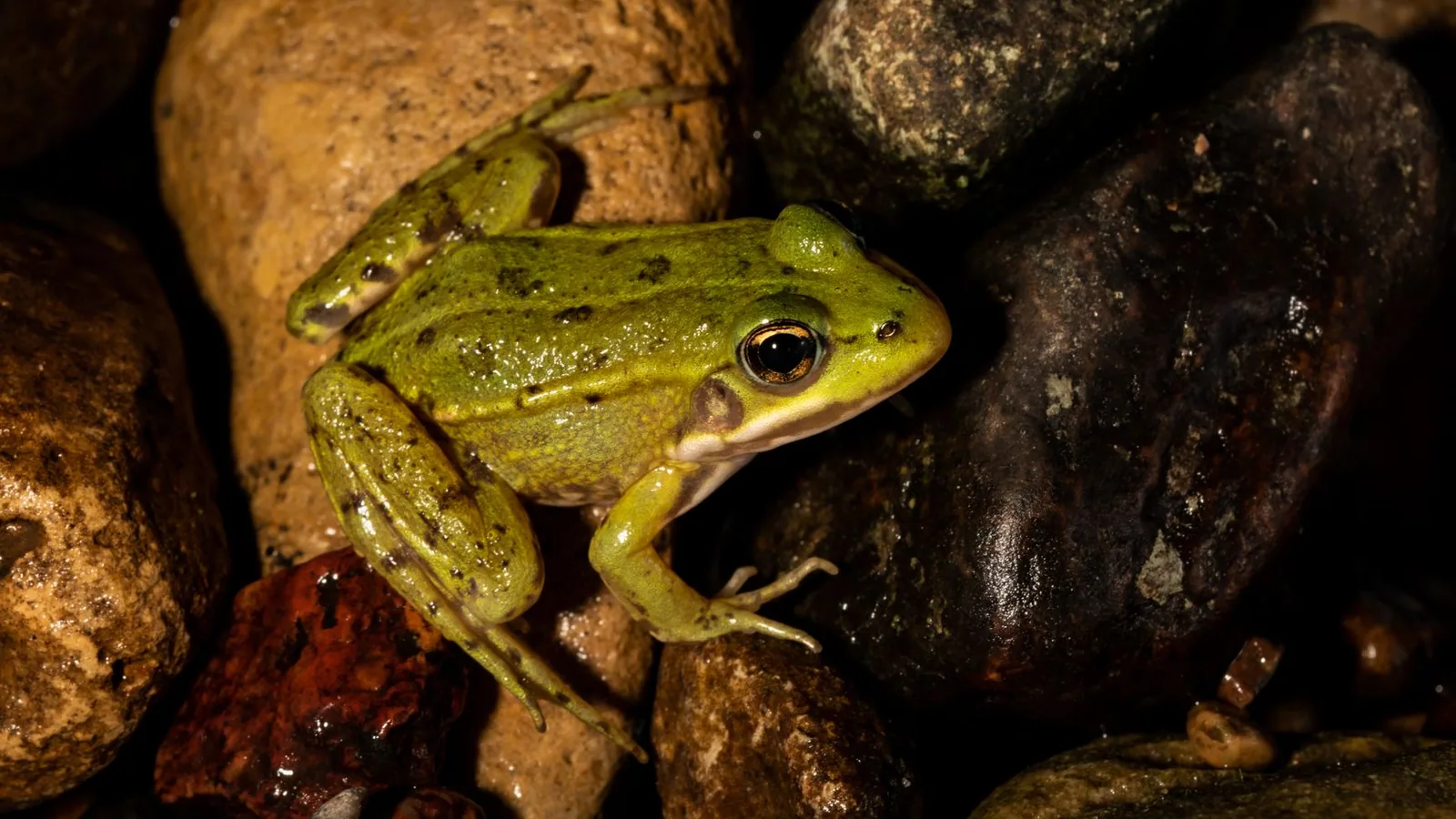
The African dwarf frog (Hymenochirus boettgeri) is one of the most popular fully aquatic amphibians kept in captivity. Despite their small size and seemingly low-maintenance reputation, these frogs require precise environmental conditions and targeted veterinary oversight to thrive. This guide provides evidence-based recommendations for husbandry, nutrition, tankmate selection, and preventive health care, drawing upon current veterinary consensus guidelines from the American Veterinary Medical Association (AVMA), the European College of Zoological Medicine, and the Merck Veterinary Manual.
Quick Q&A
Question: What is the minimum tank size for a pair of African dwarf frogs? Answer: For two adult frogs, a 10-gallon (38-liter) aquarium is recommended as a minimum. Smaller volumes lead to rapid ammonia accumulation and poor water quality, which predisposes frogs to bacterial dermatitis and septicaemia.
Question: Can African dwarf frogs live with fish? Answer: Yes, but only with small, peaceful, surface-dwelling fish such as neon tetras or guppies. Avoid bottom-dwelling fish that might compete for food or nip at the frogs’ legs.
Question: How often should I feed my African dwarf frog? Answer: Feed adults every other day with a varied diet of sinking pellets, frozen bloodworms, and brine shrimp. Juveniles require daily feeding.
Fully Aquatic Nature and Anatomy
African dwarf frogs are obligate aquatic amphibians. Unlike their clawed relatives (Xenopus laevis), they lack fully developed lungs and rely primarily on cutaneous respiration supplemented by small, simple lungs. As noted in the Merck Veterinary Manual, amphibians have highly permeable skin that makes them exceptionally sensitive to water quality changes and chemical pollutants. Owners must understand that these frogs never leave the water naturally; they will drown if kept in a terrestrial environment.
Aquarium Setup and Water Quality
Tank Size and Dimensions
For a pair of adult frogs, a 10-gallon (38-liter) tank is the veterinary minimum. A longer, shallower footprint (e.g., 20-inch length) is preferable to a tall narrow tank because frogs spend most of their time near the bottom and need horizontal swimming space. Overcrowding increases stress and aggressive behaviour, leading to immunosuppression and higher disease risk.
Filtration and Water Movement
A sponge filter is the gold standard for amphibian enclosures. It provides biological filtration without creating strong currents that can exhaust these weak swimmers. Power filters should be baffled. According to AVMA guidelines on amphibian welfare, water flow rates should not exceed 5-10 times the tank volume per hour for fragile species.
Temperature and Heating
African dwarf frogs are tropical animals. A stable water temperature of 72-78°F (22-26°C) is critical. Use an aquarium heater with a thermostat. Sudden temperature drops below 68°F (20°C) can suppress the immune system and precipitate infections such as Chlamydia or Mycobacterium species. In Europe, the Federation of Veterinarians of Europe (FVE) emphasises that poikilotherms must have a thermal gradient to thermoregulate, even in a small tank.
Water Chemistry
- pH: 6.5-7.5 (neutral to slightly acidic)
- Ammonia and nitrite: 0 ppm (detectable levels are toxic)
- Nitrate: below 20 ppm
- Total dissolved solids (TDS): 100-200 ppm
- Hardness: 5-15 dGH
Chlorine and chloramine are lethal to amphibians. Use a dechlorinator that also neutralises heavy metals. Many municipal water supplies in North America, the United Kingdom, and Australia add chloramines; check with your local water authority.
Substrate and Decor
Use fine sand or smooth rounded gravel. Sharp gravel can cause skin abrasions and secondary infections. Live or silk plants provide hiding spots and reduce stress. Avoid plastic plants with sharp edges. Provide caves or PVC pipes as refuges. A tight-fitting lid is mandatory; these frogs are accomplished jumpers and can escape the water surface.
Diet and Nutrition
Natural Feeding Behaviour
African dwarf frogs are visual predators that feed exclusively in the water. They lack a tongue and use their forelimbs to push food into their mouths. All food must sink to be accessible. Floating foods often go unnoticed.
Recommended Diet
A varied diet is essential for long-term health. The Cornell College of Veterinary Medicine recommends the following feeding regimen for captive aquatic frogs:
- Staple: Commercially available sinking amphibian pellets (e.g., Hikari Tropical Sinking Carnivore Pellet). These provide balanced protein (40-45%) and calcium.
- Supplements: Frozen bloodworms, brine shrimp, daphnia, and blackworms. Live foods stimulate natural foraging behaviour.
- Calcium and vitamin D3: Dust food with a reptile/amphibian calcium powder (without phosphorus) twice a week. Hypocalcaemia is a common cause of metabolic bone disease in captive frogs.
Feeding Frequency
- Juveniles (under 1 year): Daily, offering as much as they can consume in 5 minutes.
- Adults: Every other day, adjusted to maintain a healthy body condition score.
Avoid overfeeding; obesity leads to hepatic lipidosis and reduced lifespan. Uneaten food must be removed after 15 minutes to prevent water fouling.
Tankmates and Social Compatibility
Ideal Tankmates
African dwarf frogs are peaceful but timid. Suitable fish companions include:
- Small tetras (neon, ember, cardinal)
- Rasboras
- Guppies and endlers
- Corydoras catfish (only in larger tanks with multiple frog hides)
All fish should be too small to eat frog eggs or tadpoles and too gentle to nip fins. Fast-swimming or aggressive species (e.g., barbs, cichlids, bettas) cause chronic stress in frogs.
Species to Avoid
- Large fish that may prey on frogs (angelfish, oscars)
- Bottom-dwelling fish that compete for sinking food (loaches, plecostomus)
- Invertebrates such as crayfish or large shrimp (they may attack frogs)
- Other amphibians (disease risk; frogs of different species may cross-transmit pathogens)
Intraspecific Housing
African dwarf frogs are social and do best in small groups of 3-5. Males may show mild aggression, but serious injury is rare in adequately sized tanks. If keeping a breeding pair, provide ample cover for females to escape male courtship harassment.
Common Health Problems
1. Bacterial Dermatitis and Septicaemia
Red leg syndrome is the most frequently diagnosed bacterial infection in captive frogs. It is caused by Aeromonas hydrophila and other Gram-negative bacteria. Clinical signs include cutaneous erythema (reddening of the hind legs), lethargy, anorexia, and skin ulcerations. The condition is nearly always secondary to poor water quality. Treatment requires antibiotics (e.g., enrofloxacin, but use caution due to nephrotoxicity in amphibians) and immediate correction of water parameters.
2. Mycobacteriosis
Mycobacterium marinum and M. chelonae are atypical mycobacteria that cause chronic granulomatous disease in frogs. Lesions appear as firm nodules on the skin or in internal organs. There is no effective treatment; euthanasia is recommended because of zoonotic potential (human “fish tank granuloma”). The Australian Veterinary Association advises that any frog with persistent nodular skin lesions be submitted for post-mortem examination.
3. Chytridiomycosis
Though less common in captive Hymenochirus than in wild populations, infection with Batrachochytrium dendrobatidis (Bd) is a reportable disease in many countries. Affected frogs show excessive skin shedding, abnormal posture, and lethargy. Diagnosis is via PCR testing of skin swabs. Treatment with itraconazole baths is possible but must be supervised by a veterinary surgeon due to toxicity risks.
4. Oomycete (Fungal) Infections
Fungi of the Saprolegnia genus produce cotton-like white growths on skin and gill slits. Predisposing factors include skin trauma and low water temperature. Treatment involves 0.1% malachite green baths (short exposure) and raising the water temperature to 80°F (26.5°C) for several days.
5. Metabolic Bone Disease (MBD)
Hypocalcaemia secondary to inadequate UVB or dietary supplementation leads to jaw deformities, spinal curvature, and tetany. Although these frogs are primarily nocturnal, low-level UVB (2-5%) is beneficial for calcium metabolism. The Merck Veterinary Manual lists MBD as a preventable condition in captive amphibians when a proper calcium-to-phosphorus ratio (at least 1.5:1) is provided.
6. Oedema (Dropsy)
Generalised fluid retention (“bloat”) occurs when osmoregulation fails due to renal disease or bacterial infection. Frogs appear swollen and may have difficulty swimming. Treatment is directed at the underlying cause, but prognosis is often poor.
Veterinary Care and Preventive Medicine
Quarantine
Newly acquired frogs should be quarantined for a minimum of 30 days in a separate tank. This is especially important when introducing frogs to an established collection to prevent introduction of chytrid or mycobacteria. In Canada, the CVMA recommends screening all new amphibians for Bd via skin swab PCR before entering a closed system.
Physical Examination
Annual veterinary wellness exams are valuable. The veterinarian should assess body condition, skin integrity, oral cavity, and joints. Routine faecal examination for protozoan parasites (e.g., Hexamita or coccidia) is recommended.
Zoonoses
Mycobacterium marinum can cause skin infections in humans. Hand hygiene is critical after handling frogs or their water. Do not clean tanks in kitchen sinks. Immunocompromised individuals should avoid direct contact with amphibians altogether.
Regional Considerations
United States and Canada
Tap water chloramine levels can vary. Use a test kit to ensure dechlorination is complete. In northern states and provinces, winter heating is essential; backup battery-operated heaters are advisable during power outages.
United Kingdom and Europe
Under FVE guidelines, all amphibian enclosures must be escape-proof and provide a thermogradient. In the UK, DEFRA regulations require that any suspected chytrid outbreak be reported to the Animal and Plant Health Agency. European hobbyists should source frogs from CITES-registered breeders.
Australia
Importation of Hymenochirus is restricted; only licensed keepers may hold this species (under the Environment Protection and Biodiversity Conservation Act 1999). Australian veterinarians should screen for Batrachochytrium salamandrivorans (Bsal) as part of biosecurity protocols.
Conclusion
Successful African dwarf frog husbandry hinges on stable, pristine water quality, a varied and appropriately supplemented diet, compatible tankmates, and proactive veterinary monitoring. By following the guidelines outlined here, owners can expect a lifespan of 5-7 years, with some individuals reaching 10 years under optimal conditions. As with all exotic pets, consultation with a veterinarian experienced in amphibian medicine remains the cornerstone of responsible care.
Related Articles
Related Clinical & Scientific Guides
References
Merck Veterinary Manual. Amphibian Management and Medicine. 11th ed. Kenilworth, NJ: Merck & Co.; 2023. [Cited: veterinary parameters and disease prevention.] American Veterinary Medical Association. AVMA Guidelines for the Euthanasia of Animals: 2020 Edition. Schaumburg, IL: AVMA; 2020. [Cited: welfare standards for aquatic amphibians.] Federation of Veterinarians of Europe. FVE Position Paper on the Welfare of Amphibians in Captivity (FVE/23/015). Brussels: FVE; 2023. [Cited: thermal gradient requirements.] Cornell College of Veterinary Medicine. Nutrition of Captive Amphibians. Ithaca, NY: Cornell University; 2022. [Cited: diet recommendations for aquatic frogs.] Australian Veterinary Association. Guidelines for the Management of Mycobacteriosis in Exotic Pets. St Leonards, NSW: AVA; 2021. Cited: [zoonotic risk and euthanasia advice.] Canadian Veterinary Medical Association. Biosecurity in Exotic Animal Practice: An Amphibian Focus. Ottawa, ON: CVMA; 2023. [Cited: quarantine and chytrid screening.]