Newt Care Guide
By Dr. Zubair Khalid, DVM, MS, PhD ·
Key Takeaways
- Environmental Control is Paramount: Maintaining cool water temperatures between 15°C and 20°C (59°F to 68°F) is critical, as temperatures exceeding 24°C (75°F) induce heat stress and increase susceptibility to bacterial and fungal infections. A semi-aquatic setup with a 2:1 water-to-land ratio and robust biological filtration is essential for managing ammonia and nitrite levels below 0 ppm and nitrates below 20 ppm.
- Dietary Management and Supplementation: Newts are carnivorous and require a varied diet of live prey such as earthworms, blackworms, and crickets, which should be gut-loaded. Supplementation with calcium (with or without D3 depending on UVB availability) at every other feeding and a multivitamin weekly is crucial to prevent metabolic bone disease (MBD).
- Handling Precautions and Zoonotic Risk: Newts possess permeable skin and can secrete toxins; handling should be minimized and always performed with powder-free nitrile gloves to prevent skin damage and potential toxin transfer. Strict hygiene, including thorough handwashing, is necessary to mitigate the risk of zoonotic transmission of pathogens like Salmonella.
- Recognizing and Managing Health Issues: Common ailments include red-leg syndrome (bacterial septicemia), fungal infections, and metabolic bone disease, often stemming from poor husbandry. Early identification of clinical signs such as lethargy, skin lesions, or spinal deformities necessitates prompt veterinary consultation for diagnosis and treatment, which may involve antibiotics, antifungals, or nutritional correction.
- Importance of Quarantine and Veterinary Care: All new amphibian acquisitions should undergo a 30-60 day quarantine period to prevent the introduction of diseases like chytridiomycosis. Establishing a relationship with a veterinarian specializing in amphibian medicine is vital for routine wellness checks and addressing health concerns, as amphibians are sensitive to environmental changes during transport and examination.
Newts are fascinating semi-aquatic amphibians that have become increasingly popular as exotic pets. Their unique life cycle, striking colours, and relatively low-maintenance requirements appeal to dedicated keepers. However, providing proper newt care demands a thorough understanding of their specific environmental, nutritional, and health needs. This pillar guide, written from a veterinary perspective, covers the essential pillars of newt husbandry: semi-aquatic setup, cool temperatures, diet, handling caution, and health. Whether you are a first-time owner or an experienced herpetoculturist, following evidence-based guidelines from veterinary organisations such as the American Veterinary Medical Association (AVMA) and the Merck Veterinary Manual will help ensure your newt thrives.
Quick Q&A
Question: What is the ideal water temperature for a pet newt? Answer: Most commonly kept newt species, such as the Eastern newt (Notophthalmus viridescens) and fire-bellied newts (Cynops spp.), require cool water temperatures between 15°C and 20°C (59°F to 68°F). Temperatures above 24°C (75°F) can cause heat stress and increase susceptibility to disease.
Semi-Aquatic Setup
Newts are semi-aquatic, meaning they require both a water area for swimming and a land area for resting and basking. The enclosure must mimic their natural riparian habitat.
Tank Size and Configuration
A 20-gallon (75-litre) long tank is the minimum for one to two adult newts. Larger tanks are always better, as they provide more stable water parameters and allow for a proper land-to-water ratio. The water section should occupy roughly two-thirds of the tank, with a gentle slope or ramp leading to a dry land area. Use a tight-fitting mesh lid to prevent escape, as newts are adept climbers.
Water Quality and Filtration
Newts are highly sensitive to water quality. A sponge filter or a low-flow canister filter is ideal because it provides biological filtration without strong currents that can stress newts. Perform partial water changes (25% to 30%) weekly using dechlorinated water. Chlorine and chloramines are toxic to amphibians; always use a water conditioner suitable for reptiles and amphibians. According to the Cornell College of Veterinary Medicine, maintaining low ammonia and nitrite levels (0 ppm) and nitrate below 20 ppm is critical for amphibian health.
Land Area and Substrate
The land area should consist of a non-abrasive substrate such as coconut fibre, sphagnum moss, or smooth river stones. Avoid sharp gravel that can cause skin abrasions. Provide hiding spots using cork bark, live or artificial plants, and small caves. The land must remain moist but not waterlogged. A humid hide (e.g., a plastic container with damp moss) helps newts shed properly.
Lighting and UVB
Newts do not require intense lighting, but a low-output UVB bulb (2% to 5%) can benefit their calcium metabolism and overall health, especially if they are not receiving dietary vitamin D3. The AVMA recognises that UVB lighting is beneficial for many captive amphibians, though it is not strictly essential if the diet is properly supplemented. Provide a photoperiod of 10 to 12 hours of light per day.
Cool Temperatures
Temperature management is perhaps the most critical aspect of newt care. Unlike tropical reptiles, newts are cold-adapted and can suffer from prolonged exposure to warmth.
Optimal Temperature Range
Most pet newts (e.g., Eastern newts, fire-bellied newts, paddle-tail newts) thrive at 15°C to 20°C (59°F to 68°F). Some species, like the alpine newt (Ichthyosaura alpestris), prefer even cooler temperatures (10°C to 15°C). Use a submersible aquarium heater only if your home temperature drops below 10°C in winter; otherwise, avoid heating. In warm climates, a chiller or frequent ice bottle rotations may be necessary to keep the water cool. The European Medicines Agency (EMA) has noted that thermal stress is a major predisposing factor for infectious diseases in captive amphibians.
Seasonal Cooling
Many newt species benefit from a winter cooling period (brumation) of 4 to 8 weeks at 5°C to 10°C (41°F to 50°F). This mimics their natural cycle and can improve breeding success and longevity. Gradually reduce temperature over two weeks, then slowly warm back up. Consult a veterinarian experienced in amphibian care before attempting brumation, as it is not suitable for sick or underweight animals.
Monitoring
Place a digital thermometer in both the water and the land area. Avoid relying on stick-on thermometers, which can be inaccurate. A temperature range that consistently exceeds 24°C (75°F) can lead to heat stress, manifested by lethargy, loss of appetite, and increased respiratory rate. If you observe these signs, immediately cool the enclosure.
Diet
Newts are carnivorous and require a varied diet of live prey. They have a high metabolic rate for their size and need frequent feeding.
Staple Foods
The best staple foods for adult newts are earthworms (nightcrawlers), blackworms, bloodworms, and small crickets. Feeder insects should be gut-loaded (fed nutritious food) 24 hours before offering. Aquatic newts also accept frozen bloodworms and brine shrimp, but live foods are preferred to stimulate natural hunting behaviour. Juveniles (efts) require smaller prey such as fruit flies, pinhead crickets, and micro-worms.
Feeding Frequency
Feed adult newts every other day, offering as much as they can consume in 10 to 15 minutes. Remove uneaten food to prevent water fouling. Juveniles should be fed daily. According to the VCA Animal Hospitals, overfeeding can lead to obesity and hepatic lipidosis in amphibians.
Supplementation
Dust feeder insects with a calcium powder (without vitamin D3 if UVB is provided, or with D3 if not) at every other feeding. A multivitamin supplement should be given once weekly. This helps prevent metabolic bone disease (MBD), a common condition in captive amphibians caused by calcium deficiency or improper calcium-to-phosphorus ratios. The Federation of Veterinarians of Europe (FVE) underscores the importance of calcium supplementation for all captive amphibians.
Water Feeding
Some newts feed exclusively in water. Ensure that live prey placed in the water is small enough to be swallowed whole. Never feed mammalian meat, fish fillets, or commercial reptile pellets, as these lack the proper nutrient profile and can cause gastrointestinal obstructions.
Handling Caution
Newts are not pets that enjoy handling. They have delicate, permeable skin and can secrete potent toxins. Extreme caution is required.
Toxicity
Many newts, especially those in the genus Taricha (rough-skinned newts), produce tetrodotoxin (TTX), a powerful neurotoxin that can be fatal if ingested. Even common pet species like fire-bellied newts secrete mild toxins that can cause skin irritation or gastrointestinal upset in humans and other animals. The Canadian Food Inspection Agency (CFIA) advises that all newts should be considered potentially toxic and handled only when absolutely necessary.
Safe Handling Practices
If you must handle a newt (e.g., for veterinary examination or tank cleaning), always wear disposable, powder-free nitrile gloves. Wet the gloves with dechlorinated water first to avoid removing the newt’s protective mucus layer. Never use bare hands, as oils, salts, and lotions can damage the newt’s skin and cause secondary infections. After handling, wash your hands thoroughly with soap and water, even if you wore gloves.
Stress Reduction
Handling is extremely stressful for newts. Stress can suppress the immune system, leading to outbreaks of red-leg syndrome or fungal infections. Limit handling to essential situations only. To move a newt, gently coax it into a small container using a soft net or a plastic cup. Avoid grasping the tail, as newts can autotomise (drop) their tails as a defence mechanism.
Zoonotic Considerations
Amphibians can carry Salmonella bacteria without showing signs. The Australian Veterinary Association (AVA) highlights that reptile and amphibian owners should practice strict hygiene, including hand washing after any contact with the animal or its enclosure, to prevent salmonellosis. Children under five, elderly individuals, and immunocompromised persons should avoid direct contact with newts.
Health
Common health problems in pet newts are often linked to poor water quality, incorrect temperatures, or nutritional imbalances. Early recognition and veterinary intervention are key.
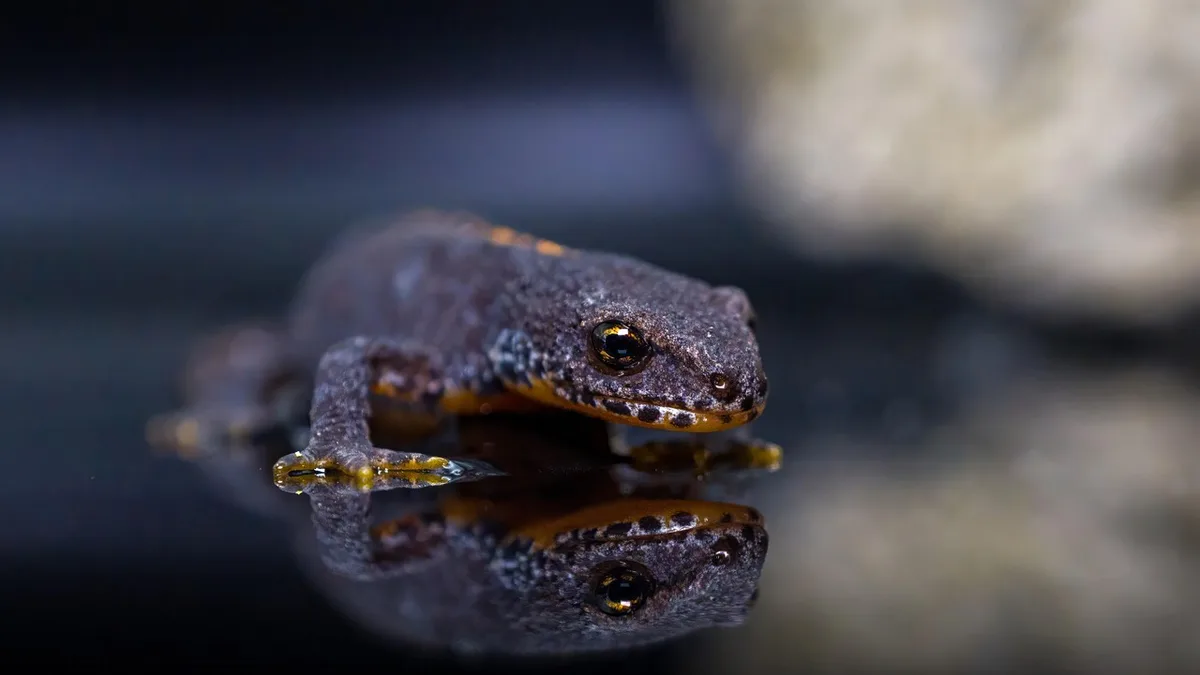 Amphibian skin is permeable, so water chemistry acts directly on the animal. Photo: ANHagen via Pixabay.
Signs of a Healthy Newt
A healthy newt is active, has clear eyes, smooth moist skin, and a good appetite. Its skin should be free of ulcers, lumps, or excessive slime. The animal should swim with coordinated limb movements and be able to right itself if turned over.
Common Diseases
Red-leg syndrome (bacterial septicemia, often caused by Aeromonas hydrophila) presents as redness on the ventral skin, lethargy, and loss of appetite. It is usually secondary to poor water quality. Treatment requires veterinary-prescribed antibiotics and immediate improvement of husbandry.
Fungal infections appear as white cotton-like growths on the skin or mouth. They often follow skin injuries. Antifungal medications (e.g., itraconazole) may be used under veterinary guidance, and the environment must be thoroughly disinfected.
Metabolic bone disease (MBD) results from calcium deficiency or inadequate UVB. Signs include soft jaw, spinal deformities, and tremors. Treatment involves correcting diet and lighting; advanced cases may require injectable calcium.
Parasites (both internal and external) can be introduced via live food. Nematodes and trematodes are common. A faecal examination by a veterinarian can identify parasites, and appropriate antiparasitic drugs (e.g., fenbendazole) can be prescribed.
Quarantine
All newts should be quarantined for at least 30 to 60 days before introduction to an established colony. House them in a separate tank with simple furnishings and monitor for signs of disease. The AVMA recommends quarantine for all new amphibian acquisitions to prevent spread of chytridiomycosis, a devastating fungal disease caused by Batrachochytrium dendrobatidis.
Veterinary Care
Find a veterinarian who specialises in exotic pets or amphibians. Routine wellness examinations are recommended annually. During a check-up, the vet will assess body condition, skin integrity, and oral health. They may also perform skin swabs or faecal tests. The Merck Veterinary Manual advises that amphibian patients should be handled minimally and kept in a moist, cool environment during transport.
Conclusion
Caring for a newt is a rewarding experience that requires dedication to replicating a cool, clean, semi-aquatic environment. By focusing on the five pillars outlined here (semi-aquatic setup, cool temperatures, diet, handling caution, and health), you can provide a high standard of welfare for your amphibian companion. Always consult a qualified veterinarian for any health concerns, and stay informed about best practices from authoritative bodies such as the AVMA, CVMA, and FVE. With proper care, many newts can live 10 to 20 years in captivity, offering a unique window into the world of amphibians.
Related Articles
Related Clinical & Scientific Guides
References
Cornell College of Veterinary Medicine. (2020). Amphibian Care Guidelines. Ithaca, NY: Cornell University. American Veterinary Medical Association. (2021). Guidelines for the Care of Amphibians in Captivity. Schaumburg, IL: AVMA. European Medicines Agency. (2019). Scientific Guideline on the Welfare of Laboratory Amphibians. London: EMA. VCA Animal Hospitals. (2022). Feeding Your Newt. Retrieved from vcahospitals.com. Federation of Veterinarians of Europe. (2020). Position Paper on Exotic Pet Welfare. Brussels: FVE. Canadian Food Inspection Agency. (2018). Amphibian Import and Health Requirements. Ottawa: CFIA. Australian Veterinary Association. (2021). Zoonotic Diseases in Reptiles and Amphibians: A Guide for Veterinarians. St Leonards, NSW: AVA. Merck Veterinary Manual. (2023). Amphibian Medicine. Kenilworth, NJ: Merck & Co.