Tomato Frog Care Guide
By Dr. Zubair Khalid, DVM, MS, PhD ·
Key Takeaways
- Maintaining optimal humidity (70-80% RH) and stable temperatures (24-28°C / 75-82°F) is paramount, as desiccation and thermal stress rapidly lead to dysecdysis and immunosuppression.
- A varied diet of gut-loaded and dusted invertebrates, supplemented with calcium and multivitamins, is essential to prevent metabolic bone disease and vitamin deficiencies.
- Amphibian skin is highly permeable; therefore, handling should be minimized and conducted only with powder-free nitrile gloves moistened with dechlorinated water to prevent toxic absorption.
- Common health issues include chytridiomycosis (diagnosed via PCR/skin swab, treated with itraconazole), red leg syndrome (bacterial, treated with antibiotics like enrofloxacin), and metabolic bone disease (prevented by proper supplementation).
- Regular visual health inspections, including skin condition, eyes, and body condition, coupled with baseline fecal examinations and quarantine of new arrivals, are critical for preventative care.
- Finding a veterinarian experienced in amphibian medicine is crucial for accurate diagnosis and treatment of diseases such as Ranavirus and fungal infections.
Introduction
The tomato frog (Dyscophus antongilii), a striking terrestrial amphibian native to the rainforests and coastal marshes of northeastern Madagascar, has become a popular exotic pet in North America, Europe, and Australia. Its vibrant red-orange coloration, docile temperament, and relatively manageable size (females reaching 10-11 cm, males 6-8 cm) make it an appealing species for dedicated amphibian enthusiasts. However, as with all herpetofauna, successful captive care demands strict adherence to environmental, nutritional, and veterinary standards. This guide provides a comprehensive, evidence-informed approach to tomato frog husbandry, referencing authoritative guidelines from the AVMA, AAHA, and the Merck Veterinary Manual, as well as regional veterinary consensus across the US, Canada, Europe, and Australia.
Quick Q&A
Question: What is the most critical factor for tomato frog health in captivity? Answer: Maintaining proper humidity (70-80%) and stable temperatures (24-28°C / 75-82°F) is the single most critical factor. These frogs are highly susceptible to desiccation and thermal stress, which can rapidly lead to dysecdysis (abnormal shedding) and immunosuppression.
Enclosure Design and Environmental Parameters
Vivarium Size and Substrate
Tomato frogs are terrestrial and moderately active, requiring a horizontal enclosure that allows for burrowing and foraging. A single adult female should be housed in a minimum 40-60 liter (10-15 gallon) terrarium, with larger dimensions recommended for pairs or groups. According to the AVMA Guidelines for Amphibian Husbandry, enclosures must provide adequate space for normal behaviours (locomotion, feeding, and hiding) and permit a thermal gradient.
The substrate should be moisture-retentive and non-abrasive. Acceptable options include:
- Coconut coir (coco fibre), excellent water holding capacity.
- Sphagnum moss, ideal for humidity pockets.
- Chemical-free topsoil, avoid perlite or vermiculite which can be ingested.
A depth of 5-8 cm (2-3 inches) allows for natural burrowing. A drainage layer (e.g., clay pebbles or LECA) is recommended to prevent waterlogging and anaerobic bacterial growth, a common cause of dermatitis and "red leg" syndrome in amphibians.
Temperature and Thermal Gradient
Tomato frogs are ectothermic and rely on external heat sources for metabolic function. The thermal gradient should be:
- Basking/warm end: 26-28°C (79-82°F)
- Cool end: 22-24°C (72-75°F)
- Nighttime drop: 20-22°C (68-72°F) is acceptable.
Overheating above 30°C (86°F) can cause thermal stress and death. Heating should be provided via a low-wattage heat mat placed on the side of the enclosure (never underneath, as amphibians cannot detect subsurface heat and may suffer burns). Ceramic heat emitters are acceptable if shielded. In Europe and Australia, thermostats are mandatory under animal welfare regulations (e.g., UK Animal Welfare Act 2006, Australian Animal Welfare Standards).
Lighting and Photoperiod
Unlike diurnal reptiles, tomato frogs do not require UVB lighting for vitamin D synthesis; they obtain calcium through dietary supplementation. However, a 12-hour day/night cycle using low-output LED or fluorescent lighting is recommended to regulate circadian rhythm and behaviour. Excessive bright light can cause stress and reduce feeding response.
Humidity and Hydration
Maintaining Optimal Humidity
Humidity is arguably the most critical environmental parameter for tomato frogs. In the wild, they inhabit humid coastal forests and marshes with relative humidity (RH) consistently above 80%. Captive requirements are:
- Optimal range: 70-80% RH
- Minimum acceptable: 60% (brief periods only)
- Ideal: 80-90% during shedding cycles.
Achieving this requires:
- Daily misting with dechlorinated or reverse-osmosis water. In hard water areas (common in parts of the US and UK), use distilled or RO water to prevent mineral deposits on the skin.
- A large, shallow water dish (changed daily) for soaking. The dish must be shallow enough to prevent drowning, as tomato frogs are poor swimmers.
- Live plants (e.g., Pothos, Ficus pumila, Spathiphyllum) to increase ambient humidity through transpiration.
- Substrate moisture, the substrate should feel damp but not waterlogged. Over-saturation can lead to bacterial dermatitis.
Monitoring and Automation
A digital hygrometer with a probe placed at substrate level is essential. In Europe, the FVE (Federation of Veterinarians of Europe) recommends automated misting systems for species with high humidity requirements to maintain consistency. In Australia, where ambient humidity varies dramatically by region, a fogger or misting system controlled by a hygrostat is often necessary.
Diet and Nutrition
Prey Items and Feeding Schedule
Tomato frogs are insectivorous and should be fed a varied diet of appropriately sized invertebrates. Acceptable prey includes:
- Crickets (Acheta domesticus or Gryllus bimaculatus), the staple feeder.
- Dubia roaches (Blaptica dubia), excellent nutritional profile.
- Black soldier fly larvae (Hermetia illucens), high in calcium.
- Waxworms and mealworms, as occasional treats only (high fat).
- Silkworms, nutritious but harder to source.
Feeding frequency:
- Juveniles (subadults): Daily, offering as many prey items as they will consume in 15-20 minutes.
- Adults: Every 2-3 days, 5-8 appropriately sized prey items per feeding.
- Breeding females: Daily feeding during reproductive cycles to support egg development.
Supplementation
All feeder insects must be gut-loaded (fed a nutrient-dense diet 24-48 hours before feeding) and dusted with supplements. According to the Merck Veterinary Manual, amphibians require:
- Calcium with vitamin D3: Dust at every feeding for juveniles, every other feeding for adults.
- Multivitamin (with vitamin A): Dust once weekly. Vitamin A deficiency is linked to squamous metaplasia and tongue dysfunction in amphibians.
- Vitamin D3: Essential for calcium metabolism, as tomato frogs do not synthesize it via UVB.
Water Quality
All water provided (for drinking, soaking, and misting) must be dechlorinated or treated with an amphibian-safe water conditioner. Chlorine and chloramines are toxic to amphibian skin. In regions with high fluoride or heavy metals (common in parts of the US and Canada), RO or distilled water is strongly recommended.
Handling and Behavioural Considerations
Handling Precautions
Tomato frogs are generally docile but should be handled as infrequently as possible. Their skin is highly permeable and sensitive to chemicals, oils, and pathogens on human hands. The AVMA and AAHA both emphasize that amphibians should only be handled when absolutely necessary (e.g., for health examinations or enclosure cleaning).
Safe handling protocol:
- Wear powder-free nitrile gloves moistened with dechlorinated water. Latex gloves may cause skin irritation.
- Avoid soap or alcohol-based hand sanitizers before handling; residues are toxic.
- Support the frog's entire body with both hands, avoiding pressure on the abdomen or limbs.
- Minimize handling duration, no more than 5 minutes.
- Never grab or restrain forcefully; tomato frogs may secrete a mild skin toxin (dermaseptin-like peptides) as a defence mechanism. While not dangerous to humans, it can cause skin irritation or allergic reactions in sensitive individuals.
Stress and Behaviour
Tomato frogs are nocturnal and secretive. Signs of stress include:
- Prolonged hiding (beyond normal daytime behaviour).
- Loss of appetite for more than 3-4 days.
- Excessive skin sloughing (dysecdysis).
- Lethargy or unresponsiveness.
Stressors include excessive handling, loud noises, vibration, inappropriate temperatures, and cohabitation with incompatible species or conspecifics. In Australia and Europe, animal welfare legislation (e.g., the UK Animal Welfare Act 2006, Australian Animal Welfare Standards) requires owners to provide for the behavioural needs of their animals, including hiding places and environmental enrichment.
Common Health Issues and Veterinary Care
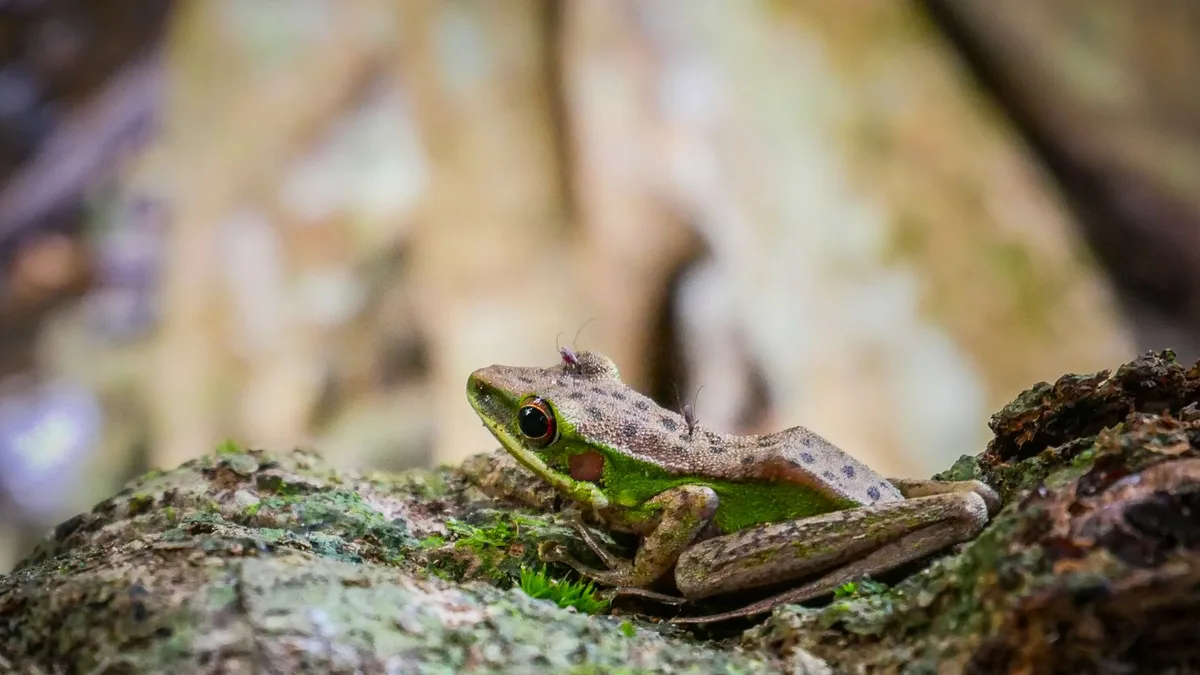 Amphibian skin is permeable, so water chemistry acts directly on the animal. Photo: Fajar Ismunanto via Pexels.
Preventative Health
Routine health monitoring is essential. A visual inspection should be performed weekly, noting:
- Skin condition: Colour, texture, presence of lesions, retained shed.
- Eyes: Clear, no swelling or discharge.
- Oral cavity: No redness, swelling, or excessive mucus.
- Body condition: Ribs or spine visible = underweight; rounded abdomen with palpable fat pads = overweight.
- Faeces: Normal colour and consistency; check for parasites (e.g., nematodes, coccidia).
A baseline faecal examination by a veterinarian experienced in amphibian medicine is recommended upon acquisition and annually thereafter. The CVMA (Canadian Veterinary Medical Association) and AVA (Australian Veterinary Association) both recommend quarantine of new arrivals for at least 30 days in a separate enclosure.
Common Diseases
1. Chytridiomycosis (Batrachochytrium dendrobatidis)
A fungal disease that has devastated amphibian populations worldwide. Clinical signs include lethargy, anorexia, excessive skin sloughing, and abnormal posture (sitting with hind legs splayed). Diagnosis is via PCR or skin swab. Treatment requires antifungal therapy (itraconazole baths) under veterinary supervision. In Australia, chytrid is a notifiable disease in some states; the DAFF (Department of Agriculture, Fisheries and Forestry) may require reporting.
2. Red Leg Syndrome (Aeromonas hydrophila)
A bacterial infection causing cutaneous haemorrhage (reddening of the ventral skin), lethargy, and oedema. It is often secondary to poor water quality or stress. Treatment involves antibiotics (e.g., enrofloxacin) and improved husbandry. The AVMA recommends culture and sensitivity testing before initiating therapy.
3. Metabolic Bone Disease (MBD)
Caused by calcium deficiency or improper calcium-to-phosphorus ratio. Signs include soft jaw, tremors, and inability to right themselves when flipped. Prevention relies on proper supplementation and gut-loading. Treatment requires oral calcium supplementation and UVB exposure (if deficient), though prognosis is guarded in advanced cases.
4. Dysecdysis (Abnormal Shedding)
Retained shed, especially on the digits, can lead to constriction and necrosis. Causes include low humidity, dehydration, or nutritional deficiencies. Treatment involves soaking the frog in shallow, lukewarm dechlorinated water and gently removing the shed with moistened cotton swabs.
5. Obesity
Common in captive tomato frogs due to overfeeding and lack of exercise. Obese frogs are predisposed to hepatic lipidosis and reduced lifespan. Management includes reducing feeding frequency and providing a larger enclosure with enrichment (e.g., climbing branches, leaf litter).
Finding a Veterinarian
Not all veterinarians are trained in amphibian medicine. The Association of Reptilian and Amphibian Veterinarians (ARAV) maintains a directory of qualified practitioners. In the US and Canada, many board-certified zoological medicine specialists (ACZM, ABVP) see amphibians. In Europe, the European College of Zoological Medicine (ECZM) certifies specialists. In Australia, the Unusual Pet Vets network provides amphibian care.
Regional Considerations
North America (US and Canada)
- Common issues: Chytridiomycosis and red leg are prevalent in poorly maintained collections. The CFIA (Canadian Food Inspection Agency) regulates importation of amphibians.
- Veterinary access: Many exotic animal hospitals in urban centres offer amphibian care. The Cornell Feline Health Center does not cover amphibians, but the Cornell College of Veterinary Medicine's Wildlife Health Center does.
Europe
- Legislation: The EU Wildlife Trade Regulations (CITES) apply to wild-caught Dyscophus species. Most captive stock is now captive-bred.
- Disease: Ranavirus (FV3-like) is an emerging concern in European amphibian collections.
- Veterinary care: The FVE and ECZM provide guidelines for amphibian medicine.
Australia
- Quarantine: Strict biosecurity laws under the DAFF regulate importation. All amphibians must be sourced from domestic captive breeders.
- Disease: Chytridiomycosis is endemic in wild populations; captive frogs should be tested regularly.
- Veterinary care: The AVA and Unusual Pet Vets provide resources for amphibian owners.
Conclusion
Tomato frogs are rewarding yet demanding captives that require precise environmental control, a nutritionally complete diet, and minimal handling. By adhering to the standards set by the AVMA, AAHA, FVE, and AVA, owners can provide a high standard of welfare that promotes longevity (10-15 years in captivity) and reduces disease risk. Regular veterinary check-ups, strict quarantine protocols, and vigilant monitoring of humidity and temperature are non-negotiable. For dedicated owners, the tomato frog offers a fascinating window into Madagascar's unique amphibian biodiversity.
Related Articles
Related Clinical & Scientific Guides
References
American Veterinary Medical Association. (2023). AVMA Guidelines for the Humane Handling and Housing of Amphibians. AVMA Publications. American Animal Hospital Association. (2022). AAHA Exotic Animal Care Guidelines. AAHA Press. Merck Veterinary Manual. (2021). Amphibian Medicine and Husbandry. In Merck Veterinary Manual (11th ed.). Merck & Co. Federation of Veterinarians of Europe. (2020). Position Paper on the Welfare of Amphibians in Captivity. FVE. Canadian Veterinary Medical Association. (2022). Amphibian Care Standards. CVMA. Australian Veterinary Association. (2023). Guidelines for the Veterinary Care of Amphibians. AVA. Department of Agriculture, Fisheries and Forestry (Australia). (2022). Biosecurity for Amphibian Keepers. DAFF. European College of Zoological Medicine. (2021). ECZM Guidelines for Amphibian Medicine. ECZM. Pessier, A. P., & Pinkerton, M. E. (2019). Chytridiomycosis in Amphibians: Diagnosis and Management. Journal of Veterinary Diagnostic Investigation, 31(2), 175-184. Wright, K. M., & Whitaker, B. R. (2001). Amphibian Medicine and Captive Husbandry. Krieger Publishing.