Pacman Frog Care Guide
By Dr. Zubair Khalid, DVM, MS, PhD ·
Key Takeaways
- Environmental Stability is Paramount: Maintaining a consistent relative humidity of 70-85% and a temperature gradient of 75-85°F (24-29°C) is critical to prevent common ailments such as metabolic bone disease (MBD), bacterial/fungal skin infections, and dysecdysis (shedding issues). Inadequate environmental control is the primary driver of these pathologies.
- Dietary Supplementation is Non-Negotiable: Pacman frogs are highly susceptible to MBD due to their insectivorous diet's low calcium content. All prey items must be dusted with a calcium supplement containing vitamin D3 at every feeding, supplemented with a multivitamin once or twice weekly, to ensure proper calcium-phosphorus balance and prevent hypocalcemia.
- Enclosure Design Mitigates Risk: A minimum 20-gallon long tank for adults, with a substrate depth of 4-6 inches (10-15 cm) of coconut coir or similar moisture-retentive material, facilitates burrowing and humidity maintenance. Strict solitary housing is mandatory due to their cannibalistic nature, preventing severe injury or death from conspecific aggression.
- Water Quality Directly Impacts Health: Amphibians absorb water and toxins through their permeable skin. Only use dechlorinated tap water, bottled spring water, or mineral-supplemented RO water, as chlorine, chloramines, and heavy metals in untreated tap water are lethal. Daily water changes in a shallow, accessible dish are essential.
- Early Detection of Disease is Crucial: Due to their sedentary nature, disease progression can be rapid. Regular observation for signs of lethargy, weight loss, abnormal swelling, skin discoloration, or incomplete shedding, coupled with monthly weighing and annual fecal examinations for parasites, facilitates timely veterinary intervention.
Quick Q&A
Question: What is the most critical aspect of Pacman frog husbandry to prevent illness? Answer: Maintaining proper humidity (70-85%) and temperature (75-85°F or 24-29°C) within a species-appropriate enclosure is paramount. Inadequate environmental conditions are the leading cause of common diseases like metabolic bone disease (MBD), skin infections, and dysecdysis (shedding problems) in captive amphibians.
Introduction
The Pacman frog, referring to the genus Ceratophrys (commonly C. cranwelli, C. ornata, and C. cornuta), is one of the most popular amphibians in the exotic pet trade. Their voracious appetites, sedentary ambush-predator behaviour (or behavior in American English), and distinctive "horned" appearance make them attractive to both novice and experienced keepers. However, these South American natives have specific environmental needs that differ significantly from those of more common companion animals. Failure to replicate these conditions can lead to severe metabolic, dermatological, and systemic diseases [1, Amphibian Medicine and Husbandry; 2, Merck Veterinary Manual]. This guide provides a rigorous, evidence-based framework for responsible Pacman frog ownership.
Enclosure: The Foundation of Health
Tank Size and Dimensions
Despite their sedentary nature, Pacman frogs require floor space that allows for thermal gradients and burrowing. For a single adult (which can reach 4-6 inches or 10-15 cm snout-to-vent length), a minimum enclosure of 20 gallons (75 litres) long is recommended. Larger enclosures (40+ gallons/151 litres) are preferable as they allow for more stable microclimates and reduce the risk of obesity associated with very small spaces. Juveniles can be started in 10-gallon (38 litre) tanks but should be upgraded as they grow.
Crucial Warning: Co-habitation Pacman frogs are cannibalistic. They must be housed individually. Even frogs of similar size will attack and consume one another, leading to severe injury, intestinal obstruction, or death. The AVMA and AAHA groups strongly advise against any co-habitation of solitary, aggressive amphibian species.
Substrate
The substrate serves as both the floor and the habitat for a burrowing frog. Its properties are critical for maintaining humidity and allowing for natural digging behaviour.
- Coconut Coir (Eco Earth): This is the gold standard. It holds moisture exceptionally well, is slightly acidic (inhibiting bacterial growth), and mimics the natural leaf-litter floor of the Amazon basin. It should be kept damp but not waterlogged.
- Sphagnum Moss: A top layer of sphagnum moss can be added to boost humidity, but it should not be the primary substrate as it can be ingested and cause impaction.
- Chemical-Free Topsoil: Organic, additive-free topsoil (no fertilizers, manure, perlite, or vermiculite) is a valid alternative for experienced keepers.
Avoid: Gravel, sand (can cause gastrointestinal impaction), wood chips (splinters, poor moisture retention), and commercial reptile carpets (abrasive to amphibian skin).
Substrate depth should be a minimum of 4-6 inches (10-15 cm) to allow for complete burrowing.
Environmental Enrichment
While Pacman frogs do not require complex cognitive enrichment, structural enrichment is essential. Include:
- Hides: Half-logs, cork bark, or large plastic plants provide security and visual barriers.
- Water Dish: A large, shallow, heavy water dish (e.g., an Exo Terra water dish) that the frog can soak in fully is vital. It must be shallow enough to prevent drowning. Change the water daily using dechlorinated water.
Humidity and Hydration
Amphibians absorb water through their skin via the ventral patch (the specialized vascularized skin on their belly). Therefore, environmental water quality is paramount.
Optimal Humidity Range
Target a relative humidity (RH) of 70% to 85%. This is best achieved through:
- Daily Misting: Mist the enclosure in the morning and evening with dechlorinated water. Use a pressure sprayer for even coverage.
- Manual Misting vs. Automated Systems: For most owners, a simple spray bottle is sufficient. For those with large vivariums or frequent travel, an automated misting system (e.g., MistKing) provides consistency. However, oversaturation leading to stagnant air can cause fungal infections like Saprolegnia [3, VCA Animal Hospitals Guide to Amphibian Skin Disease].
- Substrate Management: The core of the substrate should remain damp but the top layer should be allowed to dry slightly between mistings to prevent anaerobic bacterial growth.
Water Quality
Never use tap water. Tap water contains chlorine, chloramines, and heavy metals that are lethal to amphibian skin [2, Merck Veterinary Manual]. Use:
- Dechlorinated Tap Water: Treat with a dechlorinator (e.g., Seachem Prime).
- Bottled Spring Water: Ensure it is not distilled or reverse osmosis water, as these lack essential minerals.
- Reverse Osmosis (RO) Water: Can be used if supplemented with a mineral additive (e.g., ReptiSafe).
Temperature and Heating
As ectotherms, Pacman frogs rely entirely on external heat sources for metabolic function, digestion, and immune competence.
Temperature Gradient
Create a thermal gradient within the enclosure:
- Basking Spot (Warm Side): 85°F (29°C)
- Cool Side (Ambient): 75°F (24°C)
- Nighttime Drop: A temperature drop to 70-75°F (21-24°C) overnight is acceptable and mimics natural diurnal cycles.
Heating Equipment
- Under-Tank Heaters (UTHs): Acceptable for spot heating, but they should be placed on the side of the tank, not the bottom (to prevent direct digging into the heater). Use a thermostat to prevent burns.
- Overhead Heating: Ceramic heat emitters (CHEs) or low-wattage incandescent bulbs (red or blue for night viewing) can be used. Do not use bright white lights at night.
- Thermostat Requirement: Every heat source must be regulated by a proportional thermostat. Without one, temperatures can spike to lethal levels (>95°F/35°C), causing fatal heat stress.
UVB Lighting
Pacman frogs are nocturnal, but low-level UVB (2-5% T5 lamp) for 8-10 hours daily has been shown to improve vitamin D3 synthesis and calcium metabolism in related amphibian species [4, FVE Guidelines on Amphibian Housing]. While not strictly required if diet is supplemented with vitamin D3, UVB is recommended for optimal health.
Feeding and Nutrition
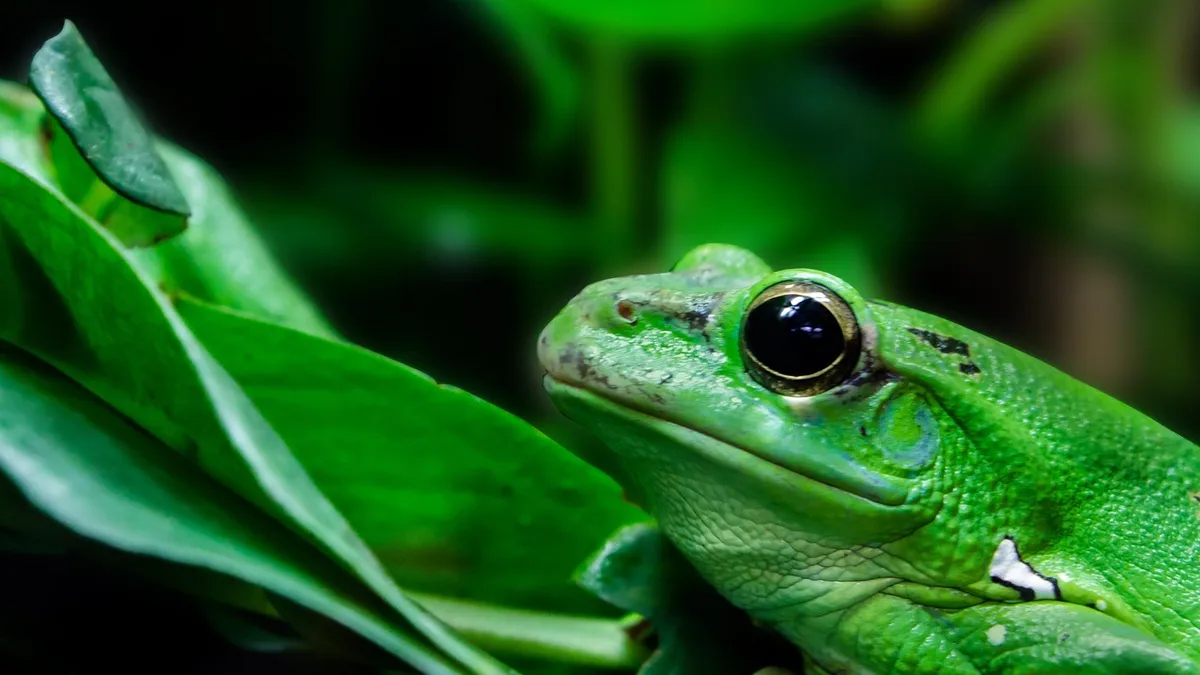 Amphibian skin is permeable, so water chemistry acts directly on the animal. Photo: frolicsomepl via Pixabay.
Diet Composition
Pacman frogs are ambush predators that eat whole prey. Their diet should be:
- Gut-Loaded Insects: Crickets, dubia roaches, black soldier fly larvae (BSFL), and silkworms. Gut-load insects with high-calcium greens (collard greens, kale) 24 hours before feeding.
- Waxy or Silkworms: Offer as treats only (high fat).
- Feeder Fish (Limited): Guppies or mollies can be offered occasionally. Avoid goldfish (high in thiaminase) and minnows.
- Feeder Rodents (Adults Only): Once or twice a month, an adult frog can ingest a pinky or fuzzy mouse. This is a high-calcium, high-protein treat but should not be the staple.
- Earthworms: A fantastic staple. Red wigglers (nightcrawlers) are excellent.
Feeding Schedule
- Juveniles (under 1 year): Feed every other day (e.g., Monday, Wednesday, Friday). Offer 3-5 appropriately sized insects per feeding.
- Adults (over 1 year): Feed every 3-4 days. Offer 5-10 insects or 1-2 pinky mice (if using rodents).
Supplementation
This is non-negotiable. Pacman frogs are highly prone to MBD due to their insect-dominated diet, which is inherently low in calcium [2, Merck Veterinary Manual].
- Calcium + D3: Dust all prey items with a calcium powder containing vitamin D3 at every feeding.
- Multivitamin: Dust with a reptile/amphibian multivitamin (e.g., Repashy Calcium Plus) once or twice a week.
Common Health Problems
Given their sedentary nature, disease can go unnoticed until advanced stages. Regular hands-off observation and occasional handling for weighing are critical.
Metabolic Bone Disease (MBD)
Pathology: Caused by hypocalcemia due to poor diet, lack of UVB, or improper supplementation. Clinical Signs: Weakness, pathological fractures, soft jaw (rubber jaw), swelling of the limbs, twitching. Treatment: Veterinary intervention is required. Injectable calcium glubionate or calcium gluconate, oral supplementation, and corrective UVB/husbandry changes. Prevention: Strict adherence to supplementation protocol and UVB provision (as per AAHA exotic pet wellness guidelines).
Obesity
Pathology: Overfeeding high-fat prey (rodents, waxworms) combined with a sedentary lifestyle. Clinical Signs: Frog appears "pear-shaped," unable to close eyes completely due to fat deposits behind the eyes (retroorbital fat bodies). Difficulty moving. Management: Reduce feeding frequency and switch to low-fat staples (crickets, BSFL). Increase enclosure size to encourage movement.
Skin Infections (Dermatitis/Sloughing)
Pathology: Often bacterial or fungal (e.g., Aeromonas, Pseudomonas, Saprolegnia). Triggered by poor water quality, high ammonia, or constant wet conditions. Clinical Signs: Reddening of the ventral skin, white or grey patches, excessive shedding (dysecdysis), sloughing of skin. Treatment: Veterinary diagnosis (skin cytology, biopsy). May require systemic antibiotics (amikacin, enrofloxacin) or antifungals (itraconazole) based on culture and sensitivity. Husbandry correction is mandatory. Veterinary Note: The CVMA and European Federation of Veterinarians (FVE) emphasize that topical treatments should only be used under veterinary guidance, as many human products are toxic to amphibians.
Ammonia Burn
Pathology: Exposure to high levels of dissolved ammonia in the water from decaying food, feces, or poor filtration. Clinical Signs: Lethargy, chemical burns on the belly, cloudy eyes. Management: Immediate 100% water change, deep clean of enclosure, and water quality testing.
Chytridiomycosis
Pathology: A highly fatal fungal disease caused by Batrachochytrium dendrobatidis (Bd). Clinical Signs: Lethargy, loss of righting reflex, abnormal postures. Treatment: Extremely difficult. Requires strict quarantine, hospitalization, and aggressive antifungal treatment (itraconazole baths). The disease is reportable in many regions (e.g., Australia under DAFF). Prevention: Quarantine all new amphibians for 30-60 days. Use quarantine-specific equipment.
Veterinary Care
When to See a Vet
You should seek an exotics-knowledgeable veterinarian (as listed by the Association of Reptilian and Amphibian Veterinarians) if you observe:
- Refusal to eat for more than 7-10 days
- Weight loss or visible bony prominences
- Abnormal swelling
- Red or discoloured skin
- Lethargy (frog not reacting normally to stimuli)
Routine Health Checks
- Fecal Examination: Annual check for parasites (nematodes, protozoa).
- Body Condition Scoring: Weigh the frog monthly. Sudden weight gain or loss is a red flag.
- Shedding: A healthy Pacman frog will shed its skin in one piece. Dysecdysis (stuck shed) indicates a humidity problem or underlying illness.
Conclusion
The Pacman frog is a rewarding but demanding species. Its care hinges on a delicate balance of high humidity, warm temperatures, a clean, burrowable substrate, and a supplemented, whole-prey diet. The most common failures in captivity, MBD, obesity, and skin disease, are entirely preventable through rigorous adherence to these five pillars. As with any exotic pet, partnering with a qualified exotics veterinarian is essential for long-term health. By understanding the ecological niche of Ceratophrys, keepers can provide a thriving environment that mimics their natural habitat, ensuring a long (10-15 years) and healthy life for these remarkable ambush predators.
Related Clinical & Scientific Guides
References
Whitaker, B. R., & Wright, K. M. (Eds.). (2001). Amphibian Medicine and Captive Husbandry. Krieger Publishing Company. Merck & Co., Inc. (2023). Merck Veterinary Manual. Amphibian Care. Available from: https://www.merckvetmanual.com VCA Animal Hospitals. (2022). Amphibian Skin Disease in Frogs and Toads. Available from: https://vcahospitals.com Federation of Veterinarians of Europe (FVE). (2020). Guidelines for the Housing and Care of Amphibians in Captivity. FVE/01/020.