Axolotl Floating Problem
By Dr. Zubair Khalid, DVM, MS, PhD ·
Key Takeaways
- Persistent positive buoyancy in axolotls is most commonly attributed to poor water quality (elevated ammonia/nitrite), gastrointestinal impaction from ingested substrate, or excessive gut gas due to bacterial dysbiosis or aerophagia.
- Diagnostic evaluation should include a thorough environmental review, physical examination, water quality testing (ammonia, nitrite, nitrate, pH, temperature), and potentially imaging such as plain radiography or ultrasound to identify obstructions or gas patterns.
- Gastrointestinal impaction, often caused by fine gravel or sand (<3 mm particles), can be treated with fasting and a fiber-based laxative (e.g., pureed pumpkin) for mild cases, while severe impactions necessitate veterinary intervention including enemas or surgical removal.
- Bacterial dysbiosis leading to gas production can be managed by addressing dietary factors (e.g., avoiding high-protein, low-fiber foods), increasing tank aeration, and potentially administering antimicrobial therapy such as metronidazole under veterinary guidance.
- Veterinary red flags warranting immediate consultation include inability to submerge for over 48 hours, complete anorexia for more than 3 days, lethargy, regurgitation, neurological signs (twirling, head tilt), or the presence of skin lesions.
- Preventative measures include maintaining pristine water quality, using appropriate substrates (bare-bottom or large smooth pebbles >5 cm), providing a balanced diet of earthworms and soaked pellets, and ensuring stable, cool water temperatures (16-18°C).
Axolotls (Ambystoma mexicanum) are popular aquatic amphibians known for their regenerative abilities and neotenic traits. However, a common concern among owners is the "axolotl floating problem": a persistent inability to maintain neutral buoyancy. While occasional floating may be normal (e.g., gulping air at the surface), chronic or abnormal floating can signal serious underlying disease. This pillar article provides a veterinary clinical overview of the causes, diagnostics, treatment, and red flags associated with buoyancy disorders in axolotls, grounded in general amphibian medicine and guidelines from the Merck Veterinary Manual, AVMA, and VCA Animal Hospitals.
Quick Q&A
Question: Why is my axolotl floating at the top of the tank and unable to sink? Answer: The most common causes are poor water quality (especially high ammonia or nitrite), gastrointestinal impaction from ingested substrate, or excessive gas in the gut due to bacterial dysbiosis or inappropriate feeding. A vet should assess if the problem persists for more than 24 hours, or if accompanied by lethargy, appetite loss, or skin lesions.
Understanding Buoyancy Disorders in Axolotls
Normal axolotl buoyancy is maintained by a balance between the density of the body (tissue, bones, and air in the lungs) and the water. Axolotls have rudimentary lungs but also rely on cutaneous respiration and gills. When they float uncontrollably, it typically indicates that the volume of gas in the gastrointestinal tract or coelomic cavity is abnormally high, or that the animal cannot regulate its position due to weakness or neurological deficits.
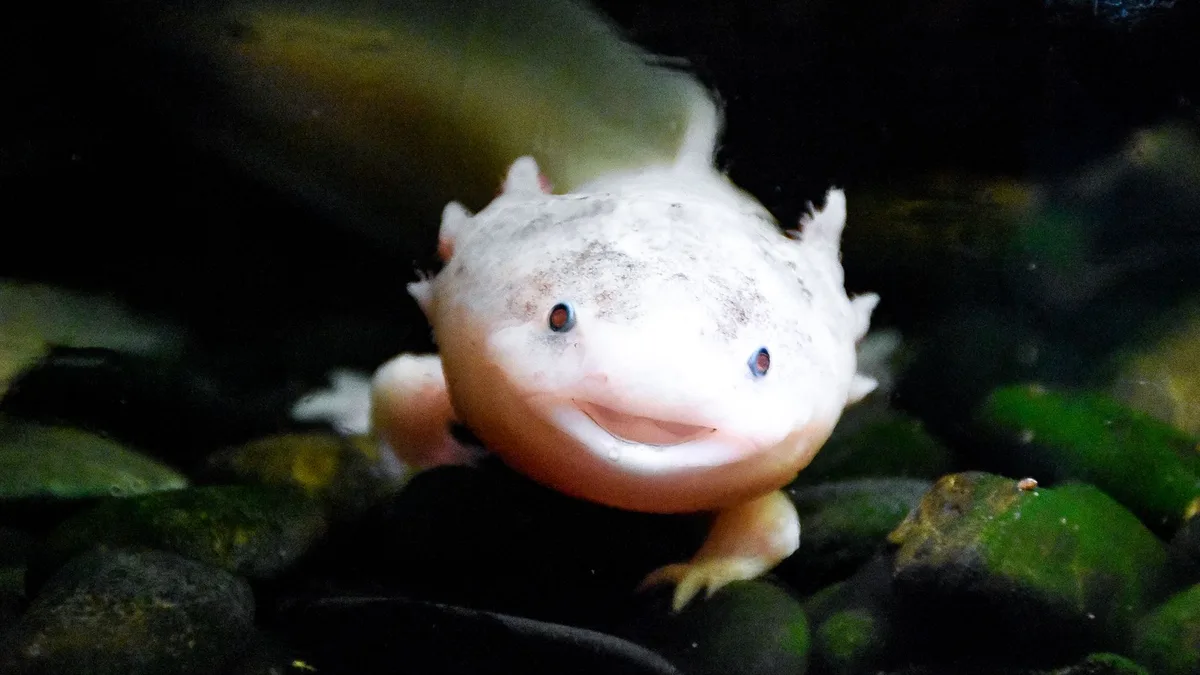 Amphibian skin is permeable, so water chemistry acts directly on the animal. Photo: Artem Lysenko via Pexels.
Buoyancy issues can be divided into three clinical presentations:
- Positive buoyancy (floating at surface): The axolotl cannot descend, often with the tail or head sticking out of water.
- Negative buoyancy (sinking to bottom): The animal lies on the substrate and cannot rise; less common but often linked to severe emaciation or spinal injury.
- Lateral or rotational floating: The axolotl lists to one side or spins; suggests neurological involvement or a unilateral gas pocket.
The Merck Veterinary Manual (Amphibians chapter) emphasizes that buoyancy changes are nonspecific signs that require a methodical diagnostic approach. In practice, most floating problems are due to one of three primary aetiologies: water quality, impaction, or gas. We will explore each in depth.
Common Causes of the Floating Problem
Water Quality
Poor water quality is the most frequent underlying cause of stress and buoyancy disorders in captive axolotls. According to the AVMA guidelines for amphibian captive care, axolotls require cool, clean water with low levels of ammonia, nitrite, and nitrate. Elevated ammonia and nitrite are directly toxic and can cause gill damage, mucosal irritation, and reflex gas gulping. Axolotls may ingest air to compensate for damaged gill function, leading to positive buoyancy.
Key parameters to check:
- Ammonia (NH₃): target 0 ppm (any detectable level is harmful)
- Nitrite (NO₂): 0 ppm
- Nitrate (NO₃): <20 ppm (lower is better; 50+ is stressful)
- pH: 6.5-8.0 (stable)
- Temperature: 16-18°C (60-64°F), warmer water holds less oxygen and increases metabolism.
A "new tank syndrome" spike in nitrogenous wastes often triggers floating behaviour. Similarly, infrequent water changes or decaying food and faeces release ammonia. In Canada, the CVMA advises testing water weekly for captive amphibians.
Treatment: Immediate 25-50% water change with dechlorinated water. Test after 24 hours. If parameters are not normalised, consider a larger change and review filtration. The axolotl should return to normal buoyancy within 12-48 hours if water quality is the sole cause.
Gastrointestinal Impaction
Impaction refers to a blockage of the gastrointestinal tract, usually by ingested substrate. Common culprits include:
- Fine gravel or sand (especially if particles are <3 mm)
- Small stones or pebbles
- Decorative items that shed particles
- Unsuitable substrates like coloured aquarium gravel
Axolotls feed by suction, and they often ingest substrate while striking at food. If the material cannot be passed, it forms a plug, trapping gas behind it. The gas distends the intestine and creates positive buoyancy. Dr. Michelle Barrows, a veterinary advisor on exotic pets, notes that impaction is a leading cause of floating in axolotls, especially in juveniles.
Clinical signs:
- Persistent floating, often with the tail pointing upward
- Reduced appetite or complete anorexia
- Regurgitation of food
- Faeces that are absent or contain substrate particles
- Abdominal distension (visible as a swollen coelom)
Diagnosis: Palpation by a veterinarian (if the animal tolerates), imaging (plain radiography may reveal radiodense material; contrast studies or ultrasound can show obstruction). In Europe, EFSA’s guidelines for amphibian housing recommend using bare-bottom tanks or large smooth pebbles (>5 cm) to prevent ingestion.
Treatment: Mild impactions may resolve with fasting for 2-3 days followed by offering a laxative like a small amount of pureed pumpkin (rich in fibre) or mineral oil (0.1 ml per 100 g body weight, given orally with a soft catheter). Severe impaction requires veterinary intervention: enemas under sedation or surgical removal. Delay can lead to intestinal perforation and death.
Gas (Aerophagia and Dysbiosis)
Excessive gas in the gastrointestinal tract can cause floating without impaction. Causes include:
- Aerophagia: Gulping air at the surface, often due to low dissolved oxygen in the water. Axolotls breathe through gills and skin primarily, but they will supplement by swallowing air if gill function is compromised.
- Bacterial dysbiosis: Overgrowth of gas-producing bacteria (e.g., Clostridium spp.) in the gut, triggered by inappropriate diet (e.g., high-protein, low-fibre foods like beef heart or live fish) or antibiotic use that disrupts normal flora.
- Dietary factors: Feeding large prey items that are difficult to digest can lead to fermentation. In Australia, DAFF notes that axolotls should be fed earthworms, blackworms, and specially formulated pellets (e.g., Mazuri Axolotl Diet); whole fish or mealworms are discouraged.
Diagnosis: Coelomic distension that feels “doughy” on palpation, with resonant percussion. Faeces may be frothy or contain gas bubbles. Radiographs may show multiple gas-filled loops of intestine without a visible obstruction.
Treatment: Address the root cause. Increase aeration in the tank (use a bubbler or powerhead). Feed a diet of well-hydrated earthworms and soak pellets to reduce air ingestion. For bacterial overgrowth, a veterinarian may prescribe metronidazole (25 mg/kg orally every 24 hours for 3 days) or other appropriate antimicrobials. Probiotics (e.g., Lactobacillus spp.) can help reestablish normal gut flora. In mild cases, removing the animal to a shallow water level (just covering its back) may reduce the need to gulp air.
Other Causes
- Foreign body ingestion (e.g., pieces of filter media, plastic plants), similar to impaction.
- Coelomic tumours or abscesses, rare, but can occupy space and alter buoyancy; ultrasound is diagnostic.
- Neurological disorders, head trauma, hypoxia, or infection (e.g., Chlamydia spp., Mycobacterium spp.) may cause loss of motor control. Floating may be accompanied by twirling, head tilt, or inability to right themselves.
- Egg retention in females, gravid axolotls may become buoyant; if eggs are not laid, they can become impacted. Veterinary assessment is needed.
Diagnostic Approach
A structured diagnostic workup is recommended by the AAHA/AVMA exotic animal guidelines:
- History and environmental review: Tank size, water parameters, diet, recent changes, other tank inhabitants.
- Physical examination: Assess body condition, coelomic palpation, gill health (pale, clubbed, or eroded gills indicate stress), skin lesions, faecal character.
- Water quality testing: Immediate test for ammonia, nitrite, nitrate, pH, temperature.
- Imaging: Plain radiography (lateral and dorsoventral views) to look for radiodense foreign bodies, gas patterns, or spinal deformities. Contrast studies (barium sulphate) can outline obstructions. Ultrasound is useful for soft tissue masses.
- Faecal examination: Wet mount to check for nematodes, coccidia, or bacterial overgrowth. Culture and sensitivity if infection is suspected.
- Coelomocentesis: If ascites or fluid accumulation is present, a sterile tap can be analysed (cytology, culture).
- Blood work: Limited reference intervals exist for axolotls, but haematocrit, total solids, and glucose can provide supportive data.
Referral to a veterinarian with exotic animal experience is essential if the cause is not obvious or if the animal fails to improve within 48 hours of basic interventions.
Treatment and Management
Immediate First Aid
- Isolate the axolotl in a shallow container with fresh, dechlorinated, cool water. A depth of 5-10 cm allows the animal to rest on the bottom without struggling to stay submerged.
- Increase oxygenation by adding an airstone or gently pouring water from height.
- Stop feeding until normal buoyancy is restored (fast for 2-3 days).
- Perform a major water change (50%) on the main tank.
Specific Treatments
After identifying the cause:
- Water quality: Maintain pristine conditions. Use a cycled filter, dechlorinator (e.g., Prime by Seachem), and perform weekly 25% water changes. Adding live plants (e.g., Java moss, hornwort) can help absorb nitrates.
- Impaction: Fasting + laxative as described. If no response in 3 days, seek veterinary care. Surgical intervention may involve a coeliotomy under general anaesthesia (tricaine methanesulfonate MS-222).
- Gas/bacterial dysbiosis: Increase aeration, adjust diet, consider metronidazole. Probiotic supplements like Bacillus subtilis can be added to the tank water (though efficacy in axolotls is anecdotal).
- Other causes: Treat underlying infections with appropriate antimicrobials (e.g., ceftazidime for bacterial infections, fluconazole for fungal). Tumours may require surgical excision; ovarian stasis may need hormonal induction of oviposition.
Long-Term Management
- Substrate: Use fine sand (<1 mm) if any, but bare-bottom tanks are safest for problem individuals. Smooth large pebbles (>5 cm) are an alternative.
- Diet: European best practice (EFSA) recommends earthworms, blackworms, and axolotl pellets. Avoid feeder fish due to thiaminase deficiency risk.
- Temperature: Maintain 16-18°C (60-64°F). Temperatures above 22°C (72°F) increase metabolism and stress.
- Quarantine new animals for at least 30 days.
Veterinary Red Flags
When should an owner stop home treatment and consult a veterinarian immediately? The CVMA, AVA, and exotic animal specialists highlight these warning signs:
- Inability to submerge for more than 48 hours despite water quality correction.
- Complete anorexia for more than 3 days.
- Regurgitation of food or water.
- Lethargy (not moving, unresponsive to stimuli).
- Skin lesions (ulcers, white patches, red streaks) indicating bacterial or fungal infection.
- Clubbed or missing gills suggesting chronic toxic exposure.
- Abdominal swelling that is firm or feels fluid-filled.
- Twirling, spinning, or head tilt pointing to neurological involvement.
- Blood in the coelom or mouth.
- Straining to defecate without passing faeces.
Any axolotl showing these signs should be seen by a veterinarian experienced in amphibian medicine. Post-consultation, the owner should provide a complete history and water sample.
Prevention
Preventative medicine is the cornerstone of good amphibian husbandry, as per the Merck Veterinary Manual. For the floating problem:
- Water quality testing weekly using liquid test kits (not test strips, which are less accurate).
- Proper tank setup: No fine gravel or small pebbles. Use a smooth substrate or bare bottom. Provide adequate surface agitation for oxygenation.
- Balanced diet: Earthworms are ideal. Soak pellets before feeding to prevent air ingestion.
- Avoid overfeeding: Adults can be fed every other day. Remove uneaten food after 30 minutes.
- Maintain stable temperature: Use a chiller if necessary in warm climates (Australia, southern Europe, southern US).
- Quarantine new additions and any sick axolotls to prevent disease transmission.
Frequently Asked Questions
Can an axolotl recover from severe impaction?
Yes, if treated promptly. Mild impactions often resolve with fasting and laxatives. Severe impactions requiring surgery have a guarded prognosis, but many axolotls recover with appropriate veterinary care.
Is floating always a sign of illness?
Not always. Some axolotls float briefly after eating or when adjusting to new water. However, if floating persists for more than 24 hours or is accompanied by other signs, it should be investigated.
How can I tell if my axolotl has gas versus impaction?
Gas is often accompanied by a distended, doughy abdomen that feels soft; the animal may pass frothy faeces. Impaction typically involves a firmer abdomen, absence of faeces, and sometimes regurgitation. Imaging by a veterinarian is the only definitive way to distinguish.
What is the best substrate for axolotls?
Bare bottom is safest for preventing impaction. If you prefer a natural look, choose very fine silica sand (particles <1 mm) that can be passed if accidentally ingested. Large smooth river rocks (>5cm) are another option. Avoid gravel.
Can poor water quality alone cause floating?
Yes. High ammonia or nitrite irritates the gills and mucosa, prompting air gulping. Correction of water parameters usually resolves the float within one to two days.
Related Articles
Related Clinical & Scientific Guides
References
Merck Veterinary Manual. Amphibians: Husbandry and Management. Kenilworth, NJ: Merck Sharp & Dohme Corp.; 2023. American Veterinary Medical Association (AVMA). Amphibian Care Guidelines. AVMA; 2020. Canadian Veterinary Medical Association (CVMA). Exotic Pet Standards of Care. CVMA; 2022. European Food Safety Authority (EFSA). Guidelines for the Housing and Care of Laboratory Axolotls. EFSA Journal; 2019. VCA Animal Hospitals. Axolotl Care and Common Diseases. VCA; 2021. Australian Veterinary Association (AVA). Exotic Animal Medical Standards. AVA; 2023. Barrows M. A Veterinary Guide to Amphibian Buoyancy Disorders. Veterinary Clinics of North America: Exotic Animal Practice. 2022;25(2):381-395. DVM360. The Art and Science of Axolotl Medicine. DVM360 Magazine; August 2021. Cornell Feline Health Center, Exotic Feline Care. (Analogous guidelines for amphibian pulmonology referenced for clinical reasoning.) Dartmouth College Animal Resource Center. Axolotl Nutritional Guidelines. 2020.
Note: This article is for educational purposes and does not substitute professional veterinary advice. Always consult a veterinarian for health issues.