Is Pine Straw Toxic to Cats? Mulch and Bedding Safety
By Dr. Zubair Khalid, DVM, MS, PhD ·
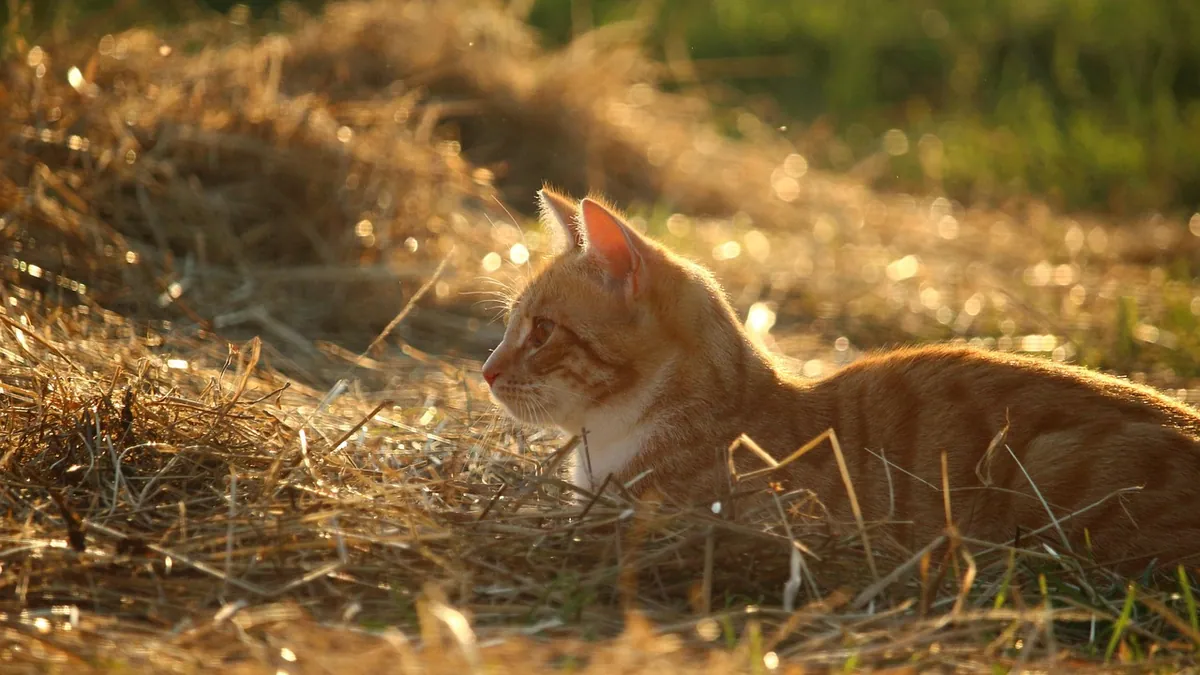
Is pine straw toxic to cats? No. Pine straw is not a known poison for cats, and it does not contain a toxin that harms them the way many houseplants or chemicals do. The real risks are physical: stomach irritation, choking, and intestinal blockage if your cat swallows a lot of it. This article is educational and is not a substitute for veterinary diagnosis or treatment.
Quick Answer
- Pine straw is not poisonous to cats. It is a mechanical hazard, not a toxic one.
- The main dangers are stomach upset, mouth or throat irritation, and intestinal blockage from swallowed pieces.
- A single small nibble usually causes nothing more than drooling or one episode of vomiting.
- If your cat ate pine straw and is eating, drinking, and acting normal, watch it closely for 24 hours.
- Call your veterinarian, the ASPCA Animal Poison Control Center at (888) 426-4435, or Pet Poison Helpline at (855) 764-7661 if you see repeated vomiting, gagging, or lethargy.
Is Pine Straw Toxic to Cats?
Pine straw is the dried, fallen needle layer from pine trees, often sold as landscaping mulch and sometimes used as animal bedding. It is not on veterinary poison lists, and there is no well documented toxic principle in pine needles that causes poisoning in cats. When owners search "is pine straw toxic to cats," the honest answer is that the danger is mostly mechanical.
That does not mean it is harmless. A cat that chews or swallows pine straw can develop irritation in the mouth, esophagus, or stomach. Long, stiff needles can also clump together in the gut. Cats are not built to pass fibrous plant material, so a wad of needles can lodge and block the intestine.
If you are sorting out which plants around your home are truly dangerous, our guide to Plants Toxic To Cats covers the ones that cause real poisoning. Pine straw belongs in a different category: a choking and obstruction risk.
Which Parts and Products Matter
The needles themselves are the concern. Fresh green needles, dried brown needles, and the mulch layer all behave the same way in a cat's gut. Pine cones are a separate issue. They are hard, can splinter, and are more likely to cause a physical injury or blockage than needles alone.
Pine shavings and pine bedding sold for small pets are a related product. The aromatic oils in fresh pine can irritate a cat's airways, and some cats are sensitive to the smell. This is a comfort issue more than a poisoning issue.
Pine-scented cleaning products, pine oil cleaners, and pine essential oils are a completely different story. Concentrated essential oils can be toxic to cats, and the review literature on essential oils in companion animals notes that many compounds with insecticidal activity also carry real safety concerns for cats [1]. Keep those products away from your cat entirely.
What About Pine Mulch?
Pine mulch and pine bark mulch carry the same mechanical risks as pine straw. The pieces are chunkier, which can make a blockage more likely if swallowed. Some mulch blends also contain cocoa bean hulls, which do contain theobromine and caffeine and are genuinely toxic to pets. If your cat has been chewing in a mulch bed, check what is actually in the bag.
The Toxic Principle: What Pine Straw Does in the Body
Pine straw does not have a toxic principle in the classic sense. It does not attack the liver, kidneys, or nervous system the way a real poison does. Ethylene glycol, the antifreeze compound, is a good contrast. It causes acute kidney injury with calcium oxalate crystals in the tubules and can be fatal [2]. Pine straw does nothing like that.
What pine straw does is irritate and obstruct. The stiff needle tips scrape the lining of the mouth and throat. Once swallowed, the needles sit in the stomach and can trigger vomiting. If a clump moves into the small intestine, it can physically block the passage of food. That is a surgical problem, not a poisoning problem.
Signs Your Cat Ate Pine Straw
Signs depend on how much your cat swallowed and where the material is sitting.
Mild Exposure
- Drooling or pawing at the mouth
- One or two episodes of vomiting
- Mild gagging or coughing after chewing
- Reduced interest in food for a few hours
More Serious Exposure
- Repeated vomiting or unproductive retching
- Refusing food for more than a day
- Lethargy or hiding
- Painful or bloated abdomen
- No bowel movement for 24 to 48 hours
- Straining to defecate with little or nothing produced
Timeline
Mild mouth irritation shows up within minutes. Vomiting from stomach irritation usually starts within a few hours. Signs of a blockage tend to build over 1 to 3 days as the material moves through the gut and fails to pass. If your cat is still normal 24 hours after a small nibble, the risk of a serious problem drops sharply.
What to Do Right Now
Stay calm and assess your cat. Look in the mouth for needles stuck in the gums or between the teeth. If you can see one and it comes out easily with your fingers, remove it. Do not dig around in the throat.
Call your veterinarian, the ASPCA Animal Poison Control Center at (888) 426-4435, or Pet Poison Helpline at (855) 764-7661 if your cat swallowed a large amount, is vomiting repeatedly, or seems painful. These services charge a consultation fee and can advise you in real time.
Do not induce vomiting unless a veterinarian tells you to. Making a cat vomit when sharp needles are in the esophagus can cause more damage on the way back up. It can also be dangerous if your cat is already lethargic.
Offer water. Withhold food for a few hours if your cat is vomiting, then offer a small bland meal if your veterinarian agrees. Keep your cat indoors and watch it closely.
Veterinary Treatment
Your veterinarian will start with a physical exam, including palpation of the abdomen. They may ask what the cat ate, how much, and when. Blood work is often normal with pine straw exposure, but it helps rule out other causes of vomiting.
X-rays are the main imaging tool. Pine needles are often visible on radiographs, and your veterinarian can look for a pattern that suggests a blockage. Ultrasound can help assess intestinal movement and wall thickness.
Treatment depends on findings:
- Supportive care. Fluids under the skin or into a vein, anti-nausea medication, and a bland diet for cats with simple stomach upset.
- Endoscopy. If material is still in the stomach, a scope can sometimes retrieve it without surgery.
- Surgery. If needles have formed a blockage in the intestine, surgery is needed to remove them. Your veterinarian calculates all medication doses from your cat's weight and health status.
If your cat has other underlying conditions, treatment may need to be adjusted. Cats with serious infections or immune problems can decompensate quickly, and veterinarians sometimes need to escalate care based on how the individual patient responds [3].
Outlook
Most cats that nibble pine straw do fine with monitoring alone. Mild stomach upset typically resolves within 24 to 48 hours. Cats that need surgery for a blockage usually recover well if the problem is caught early. The outlook is worse if a blockage goes untreated for several days, because the intestine can lose its blood supply.
Prevention and Safer Alternatives
The simplest prevention is to keep your cat away from pine straw beds. If your cat goes outside, supervise it or use a harness and leash. If pine straw is already in your yard, consider replacing it in areas your cat can reach.
Safer alternatives for landscaping include smooth river rock, rubber mulch, or plain gravel. None of these are edible, but they are less likely to form a fibrous clump if a small amount is swallowed.
For indoor bedding, choose a washable cat bed with a removable cover. Bedding material studies in infants have looked at how different fabrics affect breathing, and while that research is about babies instead of cats, it supports the general idea that bedding material matters for respiratory comfort [4]. For cats, the practical point is simple: soft, washable fabric beats loose straw or shavings.
If your cat chews plants, redirect the behavior. Offer cat grass or a safe chew toy. Check every plant in your home against a reliable list. Our articles on House Plants Toxic To Cat and Are Lilies Toxic to Cats? cover the plants that cause real poisoning, which is a much bigger concern than pine straw.
Keep flea and tick products away from your cat's mouth too. Ectoparasiticide use is common, with surveys showing that most cat and dog owners treat their pets at least once a year [5]. These products are safe when used as directed, but they are not meant to be chewed.
Limitations and When to Contact a Veterinarian
No article can tell you what is happening inside your cat. Individual cases need a veterinarian who can examine your cat, take images, and decide on treatment. Use the guidance below as a starting point.
Contact your veterinarian the same day if:
- Your cat vomited more than twice
- Your cat is drooling heavily or pawing at the mouth
- Your cat has not eaten in 24 hours
- You saw your cat swallow a large clump of pine straw
Go to an emergency clinic now if:
- Your cat is retching without producing anything
- Your cat's abdomen looks swollen or feels painful
- Your cat is collapsing, pale, or breathing hard
- Your cat has not passed stool in 48 hours and is straining
Schedule a routine visit if:
- Your cat had a small nibble and seems fine, but you want peace of mind
- Your cat has a history of eating non-food items
- You want help cat-proofing your yard or home
Frequently Asked Questions
Can pine straw kill a cat?
Pine straw itself is not poisonous, so it does not kill cats through toxicity. Death is possible only in rare cases where a swallowed clump causes a complete intestinal blockage that goes untreated for days. With prompt veterinary care, the outlook is good.
My cat ate pine straw and is acting normal. Should I worry?
A small nibble with no symptoms usually needs only monitoring. Watch for vomiting, drooling, or changes in appetite over the next 24 hours. Call your veterinarian if anything changes.
Is pine mulch toxic to cats?
Pine mulch is not toxic, but it is a choking and blockage risk just like pine straw. Some mulch blends contain cocoa bean hulls, which are toxic to pets. Check the label on any mulch you use.
Will pine straw hurt my cat's paws or skin?
Pine straw can poke or scratch paw pads, and the aromatic oils may irritate sensitive skin in some cats. Check your cat's paws after it walks through a pine straw bed, and rinse any irritated areas with plain water.
Are pine shavings safe as cat litter or bedding?
Pine shavings are not a good choice for cats. The pieces are small enough to swallow and the aromatic oils can bother a cat's airways. Use a commercial cat litter and a washable fabric bed instead.
Related Articles
- House Plants Toxic To Cat
- Are Lilies Toxic to Cats?
- Plants Toxic To Cats
- House Plants Toxic To Cats Pictures
- Flowers That Are Toxic To Cats
- Flowers Toxic To Cats
- Are Pine Needles Toxic to Cats? Christmas Tree Safety
- Can Cats Eat Pine Pellets? Litter and Wood Safety
- Is Mushroom Compost Toxic to Cats? What to Know
References
- Essential Oils for Flea and Tick Control in Companion Animals: A Critical Review of Efficacy, Safety, Resistance Mitigation and Integrated Pest Management. Antibiotics (Basel, Switzerland), 2026.
- Ethylene glycol poisoning in a free-roaming cat associated with suspected animal cruelty: a forensic veterinary case report in South Korea. Frontiers in veterinary science, 2026.
- Successful Management of Septic Splenitis in an Abyssinian Cat. Veterinary medicine and science, 2026.
- Bedding materials and early infant wheezing: A randomised controlled trial. Pediatric allergy and immunology : official publication of the European Society of Pediatric Allergy and Immunology, 2025.
- To flea or not to flea: survey of UK companion animal ectoparasiticide usage and activities affecting pathways to the environment. PeerJ, 2023.