Are Pine Needles Toxic to Cats? Christmas Tree Safety
By Dr. Zubair Khalid, DVM, MS, PhD ·
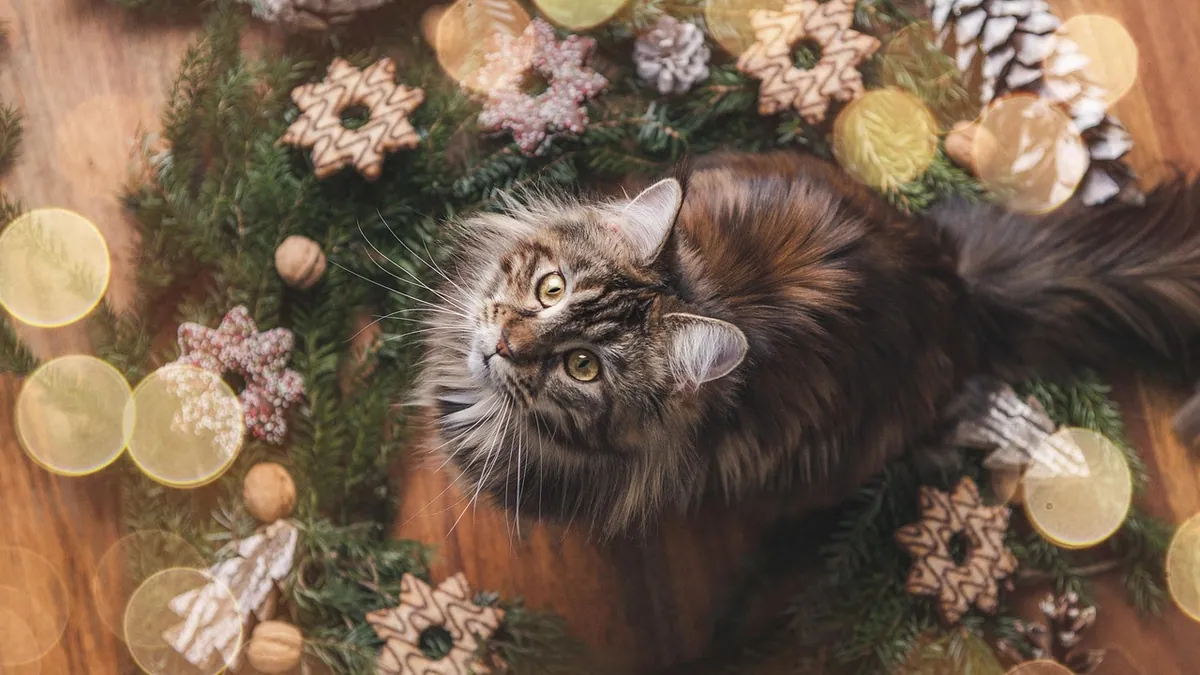
Are pine needles dangerous to cats? For most real Christmas trees, the needles are not a true poison to cats. The bigger problem is mechanical: swallowed needles can irritate or block the gut. A few specific pine products and species carry real toxic risk, so the answer depends on which pine your cat met.
This article is educational and is not a substitute for veterinary diagnosis or treatment.
Quick Answer
- Most fresh needles from common Christmas trees (firs, spruces, and many pines) are not listed as toxic to cats, but they can still cause stomach upset or a physical blockage if eaten [1].
- Ponderosa pine (also called yellow pine, western yellow pine, or bull pine) contains isocupressic acid, and while it is listed as non-toxic to cats and dogs, it causes abortions in cattle [2][1].
- Norfolk Island pine, often sold as a small holiday houseplant, is non-toxic to cats [3].
- Pine needle essential oils and concentrated extracts are a different product from a tree. Keep them away from cats, and never apply them to your cat's skin or coat.
- If your cat ate needles, call your veterinarian, the ASPCA Animal Poison Control Center at (888) 426-4435, or Pet Poison Helpline at (855) 764-7661. Do not make your cat vomit unless a veterinarian tells you to.
Is Pine Actually Toxic to Cats?
The word "pine" covers a lot of plants, and that is where the confusion starts. Your cat may have met a cut Christmas tree, a potted Norfolk Island pine, a bag of dried needles, or a bottle of pine needle oil. Each one carries a different level of concern.
Are Christmas tree pine needles toxic to cats?
For the pines most often sold as Christmas trees, the ASPCA does not list the needles as toxic to cats. Ponderosa pine, sold under names like yellow pine, western yellow pine, and bull pine, is listed as non-toxic to dogs and cats [1]. Its toxic principle, isocupressic acid, is tied to a specific problem in cattle: premature birth or miscarriage of calves [2]. That effect has not been reported in cats [1].
That does not make a Christmas tree safe to chew. Needles are sharp, indigestible, and can bunch up in the stomach or intestine. A cat that swallows several needles may vomit, drool, or go off food. A large wad of needles can cause an obstruction that needs surgery.
Are white pine needles toxic to cats?
White pine is a common name used for several pine species, and none of them appear on the ASPCA toxic plant list for cats. The ASPCA lists Ponderosa pine as non-toxic to cats, and its concern is limited to cattle reproduction [2][1]. If your cat nibbles a few white pine needles, the main worry is stomach irritation, not poisoning.
Are dry, dead, or fallen pine needles toxic to cats?
Dried and dead needles are not more poisonous than fresh ones. They are more likely to be eaten, though, because they collect on floors, tree skirts, and carpets where cats play. Dry needles are brittle and splinter easily, so they can scratch the mouth, throat, or gut lining. They also do not break down well in the digestive tract.
Old needles can grow mold if they sit damp under a tree. Moldy plant material can cause vomiting and diarrhea from mycotoxins, which is a separate problem from the pine itself. Clear fallen needles daily during the holidays.
Is pine needle oil toxic to cats?
This is the form that deserves real caution. Pine needle oil is a concentrated essential oil, not a tree. Essential oils are volatile and can contain compounds that cats handle poorly because their liver processes many plant chemicals differently than dogs or people do.
Pine needle oil from Korean red pine has shown antibacterial and antiviral activity in laboratory testing, including dose-dependent activity against influenza virus A and feline coronavirus [4]. That is a laboratory finding about the oil's properties, not a treatment for cats and not proof that the oil is safe to use on or around them.
Never rub pine needle oil on your cat. Never add it to food, water, a diffuser in a closed room, or a bedding spray. Cats groom their coats, so anything on the fur gets swallowed. If you use pine-scented cleaning products, keep your cat out of the room until surfaces are dry and the area is ventilated.
What about Norfolk Island pine and other "pines"?
Norfolk Island pine (Araucaria heterophylla), also called Australian pine or house pine, is not a true pine at all. The ASPCA lists it as non-toxic to dogs, cats, and horses [3]. It is a popular small holiday plant, and chewing on it is unlikely to poison your cat. It can still cause mild stomach upset if a cat eats a lot of it.
For a wider look at greenery that is genuinely dangerous, see Plants Toxic To Cats and House Plants Toxic To Cat.
The Toxic Principle and What It Does in the Body
Ponderosa pine contains isocupressic acid [2]. In cattle, this compound is linked to premature birth and miscarriage [2]. The ASPCA notes that this effect has not been seen in other species, and the plant is listed as non-toxic to cats and dogs [1]. So for a cat, isocupressic acid is not the practical concern.
For cats, the realistic problems are different:
- Mechanical injury. Needles are stiff and pointed. They can scrape the mouth, esophagus, stomach, and intestines.
- Obstruction. A clump of needles or a chewed branch can block the gut. This is a surgical emergency.
- Stomach upset. Plant material the cat cannot digest often causes vomiting, drooling, and appetite loss.
- Essential oil exposure. Concentrated oils can irritate the mouth and gut and may cause drooling, vomiting, wobbliness, or lethargy. The exact effect depends on the product and the amount.
- Tree water and additives. Water from a tree stand can contain fertilizer, preservatives, or bacteria. Do not let your cat drink it.
Pine needle extracts have been studied for antiviral and immune effects in laboratory and review settings, including work on polyprenyl compounds from pine greenery [5]. These are research findings about chemistry and viruses, not veterinary guidance for treating cats.
Signs to Watch For and Their Timeline
Signs usually show up within minutes to a few hours of eating needles or licking an oil. Watch for:
- Vomiting, sometimes with visible needles in the vomit
- Drooling or pawing at the mouth
- Lip smacking, gagging, or retching
- Loss of appetite
- Diarrhea or constipation
- Lethargy or hiding
- Wobbliness, tremors, or unusual behavior after oil exposure
- Straining to defecate or a swollen, painful belly (possible obstruction)
Mild stomach upset often settles in a day or two with supportive care. A blockage can worsen over 24 to 72 hours as the cat stops eating and becomes weak. Oil exposure can progress faster, so treat any neurological sign as an emergency.
What to Do Right Now
- Move your cat away from the tree, needles, and any oil product.
- Check the mouth for needles stuck in the gums or under the tongue. Do not put your fingers deep in the throat.
- Call your veterinarian, the ASPCA Animal Poison Control Center at (888) 426-4435, or Pet Poison Helpline at (855) 764-7661. Have the product label or a photo of the plant ready.
- Do not induce vomiting unless a veterinarian tells you to. Needles can injure the esophagus on the way back up.
- Do not give milk, oil, food, or home remedies.
- If your cat is struggling to breathe, collapsing, having seizures, or has a hard, painful belly, go to an emergency clinic now.
Veterinary Treatment
Your veterinarian will start with a physical exam and questions about what the cat ate and when. If needles were chewed, they may look in the mouth and feel the abdomen.
Treatment depends on the findings:
- Mild irritation. Fluids under the skin or into a vein, anti-nausea medication, and a bland diet for a short time.
- Suspected obstruction. X-rays or ultrasound, then surgery if a wad of needles is stuck. Bloodwork checks for dehydration and organ changes.
- Oil exposure. Bathing with dish soap to remove oil from the coat, plus fluids and medications for vomiting or neurological signs. The veterinarian calculates any medication dose from your cat's weight and health.
- Tree water ingestion. Supportive care and monitoring, since stand water can contain additives or bacteria.
There is no antidote for pine needles because the needles are not a classic poison in cats. Care is supportive and focused on the gut.
Outlook
Most cats that eat a few pine needles do well with monitoring and supportive care. The outlook is worse if a blockage forms or if treatment is delayed. Cats that reach surgery for an obstruction often recover, but the risk rises with how long the gut has been blocked.
Oil exposure has a more variable outlook. Mild cases improve with bathing and fluids. Serious cases with neurological signs need intensive care. Ethylene glycol, the toxic ingredient in some antifreeze products, is a potent animal poison with a high fatality rate in cats, and it shows how quickly a household chemical can become deadly [6]. Pine needle oil is not antifreeze, but the lesson holds: keep concentrated chemicals away from cats and act fast when exposure happens.
Prevention and Safer Alternatives
- Pick a tree that is not on a toxic plant list, and keep it behind a barrier or in a room your cat cannot enter unsupervised.
- Vacuum or sweep fallen needles at least once a day.
- Cover the tree stand so your cat cannot drink the water.
- Skip tinsel, ribbon, and string. These cause linear foreign bodies, which are especially dangerous in cats.
- Do not use pine needle oil in diffusers, sprays, or on your cat.
- Choose a Norfolk Island pine if you want a small holiday plant, since it is listed as non-toxic to cats [3].
- Offer cat grass or a safe chew toy so your cat has something else to nibble.
- Keep holiday bouquets out of reach too. Many cut flowers are far more dangerous than pine. See Flowers That Are Toxic To Cats and What Flowers Are Toxic To Cats.
Limitations and When to Contact a Veterinarian
No article can tell you how much your cat ate or how its body will respond. Individual cases need a veterinarian who can examine your cat.
Call the same day if your cat ate needles and is vomiting, drooling, or refusing food, or if you are not sure how much was eaten.
Go to an emergency clinic now if you see trouble breathing, collapse, seizures, tremors, a hard or painful belly, repeated unproductive retching, or a cat that cannot stand.
Schedule a routine visit if your cat had a small nibble, seems normal, and you want a checkup. Bring the plant or product label.
Frequently Asked Questions
Should I make my cat vomit after eating pine needles?
No. Do not induce vomiting unless a veterinarian tells you to. Needles are sharp and can damage the esophagus on the way up, and some exposures are safer left alone.
Can my cat get sick from drinking Christmas tree water?
Yes. Stand water can hold fertilizer, preservatives, and bacteria. Keep the stand covered and call your veterinarian or a poison control line if your cat drinks a noticeable amount.
Is a fake Christmas tree safer than a real one?
A fake tree avoids needles and tree water, but it brings its own risks. Cats can chew plastic branches, swallow small pieces, or get tangled in lights and cords. Supervise your cat around any tree.
Do pine needles cause blockages in cats?
They can. Needles do not digest, and a clump can lodge in the stomach or intestine. Signs include vomiting, appetite loss, and a painful belly. This needs veterinary care and possibly surgery.
Are all pine species the same for cats?
No. Norfolk Island pine is listed as non-toxic to cats, and Ponderosa pine is listed as non-toxic to cats and dogs even though it affects cattle reproduction [3][2][1]. Always identify the plant before you decide how worried to be.
Related Articles
- Flowers That Are Toxic To Cats
- Plants Toxic To Cats
- Flowers Toxic To Cats
- What Flowers Are Toxic To Cats
- House Plants Toxic To Cat
- What Plants Can Be Toxic To Cats
- Are Christmas Trees Toxic to Cats and Dogs?
- Is a Christmas Tree Harmful to Cats? Real vs Fake
- Is Pine Straw Toxic to Cats? Mulch and Bedding Safety
References
- Toxic and Non-toxic Plants: Blackjack Pine. ASPCA Animal Poison Control Center.
- Toxic and Non-toxic Plants: Yellow Pine. ASPCA Animal Poison Control Center.
- Toxic and Non-toxic Plants: Australian Pine. ASPCA Animal Poison Control Center.
- Antibacterial and Antiviral Properties of Pinus densiflora Essential Oil. Foods (Basel, Switzerland), 2023.
- New Approaches to the Prevention and Treatment of Viral Diseases. Archivum immunologiae et therapiae experimentalis, 2021.
- A retrospective case series of companion animals hospitalized for ethylene glycol poisoning at a Canadian veterinary teaching hospital. The Canadian veterinary journal = La revue veterinaire canadienne, 2026.