Are Chives Toxic to Cats? Allium Poisoning Risk
By Dr. Zubair Khalid, DVM, MS, PhD ·
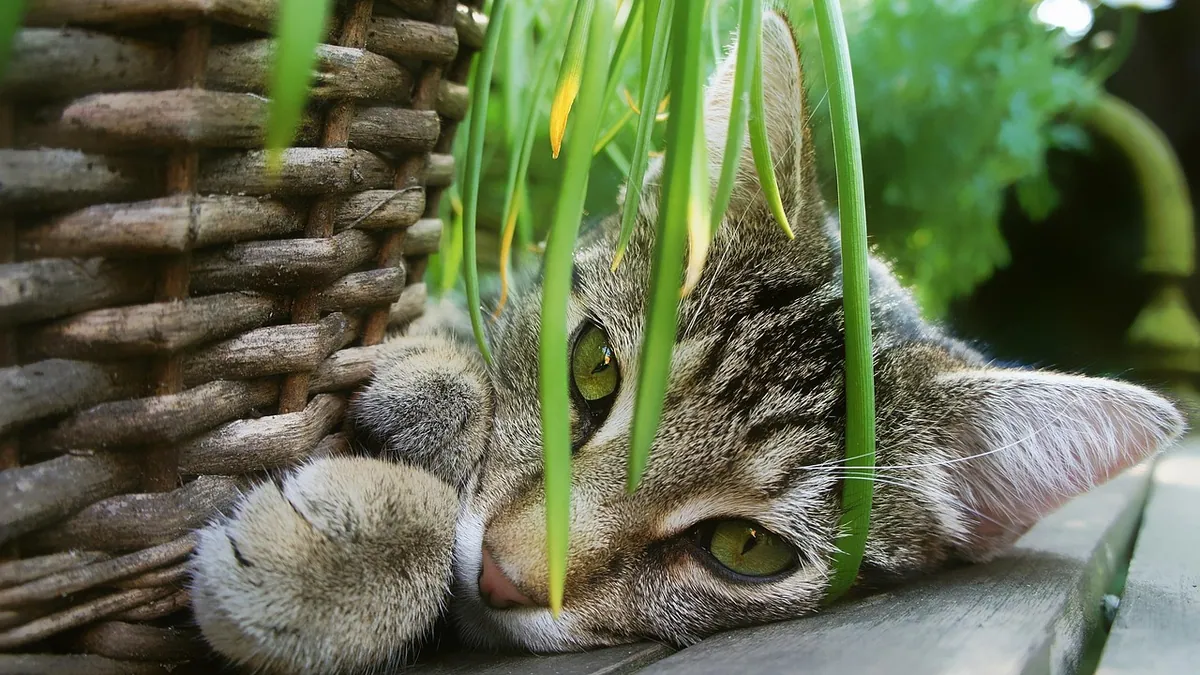
Chives are dangerous to cats. Every part of the chives plant, fresh or cooked, contains compounds that break down a cat's red blood cells, and cats are the most sensitive species to this kind of poisoning [1]. Even a small taste can matter because the damage builds over days instead of showing up right away.
This article is educational and is not a substitute for veterinary diagnosis or treatment.
Quick Answer
- Chives (Allium schoenoprasum) are listed as toxic to cats, dogs, and horses, with toxic effects that include vomiting, red blood cell breakdown, blood in the urine, weakness, a high heart rate, and panting [2].
- The toxic principle in chives is N-propyl disulfide, a compound that damages hemoglobin inside red blood cells [2].
- Cats are the most susceptible species to Allium toxicosis, more so than dogs [1].
- Signs often appear several days after ingestion, not minutes, because the anemia develops slowly [1].
- If your cat ate chives, call your veterinarian, the ASPCA Animal Poison Control Center at (888) 426-4435, or Pet Poison Helpline at (855) 764-7661 right away. Do not make your cat vomit unless a veterinarian tells you to.
Are Chives Poisonous to Cats?
Yes. Chives are poisonous to cats, and the ASPCA Animal Poison Control Center lists the plant as toxic to cats, dogs, and horses [2]. The scientific name is Allium schoenoprasum, and it belongs to the Amaryllidaceae family [2].
Chives are part of the Allium group, which also includes onions, garlic, and leeks [1]. Allium toxicosis has been reported in cats and dogs after they ate raw, cooked, dehydrated, or granulated onions and garlic [1]. Chives carry the same type of risk.
Which Parts and Products Are a Problem
The whole plant matters. That means the green stalks you snip onto a baked potato, the bulbs, the flowers, and any dried or freeze-dried chive flakes in your spice drawer. Cooking does not make chives safe. Allium toxicosis in cats and dogs has been reported after eating raw, cooked, dehydrated, or granulated forms [1].
Concentrated forms tend to cause the most trouble. Toxicosis in cats and dogs is most commonly linked to concentrated Allium products such as dehydrated flakes, powders, or dry onion soup mixes [1]. A pinch of chive powder is a bigger dose than it looks.
Are Chives Safe for Cats in Small Amounts?
No amount is known to be safe. There is no established safe threshold for chives in cats, and a veterinarian has to judge each case based on the cat's weight, the amount eaten, and the form of the plant. For context, toxicosis has been reported in cats after eating less than a teaspoon of cooked onions or 5 g/kg of raw onions [1]. Garlic is 3 to 5 times more toxic than onion [1], which shows how much the specific Allium matters.
If you are wondering whether a particular plant in your home is a risk, our guide to Plants Toxic To Cats covers common household offenders.
The Toxic Principle and What It Does to Red Blood Cells
The toxic principle in chives is N-propyl disulfide [2]. This is an organosulfur compound, and it attacks red blood cells from the inside.
Red blood cells carry oxygen using hemoglobin. When an Allium compound damages hemoglobin, the protein clumps into round inclusions called Heinz bodies. The body recognizes these damaged cells as defective and removes them from circulation. When enough red blood cells are destroyed, the cat develops hemolytic anemia, which means there are too few red blood cells to carry oxygen to the tissues [2][1].
This is why the timeline is slow. The compound does not act like a poison that stops breathing in minutes. It sets off a process that unfolds over days as damaged cells are cleared and the bone marrow struggles to keep up.
Cats are especially vulnerable. Heinz body formation is a known problem in cats, and a case report described a cat that developed Heinz body anemia with a packed cell volume of 22% (the reference interval is 24% to 45%) after repeated propofol anesthesia, with signs including lethargy and decreased appetite [3]. That case involved a drug, not a plant, but it shows how sensitive feline red blood cells are to oxidative injury. Research in cats has also studied Heinz body formation directly, including attempts to prevent it with antioxidants [4].
Signs of Chive Poisoning in Cats and When They Appear
Signs usually show up several days after ingestion. The Merck Veterinary Manual states that clinical signs of acute hemolytic anemia develop several days after a cat eats Allium material [1]. Owners often do not connect the symptoms to a bite of chives from days earlier.
Watch for these signs:
- Vomiting [2]
- Weakness or lethargy [2][1]
- Pale gums or skin (pallor) [1]
- Yellow tint to the gums, skin, or whites of the eyes (icterus) [1]
- Blood in the urine [2]
- Fast heart rate [2]
- Panting or open-mouth breathing [2]
- Collapse [1]
Some cats show stomach upset first, then seem to improve, then get worse as the anemia deepens. Others go straight to weakness and pallor. A cat that collapses needs emergency care immediately.
How Much Chives Is Toxic to Cats?
There is no published safe dose for chives in cats, so no one can tell you that a specific number of blades is fine. What we do know is that cats are the most susceptible species to Allium toxicosis [1], and that toxicosis has been reported in cats after eating less than a teaspoon of cooked onions or 5 g/kg of raw onions [1]. Because garlic is 3 to 5 times more toxic than onion [1], potency varies a lot between Allium plants.
If your cat licked chive dip, ate a chive garnish, or chewed a chive plant, treat it as a possible exposure and call for advice. Your veterinarian will calculate the risk from your cat's weight, the amount eaten, and the form of the plant.
What to Do Right Now
Act the same day, even if your cat seems fine. The damage may not be visible yet.
- Remove your cat from the plant or food source.
- Save the packaging, the plant, or a photo of what was eaten. This helps the veterinarian or poison control estimate the exposure.
- Call your veterinarian, the ASPCA Animal Poison Control Center at (888) 426-4435, or Pet Poison Helpline at (855) 764-7661.
- Do not induce vomiting unless a veterinarian tells you to.
- Do not give home remedies, milk, oil, or activated charcoal on your own.
- Watch for vomiting, weakness, pale gums, fast breathing, or blood in the urine while you wait for instructions.
If your cat is collapsing, struggling to breathe, or has white or yellow gums, go to an emergency clinic now.
How Veterinarians Treat Allium Toxicosis
Treatment starts with early gastrointestinal decontamination when it is appropriate, followed by management of acute hemolytic anemia [1]. The exact steps depend on how much time has passed and how sick your cat is.
Your veterinarian may recommend blood work, including a packed cell volume and a blood smear to look for Heinz bodies and anemia. They may check for icterus and monitor heart rate and breathing. In more serious cases, a cat may need oxygen, intravenous fluids, or a blood transfusion. Some cats need hospitalization for monitoring while their red blood cell count is followed over days.
Never try to treat this at home. Anemia from Allium poisoning can worsen quickly, and the timing of supportive care matters.
Outlook for a Cat That Ate Chives
The outlook depends on how much was eaten, how quickly care started, and how severe the anemia becomes. Cats with mild exposure and early veterinary care often recover with supportive treatment. Cats with severe hemolytic anemia, collapse, or organ stress have a much more guarded prognosis.
Allium toxicosis causes hemolytic anemia, and in large enough exposures these changes can lead to secondary organ damage and death [5]. That finding comes from cattle that consumed about 20 kg of onions per cow per day for 6 weeks, so it reflects a heavy, prolonged exposure in a different species [5]. Still, it shows how serious Allium poisoning can become when the dose is large and repeated.
The key point for cat owners is that the process takes days. A cat that looks normal tonight can be anemic by the weekend. That is why same-day advice matters even when your cat seems fine.
Prevention and Safer Alternatives
The simplest prevention is to keep chives out of your cat's reach. That includes the garden bed, the kitchen windowsill pot, the spice drawer, and any plate left on the counter.
- Do not offer chives, onion, garlic, leeks, or shallots as treats.
- Check labels on soups, dips, seasoned meats, and dry soup mixes for onion or garlic powder.
- Keep compost and food scraps covered.
- Store dried chive flakes in a closed container inside a cabinet.
- Warn houseguests and children not to share table food with the cat.
If you want a cat-safe plant to brighten a windowsill, spider plants and snake plants are common choices. You can read more in Are Spider Plants Toxic To Cats and Are Snake Plants Toxic To Cats.
Some plants are far more dangerous than chives. Lilies, for example, can cause fatal kidney failure in cats, which you can read about in Are Lilies Toxic to Cats?. Knowing which plants are safe and which are not is one of the most useful things you can do for an indoor cat.
Limitations and When to Contact a Veterinarian
This article cannot tell you whether your individual cat will get sick. The amount eaten, the form of the chives, your cat's weight, and your cat's overall health all change the risk. Only a veterinarian who examines your cat can give you a real answer.
Call the same day if your cat ate chives, chive powder, chive dip, or any food containing chives, even if your cat seems completely normal right now.
Go to an emergency clinic now if your cat is collapsing, breathing fast or with an open mouth, has gums that look pale, white, or yellow, has blood in the urine, or cannot stand.
Schedule a routine visit if you are unsure whether your cat got into chives, if you want help cat-proofing your kitchen or garden, or if your cat has a known anemia or immune condition that raises the stakes.
Frequently Asked Questions
Are chives poisonous to cats?
Yes, chives are poisonous to cats. The ASPCA lists chives as toxic to cats, with effects that include vomiting, hemolytic anemia, Heinz body anemia, blood in the urine, weakness, a high heart rate, and panting [2]. All parts of the plant carry the risk, and cooking does not remove it.
Are fresh chives toxic to cats?
Yes, fresh chives are toxic to cats, and so are cooked, dried, and powdered chives. Allium toxicosis has been reported in cats and dogs after eating raw, cooked, dehydrated, or granulated onions and garlic [1]. Fresh chives from a garden or grocery store are not a safe treat.
Is the chives plant toxic to cats?
Yes, the chives plant itself is toxic to cats. The ASPCA lists Allium schoenoprasum as toxic to cats, dogs, and horses, with N-propyl disulfide as the toxic principle [2]. A cat that chews the leaves, bulbs, or flowers has been exposed.
How much chives is toxic to cats?
No safe amount has been established for chives in cats. Cats are the most susceptible species to Allium toxicosis, and toxicosis has been reported in cats after eating less than a teaspoon of cooked onions or 5 g/kg of raw onions [1]. Because potency varies between Allium plants, any exposure deserves a call to your veterinarian or a poison control hotline.
Can a cat recover from eating chives?
Yes, many cats recover with prompt veterinary care, but recovery is not guaranteed. Treatment focuses on early gastrointestinal decontamination and management of acute hemolytic anemia, and signs typically develop several days after ingestion [1]. The sooner you call, the better your cat's chances.
Related Articles
- Plants Toxic To Cats
- Are Lilies Toxic to Cats?
- Can Cats Eat Spirulina? Heavy Metal and Algae Safety
- Are Spider Plants Toxic To Cats
- Are Snake Plants Toxic To Cats
- House Plants Toxic To Cat
- Is Salt Toxic to Cats? Garlic Salt and Sodium Risks
- Is Holly Toxic to Cats? Berries, Leaves, and Signs
- Is Bleach Harmful to Cats? Fumes, Dilution, Safety
References
- Garlic and Onion (Allium spp) Toxicosis in Animals - Toxicology. Merck Veterinary Manual.
- Toxic and Non-toxic Plants: Chives. ASPCA Animal Poison Control Center.
- Clinical Heinz Body Anemia in a Cat After Repeat Propofol Administration Case Report. Frontiers in veterinary science, 2020.
- Antioxidant prevention of Heinz body formation and oxidative injury in cats. American journal of veterinary research, 2001.
- Onion toxicosis in a herd of beef cows. The Canadian veterinary journal = La revue veterinaire canadienne, 1999.