Do Leopard Geckos Bite? Why It Happens and What to Do
By Dr. Zubair Khalid, DVM, MS, PhD ·
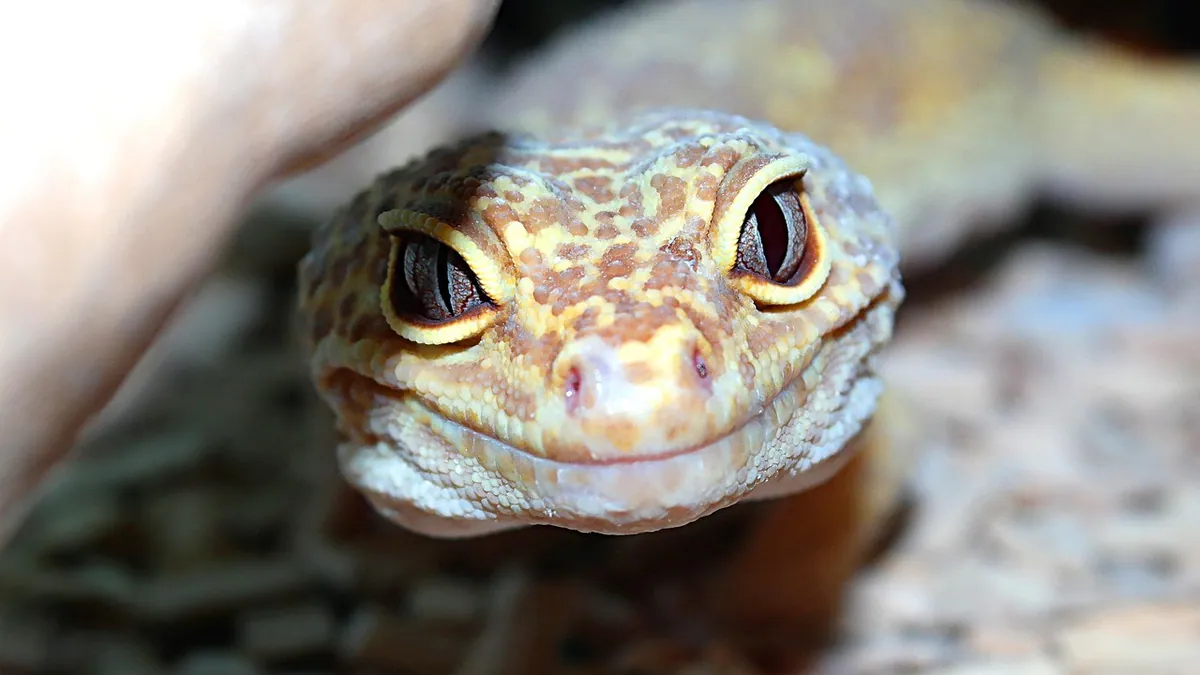
Do leopard geckos bite? Yes, they can, but they rarely do when they feel safe. Most bites are quick defensive nips, not attacks, and they usually happen when a gecko is startled, stressed, or handled incorrectly. Understanding why bites happen and how to read your gecko's body language goes a long way toward keeping both of you calm.
This article is educational and is not a substitute for veterinary diagnosis or treatment.
Quick Answer
- Leopard geckos have small teeth and a bite that typically causes a pinch or minor scrape, not a serious wound.
- Most bites are defensive, triggered by sudden movement, rough handling, or a gecko that feels cornered.
- A hungry gecko may bite by mistake during feeding, especially if fingers smell like food.
- Warning signs include a raised tail, an open mouth, a stiff body, and a quick turn toward your hand.
- Slow, low, supported handling and regular calm contact reduce biting over time.
Why Leopard Geckos Bite: Normal Reasons First
Biting is a normal behavior for a small prey animal. In the wild, a leopard gecko's survival depends on reacting fast to anything that might be a predator. That instinct does not disappear in captivity.
Defensive Biting
This is the most common reason pet leopard geckos bite. A gecko that feels trapped, picked up in published veterinary research, or grabbed will often open its mouth, hiss, and lunge. From the gecko's point of view, you are a large animal coming from the sky, which looks a lot like a predator.
Feeding Mistakes
Leopard geckos are enthusiastic eaters. If your fingers smell like insects or you hand-feed, a gecko may strike your hand instead of the food. This is usually a quick, accidental bite instead of aggression. Following a solid Leopard Gecko Diet and Feeding Guide helps you keep feeding predictable and reduces these mix-ups.
Stress and Poor Handling
Reptiles respond to handling in ways owners often miss. In a study of zoo snakes, inactive behavior increased and out-of-sight behavior changed after handling sessions, showing that human contact affects reptile behavior even when no obvious struggle occurs [1]. Leopard geckos are different animals, but the principle holds. Handling is a stressor, and stressed geckos are more likely to bite.
Pain or Illness
A gecko in pain may bite as a reflex. If your normally calm gecko suddenly bites when touched in a certain spot, consider that something hurts. This is a medical issue, not a training problem.
Hormonal and Breeding Behavior
Adult males can become more defensive during breeding season. Females may also be more reactive at certain times. This is normal, but it means you should adjust handling during these periods.
Medical Causes to Rule Out Before Assuming It Is Behavioral
Before you treat biting as a training problem, rule out health issues. A sick or uncomfortable gecko often behaves differently than usual.
Signs That Point to a Medical Cause
- Sudden change in temperament in a gecko that was previously calm
- Biting when a specific body area is touched
- Refusing food or losing weight
- Swelling, wounds, or discharge around the mouth, eyes, or cloaca
- Trouble shedding, which can leave stuck skin that hurts
Environmental stress can also play a role. A review of reptile and amphibian physiology found that temperature, water balance, disease, and pollution can interact and compound stress on these animals [2]. In a home setup, that translates to checking your temperatures, humidity, and cleanliness before blaming your gecko's personality.
Oral and Dental Problems
Mouth injuries, overgrown dental structures, and stuck shed around the mouth can all make a gecko reactive to touch near the face. If your gecko flinches or bites when you approach its mouth, have a veterinarian examine it. Our guide to Leopard Gecko Care: Overgrown Dental Spurs & Tooth Trimming Guide explains what these problems look like.
Skin and Shedding Issues
Retained shed can act like a tight band and cause discomfort. A gecko that cannot shed properly may bite when handled. This is a husbandry problem first and a medical problem second, so fix humidity and check with your vet.
When Leopard Gecko Biting Becomes a Problem
An occasional defensive nip is normal. Biting becomes a real problem when it happens often, when it draws blood, or when it makes basic care impossible.
Warning Signs to Watch For
- The gecko bites every time you try to pick it up
- The gecko bites during routine cage cleaning
- The gecko bites without any obvious trigger
- The gecko stops eating or hides constantly
- The gecko's bites are getting harder or more frequent
Any of these patterns deserves a closer look at both health and environment.
How to Handle a Leopard Gecko to Reduce Biting
Good handling is a skill. You can build it with patience, and your gecko can learn that your hands are safe.
Step 1: Let the Gecko Come to You
Place your open hand flat in the enclosure and let the gecko investigate. Do not grab. Let it walk onto your palm on its own. This builds trust faster than any treat.
Step 2: Support the Whole Body
Slide one hand under the belly and support the legs and tail. Never lift a gecko by the tail. Tail loss is a real risk, and our Leopard Gecko Tail Drop Care article covers what to do if it happens.
Step 3: Keep Sessions Short
Start with a few minutes at a time. Watch for stress signals and end the session before your gecko gets worked up. Short, calm sessions beat long, forced ones.
Step 4: Use a Consistent Routine
Handle at similar times, in a quiet room, with clean hands. Predictability lowers stress. Wash your hands before and after, and do not handle right after touching insects.
Step 5: Use a Scoop, Not a Grab
If you must move a defensive gecko, scoop it up in a small container or use a soft scoop. This avoids a bite and reduces stress for both of you.
Step 6: Train with Food, Not Force
Tong feeding keeps your fingers out of the strike zone. Target training with a soft touch or a small item can teach your gecko to move where you want without grabbing. Keep sessions positive and stop when your gecko loses interest.
Environment and Enrichment Changes That Reduce Biting
A gecko that feels secure bites less. Most biting problems trace back to the setup.
Check Temperatures and Humidity
Leopard geckos need a proper thermal gradient and a humid hide. Wrong temperatures cause stress and appetite problems. The same physiology review noted that thermal tolerance limits vary across species and that acclimation is often limited [2], so do not assume your gecko will simply adjust to a bad setup.
Provide Hides and Cover
At least three hides (warm, cool, and humid) give your gecko choices. A gecko with somewhere to retreat feels safer and is easier to handle when it chooses to come out.
Keep the Enclosure Quiet
Place the tank away from heavy foot traffic, loud speakers, and other pets. Reduce overhead movement. Approach from the side, not in published veterinary research.
Feed on a Schedule
Regular feeding reduces food-driven biting. Use tongs, offer appropriate prey size, and remove uneaten insects. A consistent routine makes your gecko calmer.
Respect Your Gecko's Limits
Some geckos tolerate handling more than others. If your gecko clearly dislikes it, reduce handling to what is needed for health checks and cleaning. That is not failure. It is good welfare.
What Not to Do When a Leopard Gecko Bites
How you respond matters more than the bite itself.
Do Not Punish or Flick
Never tap, flick, or yell at your gecko. Punishment does not teach a reptile anything useful. It increases fear and makes biting more likely.
Do Not Grab or Pin
Grabbing a gecko in published veterinary research triggers the exact defensive response you are trying to avoid. It also risks injury to a small, delicate animal.
Do Not Handle Right After Feeding
Give your gecko time to settle after eating. Handling too soon can cause regurgitation and stress.
Do Not Ignore Pain Signs
If your gecko bites when a certain area is touched, do not push through it. Get it checked.
Myths to Drop
- Myth: A biting gecko is mean. Reality: it is scared, hungry, or uncomfortable.
- Myth: You should let it bite you to show dominance. Reality: this only teaches fear.
- Myth: Biting means the gecko cannot be tamed. Reality: most geckos improve with calm, consistent handling.
- Myth: All geckos bite the same way. Reality: temperament varies, and so does the reason for biting.
When to Involve a Veterinarian or Behavior Professional
Get help when biting is sudden, severe, or linked to health changes. A veterinarian who treats reptiles can examine your gecko for pain, infection, dental problems, and shedding issues. If your vet rules out medical causes, a certified behavior professional with reptile experience can help you build a handling plan.
Do not wait if your gecko is not eating, is losing weight, or has visible wounds. These are medical concerns, and individual cases need a veterinarian.
Limitations and When to Contact a Veterinarian
This article gives general guidance. It cannot diagnose your gecko or replace an exam.
Contact a Veterinarian the Same Day If:
- Your gecko has a wound, swelling, or discharge
- Your gecko suddenly becomes aggressive after being calm
- Your gecko refuses food for more than a few days
- Your gecko has stuck shed around the mouth, eyes, or cloaca
- Your gecko shows weakness, tremors, or trouble moving
Seek Emergency Care Now If:
- Your gecko has a prolapse (tissue protruding from the cloaca)
- Your gecko has a severe injury or heavy bleeding
- Your gecko is unresponsive or struggling to breathe
- Your gecko has a suspected toxic exposure
Schedule a Routine Visit If:
- Biting continues after you fix husbandry and handling
- You are unsure whether your setup meets your gecko's needs
- Your gecko needs a general health check
Surgical and medical care for reptiles can be complex. A case report on a hawksbill turtle showed that a chronic abscess required surgical excision and did not respond well to medication alone [3]. Leopard geckos are not sea turtles, but the lesson applies. Some reptile problems need hands-on veterinary treatment, not home remedies.
Frequently Asked Questions
Do leopard geckos bite often?
No, most pet leopard geckos rarely bite. When bites happen, they are usually defensive reactions to feeling trapped or startled. With calm handling and a good setup, biting becomes uncommon.
Does a leopard gecko bite hurt?
A leopard gecko bite feels like a sharp pinch and may leave a small scrape. Their teeth are tiny, so serious injury is rare. The bigger concern is stress for the gecko and infection risk for any broken skin.
How do I stop my leopard gecko from biting me?
Start by ruling out pain and illness, then improve handling and husbandry. Use slow, supported handling, feed with tongs, and keep sessions short. Most geckos settle down once they feel secure.
Can you tame a biting leopard gecko?
Yes, most leopard geckos can become calmer with patience. Let the gecko approach you, avoid grabbing, and keep contact predictable. Some geckos will always prefer limited handling, and that is okay.
Why does my leopard gecko bite when I pick it up?
Picking up in published veterinary research looks like a predator attack to a small gecko. That triggers a defensive bite. Scoop from the side or below, support the body, and give your gecko time to adjust.
Related Articles
- Leopard Gecko Care: Overgrown Dental Spurs & Tooth Trimming Guide
- Leopard Gecko Morphs Explained for Owners
- Leopard Gecko Diet and Feeding Guide
- Leopard Gecko Care: Pyramiding & Shell Health Management
- Leopard Gecko Tail Drop Care
- Leopard Gecko Care Guide for Beginners
- Why Is My Leopard Gecko Biting or Licking Me?
- Do Leopard Geckos Make Good Pets? Pros and Cons
- Do Leopard Geckos Recognize Their Owners? What Science Says
References
- Behavioural Welfare Implications of Human Handling Practices in Zoo Snakes. Veterinary medicine and science, 2026.
- Physiological responses and adaptive mechanisms of amphibians and reptiles to multiple interacting environmental stressors: an integrative review. Frontiers in physiology, 2026.
- Successful Surgical Excision of a Chronic Abscess in a Hawksbill Turtle (Eretmochelys imbricata): A Case Report. Veterinary sciences, 2025.