Do Leopard Geckos Recognize Their Owners? What Science Says
By Dr. Zubair Khalid, DVM, MS, PhD ·
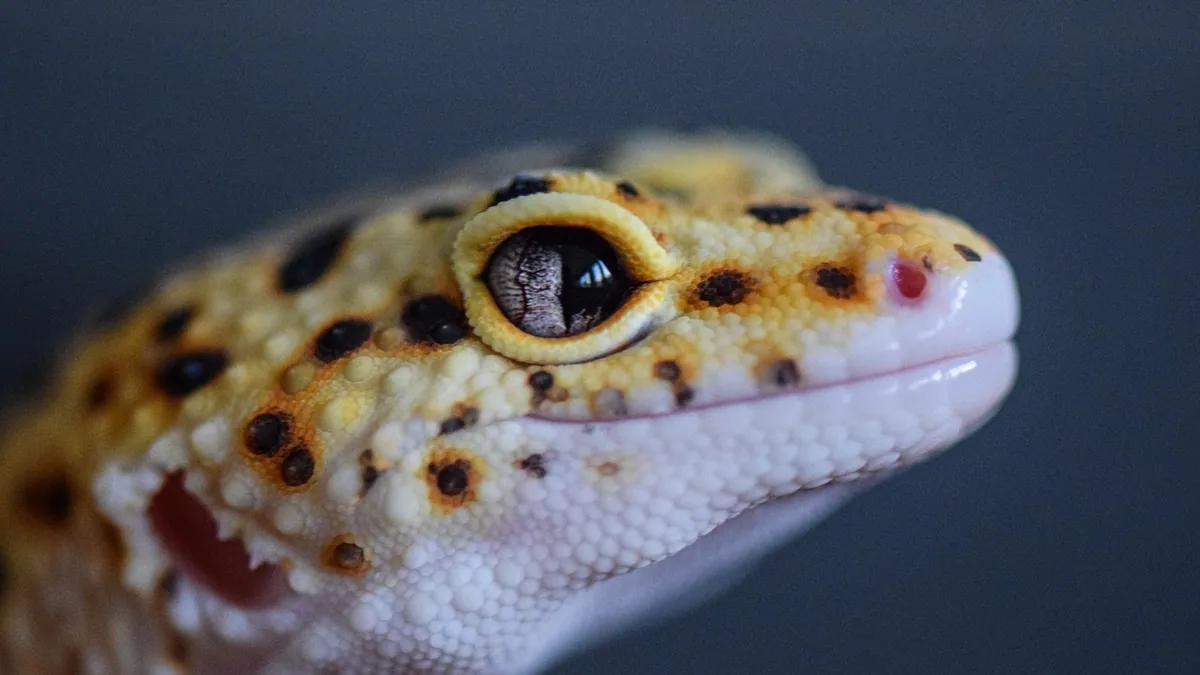
Do leopard geckos recognize their owners? In a limited way, yes. A leopard gecko can learn your scent, your routine, and the feel of your hands, and it may respond differently to you than to a stranger. What it does not do is form the kind of emotional attachment a dog or cat shows. Your gecko knows you as a safe, familiar part of its world, not as a person it loves.
This article is educational and is not a substitute for veterinary diagnosis or treatment.
Quick Answer
- Leopard geckos rely heavily on chemical cues (smell and taste) to read their environment, and they can learn to associate a familiar scent with safety [1][2].
- A gecko that stays calm, comes out of hiding, or climbs onto your hand is showing tolerance and familiarity, not affection.
- Recognition is built through calm, repeated, short handling sessions and a predictable routine, not through cuddling or constant contact.
- Stress signs (tail waving, squeaking, freezing, dropping the tail) mean back off, not push forward.
- Memory in leopard geckos is real but limited, and spatial memory can fade over months without practice [3].
Do Leopard Geckos Recognize Their Owners? What Recognition Actually Looks Like
Reptile cognition research has moved a long way from the old idea that lizards run on pure instinct. Lizards can tell individuals apart using physical, acoustic, and chemical cues, and they use specialized skin glands to send and receive those chemical signals [1]. In one three-week study, common wall lizards learned to associate specific odors (feces, urine, skin, and gland secretions) with previous experience of other lizards [1]. That is individual recognition, and it happens through smell.
Leopard geckos are not the same species, but they share the same basic toolkit. A study on leopard geckos found that chemical information is the main driver of how they assess and respond to threats, while visual and touch cues act as extra signals that increase their chemical sampling [2]. In plain terms, your gecko is reading the world through its nose and tongue far more than through its eyes.
So what does this mean for you? Your gecko can learn that a specific scent (yours) plus a specific routine (feeding, gentle handling, warm hands) equals no danger. That is recognition in the practical sense. It is not the same as a dog running to the door because it missed you.
Do leopard geckos get attached to their owners?
No, not in the emotional sense. Attachment requires a social bond that reptiles are not built for. What you will see instead is habituation, which means your gecko has learned that you are not a threat. A habituated gecko may sit calmly on your hand, explore your sleeve, or stop hiding when you enter the room. That is comfort and predictability, and it is worth a lot.
Do leopard geckos remember their owners?
They can remember familiar scents and routines, but the memory is not permanent or detailed. In a leopard gecko study, spatial memory stayed stable four months after training but declined significantly by fourteen months, dropping back to baseline [3]. If memory for a simple navigation task fades over months, memory for your face or voice is not going to be strong or lasting. Regular, low-stress contact keeps you in the "familiar" category.
Do leopard geckos bond with their owners?
Bonding is the wrong word. Think of it as trust built through repetition. Your gecko does not miss you when you travel. It notices that its environment changed, and it may act more cautious until the routine returns. That is about predictability, not longing.
Do leopard geckos trust their owners?
Trust, in reptile terms, is the absence of a fear response. A gecko that lets you pick it up without tail waving, squeaking, or bolting has learned that handling is safe. You earn that by keeping every interaction calm and short. You lose it fast with rough or sudden movements.
Do leopard geckos miss their owners?
No. There is no evidence that leopard geckos form separation distress the way social mammals do. If your gecko seems "sad" while you are away, the more likely causes are a temperature drop, a missed feeding schedule, or a change in its enclosure. Check the basics before you read emotion into it.
Why Your Gecko Responds to You (Normal Reasons)
Most of what owners interpret as recognition has simple, normal explanations.
Scent memory. Your hands carry a consistent mix of soap, lotion, food, and your own skin oils. Your gecko learns that mix and links it to feeding or gentle handling. Chemical cues are its primary channel for this kind of learning [2].
Routine and timing. Leopard geckos are crepuscular, most active around dawn and dusk. If you feed at the same time each evening, your gecko may come out of its hide when it hears you. It has learned the schedule, not your face.
Warmth seeking. Your hands are warm. A gecko that walks onto your palm may simply be looking for heat. This is normal and not a sign of affection.
Reduced startle response. With repeated calm handling, the fear response fades. This is habituation, and it is the closest thing to trust a gecko offers.
Tongue flicking at you. Tongue flicks are how geckos sample chemicals. A gecko that flicks its tongue toward your hand is gathering information, not kissing you.
Medical Causes to Rule Out Before You Blame Behavior
Sometimes a change in how your gecko responds to you is a health problem, not a personality shift.
- Sudden aggression or defensiveness. Pain is a common cause. Check for retained shed around the toes and tail tip, swelling, or a wound.
- Refusing to come out or eat. This can point to low temperatures, incorrect lighting, or illness. Review your setup with Leopard Gecko Care Requirements: A Practical Guide for New Owners and Lighting for Leopard Geckos: UVB, Heat, and Photoperiod Explained.
- Lethargy or weakness. Metabolic bone disease, impaction, and infection all cause this. A gecko that used to climb onto your hand and now cannot lift its head needs a vet visit.
- Weight loss. Weigh your gecko monthly on a small kitchen scale. A steady drop is a red flag. Feeding problems are covered in Leopard Gecko Diet and Feeding Guide.
- Eye or mouth discharge. Respiratory and eye infections are common in geckos kept too cool or too damp.
Any of these signs means a veterinary exam, not more handling.
When Recognition Becomes a Problem
A gecko that "knows" you can still become stressed by too much contact. Watch for these signs and treat them as a stop signal.
- Tail waving or a raised, twitching tail
- Squeaking, hissing, or open-mouth gaping
- Freezing completely or flattening against the floor
- Trying to bolt or jump from your hands
- Dropping the tail (a last-resort defense that costs your gecko energy and regrowth time)
- Refusing food for more than a few days after handling sessions
If your gecko shows these signs every time you pick it up, the problem is the handling, not the gecko. Cut sessions to a few minutes, or stop handling entirely for a week and let it settle.
What to Do Step by Step
Build trust slowly
Start with your hand resting flat inside the enclosure for two to three minutes, near but not touching your gecko. Do this daily for a week. Let the gecko come to you. When it walks onto your hand on its own, lift it just a few inches above the floor of the enclosure and set it back down. Increase distance and time only when your gecko stays relaxed.
Keep sessions short and predictable
Five to ten minutes, once a day, is plenty for most leopard geckos. Handle in the evening when your gecko is naturally active. Wash your hands with unscented soap and dry them fully before and after. Avoid handling for 24 to 48 hours after a meal so digestion is not disturbed.
Use scent to your advantage
Since chemical cues drive so much of your gecko's behavior [2], consistency matters. Use the same unscented soap, keep your hands at a similar temperature, and approach from the side instead of in published veterinary research. A hand coming in published veterinary research looks like a predator.
Enrich the enclosure
A gecko that feels secure in its home is easier to handle. Provide at least three hides (one on the warm side, one on the cool side, one humid hide), a proper heat gradient, and clutter for cover. A gecko with nowhere to hide will be defensive. If you are unsure about your setup, Leopard Gecko Care Requirements: A Practical Guide for New Owners walks through the basics.
Respect the gecko's choice
If your gecko backs away, stop. Forcing contact teaches it that your hand predicts something unpleasant. You want the opposite association.
Track progress in a notebook
Note the date, session length, and your gecko's response. Over weeks you will see a pattern. This also helps your veterinarian if a behavior problem develops.
What Not to Do
- Do not punish. Yelling, tapping, or spraying water will only increase fear. Reptiles do not learn from punishment the way mammals do.
- Do not grab or chase. Scoop gently from below, or use a small container to move a defensive gecko.
- Do not handle during shed. Geckos are especially sensitive and may bite or drop their tail when shedding skin is pulled.
- Do not assume a gecko that tolerates handling loves it. Tolerance is not enjoyment.
- Do not believe the myth that geckos "imprint" on their owners. There is no evidence for imprinting in leopard geckos.
- Do not keep two males together to try to make your gecko "friendlier." This causes fighting and injury.
- Do not skip quarantine or a vet check for a new gecko. A sick gecko will not bond with anyone.
When to Involve a Veterinarian or Behavior Professional
Call a veterinarian who treats reptiles if your gecko shows any of the following.
Same day: sudden aggression in a previously calm gecko, a wound, retained shed cutting off circulation to a toe or tail tip, or a dropped tail with an open wound.
Emergency now: trouble breathing, open-mouth breathing, prolapse, severe bleeding, or a gecko that is unresponsive or limp.
Routine visit: a new gecko within the first week or two, an annual wellness exam, or any change in appetite, weight, or activity lasting more than a few days.
A certified behavior professional can help if handling-related stress continues despite your best efforts. Ask your veterinarian for a referral.
Limitations and When to Contact a Veterinarian
Reptile cognition research is still catching up to what owners observe at home. Much of what we know about lizard recognition comes from other species, and leopard gecko studies focus on learning and predator response, not on owner bonding [1][2][3]. That means any claim that a gecko "loves" its owner goes beyond the evidence.
Individual cases need a veterinarian. If your gecko's behavior changes suddenly, if it stops eating, if it loses weight, or if it shows signs of pain or infection, book an appointment. Do not wait to see if it passes. Reptiles hide illness well, and by the time symptoms are obvious, the problem is often advanced.
Frequently Asked Questions
How long does it take for a leopard gecko to get used to you?
Most geckos settle into a calm routine within a few weeks of consistent, gentle contact. Some take several months, especially adults that were rarely handled before. Go at your gecko's pace and never rush the process.
Can a leopard gecko tell you apart from a stranger?
Often, yes, mainly by scent. Your gecko has learned your specific chemical signature and your handling style. A stranger smells and moves differently, so your gecko may act more cautious or hide.
Does my leopard gecko like being held?
Most leopard geckos tolerate handling instead of enjoy it. A relaxed gecko sits still or explores calmly. A stressed gecko waves its tail, squeaks, or tries to escape. Let those signals guide you.
Will my leopard gecko forget me if I go on vacation?
Your gecko will not pine for you, but it may act more cautious when you return. Keep the enclosure routine stable while you are away, then restart short, calm handling sessions. Familiarity usually returns within a week or two.
Is it bad to handle my leopard gecko every day?
Daily handling is fine if sessions are short and your gecko stays relaxed. Skip handling for a day or two after feeding, during shedding, and any time your gecko shows stress signs. Quality of contact matters more than frequency.
Related Articles
- Leopard Gecko Morphs Explained for Owners
- Leopard Gecko Care Requirements: A Practical Guide for New Owners
- Lighting for Leopard Geckos: UVB, Heat, and Photoperiod Explained
- Leopard Gecko Care: Pyramiding & Shell Health Management
- Leopard Gecko Diet and Feeding Guide
- Bearded Dragon vs. Leopard Gecko: Choosing the Right Pet Lizard
- Do Ball Pythons Recognize Their Owners? What Science Says
- Do Tortoises Recognize Their Owners? Memory in Reptiles
- Do Leopard Geckos Like to Be Held? Handling Tips
References
- Common wall lizards learn familiar-unfamiliar identity of conspecifics through chemical cues. Learning & behavior, 2025.
- Response of leopard geckos (Eublepharis macularius) towards a multimodal cue simulating a predator. Behavioral ecology : official journal of the International Society for Behavioral Ecology, 2026.
- Could Spatial Learning in the Early Stages of Life Consistently Affect the Long-Term Memory of Leopard Geckos (Eublepharis macularius)?. Animals : an open access journal from MDPI, 2026.