Can Dogs Eat Turnips? Raw, Cooked, and Greens Safety
By Dr. Zubair Khalid, DVM, MS, PhD ·
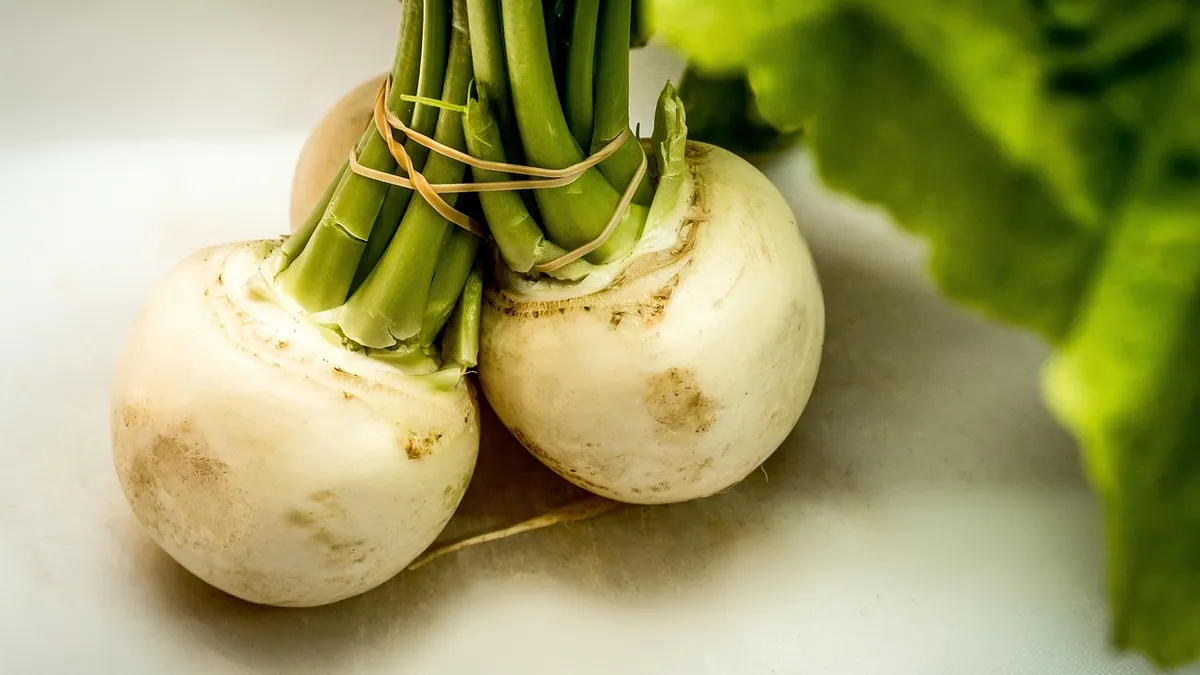
Can dogs eat turnips cooked? Yes. Plain, cooked turnips are safe for most dogs in small amounts, and many dogs will eat them as a low-calorie treat. Raw turnips are also safe in small pieces, but they are hard and can be a choking hazard for some dogs.
This article is educational and is not a substitute for veterinary diagnosis or treatment.
Quick Answer
- Cooked turnips are safe for most dogs when served plain, with no butter, oil, salt, garlic, onion, or xylitol-sweetened seasonings.
- Raw turnips are safe only if cut into small, thin pieces. Large chunks can cause choking or block the throat.
- Turnip greens are safe in small amounts, but they can cause gas or loose stool in sensitive dogs.
- Keep portions small. Treats should make up no more than about 10 percent of your dog's daily calories, and turnips are a treat, not a meal.
- Skip turnips entirely if your dog has a history of thyroid disease, kidney disease, or a sensitive stomach, unless your veterinarian says otherwise.
Are Turnips Safe for Dogs?
Turnips are not toxic to dogs. The Pet Poison Helpline lists turnips among human foods that are generally safe for dogs when fed in appropriate amounts [1]. That means a plain piece of turnip is not a poison risk. The bigger concerns are preparation, portion size, and your dog's individual health.
Turnips belong to the same plant family as cabbage, broccoli, cauliflower, and kale. These vegetables are safe for most dogs, but they can produce gas and loose stool when fed in large amounts. If your dog has never eaten turnips, start with one small piece and watch for digestive upset.
You can also offer other plain vegetables from this family. For a broader list, see What Are Some Safe Vegetables For Dogs To Eat.
Can Dogs Eat Turnips Cooked?
Yes, cooked turnips are safe for dogs. Cooking softens the vegetable, which makes it easier to chew and digest. It also reduces the sharp, peppery bite that some dogs dislike.
The method matters more than the turnip itself. Boil, steam, or roast turnips plain. Do not add butter, oil, salt, sugar, honey, garlic, onion, or seasoning blends. Garlic and onion are toxic to dogs, and many seasoned blends contain them. Xylitol is sometimes used in sweetened vegetable dishes, and it is highly toxic to dogs.
Cooked turnips should be cut into bite-sized pieces. A piece about the size of a pea works for a small dog. A piece about the size of a nickel works for a medium dog. For a large dog, a piece about the size of a quarter is reasonable. Always supervise your dog while they eat.
Some owners mix a spoonful of plain mashed turnip into regular dog food. That is fine as long as the turnip is plain and makes up only a small part of the bowl. Your dog's regular diet should still provide complete and balanced nutrition.
Can Dogs Eat Turnips Raw?
Raw turnips are safe for most dogs, but they are firm and crunchy. A large raw chunk can lodge in the throat or cause a choking episode. Raw turnips are also harder to digest, so they are more likely to cause gas or loose stool.
If you want to feed raw turnip, peel it and cut it into thin slices or small cubes. Avoid giving your dog the whole root or a large wedge. Some dogs will gnaw on a raw turnip piece the way they would a carrot, but that does not mean it is safe to leave them alone with it.
Raw turnips are not a replacement for dental chews. They can break into sharp pieces, and they do not clean teeth reliably. If your dog has dental disease, missing teeth, or a history of choking, cooked turnip is the safer choice.
Can Dogs Eat Turnips and Parsnips?
Yes, dogs can eat both turnips and parsnips in small, plain amounts. Parsnips are a different root vegetable, but they are also non-toxic to dogs. Cooked parsnips are soft and easy to mash. Raw parsnips are hard, so cut them into small pieces or cook them first.
The same rules apply to both vegetables. Serve them plain, keep portions small, and introduce one new food at a time. If your dog gets gas or diarrhea after eating turnips and parsnips together, you will not know which one caused the problem. Offer one, wait a day, then offer the other.
Parsnips are higher in natural sugars than turnips. That matters for dogs with diabetes or weight problems. A small piece is fine for most dogs, but a dog with diabetes should get treats only with veterinary approval.
Can Dogs Eat Turnips and Carrots?
Yes, dogs can eat turnips and carrots together. Carrots are a common safe vegetable for dogs, and they are often used as low-calorie treats. Turnips and carrots can be cooked together and mashed plain, or cut into small raw pieces for a crunchy snack.
Carrots are firmer than cooked turnips, so cut them into small pieces for small dogs and dogs who eat quickly. Some dogs swallow pieces whole, which raises the risk of choking. If your dog is a fast eater, cook both vegetables until soft.
A mix of plain cooked turnip and carrot is a reasonable topper for a boring bowl of food. Keep the total treat portion small. For more safe options, see What Kind Of Vegetables Are Safe For Dogs To Eat.
Can Dogs Eat Turnip Greens?
Yes, turnip greens are safe for dogs in small amounts. They are leafy and soft when cooked, and they contain fiber and vitamins. Raw turnip greens are also safe, but they are tougher and can be stringy.
The main problem with turnip greens is gas. Like other leafy greens in the cabbage family, they can cause bloating, burping, and loose stool. Start with a small pinch of cooked greens mixed into food. If your dog tolerates it, you can slowly increase to a small spoonful.
Do not feed turnip greens that were cooked with bacon, ham, butter, salt, or onion. Southern-style turnip greens are often cooked with smoked meat and onion, which makes them unsafe for dogs. Plain steamed or boiled greens are the only version you should share.
If your dog has a history of pancreatitis or a sensitive stomach, skip turnip greens. The fiber and natural plant compounds can trigger digestive upset in some dogs.
Nutritional Content and Real Benefits
Turnips are mostly water and fiber. They are low in calories, which makes them a useful treat for dogs who need to lose weight. A few pieces of plain cooked turnip can add volume to a meal without adding many calories.
Turnips contain vitamin C, potassium, and some fiber. They are not a complete source of nutrition, and they do not replace a balanced dog food. Dogs have different nutritional needs than people, and they do not need the same amount of plant fiber that humans do.
Some owners use turnips as a filler for dogs who beg at the table. A small bowl of plain cooked turnip can satisfy a dog who wants to chew something while the family eats. That is a reasonable use as long as the turnip stays a small part of the daily diet.
If your dog is overweight, your veterinarian can help you plan treat portions. Turnips are one option among many. For other safe choices, see Safe Veggies For Dogs To Eat.
Risks and What to Watch For
Choking and Blockage
Raw turnips are hard. A large piece can get stuck in the throat or cause a blockage in the esophagus or intestines. Small dogs, flat-faced dogs, and dogs who gulp food are at higher risk. Cut raw turnips into thin slices or small cubes, or cook them until soft.
Digestive Upset
Turnips and turnip greens can cause gas, bloating, and loose stool. This is more likely when you feed a large amount or when your dog is not used to vegetables. Start small and increase slowly.
Thyroid Concerns
Turnips are a cruciferous vegetable. Cruciferous vegetables contain natural compounds called goitrogens. In very large amounts, these compounds can interfere with thyroid function. Normal treat portions are not a concern for most healthy dogs. If your dog has hypothyroidism or another thyroid condition, ask your veterinarian before feeding turnips.
Additives and Seasonings
The turnip itself is safe. The problem is what people put on it. Butter, oil, salt, garlic, onion, bacon, ham, and sweeteners can all cause problems. Xylitol is especially dangerous. Even a small amount can cause low blood sugar and liver damage in dogs.
Raw Diet and Bacteria
Some owners feed raw turnips as part of a raw diet. Raw meat diets have been linked to concerns about pathogenic bacteria and antimicrobial resistance [2]. Vegetables themselves are not the main concern, but raw produce can carry bacteria. Wash turnips thoroughly and store them properly.
Diet and Gut Health
What you feed your dog affects their gut. A study of dogs fed a fresh-frozen diet found improved fecal consistency compared with extruded kibble [3]. Another study found that a minimally processed diet changed the fecal microbiome and metabolic responses in dogs [4]. These findings do not mean turnips are a treatment for gut disease. They do show that diet form and processing matter for digestive health.
If your dog has chronic enteropathy, a veterinarian may recommend a specific diet. One study found that an insect-based diet helped some dogs with food-responsive enteropathy [5]. That is a prescription decision, not something you should try at home with turnips.
How to Offer Turnips Safely
| Form | Safe? | Notes |
|---|---|---|
| Plain cooked turnip | Yes | Boil, steam, or roast with no additives. Cut into small pieces. |
| Raw turnip | Yes, with care | Peel and cut into thin slices or small cubes. Watch for choking. |
| Turnip greens | Yes, in small amounts | Cook plain. Avoid bacon, ham, butter, onion, and salt. |
| Mashed turnip with butter | No | Butter adds fat and can trigger pancreatitis in sensitive dogs. |
| Turnip with garlic or onion | No | Garlic and onion are toxic to dogs. |
| Pickled turnip | No | Vinegar, salt, and spices can cause stomach upset. |
| Turnip in a stew | Usually no | Stews often contain onion, garlic, salt, and bones. |
| Turnip with xylitol | No | Xylitol is highly toxic to dogs. |
Step-by-Step Serving Guide
- Choose a fresh turnip. Wash it well and peel the skin.
- Cut it into small pieces. For raw turnip, slice it thin.
- Cook it plain if your dog has dental problems or eats too fast.
- Cool cooked turnip to room temperature before serving.
- Start with one small piece. Wait 24 hours and watch for vomiting, diarrhea, or gas.
- If your dog tolerates it, offer a few pieces as a treat. Do not exceed 10 percent of daily calories.
Parts to Avoid
Avoid the leaves if they are wilted, moldy, or sprayed with pesticides. Avoid the root if it has soft spots or mold. Avoid any turnip that has been pickled, candied, or cooked with onion, garlic, or xylitol.
What to Do If Your Dog Ate Too Much
If your dog ate a large amount of plain turnip, they may get gas or loose stool. Most cases are mild. Withhold other treats for the rest of the day and make sure fresh water is available. Call your veterinarian if vomiting or diarrhea lasts more than 24 hours, if your dog seems painful, or if they stop eating.
If your dog ate turnip cooked with onion, garlic, or xylitol, call your veterinarian or a pet poison control hotline right away. Do not wait for symptoms. Onion and garlic can damage red blood cells, and xylitol can cause dangerous drops in blood sugar.
If your dog is choking, pawing at the mouth, gagging, or having trouble breathing, go to an emergency clinic now. Do not try to pull a piece out of the throat with your fingers unless you can see it and it is easy to reach. You could push it deeper.
If your dog swallowed a large raw chunk and is retching or drooling, treat it as an emergency. A blockage can become life-threatening within hours.
Safer Alternatives
If turnips do not agree with your dog, try other plain vegetables. Cooked carrots, green beans, zucchini, and pumpkin are common safe choices. Plain cooked sweet potato is another option in small amounts. For a full list, see List Of Safe Vegetables For Dogs To Eat.
Avoid vegetables that are toxic or risky. Onion, garlic, leeks, chives, and wild mushrooms are not safe. For a list of vegetables to avoid, see What Vegetables Are Not Safe For Dogs To Eat.
Some dogs do better on a consistent commercial diet than on table food. A study of grain-free diets found no clear link to new cardiac diagnoses over two years, but owner-reported diet information was often inaccurate [6]. That is a reminder that diet choices should be based on veterinary guidance, not internet trends.
Limitations and When to Contact a Veterinarian
This article gives general guidance. It cannot tell you whether turnips are right for your dog. Every dog has different health needs, and individual cases need a veterinarian who knows your dog's history.
Contact your veterinarian the same day if your dog ate turnip cooked with onion, garlic, or xylitol, or if they ate a large amount of raw turnip and are vomiting or retching.
Go to an emergency clinic now if your dog is choking, having trouble breathing, collapsing, having seizures, or has a swollen, painful abdomen.
Schedule a routine visit if your dog gets gas or loose stool every time they eat turnips, or if you are unsure whether turnips fit your dog's diet plan. Bring a list of everything your dog eats, including treats and table food.
Frequently Asked Questions
Can dogs have turnips every day?
Yes, a small amount of plain cooked turnip can be offered daily for most healthy dogs. Keep it to a few small pieces and count it as part of your dog's daily treats. If your dog gets gas or loose stool, cut back or stop.
Are turnip greens better for dogs than the root?
Neither is better. The root is lower in fiber and less likely to cause gas. The greens have more vitamins but can cause bloating. Offer whichever your dog tolerates, in small amounts, and always plain.
Can puppies eat turnips?
Yes, puppies can eat small pieces of plain cooked turnip once they are eating solid food. Keep pieces very small and supervise closely. Puppies have sensitive stomachs, so introduce one new food at a time.
Do turnips help dogs lose weight?
Turnips are low in calories, so they can replace higher-calorie treats. They do not cause weight loss on their own. Weight loss comes from a calorie-controlled diet and regular exercise planned with your veterinarian.
What if my dog eats a whole raw turnip?
A whole raw turnip is a choking and blockage risk, especially for small dogs. Call your veterinarian or a pet poison control hotline for advice. Watch for gagging, drooling, vomiting, or a painful belly, and go to an emergency clinic if any of those signs appear.
Related Articles
- What Are Some Safe Vegetables For Dogs To Eat
- What Kind Of Vegetables Are Safe For Dogs To Eat
- Safe Veggies For Dogs To Eat
- What Vegetables Are Not Safe For Dogs To Eat
- List Of Safe Vegetables For Dogs To Eat
- Can Dogs Eat Green beans? Weight Loss & Raw Safety
- Can Dogs Eat Collard Greens Raw or Cooked?
- Can Dogs Eat Radishes? Raw, Cooked, and Leaf Safety
- Can Dogs Eat Brussels Sprouts Raw or Cooked? Safety Guide
References
- Learn Which Human Food Is Safe For Dogs. Pet Poison Helpline.
- Exploring veterinarian and pet owner perspectives on the risk of antimicrobial resistance when feeding raw meat diets to dogs. Veterinary record open, 2026.
- Impacts of a fresh-frozen dog food on fecal consistency and microbiome in colony dogs. Journal of animal science, 2026.
- Diet-induced metabolic and faecal microbiome responses in pet dogs fed a minimally processed versus extruded kibble diet. Frontiers in veterinary science, 2026.
- Successful use of insect-based (Hermetia illucens) diet in dogs with food-responsive enteropathy. The Journal of small animal practice, 2026.
- Multiple Modelling Methods Suggest That Grain-Free Diets Are Not Predictive of New Owner-Reported Cardiac Diagnoses Over Two Years in the Dog Aging Project, Despite Owner Misclassification of Diet. Veterinary medicine and science, 2026.