Can Dogs Eat Cranberries? Benefits and Safety
By Dr. Zubair Khalid, DVM, MS, PhD ·
Yes. Dogs can eat cranberries. Cranberry fruit is a human food, and veterinary researchers have incorporated cranberry extracts and cranberry-supplemented diets into dogs' meals over study periods that ranged from 10 days to 6 months [1][2][3]. Cranberries are not poisonous to dogs, and a plain berry will not harm most animals that eat one off the floor.
The harder question is whether cranberries do anything useful. The short answer is that they might, a little, in a narrow way. They are not a cure for a urinary tract infection, they are not a substitute for antibiotics, and the clinical evidence that they prevent infection in dogs is weak and inconsistent [4]. That does not make cranberries worthless. It makes them a modest food with a specific, well-documented laboratory effect and a much less impressive record in real patients.
This article explains the difference between those two things, shows you which cranberry products are reasonable for a dog and which are not, and sets out the safety points that actually matter: product form, drug interactions, and the urinary signs that need a veterinarian rather than a treat.
This article is educational and is not a substitute for veterinary diagnosis or treatment.
At a Glance
| Owner question | Practical answer |
|---|---|
| Can dogs eat cranberries? | Yes. Plain cranberry fruit is a food, not a poison. |
| Best form for a dog | Fresh, frozen, or dried cranberry with no added sugar or other ingredients. |
| Forms to skip | Sweetened dried cranberries, juice cocktails, cranberry sauce, baked goods, yogurt-coated or chocolate-coated products, mixed trail mixes. |
| What the research supports | A measurable reduction in the ability of E. coli to stick to canine kidney cells in the laboratory [1][2]. |
| What the research does not support | Reliable prevention or treatment of urinary tract infections in real dogs [4]. |
| Typical study periods | 10 days on a supplemented diet [2], extract supplementation [1], 6 months of extract [1], 6 weeks in a clinical trial [3]. |
| Established feeding dose | None. The studies used measured extracts and formulated diets, not kitchen amounts [1][2]. |
| Biggest safety issue | Anticoagulant medication. Cranberry changed warfarin handling in rats, in both directions depending on timing [5]. |
| Who should ask a veterinarian first | Dogs with a UTI history, bladder stones, diabetes, spinal cord injury, or any long-term medication. |
| Red flags that need a vet now | Straining to urinate, blood in urine, inability to pass urine, repeated accidents, fever, lethargy. |
Why Cranberries Got a Reputation in Urinary Care
Escherichia coli is the most common bacterium recovered from the urine of dogs with urinary tract infections [2]. To cause infection, E. coli has to attach to the lining of the urinary tract. The bacterium does this with hair-like surface structures, including type 1 pili and P pili, which the research literature tracks with gene markers such as fimA and papC [2][6].
Cranberry appears to interfere with that attachment step. In dogs, urine collected after cranberry extract administration reduced the adhesion of E. coli to Madin-Darby canine kidney (MDCK) cells, a laboratory stand-in for urinary epithelium [1][2]. The same pattern has been shown in cats using a feline kidney cell line [6].
That mechanism explains both the enthusiasm and the disappointment around cranberry. Blocking adhesion is plausible and measurable. Preventing a clinical infection is a much bigger claim, and it depends on dose, duration, the individual dog's anatomy, urine flow, immune function, and whether the bacteria in that dog actually depend on the adhesins cranberry interferes with.
One more detail matters. Cranberry is not an antibiotic. In one study, urine from dogs given cranberry extract produced no zone of inhibition in a bacteriostasis assay, meaning the urine did not kill or stop the growth of bacteria [1]. The benefit being studied is antiadhesion, not antibacterial killing.
What the Dog Research Actually Shows
Laboratory evidence: adhesion drops
The clearest findings are in the laboratory. In a study of 12 client-owned dogs with a history of recurrent urinary tract infection, six received an antimicrobial and six received cranberry extract orally for 6 months. None of the 12 dogs developed a UTI during the study [1]. That result is interesting but not decisive on its own, because the groups were small and the antimicrobial group was expected to do well.
The mechanism data were stronger. Bacterial adhesion to MDCK cells was significantly reduced when bacteria were cultured with urine collected 30 and 60 days after cranberry extract started, compared with urine collected before treatment [1]. The bacteria were not killed. They were less able to stick.
A later study fed eight dogs (four male, four female) two diets in sequence, a control diet and then a diet containing cranberry extracts. Urine collected on day 10 of each diet was used to grow a uropathogenic E. coli strain. Adherence to MDCK cells fell significantly in the four females, with reductions ranging from about 16 percent to about 73 percent. No reduction was seen in the four males [2]. The authors concluded that dietary cranberry may provide some degree of protection to female dogs against E. coli adhesion [2].
That sex difference is worth remembering. It shows up in the dog data, and it means a confident recommendation for every dog is not justified by the current evidence.
Clinical evidence: the picture is muddier
Moving from a cell culture to a sick dog changes the story.
A randomized, placebo-controlled, blinded trial enrolled 94 dogs with acute thoracolumbar intervertebral disc herniation, a spinal injury that causes nonambulatory status and increased residual urine volume, which raises infection risk. Dogs were randomized about 48 hours after surgery to cranberry extract or placebo, and urine cultures were performed at 2, 4, and 6 weeks [3].
Bacteriuria was detected 17 times across the 94 dogs, six in the placebo group and 11 in the cranberry group, a difference that was not statistically significant. There were seven E. coli positive cultures, one in the placebo group and six in the cranberry group [3]. The trial did not show a protective effect.
There was one secondary finding of interest. Dogs in both groups produced urine with antiadhesion activity, 14 of 21 in the placebo group and 16 of 26 in the cranberry group. Dogs with that activity in their urine had significantly fewer E. coli positive cultures than dogs without it [3]. This hints that antiadhesion activity in urine is a real biological phenomenon that varies between individuals, but it does not show that feeding cranberry reliably produces that activity or that doing so prevents infection.
The systematic review: low certainty
A systematic review examined the evidence for cranberry supplementation in dogs and cats with bacterial cystitis or subclinical bacteriuria. It identified three studies involving 122 animals, 106 dogs and 16 cats. No study reported a statistically significant or numerical impact of treatment. Two studies were judged at high risk of bias and one at low risk. Certainty of evidence was rated low to very low, and the authors concluded that the small number of studies, small sample sizes, and low certainty preclude a confident assessment of cranberry's role [4].
That is the fairest summary available. Cranberry is biologically plausible, measurable in a lab, and unproven in the clinic.
What the cat data add
A crossover study in six cats fed diets containing 0.1 percent or 0.3 percent cranberry powder found significant reductions in uropathogenic E. coli adherence to a feline kidney cell line in 60 percent of cats on the lower dose and in all cats on the higher dose [6]. This supports the general antiadhesion mechanism across species. It does not transfer automatically to dogs, and it does not tell you what dose to feed your own animal.
What this means for your dog
Put the pieces together and a realistic expectation emerges. Cranberry may reduce the ability of some E. coli strains to attach to urinary cells, particularly in female dogs, at least while the dog is eating it consistently [1][2]. It has not been shown to prevent urinary tract infection in a clinical trial [3]. It has not been shown to treat one. A systematic review found the overall evidence too weak to support confident use [4].
That is a food with a possible marginal benefit. It is not a medication.
Where Cranberries Might Reasonably Fit
Dogs with recurrent urinary tract infections
Owners of dogs with repeated infections are the ones most likely to ask about cranberry. The rationale is reasonable, since the antiadhesion effect is documented in this exact population [1]. The caution is equally important. Recurrent infections usually have an underlying reason, such as anatomy, urine retention, bladder stones, or immune function, and cranberry does not address any of those. A dog with repeated infections needs a diagnostic workup, not a dietary experiment.
Dogs with spinal injury or urine retention
Dogs with acute spinal cord injury are at increased risk of bacteriuria because residual urine volume is higher [3]. Cranberry has been studied in this group specifically. The trial did not demonstrate a reduction in bacteriuria [3]. Your neurologist or primary veterinarian may still have a view on whether it is worth trying alongside their monitoring plan, and that conversation is the right place to decide.
A tart treat for an otherwise healthy dog
For a healthy dog with no urinary history, a few plain cranberries are simply a low-sugar fruit treat. Some dogs enjoy the tartness and some spit it out. Either reaction is fine. Treats should sit alongside a complete and balanced diet rather than replace part of it, and your veterinarian can tell you what proportion of your dog's daily calories you can safely spend on extras.
Where cranberry sits among complementary options
A veterinary review of complementary and integrative therapies for lower urinary tract disease lists cranberry supplements alongside mannose, oral probiotics, acupuncture, methionine, and herbal preparations, and notes that consumer use is growing while evidence-based research remains limited [7]. Cranberry is one option in a crowded, understudied field. It is not the first-line answer to anything.
Safety: Which Forms of Cranberry Are Reasonable
The fruit is not the problem. The product around the fruit usually is.
| Form | Notes for dog owners |
|---|---|
| Fresh cranberries | Reasonable. Rinse, cut into pieces sized for your dog, feed a small number. Very tart. |
| Frozen cranberries | Reasonable. Thaw or feed frozen as a cold treat for dogs that tolerate it. Cut large berries. |
| Dried cranberries, unsweetened | Reasonable in small amounts. Check the label for added sugar or oil. |
| Dried cranberries, sweetened | Skip. Added sugar means extra calories with no nutritional benefit. |
| Cranberry juice | Not recommended as a routine treat. Juice removes the fiber and concentrates the sugar. |
| Cranberry juice cocktail | Skip. Heavy added sugar. |
| Cranberry sauce and relishes | Skip. High sugar and often other ingredients. |
| Cranberry baked goods | Skip. Sugar, fat, and sometimes raisins or chocolate. |
| Cranberry capsules and powders sold for people | Do not use without veterinary guidance. Products vary and human doses do not transfer to dogs [4]. |
| Trail mix and dried fruit blends | Skip. Mixed products often contain other fruits and nuts that are not appropriate for dogs. |
Read the ingredient list, not the front of the bag
Selection criteria that hold up in practice:
- The ingredient list should say cranberries and nothing else, or cranberries plus a preservative your veterinarian approves.
- No added sugar, syrup, or sweetener of any kind.
- No chocolate, yogurt coating, or "cranberry flavored" products.
- No mixed bags with raisins, nuts, or seeds.
- No human supplement tablets unless your veterinarian has specifically calculated a dose.
The anticoagulant question
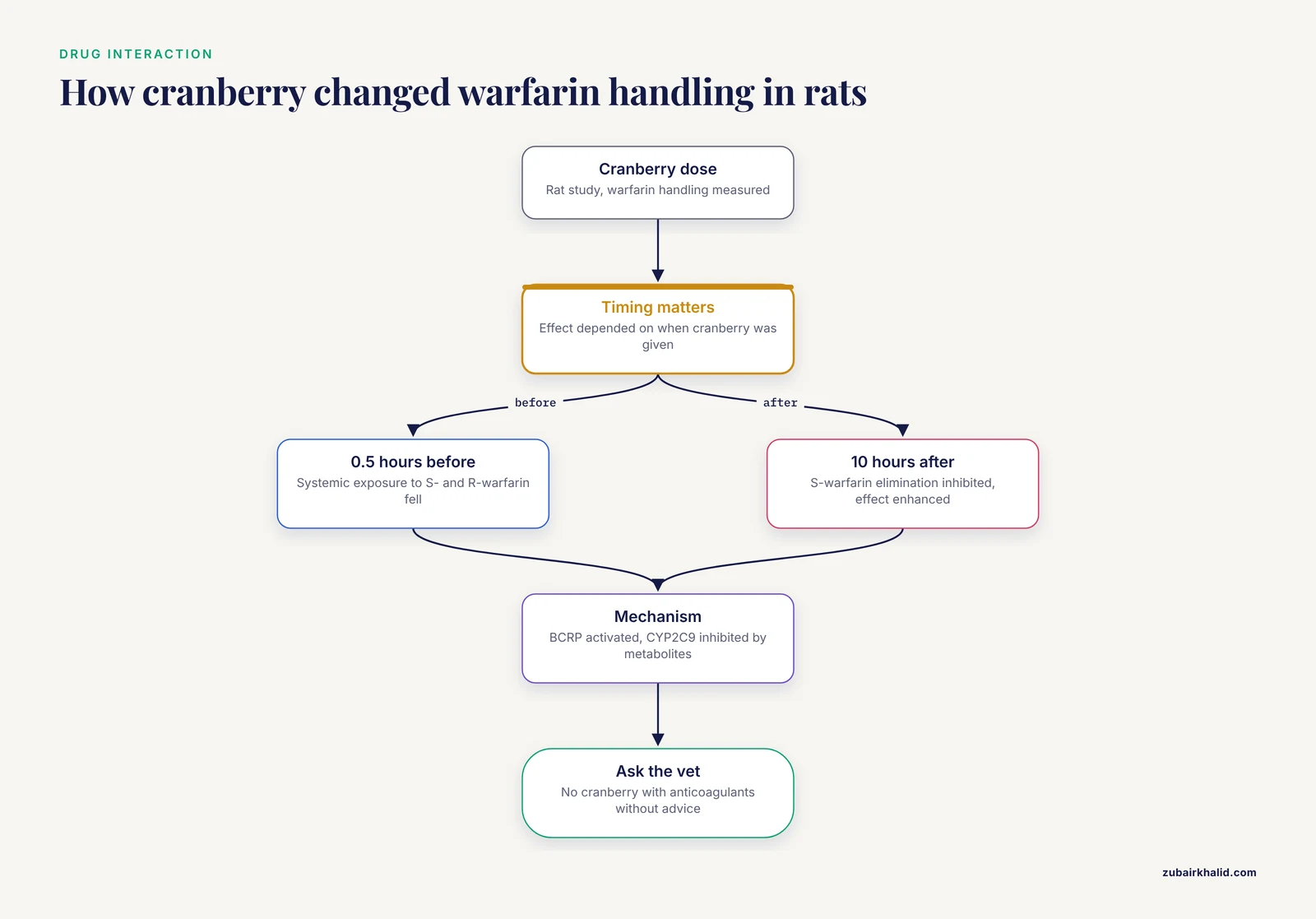
This is the safety point most owners have never heard. In a rat study, cranberry altered the pharmacokinetics and pharmacodynamics of warfarin, and the direction of the effect depended on timing. Cranberry given 0.5 hours before warfarin significantly decreased systemic exposure to both S- and R-warfarin. Cranberry given 10 hours after warfarin significantly inhibited elimination of S-warfarin and enhanced the anticoagulant effect [5]. The mechanism work showed that cranberry activated a drug efflux transporter known as BCRP and that cranberry metabolites inhibited CYP2C9, the main metabolizing enzyme for the more active form of warfarin [5].
Cranberry-warfarin interactions in clinical reports have shown bidirectional outcomes, which is exactly what that mechanism predicts [5]. This research is in rats, not dogs. Even so, the practical rule for owners is straightforward. If your dog takes an anticoagulant, or any long-term medication with a narrow safety margin, ask your veterinarian before adding cranberry or a cranberry supplement to the diet.
Product variability
Cranberry products are not standardized in a way that lets you compare one bottle to another, and guidance on their use in dogs and cats is lacking [4]. Two products labeled "cranberry extract" may contain different amounts of the compounds that produce the antiadhesion effect. That is one reason the clinical results have been inconsistent.
How to Feed Cranberries: Step by Step
- Check with your veterinarian first if your dog has a history of urinary tract infections, bladder stones, diabetes, spinal cord injury, or is on any medication. Bring the product label if you already have one.
- Choose a plain product. Fresh, frozen, or unsweetened dried cranberries. Nothing else in the bag.
- Prepare for your dog's size. Rinse fresh berries. Cut them into pieces appropriate to your dog's mouth size. Whole berries are a choking consideration for small dogs and greedy eaters.
- Start small and feed once. Give a piece or two while you are watching the dog, not before you leave the house.
- Keep it a treat. Cranberry should sit alongside the main diet, not replace it. Ask your veterinarian for a daily calorie target if you are unsure how much room you have for extras.
- Watch for the next 24 hours. Note appetite, stool quality, vomiting, and any change in drinking or urination.
- Store the bag out of reach. A dog who finds an open bag will eat the whole thing. That is a very different dose from a few berries.
- Keep a simple log if you are trialing cranberry alongside veterinary care. Dates, amount, and any urinary signs give your veterinarian something to work with.
Equipment you may want: kitchen shears for cutting berries, a small lidded container for portioning, a treat pouch for training, and a kitchen scale if your veterinarian has given you a target in grams.
A note on dose: no feeding dose for cranberries in dogs is established in the veterinary literature. The amounts used in research were measured extracts and formulated diets, not kitchen measurements [2]. Do not scale a human supplement dose down to your dog's weight.
Common Mistakes
Treating a UTI with cranberries. Cranberry does not kill bacteria [1]. A dog with a urinary tract infection needs a diagnosis and appropriate treatment from a veterinarian.
Buying the sweetened dried cranberries. This is the single most common error. Those products are candy with fruit in them, not fruit.
Using juice as a delivery vehicle. Juice cocktail is mostly sugar, and juice in general concentrates sugar while removing fiber.
Assuming a supplement works because it is sold for urinary health. The evidence base is small and rated low to very low certainty [4].
Extrapolating from the female-dog data. The significant adhesion reduction in one study was seen only in the four females [2].
Stopping a prescribed preventive plan. Cranberry is not a replacement for whatever your veterinarian has already recommended.
Feeding from the bag. Portion into a bowl. Dogs do not self-regulate around dried fruit.
Troubleshooting
My dog refuses cranberries. Fine. Some dogs dislike the tartness. Do not force it and do not hide it in a food your dog normally tolerates well without checking with your veterinarian.
My dog got loose stool after trying them. Stop the cranberry and call your veterinarian if it persists beyond a day, if there is vomiting, or if your dog seems unwell.
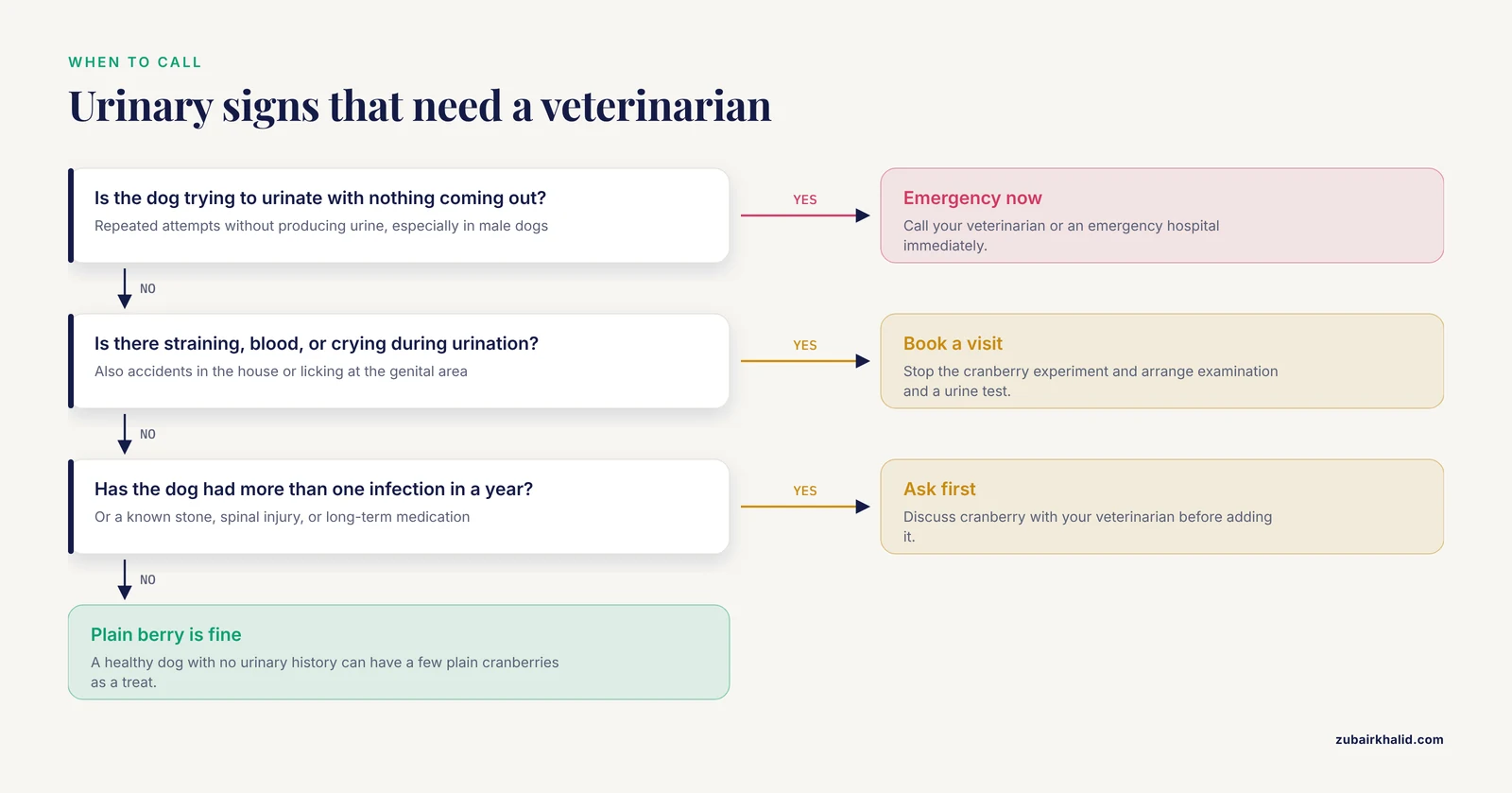
My dog has urinary signs right now. Stop the experiment and make an appointment. Straining, frequent small urinations, accidents in the house, blood in the urine, or licking at the genital area all warrant examination and a urine test.
My dog cannot pass urine at all. This is an emergency. Call your veterinarian or an emergency hospital immediately.
My dog is on warfarin or another anticoagulant. Do not add cranberry without asking your veterinarian first [5].
My dog has bladder stones. Ask before feeding cranberry or anything else outside the prescribed diet.
I already gave a large amount. Call your veterinarian or a pet poison service for advice. Bring the packaging.
Welfare and Safety Points
Urinary discomfort is a welfare issue, not just a nuisance. A dog with cystitis may be in real pain, and repeated infections can ascend. Cranberry is a food, and food is not a diagnostic tool.
Several signs should not be managed at home: straining to urinate, blood in the urine, urinating in unusual places, crying during urination, excessive licking of the genital area, and any dog that repeatedly tries to urinate without producing urine. The last one is an emergency, particularly in male dogs.
Dogs with spinal cord injury, dogs with confirmed urine retention, and dogs with structural urinary abnormalities are managed with a veterinary plan that may include regular urine cultures [3]. Cranberry may be discussed as an add-on. It should not change that plan.
Finally, remember what the evidence actually is. Three studies, 122 animals, mostly small, with low certainty [4]. Cranberry is a reasonable thing to talk about with your veterinarian and an unreasonable thing to rely on.
Limitations and When to Contact a Veterinarian
The research on cranberry in dogs has small sample sizes, inconsistent products, and low certainty ratings [4]. Individual dogs vary in anatomy, urine flow, immune function, medication use, and diet, and no study can predict what will happen in your dog. That is why a veterinarian who knows your animal should be involved in any decision beyond feeding a plain berry as a treat.
Contact your veterinarian if:
- Your dog shows any urinary sign, including straining, frequency, blood, accidents, or licking.
- Your dog has had more than one urinary tract infection in a year.
- Your dog has a known bladder stone, urinary tract abnormality, or spinal cord injury.
- Your dog takes an anticoagulant or any long-term medication with a narrow safety margin [5].
- Your dog has diabetes or another condition affecting urine or immune function.
- Your dog develops vomiting, diarrhea, or loss of appetite after eating cranberries.
- Your dog eats a large quantity of cranberries or a mixed dried fruit product.
- You are considering a cranberry supplement and want a dose you can actually defend.
Can Cranberries Help Dogs With Bladder Stones?
No. Cranberry does not dissolve bladder stones, and it has not been shown to prevent them. Its documented urinary effect is antiadhesion against E. coli [1][2], a bacterial attachment mechanism with no direct action on mineral crystals. Struvite stones are commonly driven by urease-producing infection, and cranberry does not kill bacteria [1]. Owners often assume a food promoted for urinary health covers stones too. It does not.
Urine pH matters in stone management, and this is where owners get into trouble. Cranberry contains quinic acid, which is metabolized to hippuric acid and can acidify urine in humans. The change in dogs is small and poorly documented, and no dog study has linked it to stone outcomes. Commercial products also vary in composition. Acidification belongs to specific stone protocols with urine pH monitoring, not to general urinary health.
Stone type determines whether acidification even helps:
| Stone type | Role of acidifying urine |
|---|---|
| - | - |
| Struvite | Acidification is part of dissolution diets |
| Calcium oxalate | Acidification does not dissolve stones |
| Urate and cystine | Alkalinization is often the goal |
A dog with a known stone needs imaging (radiographs or ultrasound), stone analysis when possible, and a diet planned around that specific mineral. Shifting urine pH blindly, including with cranberry, can push a stone in the wrong direction or complicate monitoring. Any urinary sign, including straining, blood, accidents, or repeat infections, warrants examination and imaging rather than a home remedy. The stone diagnosis, not the berry, should drive the plan.
How Many Cranberries Can a Dog Eat? A Practical Portion Guide

No research-backed dose exists for cranberries in dogs. The studies used measured extracts and formulated diets, not whole berries [2]. The portions below are conservative treat-size estimates, not medical doses.
Start with one piece. Give a single fresh or frozen cranberry, cut to your dog's size, and wait 24 hours. Watch for vomiting, diarrhea, or loss of appetite. If your dog tolerates it, you can offer a small portion as an occasional treat.
Keep cranberries under 10% of daily calories, the same limit that applies to treats in general. For a 10 kg dog eating roughly 600 kcal per day, the treat budget is about 60 kcal. A 10 g serving of fresh cranberries is about 5 kcal, so the calorie ceiling is generous. The practical limit is usually the dog's interest and digestion, not the math.
| Dog weight | Fresh or frozen berries per serving | Frequency |
|---|---|---|
| - | - | - |
| Under 5 kg | 1 to 2 | A few times per week |
| 5 to 15 kg | 2 to 4 | A few times per week |
| 15 to 30 kg | 4 to 6 | A few times per week |
| Over 30 kg | 6 to 8 | A few times per week |
Cut each berry to a size your dog can chew safely. Dried cranberries are calorie-dense and sticky. Use about half the count of fresh berries, or weigh them. Unsweetened dried cranberries contain roughly 300 kcal per 100 g, so a few pieces add up quickly.
Large amounts can cause stomach upset. A dog that empties a whole bag may vomit or develop diarrhea. Stop the cranberries and call your veterinarian if signs persist beyond a day.
Are Cranberries Safe for Puppies and Senior Dogs?
Puppies
Puppies can eat plain cranberries as an occasional treat, but whole berries are a choking hazard for small puppies and greedy eaters. Rinse the berries and cut them into pieces sized for the puppy's mouth. Cranberries should never replace puppy food. A puppy's main diet must be a complete and balanced growth formula, and treats should only account for a small share of daily calories. Start with a single small piece and watch for digestive upset over the next day, since puppies have sensitive stomachs. No feeding dose for cranberries is established in the literature, so ask your veterinarian for a portion suited to your puppy's size and age.
Senior Dogs
Senior dogs warrant more caution before adding cranberries or cranberry supplements. Many older dogs take long-term medications, and cranberry altered warfarin handling in an animal study, with effects in both directions depending on timing [5]. If your senior dog is on an anticoagulant or any medication with a narrow safety margin, ask your veterinarian before offering cranberry.
Kidney disease is common in older dogs, and a veterinarian should confirm that cranberry fits alongside the prescribed kidney diet. Urinary signs in a senior dog should not be managed at home with cranberry. Straining, blood in the urine, accidents in the house, or repeated attempts to urinate all warrant a veterinary visit and a urine test, not a dietary experiment. The overall evidence for cranberry in dogs is small and of low certainty [4], which matters most for the animals least able to tolerate a setback.
Related Guides
- Can Dogs Eat Cucumbers? Benefits and Safe Feeding: Another safe vegetable treat option for dogs to consider
- Can Dogs Eat Broccoli? Benefits and Safe Feeding: Explains broccoli safety, benefits, and safe feeding amounts
- Can Dogs Eat Fish? Safe Types, Benefits, and Risks: Covers safe fish types, benefits, and risks for dogs
- Can Dogs Eat blueberries? Vet Safety, Benefits & Hazards: Blueberry safety, benefits, and hazards for dog treats
- Can Dogs Eat Watermelon? Vet Safety, Benefits and Hazards: Watermelon safety, benefits, and hazards for dog treats
- Can Dogs Eat bananas? Vet Safety, Benefits & Hazards: Banana safety, benefits, and hazards for dog treats
- Can Dogs Eat Squash? Types, Benefits, and Safety: Squash types, benefits, and safe feeding guidance
- Can Dogs Eat Cauliflower? Safety, Risks and How Much Is Safe: Cauliflower safety, risks, and safe feeding amounts
Frequently Asked Questions
Can dogs eat cranberries every day?
Yes, small amounts of plain cranberry can be fed daily as a treat. Keep the total portion small so it does not displace the balanced diet, and ask your veterinarian if your dog has a medical condition.
Are dried cranberries safe for dogs?
Only unsweetened dried cranberries are a reasonable choice. Sweetened dried cranberries are high in added sugar and are better avoided. Check the ingredient list every time, because formulations change.
Does cranberry cure a dog's urinary tract infection?
No. Cranberry does not kill bacteria, and it is not a treatment for an active infection. A dog with urinary signs needs a veterinary examination, a urine test, and appropriate treatment.
How many cranberries can a dog eat?
There is no established feeding dose for dogs. The research used measured extracts and formulated diets rather than kitchen amounts, so a specific number of berries cannot be recommended. Ask your veterinarian for guidance based on your dog's size and health.
Is cranberry juice good for dogs?
No. Juice concentrates sugar and removes the fiber of the whole fruit, and juice cocktails add more sugar. Plain cranberry fruit is the better choice.
Can cranberry help male dogs with urinary issues?
The one study that found a significant reduction in bacterial adhesion found it only in female dogs, not in the males tested. There is no basis for assuming the same effect in a male dog.
Are cranberry supplements for people safe for dogs?
Not without veterinary guidance. Products vary, dosing is not established for dogs, and some dogs take medications that interact with cranberry. Discuss any supplement with your veterinarian before giving it.
Can I give cranberries to a dog on medication?
Ask your veterinarian first, especially if the medication is an anticoagulant. Cranberry altered warfarin handling in an animal study, with effects in both directions depending on timing.
Sources
- Effects of cranberry extract on prevention of urinary tract infection in dogs and on adhesion of Escherichia coli to Madin-Darby canine kidney cells.
- Adherence of Uropathogenic Escherichia Coli in Dog Urine After Consumption of Food Supplemented with Cranberry (Vaccinium Macrocarpon).
- Effect of Cranberry Extract on the Frequency of Bacteriuria in Dogs with Acute Thoracolumbar Disk Herniation: A Randomized Controlled Clinical Trial.
- Effectiveness of Cranberry Supplementation for Prevention and Treatment of Infectious Urinary Tract Disease in Dogs and Cats: A Systematic Review.
- Bidirectional Influences of Cranberry on the Pharmacokinetics and Pharmacodynamics of Warfarin with Mechanism Elucidation.
- The effect of consumption of cranberry (Vaccinium macrocarpon) on Escherichia coli adherence to feline uroepithelial cells in a blind randomised cross-over trial in cats.
- Complementary and integrative therapies for lower urinary tract diseases.