Why Is My Cat Rolling Around on the Floor? Behavior Explained
By Dr. Zubair Khalid, DVM, MS, PhD ·
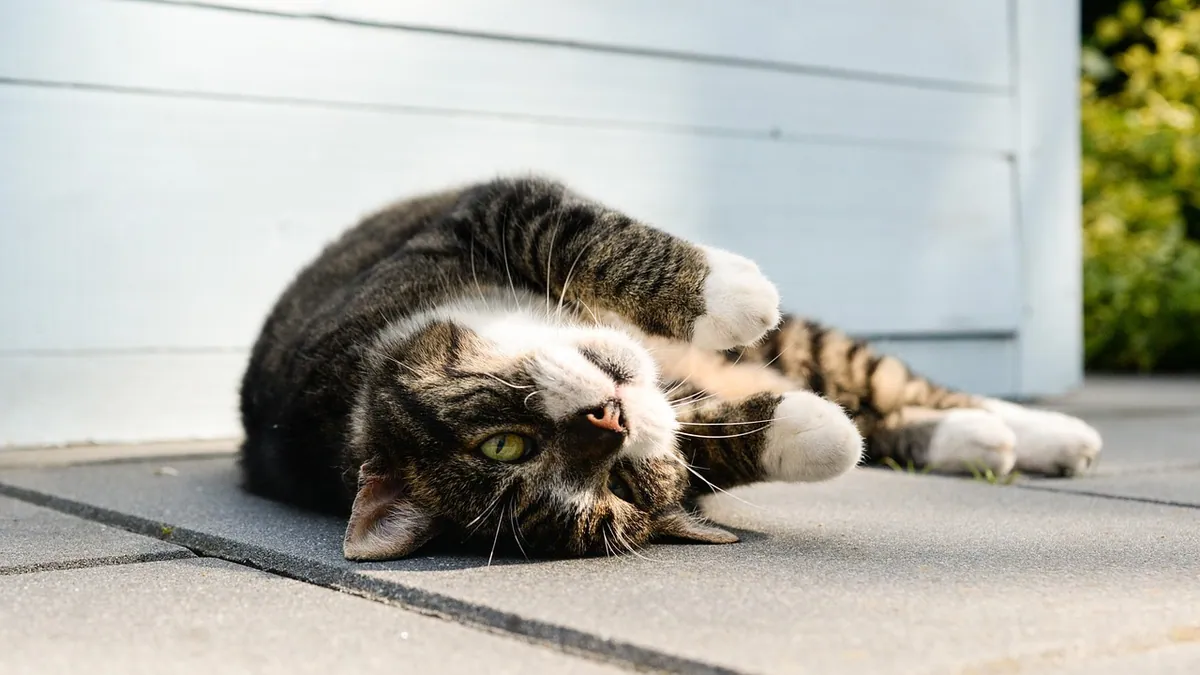
Cats roll on the floor for many reasons, and most of them are normal. A cat may be playing, marking a scent, asking for attention, or simply feeling relaxed and safe. Sometimes, though, rolling can signal pain, itching, or a hormone problem, so the pattern matters as much as the pose.
This article is educational and is not a substitute for veterinary diagnosis or treatment.
Quick Answer
- Rolling is often normal behavior. Cats roll to play, stretch, scratch an itch, spread their scent, or invite interaction.
- Watch the context. Rolling during petting, after eating, or near a new scent is usually harmless.
- Sudden, frequent, or distressed rolling is different. Yowling, pacing, or rolling while pressing the head or belly to the floor needs a vet visit.
- Spayed females that roll in a cyclical pattern may have leftover ovarian tissue. This is called ovarian remnant syndrome and it is treatable [1].
- Never punish rolling. Punishment can increase fear and aggression, and it does not teach your cat what you want [2].
Why Is My Cat Rolling Around on the Floor? The Normal Reasons
Most floor rolling is your cat doing cat things. The behavior looks dramatic, but it usually has a simple purpose.
Play and hunting practice
Cats have a strong need to play and explore [2]. Rolling can be part of a mock hunt. Your cat may flop, twist, and bat at a toy or at your hand. This is normal predatory play. It is also a way to burn energy and practice the movements used to catch prey.
If your cat rolls and then pounces, that is play. If your cat rolls and then bites hard, that is overexuberant play, which is a behavior problem when it happens too often or too intensely [3].
Scent marking and scent rolling
Cats have scent glands on the cheeks, chin, and other parts of the body. Rolling spreads your cat's scent onto the floor, furniture, or a new object. This claims territory in a way that is normal for the species.
Scent rolling is also seen in other carnivores. Wolves roll in strong smells, and the behavior appears tied to interest in a scent instead of to any single purpose [4]. The exact function in cats is not well established in veterinary research, but the behavior itself is common and usually harmless.
Relaxation and trust
A cat that rolls onto its back and shows its belly is often relaxed. The belly is a vulnerable area. Showing it usually means your cat feels safe in that spot.
This is not always an invitation to pet the belly. Many cats roll to stretch and then swat if you touch the belly. Read the rest of the body. Soft eyes, slow blinks, and a loose tail suggest comfort. A twitching tail and flattened ears suggest you should keep your hands to yourself.
Attention seeking and social contact
Cats learn fast. If rolling on the floor gets a laugh, a treat, or a scratch behind the ears, your cat will do it again. This is normal learning. Behavior is shaped by what happens right after it [5].
Some cats roll when you come home, when you open the treat bag, or when you sit down to work. That is a request for contact, not a medical problem.
Itching and grooming
Grooming is a maintenance behavior that takes up about 4% of a cat's activity budget [6]. Rolling and twisting can be part of scratching a hard-to-reach spot or finishing a grooming bout.
If your cat rolls and then grooms the same area over and over, itching may be the cause. Fleas, allergies, and skin infections are common reasons for extra scratching and rolling.
Heat and estrus behavior in unspayed females
An unspayed female in heat will roll, vocalize, and hold her rear end up (lordosis). This is normal estrus behavior. It repeats on a cycle until the cat is spayed or bred.
Medical Causes to Rule Out
When rolling is new, intense, or paired with other signs, a health problem may be behind it. Your veterinarian will want to rule out medical causes before treating this as a behavior issue [3].
Ovarian remnant syndrome
A spayed female cat can still show estrus behavior if a small piece of ovarian tissue was left behind during surgery. One case report described a 2.5-year-old spayed cat with cyclical rolling, lordosis, and vocalization every 3 weeks [1]. Signs started 6 months after her spay [1].
This condition is treatable. If your spayed cat rolls and yowls in a repeating cycle, ask your veterinarian about testing for ovarian remnant syndrome.
Pain and discomfort
A cat in pain may roll, stretch, or change position often because it cannot get comfortable. Look for other signs. These include hiding, reduced appetite, limping, growling when picked up, and avoiding the litter box.
If your cat is limping or moving stiffly, see Why Is My Cat Limping?.
Skin and ear problems
Itching from fleas, mites, allergies, or infections can make a cat roll and rub against the floor. Check for hair loss, scabs, redness, and dark specks in the coat. Ear infections can also cause head rubbing and rolling.
Neurologic and balance problems
Rolling that looks uncontrolled is different from playful rolling. A cat with a balance problem may roll to one side, tilt its head, or have trouble walking. These signs need same-day veterinary care.
Hormonal and metabolic disease
Some hormonal conditions change behavior and activity level. Your veterinarian can check for these with an exam and blood work. The dose of any medication is calculated by your veterinarian from your pet's weight and health, so never use a dose from the internet.
When Does Rolling Become a Problem?
Rolling is a problem when it is excessive in intensity or frequency, or when it disturbs your home [3]. Ask yourself three questions.
- Is it new? A sudden change in behavior often points to a medical cause.
- Is it distressing? Yowling, pacing, and frantic rolling are not normal play.
- Is anyone getting hurt? Rolling that turns into biting or scratching is a safety issue.
Behavior problems in cats include normal behaviors that are excessive, such as play biting and overexuberant play [3]. They also include abnormal behaviors such as anxiety and compulsive behaviors [3]. A cat that rolls and then attacks hands or ankles may fall into the first group. A cat that rolls in a fixed, repetitive pattern for long stretches may fall into the second.
What to Do: Step by Step
Step 1: Track the pattern
Write down when the rolling happens. Note the time of day, what happened just before, and what happens after. Note whether your cat is spayed or neutered, and whether the behavior is cyclical. This history is the single most useful thing you can bring to your veterinarian [3].
Step 2: Rule out medical causes
Schedule a veterinary exam. Your veterinarian will check the skin, ears, joints, and neurologic system. Blood work may be needed. If your cat is a spayed female with cyclical signs, ask about ovarian remnant testing [1].
Step 3: Meet your cat's behavioral needs
Cats need to eat, drink, eliminate, feel secure, play, explore, climb, perch, and scratch [2]. A cat whose needs are met is less likely to develop problem behaviors.
Try these changes:
- Feed small portions through the day. Use food puzzles that require batting, chasing, rolling, or pawing to release food [2].
- Add hunting-style play. Dangle or pull a toy so your cat can chase, pounce, and bite it [2].
- Offer vertical space. Cat trees and shelves give your cat a place to perch and watch.
- Keep scratching posts in the rooms your cat uses most.
- Set a play routine. Two short sessions a day often work better than one long one.
Step 4: Respond to rolling in a consistent way
If your cat rolls for attention, decide what you want to reward. Pet your cat calmly when all four paws are on the floor. Stop petting the moment the tail starts to swish. This teaches your cat which behavior earns contact.
If your cat rolls and then bites during play, end the session right away. Walk away and give your cat a toy to bite instead. Do not use your hands as toys.
Step 5: Reduce stress in the home
Stress can trigger or worsen behavior problems [3]. Give your cat a quiet room with food, water, a litter box, and a bed. Keep routines steady. If you have multiple cats, make sure each one has its own resources.
If your cat is also urinating outside the box, that can be a medical or behavioral issue. See Why Is My Cat Peeing on the Floor Right in Front of Me? and Why Is My Cat Peeing on the Rug? Medical and Behavioral Reasons.
What Not to Do
Do not punish your cat
Yelling, spraying water, or hitting does not fix behavior problems. It can make fear and aggression worse [2]. Punishment also fails to teach your cat what to do instead.
Do not assume it is always play
Rolling that comes with yowling, pacing, or a fixed stare is not play. It may be pain, anxiety, or a hormone issue. Get it checked.
Do not skip the vet because the behavior looks cute
A cat that rolls and vocalizes on a schedule may have a medical reason [1]. Cute does not mean harmless.
Do not rely on myths
Common myths include "cats roll on their backs because they want belly rubs" and "a rolling cat is always happy." Neither is reliable. Some cats roll to invite play, some to mark scent, and some because they itch. Watch the whole body and the context.
Do not change your cat's diet or give supplements on your own
Diet changes and supplements can interact with health conditions. Ask your veterinarian first.
When to Involve a Veterinarian or Behavior Professional
Start with your veterinarian. They can rule out medical causes, which is the first step in diagnosing a behavior problem [3]. If your cat is healthy and the behavior continues, your veterinarian may refer you to a veterinary behaviorist or a certified behavior professional.
A behavior consultation includes a full history. The goal is to diagnose the problem, set a prognosis, and build a treatment plan [3]. This is not a sign that you failed. It is the same as seeing a specialist for any other health issue.
Limitations and When to Contact a Veterinarian
This article covers common patterns, but every cat is different. Individual cases need a veterinarian who can examine your cat and review its history.
Contact your veterinarian the same day if your cat:
- Rolls or thrashes in a way that looks uncontrolled
- Tilts its head, falls, or walks in circles
- Yowls and paces without settling
- Stops eating or drinking
- Has a swollen, painful belly
- Rolls and cries when touched
Go to an emergency clinic now if your cat:
- Cannot stand or walk
- Has trouble breathing
- Has a seizure
- Is bleeding or has a suspected injury
- Ate something toxic or a foreign object
For poison emergencies in the United States, call the ASPCA Animal Poison Control Center at (888) 426-4435 or the Pet Poison Helpline at (855) 764-7661. A consultation fee may apply.
Schedule a routine visit if your cat:
- Rolls in a repeating cycle, especially a spayed female [1]
- Rolls and scratches the same spot often
- Has new hair loss, scabs, or redness
- Shows a change in behavior that lasts more than a few days
Frequently Asked Questions
Why does my cat roll around on the floor when I pet it?
Many cats roll during petting to invite more contact or to redirect the interaction. Some roll because the touch feels good, and some roll to end the session. Watch the tail and ears. If the tail swishes or the ears flatten, stop petting and let your cat settle.
My cat keeps rolling on the floor and meowing. Is that normal?
It depends on the pattern. A cat that rolls and meows once in a while is usually fine. A cat that rolls and yowls in a repeating cycle may have a hormone or pain issue. Spayed females with leftover ovarian tissue can show this pattern [1]. Call your veterinarian if the behavior is new or repetitive.
Is my cat rolling on the floor to mark its territory?
Often, yes. Cats have scent glands on the face and body, and rolling spreads their scent onto surfaces. This is normal territorial behavior. It becomes a problem only if it comes with urine marking, aggression, or other signs of stress [3].
Can rolling on the floor mean my cat is in pain?
Yes, it can. A cat in pain may roll, stretch, or shift position often because it cannot get comfortable. Other signs include hiding, not eating, limping, and growling when touched. If you see these signs, contact your veterinarian.
Should I stop my cat from rolling on the floor?
No, not if the behavior is normal. Rolling for play, scent marking, or attention is healthy. Redirect the behavior only if it leads to biting, scratching, or distress. If you are unsure, ask your veterinarian to check for medical causes first [3].
Related Articles
- Why Is My Cat Peeing on the Floor Right in Front of Me?
- Why Is My Cat Limping?
- Why Is My Cat Peeing on the Rug? Medical and Behavioral Reasons
- Why Is My Cat Suddenly Peeing on the Carpet?
- Why Is My Cat Peeing on the Couch? Medical and Behavioral Causes
- Why My Dog Scooting On Carpet
- Why Is My Cat Dragging His Bum on the Floor?
- Why Does My Cat Scoot or Wipe Its Bum on the Floor?
- Why Is My Kitten Rolling in the Litter Box?
References
- Ovarian remnant syndrome in a 2-year-old cat with inconclusive diagnostics. JFMS open reports, 2026.
- Behavior Problems in Cats - Cat Owners. Merck Veterinary Manual.
- Behavior Problems of Cats - Behavior. Merck Veterinary Manual.
- Preliminary Study of Scent Rolling in Captive Wolves (Canis lupus L. 1758) in Response to Olfactory Enrichment. Biology, 2024.
- Introduction to Behavior of Cats - Cat Owners. Merck Veterinary Manual.
- Exploring Normal to Abnormal Variations of Grooming Behaviours in Cats. Veterinary dermatology, 2026.