Why Is My Cat Following Me Around? What It Means
By Dr. Zubair Khalid, DVM, MS, PhD ·
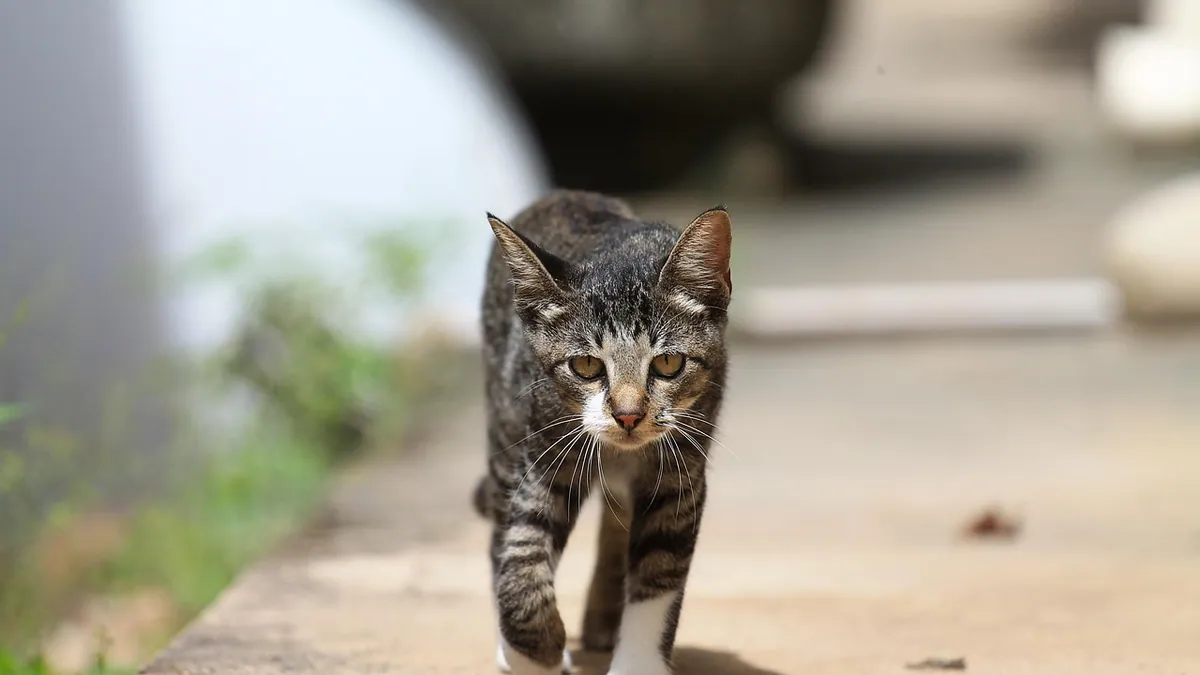
Cats follow their owners for many ordinary reasons, including affection, hunger, boredom, and a strong social bond. Sometimes, though, following behavior signals stress, pain, or a medical problem that needs veterinary care. This article explains how to tell the difference and what to do next.
This article is educational and is not a substitute for veterinary diagnosis or treatment.
Quick Answer
- Following you from room to room is usually normal social behavior in cats who feel safe with you.
- The most common everyday triggers are hunger, wanting play or attention, and routine (your cat knows you open doors, feed, or sit down).
- A sudden change in following behavior, especially with vocalizing, pacing, or confusion, can point to a medical problem.
- Never punish a cat for following you. Punishment increases stress and can damage your bond.
- Call your veterinarian if the behavior starts suddenly, comes with other symptoms, or your cat seems distressed.
Normal Reasons Your Cat Follows You Around
Most of the time, a cat is following you because you matter to the cat. Owners often describe their cats as having rich emotional lives, and this belief tends to be stronger in people who feel closely attached to their cats [1]. That attachment runs both ways in daily life. Cats form bonds with their owners, and those bonds shape how they respond to us [2].
You are a source of food and resources
Cats learn quickly who fills the bowl. If your cat follows you toward the kitchen at certain times, that is often simple resource seeking. In one survey of owners of cats with cognitive dysfunction, about 16 percent believed their cat's increased vocalizing was tied to seeking a resource such as food [3]. Following behavior can work the same way.
You are part of your cat's routine
Cats are creatures of habit. If you sit in the same chair every evening, your cat may trail behind you because that chair means lap time. When daily life changed during COVID-19 lockdowns, owners reported more attention-seeking and demanding behaviors from their cats, likely because people were home more and routines shifted [4]. Your cat tracks your patterns closely.
Your cat wants company and interaction
Cats are social animals, even if they show it on their own terms. Passive interaction, meaning calm contact without pressure, is linked to higher oxytocin and lower cortisol in cats [2]. In plain terms, quiet time near you can be genuinely relaxing for your cat. Following you may simply be your cat's way of staying close to a calming presence.
Your cat wants to play
A bored cat with energy to burn will often shadow its owner. Following may be your cat's way of asking for a wand toy session or a chase game. This is especially common in younger cats and in cats who spend most of their time indoors.
Breed and personality play a role
Some cats are simply more people-oriented than others. Early experiences, temperament, and how much handling your cat received as a kitten all shape this. A cat who follows you but also eats, plays, sleeps, and uses the litter box normally is usually just a social cat.
Medical Causes to Rule Out
A change in following behavior is the part that matters most. If your cat has always shadowed you, that is one thing. If your cat suddenly starts following you constantly, or follows you in a way that looks restless or worried, think about health first.
Pain
Cats hide pain well. A cat in discomfort may pace, follow you, and seem unable to settle. Owners of cats with cognitive dysfunction often attributed increased vocalizing to disorientation or attention seeking, but pain was also perceived as a cause in some cases [3]. Any cat with new restlessness deserves a pain check.
Cognitive dysfunction in older cats
Senior cats can develop cognitive dysfunction syndrome, a condition similar in some ways to dementia in people. Increased vocalizing is a common sign, and owners most often linked it to disorientation or attention seeking [3]. A cat who follows you while yowling, especially at night, may be confused instead of affectionate.
Sensory decline
Hearing loss and vision changes are common in older cats. A cat who cannot hear you move to another room may follow you more closely to keep track of you. This is not a disease by itself, but it changes how your cat copes with the house.
Hormonal and metabolic disease
Conditions such as hyperthyroidism, diabetes, and kidney disease can increase appetite, thirst, restlessness, and vocalizing. A cat who follows you and begs for food constantly may be genuinely hungry because of a medical problem. Your veterinarian can check with a blood panel and urine test.
Anxiety and stress
Not all following is calm. An anxious cat may follow you because being apart feels unsafe. Cats with insecure attachment styles show different hormonal responses to human interaction than secure cats, and forced or unwanted interaction can raise cortisol [2]. If your cat follows you but flinches, hides, or over-grooms, anxiety may be part of the picture. For related behavior changes, see Why Is My Cat Hiding? and Why Is My Cat Suddenly Afraid of Me?.
When Following Becomes a Problem
Following is a problem when it costs your cat comfort or disrupts your household. Watch for these patterns.
- Your cat cannot relax even when you are home and nearby.
- Your cat follows you and vocalizes loudly, especially at night.
- Your cat follows you to the litter box, the bathroom, or the door and panics when you leave.
- Your cat stops eating, sleeping, or playing normally.
- Your cat follows you while pacing, panting, or grooming excessively.
- You feel unable to leave the house without your cat becoming distressed.
Separation-related distress in cats is real, though it is less well studied than in dogs. If your cat's following is paired with destruction, house soiling, or nonstop crying when you are gone, that is a behavior problem worth professional help.
What to Do: A Step-by-Step Plan
Step 1: Track the behavior
Write down when the following happens, what your cat does, and what happens right before and after. Note any changes in appetite, thirst, litter box use, sleep, or vocalizing. This log helps your veterinarian sort medical from behavioral causes.
Step 2: Book a veterinary visit
A sudden increase in following, especially in a cat over 8 years old, deserves a physical exam. Your veterinarian will decide which tests are needed. There is no single test for this behavior, so the workup is tailored to your cat's age and symptoms.
Step 3: Meet your cat's needs on a schedule
Feed, play, and groom at consistent times. Predictable routines reduce anxiety. A cat who knows playtime happens at 7 p.m. is less likely to shadow you all evening.
Step 4: Add enrichment
- Puzzle feeders and food-dispensing toys
- Window perches with a view
- Cat trees and vertical space
- Rotating toys to keep things new
- Short, frequent play sessions with a wand toy
Enrichment gives your cat something to do besides track your every move.
Step 5: Practice calm, low-pressure contact
Let your cat choose whether to sit on you or near you. Passive interaction supports relaxation, while forced handling does the opposite [2]. If your cat follows you, offer a nearby bed or mat instead of picking the cat up.
Step 6: Teach independence gently
Give your cat a comfortable spot in each room you use. Reward your cat for settling there with treats or praise. Over time, your cat learns that being near you does not require being on you.
Step 7: Consider a pheromone or behavior plan
For anxiety-driven following, your veterinarian may discuss pheromone products, environmental changes, or referral to a behavior professional. Any medication dose is calculated by your veterinarian based on your cat's weight and health.
What Not to Do
Do not punish your cat
Yelling, spraying water, or pushing your cat away will not stop the behavior. It adds stress and can make anxiety worse. Punishment also damages the trust that makes your cat want to be near you in the first place.
Do not lock your cat away for long periods
Isolation can increase distress in a cat who is following you out of anxiety. If you need space, use a baby gate or give your cat a comfortable room with resources, but keep it short and calm.
Do not assume it is always love
Following can look affectionate and still be driven by pain, confusion, or hunger from a medical condition. If the behavior is new, get it checked.
Do not rely on myths
Common myths include "cats are solitary and do not bond" and "a cat who follows you is being dominant." Neither holds up. Cats form attachment bonds with people, and their behavior reflects that bond [1][2]. Dominance is not a useful way to understand cat behavior.
Do not skip the vet because the behavior seems sweet
A cat who suddenly follows you everywhere at age 14 may be lost and confused, not more affectionate. Cognitive dysfunction and sensory decline are common in senior cats [3].
When to Involve a Veterinarian or Behavior Professional
Call your veterinarian if your cat's following behavior is new, getting worse, or paired with any change in eating, drinking, sleeping, grooming, or litter box habits. Your veterinarian can rule out medical causes and discuss next steps.
Ask for a referral to a veterinary behaviorist or a certified behavior professional if:
- Your cat injures itself or others
- Your cat cannot be left alone without severe distress
- House soiling or destruction happens when you are gone
- Behavior does not improve after medical causes are treated
- You feel overwhelmed or unsafe managing the behavior
If your cat shows sudden aggression along with the following, treat it as urgent. See Cat Sudden Aggression: What Could It Mean? and Why Is My Cat Suddenly Aggressive Towards Other Cats?.
Limitations and When to Contact a Veterinarian
This article cannot tell you what is happening with your individual cat. Only a veterinarian who examines your cat can do that. Behavior alone rarely gives a full answer, and many conditions look alike from the outside.
Contact your veterinarian the same day if your cat:
- Starts following you constantly and stops eating or drinking
- Vocalizes loudly and cannot settle, especially at night
- Seems disoriented, stares at walls, or gets stuck in corners
- Has trouble walking, jumping, or using the litter box
- Shows new hiding, pacing, or restlessness
Go to an emergency clinic now if your cat:
- Breathes with an open mouth or struggles to breathe
- Collapses, has a seizure, or cannot stand
- Cries out in pain when touched
- Has a distended abdomen or repeated unproductive vomiting
- Shows sudden severe weakness or pale gums
If you think your cat ate something toxic, call the ASPCA Animal Poison Control Center at (888) 426-4435 or the Pet Poison Helpline at (855) 764-7661. These services may charge a consultation fee.
Schedule a routine visit within a few days if the following behavior is new but your cat otherwise seems well. Bring your behavior log. Your veterinarian will decide what testing is appropriate for your cat's age and history.
Frequently Asked Questions
Why does my cat follow me everywhere all of a sudden?
A sudden change often points to a medical or emotional trigger. Pain, cognitive dysfunction, sensory decline, and anxiety can all make a cat shadow its owner more than usual. Book a veterinary visit to rule out health causes before assuming it is purely behavioral.
Does my cat following me mean it loves me?
It can, and many owners read it that way. People who feel strongly attached to their cats tend to credit them with complex emotions and thoughts [1]. Bond strength also shapes how cats respond to their owners [2]. That said, love is not the only possible reason, so watch for signs of stress or illness too.
Why does my cat follow me to the bathroom?
Bathrooms are small, enclosed, and often have a door you close. Your cat may follow because it wants to stay near you, because it is curious about the room, or because it does not like being separated by a closed door. This is usually normal.
Should I ignore my cat when it follows me?
You do not need to ignore your cat, but you also do not need to respond every time. Offer a nearby resting spot and reward calm settling. If your cat is anxious, forced or constant interaction can raise stress hormones, while calm, low-pressure contact supports relaxation [2].
Can following behavior be a sign of dementia in cats?
Yes, it can be part of cognitive dysfunction syndrome in older cats. Owners of cats with this condition often report increased vocalizing tied to disorientation or attention seeking [3]. If your senior cat follows you while yowling or seems confused, see your veterinarian.
How long does it take to change this behavior?
It depends on the cause. Medical problems may improve quickly once treated. Behavior changes usually take weeks of consistent routine, enrichment, and low-pressure interaction. Your veterinarian can set a realistic timeline for your cat.
Related Articles
- Why Is My Cat Hiding?
- Why Is My Cat Suddenly Afraid of Me?
- Why Is My Cat Suddenly Aggressive Towards Other Cats?
- Why Is My Cat Suddenly Hiding and Acting Weird?
- Cat Sudden Aggression: What Could It Mean?
- Cat Excessive Meowing: What Is Your Cat Trying to Say?
- Why Does My Kitten Follow Me Everywhere?
- Why Does My Cat Follow Me to the Bathroom?
- Why Is My Cat Obsessed with Me? Understanding Feline Bonding
References
- Attachment as the Catalyst for the Attribution of Complex Cognition and Emotion to Companion Cats. Animals : an open access journal from MDPI, 2024.
- EXPRESS: The hormonal effects of owner-cat interactions on pet cats of different potential attachment styles. Journal of feline medicine and surgery, 2026.
- Potential Causes of Increased Vocalisation in Elderly Cats with Cognitive Dysfunction Syndrome as Assessed by Their Owners. Animals : an open access journal from MDPI, 2020.
- Cat-Owner Relationship and Cat Behaviour: Effects of the COVID-19 Confinement and Implications for Feline Management. Veterinary sciences, 2022.