Cat Pee on Wood Floors: Stains, Smell, and Fixes
By Dr. Zubair Khalid, DVM, MS, PhD ·
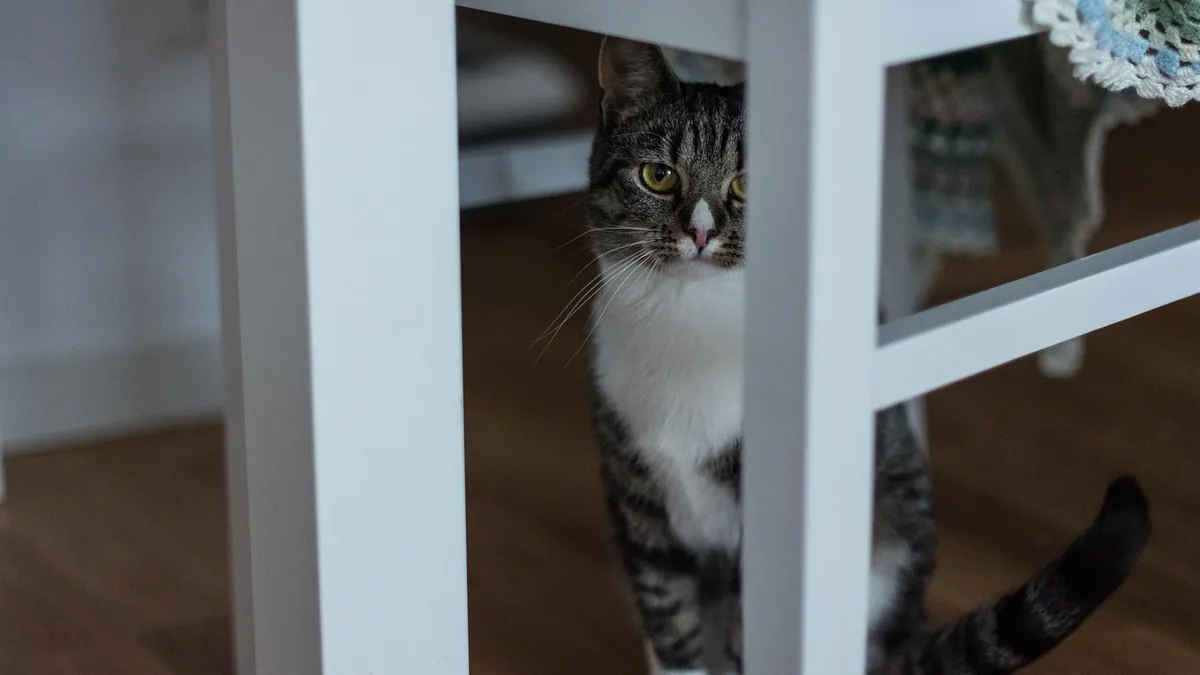
Cat pee on wood floor creates two problems at once: a stain that soaks into the finish and a smell that can linger for months. The urine reacts with wood tannins and finishes, which is why the spot often turns dark or black over time. Cleaning works best when you neutralize the urine instead of just wiping the surface.
This article is educational and is not a substitute for veterinary diagnosis or treatment.
Quick Answer
- Cat urine contains extra communication chemicals that smell strongly to people, and those chemicals bind to wood and finishes [1].
- Black or dark staining means the urine has soaked past the surface and reacted with the wood, so surface wiping will not fix it.
- Clean with an enzymatic cleaner made for pet urine, not ammonia-based products, because ammonia smells like urine and can attract repeat marking.
- If the wood is soft, warped, or crumbly, the damage has reached the subfloor and replacement may be the only real fix.
- Stop the behavior first. If your cat keeps urinating outside the box, the floor will keep getting damaged until the cause is addressed.
Why Cat Pee Turns a Wood Floor Black
Wood floors are porous. Even a sealed floor has seams, scratches, and worn spots where liquid can pass through. When urine sits on the surface, it soaks into the finish and then into the wood itself.
Urine is not just water and waste. It also contains extra communication chemicals that make the smell pungent to people [1]. Those chemicals are sticky and hard to remove. As they sit in the wood, they react with tannins and with the finish, and the area darkens. That is the black or gray-brown stain owners notice days or weeks later.
The stain is a sign of depth. A light yellow spot may only be on the surface. A black spot usually means the urine reached the wood fibers or the subfloor underneath. Once that happens, sanding and refinishing may help, but only if the damage is shallow.
Cat Pee in Wood Floor: Step-by-Step Cleaning
Step 1: Find every spot
Urine dries clear or pale, so old spots can be hard to see. Use a blacklight (UV flashlight) in a dark room. Urine glows under UV light. If you have multiple cats and cannot tell which one is urinating outside the box, your veterinarian can discuss giving fluorescein, a harmless dye, to one cat. It makes that cat's urine glow blue under ultraviolet light for about 24 hours [1].
Mark each spot with painter's tape so you do not miss any.
Step 2: Blot, do not rub
Press a clean cloth or paper towel onto the wet spot. Rubbing pushes urine deeper into the wood and spreads the stain. Change the cloth as it picks up liquid.
Step 3: Clean the surface
Use an enzymatic cleaner labeled for cat urine. These products break down the uric acid and odor compounds. Follow the label directions for dwell time. Many need 10 to 15 minutes of contact time to work.
Avoid steam cleaners on wood. Heat and moisture can warp boards and set stains.
Step 4: Neutralize, do not just mask
Enzymatic cleaners are the standard for a reason. They digest the compounds that cause odor. Air fresheners, vinegar rinses, and baking soda pastes may reduce surface smell, but they do not reach urine that has soaked into the wood.
Step 5: Pull up the floor if the stain is black
If the spot is black, soft, or has a strong smell that returns after cleaning, the urine is likely in the subfloor. In that case, the board or section may need to be removed and replaced. A flooring professional can tell you whether sanding and refinishing will work or whether replacement is needed.
Step 6: Seal the subfloor
If you remove flooring and find stained subfloor, clean it, let it dry completely, and seal it with a shellac-based or epoxy sealer made for odor blocking. This step matters because urine odor can pass through new flooring if the subfloor is not sealed.
Cat Pee Under Vinyl Flooring
Vinyl looks waterproof, but seams, edges, and damaged areas let liquid through. Cat pee under vinyl flooring is a common problem because the urine spreads sideways under the sheet or plank and stays trapped.
Signs include a smell that gets stronger near a seam, dark staining at the edges, and soft or lifting vinyl. If the smell is under the vinyl, surface cleaning will not fix it. The flooring usually needs to be lifted so the subfloor can be cleaned and sealed.
If you find urine under vinyl, check the subfloor for soft spots. Particle board and plywood swell and crumble when wet. Once that happens, the damaged section needs to be cut out and replaced.
A Cleaning and Prevention Schedule
| Timeframe | Action |
|---|---|
| Immediately after a wet spot | Blot, then apply enzymatic cleaner and let it dwell per label |
| Daily | Scoop the litter box at least once |
| Weekly | Fully replace litter and wash the box |
| Monthly | Check floors with a blacklight for missed spots |
| After any new spot | Recheck the litter box setup and your cat's health |
Litter box habits matter for floor damage. Cats prefer litter boxes measuring at least 50 cm (about 20 inches) and clumping clay litter [2]. A comfortable litter setup combining those two features promoted normal urination and reduced house-soiling in one study [2]. Meeting your cat's preferences for litter type, box type, location, and strict cleanliness is recommended to prevent and manage house-soiling [3].
Signs That Something Is Wrong
Floor damage is a symptom. The real question is why your cat is urinating outside the box.
A cat with an aversion to the litter box often eliminates on a variety of surfaces, including soft items like carpets and clothing or hard surfaces like tile and bathtubs [4]. Some cats keep using the box inconsistently while also going elsewhere [4]. Others simply prefer a certain surface or location, and cats that prefer a surface tend to stick with that choice [4].
Spraying is different from house-soiling. Cats may spray when they perceive a threat to their territory, such as a new cat in the home or outside cats nearby. They may also spray from frustration with restrictive diets, too little playtime, or the smell of new furniture and carpet [4].
Fear plays a role too. Fearful cats are more prone to litter box issues than nonfearful cats [5]. Low sociability toward other cats, being male, and being intact were linked to more house-soiling, while older age was linked to litter box fussiness [5].
Medical causes are common and must be ruled out. A urinary tract infection, crystals, bladder stones, kidney disease, diabetes, arthritis, and pain can all change urination habits. If your cat is straining, crying, or producing tiny amounts of urine, read Cat Straining To Pee and call your veterinarian.
If the spots appear on soft surfaces, see Why Is My Cat Peeing on the Rug? Medical and Behavioral Reasons. If your cat targets the bed, read Cat Peeing on the Bed: Medical or Behavioral?. Couch urination has its own pattern, covered in Why Is My Cat Peeing on the Couch? Medical and Behavioral Causes.
Common Mistakes That Make It Worse
Using ammonia-based cleaners. Ammonia smells like urine and can encourage your cat to mark the same spot again.
Rubbing the stain. Rubbing pushes urine deeper into the grain and spreads the dark ring.
Sealing over wet wood. If you seal a floor before the wood is fully dry, trapped moisture and odor will come back.
Replacing flooring without fixing the behavior. New floors get damaged the same way if the underlying cause is not addressed.
Ignoring the litter box. Litter box issues are the most common problem cat owners face and a leading reason cats are surrendered to shelters [2]. Small, dirty, or covered boxes make the problem worse.
Waiting too long to see a vet. A cat that urinates outside the box may have a medical problem that gets worse with time.
Supplies and Setup That Matter
Enzymatic cleaner. Choose one labeled for cat urine. Follow the dwell time on the label.
Blacklight. A UV flashlight helps you find old spots and check your work.
Gloves and ventilation. Urine and cleaners can irritate skin and airways. Work in a ventilated area.
Litter box size. Cats preferred boxes measuring at least 50 cm, and clumping clay litter was preferred over other types [2].
Litter box count and cleaning. The number, type, and location of boxes, the litter type, and how often you scoop and fully replace litter all affect house-soiling risk [3]. Daily scooping and weekly full changes are a reasonable baseline.
Pheromone or behavior support. If your veterinarian suspects stress or territorial marking, they may recommend behavior modification or other support. Ask before buying products.
A note on declawing. Onychectomy has been linked to a higher risk of house soiling, and cats that had the procedure with a non-laser technique had a higher risk than those with a carbon dioxide laser technique [6]. Declawing is not a fix for litter box problems and can make them worse.
Limitations and When to Contact a Veterinarian
This article covers floor cleaning and general behavior information. It cannot tell you why your specific cat is urinating outside the box. Individual cases need a veterinarian who can examine your cat, ask about the home environment, and run tests if needed.
Call your veterinarian the same day if:
- Your cat is straining to urinate, crying, or producing only drops
- You see blood in the urine
- Your cat is licking the genital area constantly
- Your cat urinates outside the box for the first time after years of good habits
- Your cat is older and suddenly started missing the box
Go to an emergency clinic now if:
- Your cat is a male and cannot pass urine at all
- Your cat is vomiting, lethargic, or hiding
- Your cat's abdomen looks swollen or feels painful
- Your cat is open-mouth breathing or collapsing
A blocked cat is a medical emergency. Do not wait to see if it passes.
Schedule a routine visit if:
- The behavior started after a change at home, such as a new pet or move
- Your cat avoids the litter box but seems otherwise well
- You have tried cleaning and litter box changes with no improvement
- You need help identifying which cat is urinating outside the box
Frequently Asked Questions
Can cat pee stains on wood floors be removed completely?
Sometimes, if the urine only reached the surface finish. Black or dark stains usually mean the urine soaked into the wood, and those spots may lighten with sanding and refinishing but may not disappear. If the wood is soft or the smell returns, the board or section may need replacement.
Does vinegar kill cat urine smell in wood?
Vinegar can reduce surface odor, but it does not break down the uric acid crystals that cause the smell to return. Enzymatic cleaners are designed for that job. If the smell comes back after vinegar, the urine is likely deeper in the wood or subfloor.
Why does cat pee turn wood black?
Urine contains communication chemicals that bind to wood and finishes [1]. Over time, those compounds react with wood tannins and the finish, causing the dark or black color. The darker the stain, the deeper the urine has soaked.
How do I stop my cat from peeing on the wood floor again?
Start by ruling out medical causes with your veterinarian. Then review the litter box: size, litter type, location, and cleaning frequency all matter [2][3]. Cats preferred boxes at least 50 cm with clumping clay litter, and a comfortable setup reduced house-soiling [2].
Do I need to replace the whole floor if my cat pees under vinyl?
Not always. If the damage is limited to one area, a flooring professional may be able to remove that section, clean and seal the subfloor, and replace only the damaged part. If the subfloor is soft, swollen, or crumbly, that section must be cut out and replaced.
Related Articles
- Why Is My Cat Peeing on the Rug? Medical and Behavioral Reasons
- Cat Peeing on the Bed: Medical or Behavioral?
- Cat Licking Walls or Floors: Pica or Medical Issue?
- Why Is My Cat Peeing on the Couch? Medical and Behavioral Causes
- Cat Straining To Pee
- Cat Peeing Blood: What Should You Do?
- Does Vinegar Remove Cat Pee Smell? What Works
- Cat Urine Smell: Safe Home Remedies and Cleaning Tips
- How to Get Cat Pee Out of Carpet: A Vet-Reviewed Method
References
- Urine Marking in Cats. ASPCA Animal Poison Control Center.
- Litter box size and litter type preference and their associated behavioral changes in cats. The Journal of veterinary medical science, 2025.
- Factors associated with house-soiling in Italian cats. Journal of feline medicine and surgery, 2023.
- Feline Behavior Problems: House Soiling. Cornell University College of Veterinary Medicine.
- Feline litter box issues associate with cat personality, breed, and age at sterilization. Journal of the American Veterinary Medical Association, 2023.
- Telephone survey to investigate relationships between onychectomy or onychectomy technique and house soiling in cats. Journal of the American Veterinary Medical Association, 2016.