How to Make Your Cat More Affectionate and Cuddly
By Dr. Zubair Khalid, DVM, MS, PhD ·
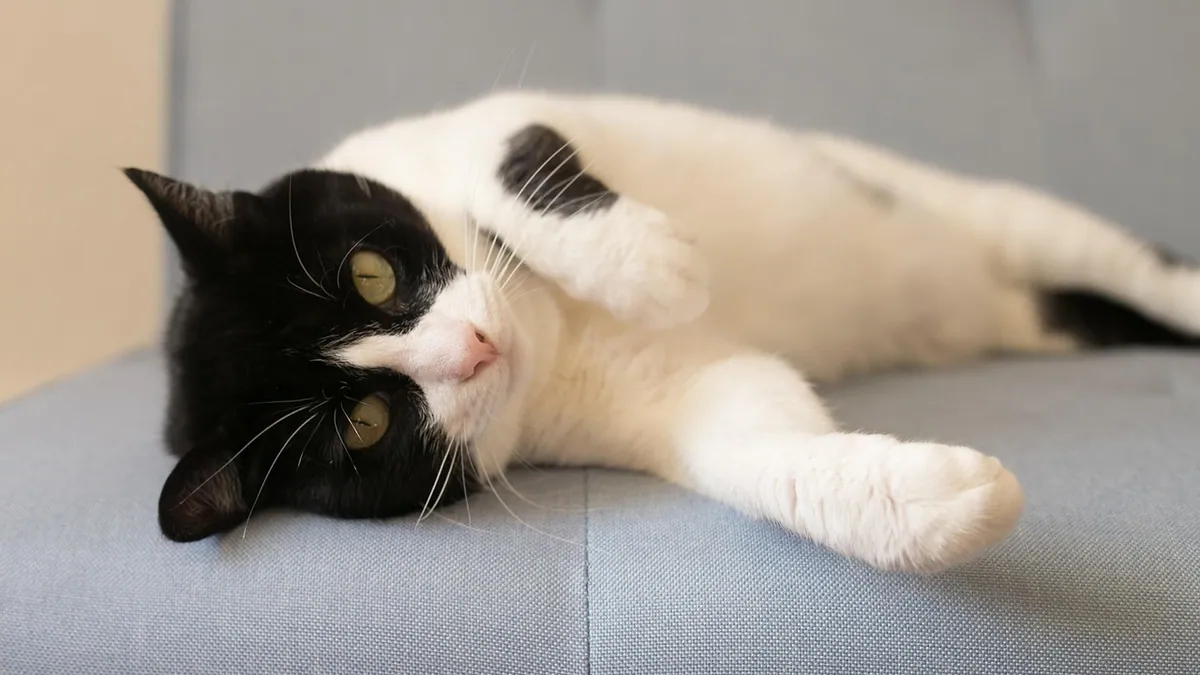
Some cats stay at arm's length no matter how much you want a lap cat, and that is often normal feline behavior, not a sign your cat does not love you. You can learn how to get my cat to be more affectionate by letting your cat set the pace, using calm and passive contact, and ruling out pain or illness first. This article is educational and is not a substitute for veterinary diagnosis or treatment.
Quick Answer
- Affection in cats is built on trust and choice, so let your cat approach you instead of picking your cat up.
- Passive contact (sitting nearby, slow blinking, offering a hand) raised oxytocin and lowered cortisol in cats, while forced contact did the opposite [1].
- More socialized cats were more likely to solve a food puzzle, solve it faster, and approach a new object sooner, which shows that gentle socialization pays off [2].
- Cats in a busy cat café avoided people about 44 percent of the time and preferred high perches when the room was crowded [3].
- Sudden clinginess or sudden avoidance can signal pain, dental disease, or another medical problem, so a veterinary exam comes first.
Why Some Cats Seem Aloof
Temperament and attachment style are real
Cats are not small dogs, and they do not all want the same kind of contact. In one study, cats were classified as secure, insecure-anxious, or insecure-avoidant based on how they used their owner as a safe base [1]. Secure cats showed more positive hormonal responses to human interaction, while insecure cats showed rising cortisol or a limited hormonal response [1]. That means your cat's standoffish behavior may reflect a learned style of relating, not a lack of feeling.
Cats are individuals, and so are their boundaries
In a Swedish cat café, researchers watched 27 cats for 227 hours. Cats varied widely, from engaging with people to avoiding them, and no human interaction happened at all during 44.4 percent of observation time [3]. Cats also moved to vertical spaces or cat-only rooms when the café was busy [3]. Your living room works the same way. A cat who hides under the bed during a party is managing stress, not plotting against you.
Socialization history shapes confidence
Cats who were more socialized toward humans were more likely to solve a problem-solving task, solve it faster, and approach a novel apparatus sooner [2]. Early and ongoing gentle handling tends to produce a bolder, more interactive cat. A cat who had little positive human contact early in life can still improve, but progress is usually slower and smaller.
Cats are not less loving, just different
A large comparative study found that dog and cat ownership differed only slightly in overall stress levels, but human-animal interaction was strongly linked to lower stress for dog owners and only minimally linked for cat owners [4]. Cats often show affection in quiet ways, like following you, sleeping near you, or slow blinking from across the room.
Medical Causes to Rule Out First
Before you change anything about your routine, book a veterinary exam. Pain and illness are common reasons a cat stops seeking contact or becomes clingy and restless.
- Dental disease, arthritis, and soft tissue pain can make a cat flinch when touched or held.
- Hyperthyroidism, chronic kidney disease, and other metabolic problems can cause irritability, restlessness, or personality change.
- Vision or hearing loss can make a cat startle easily and avoid handling.
- Cognitive dysfunction in older cats can cause nighttime yowling, confusion, and changes in social behavior.
Your veterinarian will decide what testing is needed and will calculate any medication dose from your cat's weight and health status. Do not give human pain relievers to a cat, because several common ones are toxic to cats.
When Aloof Behavior Becomes a Problem
A cat who has always been independent is not a medical case. Behavior becomes a concern when it changes.
- Your cat used to sleep on your lap and now hides.
- Your cat hisses, growls, or swats when you walk past.
- Your cat stops grooming, stops eating, or starts soiling outside the litter box.
- Your cat becomes clingy and vocal at night after years of sleeping quietly.
Sudden changes deserve a veterinary visit. If your cat is avoiding the litter box, see Cat Litter Box Aversion: How to Make It More Appealing.
How to Get My Cat to Be More Affectionate: Step by Step
Step 1: Let your cat choose the contact
Passive interaction means you are present and available without reaching, grabbing, or restraining. In one study, passive interactions increased oxytocin and decreased cortisol in cats, while forced interactions produced the opposite pattern [1]. Sit on the floor, read a book, and let your cat decide whether to come over. If your cat walks away, that is information, not rejection.
Step 2: Use slow blinks and a soft voice
Slow blinking is a widely used calming signal in cats. Pair it with a quiet voice and a relaxed body. Do not stare. Look away, blink slowly, and wait.
Step 3: Offer a hand, not a grab
Extend one finger at nose height and let your cat sniff. If your cat rubs against your hand, you can stroke one or two strokes along the cheek or the base of the ear, then stop. Short sessions that end before your cat wants to leave build trust faster than long ones.
Step 4: Build a predictable routine
Cats do well with sameness. Feed, play, and groom at about the same times each day. Predictability lowers arousal and makes your cat more willing to relax near you.
Step 5: Add vertical space and hiding spots
Cats in a busy cat café preferred elevated structures and cat-only rooms when occupancy was high [3]. Give your cat tall cat trees, shelves, and covered beds. A cat who can watch in published veterinary research often feels safe enough to come down and interact.
Step 6: Play every day
Two short play sessions with a wand toy, morning and evening, mimic hunting and burn energy. A tired, satisfied cat is more likely to settle next to you afterward.
Step 7: Use food and treats to build positive associations
Hand-feeding a few kibbles or a lickable treat teaches your cat that your hands predict good things. Keep sessions short and end while your cat is still interested.
Step 8: Go at your cat's pace with new people and pets
If you are adding a cat to the home, do it slowly. See How Do You Introduce A New Cat To Your Cats and How To Introduce New Cat To Home. Rushed introductions raise stress and set back the affection you are trying to build.
Step 9: Track small wins
Write down when your cat approaches you, sits near you, or sleeps on the bed. Progress in shy cats is often measured in inches over weeks, and a written log helps you see it.
What Not to Do
Do not punish or scold
Punishment does not teach a cat to love you. It teaches a cat to avoid you. Yelling, spraying water, and swatting raise fear and can turn a shy cat into a defensive one.
Do not force contact
Holding a cat who is struggling, wrapping a cat in a towel for cuddles, or trapping a cat on your lap all count as forced interaction. Forced interactions were linked to rising cortisol and falling oxytocin in cats [1]. That is the opposite of what you want.
Do not believe common myths
- "Cats are solitary and do not need company." Cats can live socially and do socialize to humans [2].
- "A cat who hides hates you." Hiding is usually stress management, not spite.
- "You can train a cat like a dog." Cats learn well with reward-based training, but the pace and the methods differ.
- "Getting a second cat will make my cat cuddlier." A new cat often adds stress before it adds comfort. Introduce slowly, as in How To Introduce New Cat To Cat.
Do not chase a cat around the house
Following a cat who is walking away is a form of pressure. Let your cat leave and try again later.
When to Involve a Veterinarian or Behavior Professional
Call your veterinarian if your cat's affection level changes suddenly, if your cat shows pain signals (flattened ears, tucked tail, growling when touched), or if you see appetite, litter box, or grooming changes. Your veterinarian can rule out medical causes and discuss whether a referral to a board-certified veterinary behaviorist is appropriate.
A certified behavior professional can help if:
- Your cat injures you or another pet.
- Your cat cannot be handled for basic care.
- You have tried low-pressure bonding for 8 to 12 weeks with no improvement.
- Your cat shows fear, anxiety, or aggression that interferes with daily life.
Never give a cat any medication, supplement, or pheromone product without veterinary guidance. Your veterinarian calculates the dose from your cat's weight and health.
Limitations and When to Contact a Veterinarian
Some cats will never become lap cats, and that is not a failure on your part. Temperament has a strong genetic and early-life component, and the research on attachment styles in cats is still developing [1]. You can improve trust and closeness, but you cannot rewrite your cat's basic personality.
Contact your veterinarian the same day if your cat:
- Stops eating or drinking
- Vomits repeatedly or has diarrhea for more than 24 hours
- Breathes with an open mouth or breathes rapidly at rest
- Cries out when picked up or touched
- Hides completely and will not come out for food
Go to an emergency clinic now if your cat:
- Cannot urinate or strains in the litter box with no urine produced (this is life threatening, especially in male cats)
- Collapses, has a seizure, or has trouble breathing
- Bleeds heavily or has a suspected broken bone
- Ate something toxic, such as lilies, antifreeze, or human medication
Schedule a routine visit if your cat's behavior changes slowly over weeks, if your cat is due for a wellness exam, or if you need help with a behavior plan. Individual cases need a veterinarian who can examine your cat in person.
Frequently Asked Questions
Do some cats just not like being held?
Yes, many cats dislike restraint even when they enjoy being near people. Holding restricts movement and can trigger a stress response, which is why forced contact raised cortisol in one study [1]. Respect your cat's preference and offer other forms of closeness, like sitting side by side or gentle cheek rubs.
How long does it take to make a shy cat more affectionate?
There is no fixed timeline, and progress varies with age, history, and temperament. Cats who were more socialized to humans approached new situations sooner and solved problems faster in one study, which suggests that early positive contact helps [2]. Expect weeks to months of short, low-pressure sessions, and measure progress in small steps.
Does getting a second cat make my cat cuddlier?
Usually not by itself, and it can add stress if the introduction is rushed. Cats in a shared space avoided each other and used vertical space to reduce conflict [3]. If you do add a cat, follow a slow introduction plan and keep separate resources for food, water, litter, and resting spots.
Can food or treats really make my cat more affectionate?
Food builds positive associations with your hands and your presence, which supports trust over time. Hand-feeding a few treats during calm moments is a simple, low-risk way to pair you with good things. Keep portions small so you do not unbalance your cat's diet, and ask your veterinarian about treat limits for your cat's weight.
Is it normal for my cat to want attention only at night?
Yes, many cats are crepuscular and become more active at dawn and dusk, and some shift activity to the quiet hours when the house is calm. If the behavior is new and comes with vocalizing, restlessness, or appetite changes, have your veterinarian check for pain, thyroid disease, or cognitive dysfunction in older cats. A predictable daytime play and feeding routine often helps reset the pattern.
Should I use pheromone sprays or calming products?
Some owners find pheromone diffusers helpful, but the evidence in cats is mixed and not well established in veterinary research. Ask your veterinarian before starting any product, especially if your cat takes medication or has a health condition. Behavior change through environment and low-pressure interaction should come first.
Related Articles
- How Do You Introduce A New Cat To Your Cats
- How To Introduce New Cat To Cat
- Cat Litter Box Aversion: How to Make It More Appealing
- How To Introduce A New Cat To Your Resident Cat
- How To Introduce New Cat To Home
- How To Introduce A New Cat
- How to Get Your Cat to Cuddle With You
- How Do Cats Show Affection? 10 Real Signs
- How to Get Your Cat to Like You: Building Trust Step by Step
References
- EXPRESS: The hormonal effects of owner-cat interactions on pet cats of different potential attachment styles. Journal of feline medicine and surgery, 2026.
- Effects of Socialization on Problem Solving in Domestic Cats. Animals : an open access journal from MDPI, 2024.
- Cats in a Cat Café: Individual Cat Behavior and Interactions with Humans. Animals : an open access journal from MDPI, 2025.
- Comparative mediation analysis of dog and cat ownership and perceived stress. PloS one, 2026.