How to Get Your Cat to Like You: Building Trust Step by Step
By Dr. Zubair Khalid, DVM, MS, PhD ·
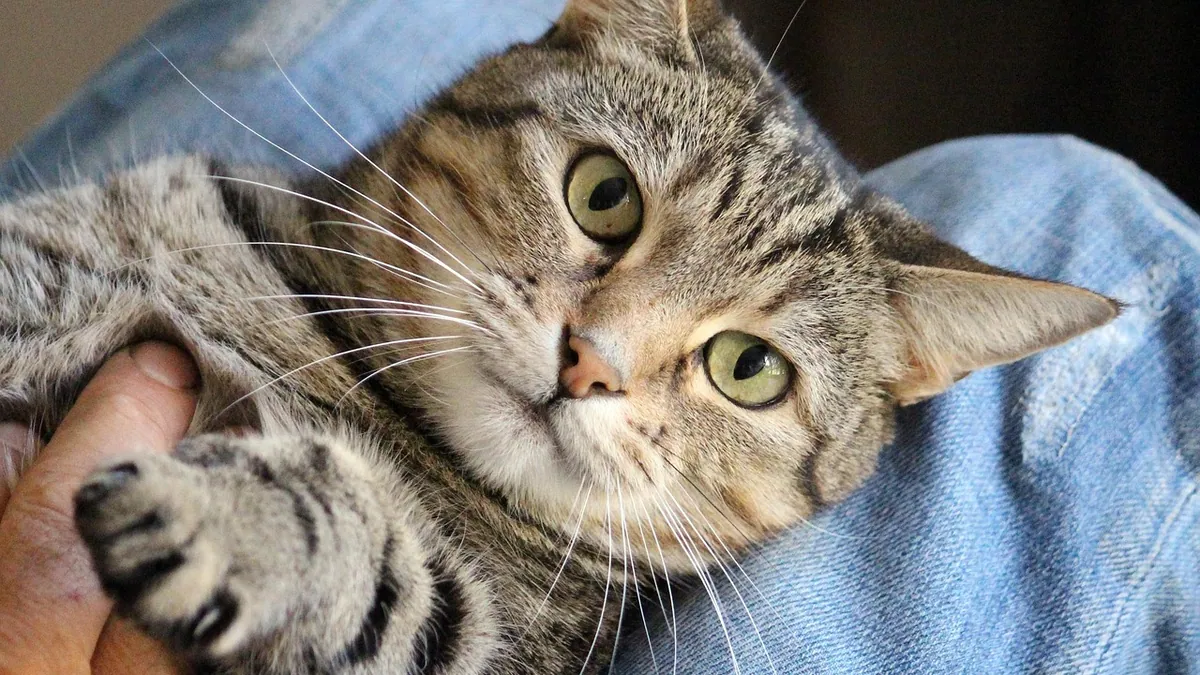
You cannot force a cat to like you. You build trust slowly by letting the cat control the pace, offering calm and predictable contact, and meeting the cat's needs for safety, play, and routine. Most distant cats are not broken, they are simply reading your behavior and deciding whether you are safe. This article is educational and is not a substitute for veterinary diagnosis or treatment.
Quick Answer
- Let the cat approach you first. Passive, low-pressure interaction raises oxytocin and lowers cortisol in cats, while forced handling does the opposite [1].
- Learn the cat's signals. A slow blink, tail up, and head bunting mean "come closer." Flattened ears, a twitching tail, and a crouched body mean "stop."
- Play every day with a wand toy. This taps into the cat's hunting instincts and gives you a shared activity that does not require touching [2].
- Rule out pain and illness first. A cat that suddenly avoids you may be sick, not angry.
- Never punish a cat. Punishment and forced restraint damage trust and raise stress hormones [1].
Why Your Cat Seems Distant
Cats are not small dogs. They are social animals, but their social rules differ from ours. Many cats prefer to control when contact happens, and they often choose brief, frequent check-ins over long cuddle sessions. A cat watching you from across the room is not rejecting you. That cat may be participating in the relationship on its own terms.
Attachment style matters. In one study, cats classified as securely attached showed more positive hormonal responses to human interaction, while insecure cats showed higher cortisol or limited hormonal benefits [1]. In other words, some cats are wired to relax around people more easily than others. That does not mean an insecure cat can never warm up. It means the process takes patience and the right kind of contact.
Socialization history also plays a role. Cats that are more socialized toward humans are more likely to approach new things, solve problems faster, and engage with unfamiliar objects [3]. A cat that had limited positive human contact early in life may start further back. Adult cats can still learn that people are safe, but the timeline is measured in weeks and months, not days.
Personality is real, too. Cats vary widely in how much they seek out human contact. In a cat café study, human-cat interactions were absent during 44.4% of observation time, and individual cats ranged from engaging to avoiding [4]. Even in a setting built around human contact, many cats chose not to interact. Your cat may simply have a lower social battery than you expected.
Medical Causes to Rule Out First
Before you assume your cat is aloof, consider pain. Cats hide illness well. A cat with dental disease, arthritis, or an upset stomach may avoid being picked up because handling hurts. A cat that once loved laps and now walks away may be telling you something is wrong.
Common medical causes of behavior change include:
- Dental pain or oral disease
- Arthritis, especially in older cats
- Hyperthyroidism
- Kidney disease
- Vision or hearing loss
- Cognitive changes in senior cats
Any sudden change in affection level deserves a veterinary visit. Your veterinarian can examine your cat, run bloodwork, and check for pain. If your cat is healthy, you can move forward with a behavior plan knowing you are not missing a medical problem.
When a Distant Cat Becomes a Problem
A cat that keeps some distance is not necessarily a problem. Some cats are happy with parallel company, sitting near you without touching. That is a normal relationship style.
It becomes a problem when the behavior changes suddenly, when your cat hides most of the day, when your cat stops eating or grooming, or when your cat shows aggression, hissing, or swatting. It is also a problem if you feel unable to care for your cat because of the behavior, or if your cat seems distressed instead of simply independent.
If your cat is avoiding you after a change in the home, such as a new pet, a move, or a new baby, that is a stress response. Cats do not like sudden changes to their territory or routine. Slow introductions and predictable schedules help. If you are adding another cat, follow a gradual process like the one in How To Introduce New Cat To Cat. If you are adding a dog, see How to Introduce a New Dog to Your Cat: Step-by-Step Guide.
How to Get My Cat to Like Me: A Step-by-Step Plan
Step 1: Stop chasing contact
The single most effective change is to stop reaching for your cat. Let your cat come to you. Passive interactions, where you are present but not demanding anything, were associated with increased oxytocin and decreased cortisol in cats [1]. Forced interactions showed the opposite pattern [1]. That means petting a cat that is trying to leave actually raises its stress.
Sit on the floor. Read a book. Ignore the cat. Let curiosity do the work.
Step 2: Learn the body language
You need to know when your cat is saying yes and when it is saying no.
Signs your cat wants contact:
- Tail held up with a slight curve at the tip
- Slow blink
- Head bunting or rubbing against you
- Kneading
- Soft, relaxed ears facing forward
Signs your cat wants space:
- Tail twitching or thumping
- Ears flattened or turned sideways
- Crouched body
- Dilated pupils in a well-lit room
- Skin rippling along the back
When you see a "no" signal, stop and back off. Respecting the no is what teaches your cat that you are safe.
Step 3: Use the slow blink
Slow blinking is a simple, low-risk way to communicate calm. Look at your cat, close your eyes slowly, hold for a second, and open them slowly. If your cat blinks back, you are having a conversation. Do not stare. A hard stare is a threat in cat language.
Step 4: Offer a hand, not a grab
Extend one finger toward your cat at nose level and let the cat sniff. If your cat rubs against your finger, you can try a gentle scratch under the chin or on the cheek. Most cats prefer being touched on the head and cheeks over the belly or tail base. Keep sessions short. Two or three seconds is enough at first.
Step 5: Play every day
Play is one of the best relationship builders because it does not require physical contact. Use a feather wand or a ball to stimulate your cat's hunting instincts [2]. Aim for two short sessions a day, morning and evening. Let your cat catch the toy sometimes so the hunt feels complete. Play reduces boredom and gives your cat a reason to associate you with good things.
Step 6: Feed on a schedule
Cats thrive on routine. Feed at the same times each day. If your cat is overweight or needs more activity, divide the daily meal into several smaller portions in bowls placed around the house so your cat has to move to find them [2]. You can also hand-feed a few kibbles or a spoon of wet food. Food is a powerful trust builder when it comes from your hand at the cat's pace.
Step 7: Build a cat-friendly environment
Cats need vertical space and hiding spots. In the cat café study, elevated structures were important to cats, especially when the space was busy [4]. At home, cat trees, shelves, and window perches give your cat a sense of control. A cat that can get up high and watch is a cat that feels safe.
Keep the home safe as well. Store cleaning supplies, electrical cords, and small items like sewing needles and dental floss out of reach, and be careful with open windows and balconies because cats can fall and get hurt [2].
Step 8: Respect the cat's schedule
Cats are often most active at dawn and dusk. That is when play and interaction are most likely to succeed. If your cat hides all day and comes out at night, do not force daytime contact. Meet your cat when your cat is ready.
Step 9: Be consistent
Trust is built through repetition. Same voice, same movements, same routine. If you are calm and predictable for weeks, most cats will begin to relax. Some cats take longer. That is normal.
What Not to Do
Do not punish your cat. Yelling, spraying water, or swatting does not teach a cat to like you. It teaches a cat to fear you. Forced interactions raise cortisol and lower the hormonal benefits of contact [1].
Do not pick up a cat that is trying to leave. That is a forced interaction, and it works against you [1].
Do not stare. In cat language, a direct stare is a challenge.
Do not wake a sleeping cat to pet it. Let your cat choose the moment.
Do not assume a cat that follows you wants to be touched. Following is often social behavior, not an invitation to handle. If you want to know how to get my cat to follow me, the answer is usually the opposite of chasing. Cats follow people who are calm, predictable, and associated with food and play.
Do not believe the myth that cats are solitary and do not need company. Cats are social and can suffer from boredom and stress when left alone too much [5].
Do not bring home a new pet without a slow introduction. Sudden changes in territory cause stress. If you are adding a cat, see How To Introduce A New Cat To Your Resident Cat.
When to Get Professional Help
If your cat is healthy but continues to hide, avoid you, or show aggression after several weeks of consistent, low-pressure interaction, a certified behavior professional can help. Look for a veterinarian who specializes in behavior or a certified applied animal behaviorist. Your veterinarian can also rule out pain and discuss whether anxiety medication is appropriate.
If your cat is showing signs of stress such as overgrooming, not eating, or hiding constantly, that is a medical and behavioral concern. Do not wait.
Limitations and When to Contact a Veterinarian
This article gives general guidance. Individual cats need individual assessment by a veterinarian.
Contact your veterinarian the same day if your cat:
- Stops eating or drinking
- Vomits repeatedly or has diarrhea
- Shows sudden aggression or confusion
- Is hiding and cannot be coaxed out
- Has trouble breathing or is open-mouth breathing
Go to an emergency clinic immediately if your cat:
- Is straining to urinate, especially a male cat
- Collapses or has a seizure
- Has been hit by a car or fallen from a height
- Is bleeding heavily
- Has ingested a toxin
Schedule a routine visit if your cat's affection level changes gradually, if your cat seems painful when touched, or if you notice weight loss, bad breath, or changes in grooming.
Frequently Asked Questions
How long does it take to get a cat to like you?
It varies by cat. Some cats warm up in a few weeks, while others need months of patient, low-pressure interaction. Socialization history and attachment style both affect the timeline [1][3]. Consistency matters more than speed.
Why does my cat ignore me but sit on other people?
Cats choose based on comfort and past experience. A person who is quiet, still, and does not reach for the cat often gets chosen first. Your cat may also associate other people with specific rewards, like food or play. Change your own behavior before assuming your cat dislikes you.
Can a cat that was never socialized learn to like people?
Yes, but it takes time and patience. More socialized cats tend to approach new things sooner and solve problems faster, which suggests socialization shapes how boldly a cat engages with the world [3]. An under-socialized cat can still form bonds, but progress may be slow and should never be forced.
Does food help a cat bond with me?
Yes. Feeding on a predictable schedule and hand-feeding small amounts builds positive associations. Dividing meals into several smaller portions around the house also encourages activity [2]. Pair your presence with food and your cat will start to seek you out.
Should I get another cat to keep my cat company?
Not automatically. Cats vary in how social they are with other cats, and cat-cat interactions can be infrequent even in group settings [4]. A new cat can add stress if the introduction is rushed. If you do add a cat, use a gradual introduction process and talk to your veterinarian first.
Related Articles
- How to Introduce a New Dog to Your Cat: Step-by-Step Guide
- How To Introduce New Cat To Cat
- How Do You Introduce A New Cat To Your Cats
- How To Introduce A New Cat To Your Resident Cat
- How To Introduce New Cat To Home
- How To Introduce A New Cat
- How to Tell If Your Cat Trusts You: Signs and How to Build It
- How to Get Your Cat to Cuddle With You
- How to Get Your Cat to Come to You Every Time
References
- EXPRESS: The hormonal effects of owner-cat interactions on pet cats of different potential attachment styles. Journal of feline medicine and surgery, 2026.
- Providing a Home for a Cat - Cat Owners. Merck Veterinary Manual.
- Effects of Socialization on Problem Solving in Domestic Cats. Animals : an open access journal from MDPI, 2024.
- Cats in a Cat Café: Individual Cat Behavior and Interactions with Humans. Animals : an open access journal from MDPI, 2025.
- Introduction to Behavior of Cats - Cat Owners. Merck Veterinary Manual.