How Do Cats Show Affection? 10 Real Signs
By Dr. Zubair Khalid, DVM, MS, PhD ·
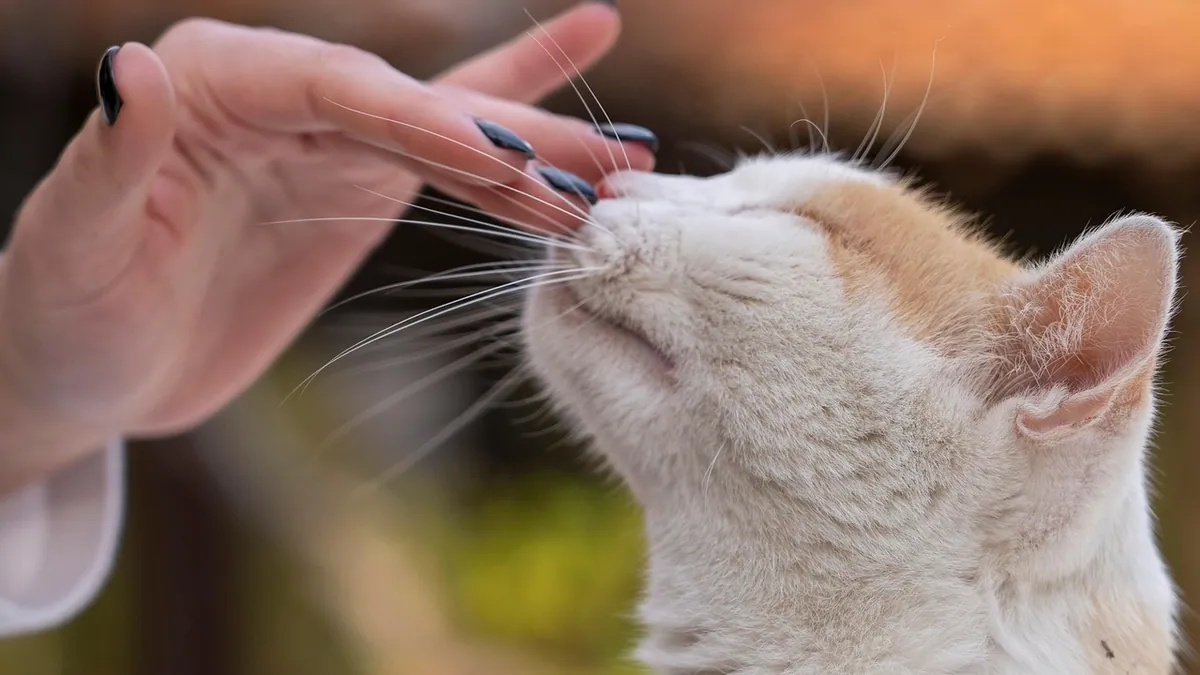
Cats show affection through body language and chosen proximity, not the same signals dogs use. A slow blink, a head bump against your hand, or a cat that settles near you are all ways cats say they feel safe with you. Learning how do cats show affection helps you tell genuine bonding from stress or overstimulation.
This article is educational and is not a substitute for veterinary diagnosis or treatment.
Quick Answer
- A slow blink directed at you is a relaxed social signal, and you can blink back slowly.
- Head bunting (rubbing the cheek, chin, or forehead on you) deposits scent and marks you as familiar and safe.
- Kneading, purring, and following you from room to room are common signs of comfort and attachment.
- A bite during petting usually means overstimulation, not love. Stop petting and give your cat space.
- Cats are social animals that form attachments to people, and secure cats show more positive hormonal responses to friendly human contact [1][2].
What Counts as Affection in Cats
Affection in cats is a set of behaviors that signal comfort, trust, and preference for a specific person. Cats are social animals, and their normal social behavior includes affiliative contact with familiar individuals [3]. They also form attachment bonds with caregivers, and cats from private homes show more exploration and play after reuniting with their person, which suggests the familiar human acts as a safe base [2].
That matters because cat affection often looks quiet. A cat that chooses to nap two feet from you, blinks slowly, or leans into your leg is communicating something real. Cats in a cat café study interacted with humans in varied ways, from engaging to avoiding, and human contact was absent in 44.4% of observed time [4]. In other words, a cat that seeks you out is making a choice.
10 Signs Your Cat Is Showing Affection
1. Slow Blinking
A slow blink is a relaxed, nonthreatening gaze. If your cat looks at you and closes its eyes slowly, it is signaling comfort. You can return the gesture by blinking slowly and looking away.
2. Head Bunting and Cheek Rubbing
When a cat rubs its cheek, chin, or forehead against you, it is transferring scent from glands in those areas. This is normal social behavior that marks you as part of its familiar group [3].
3. Tail Up and Curved
A tail held high with a gentle curve at the tip is a friendly greeting. A tail wrapped around your leg or another cat is an affiliative signal [3].
4. Kneading
Kneading with the front paws, sometimes called making biscuits, is a leftover kitten behavior. Adult cats often knead on soft surfaces or on people they trust.
5. Purring
Purring usually signals contentment, though cats also purr when stressed or in pain. Context matters. A cat purring while relaxed on your lap is showing comfort. Cats in shelters purred more often after reuniting with their caregiver, which suggests purring can also serve as a coping signal [2].
6. Following You
A cat that trails you to the kitchen or bathroom is choosing your company. This is one of the clearest everyday signs of cat affection.
7. Sleeping Near You
Cats are vulnerable when asleep. A cat that sleeps on your bed or in your chair is treating you as safe.
8. Grooming You
Licking your hand or hair is allogrooming, a social behavior cats use with familiar companions [3]. It can also be a displacement behavior when a cat is mildly conflicted, so read the rest of the body.
9. Bringing You Toys
Some cats carry toys or prey to their owners. This is not well established as a deliberate gift, but it does reflect a cat's comfort with you and its hunting drive.
10. Belly Display
A cat that rolls onto its back and shows its belly is showing trust. This is not an invitation to rub the belly in most cats. Petting the belly often triggers defensive grabbing.
Do Cats Bite to Show Affection?
Usually, no. A gentle nibble during grooming or a soft mouth on your hand can be part of social contact, but a real bite is a distance signal. Cats use bites to end unwanted handling, and the sequence often starts with a twitching tail, flattened ears, dilated pupils, or skin rippling.
This is the difference between affection and overstimulation. Petting that starts as pleasant can tip into irritating within seconds. If your cat bites, stop the interaction and let it walk away. Punishing the bite will make the next interaction worse.
Why Cats Show Affection (Normal Reasons)
Affection behaviors serve real social functions. Scent marking through bunting and rubbing builds a shared group odor [3]. Physical contact and proximity reduce uncertainty. Play and social contact with familiar people support positive emotional outcomes, and predictable routines help cats stay emotionally stable [5].
Hormones play a role too. In a study of owner-cat interactions, passive interactions were linked to increased oxytocin and decreased cortisol, while forced interactions showed the opposite pattern [1]. Secure cats had more positive hormonal responses to human contact than insecure cats [1]. In plain terms, affection grows when contact is voluntary and calm.
Medical Causes to Rule Out
Some behaviors that look like affection can have a medical driver.
- Constant purring with hiding or appetite loss. Pain can cause purring. Cats with arthritis often purr while sitting still because movement hurts. Learn the signs in Cat Arthritis: How to Tell If Your Cat Is in Pain.
- Sudden clinginess in an older cat. This can reflect pain, vision loss, or cognitive changes. A cat that suddenly follows you constantly and vocalizes at night needs a veterinary exam.
- Excessive grooming of you or itself. Overgrooming can be a sign of stress or skin disease. See Cat Stress Signs: How to Recognize and Reduce Stress in Your Cat.
- Bad breath during close contact. Dental disease is common and painful. Read Why Does My Cat's Breath Smell?.
- Head pressing or leaning the head against walls. This is a neurologic red flag, not affection. Call your veterinarian the same day.
When Affection Becomes a Problem
Affection is rarely a behavior problem on its own. Problems appear when contact is forced or when a cat's signals are ignored.
- Biting during petting. This is the most common complaint. It means your cat's tolerance was exceeded.
- Night waking and vocalizing. A cat that wants contact at 3 a.m. may be bored, hungry, or in pain.
- Clinginess after a change. A move, a new baby, or a lost companion can trigger anxious following.
- Mounting or humping. This can be affectionate or stress related, and it is more common in intact cats.
- Intercat tension. A cat that rubs on you may be resource guarding your attention from another cat.
Inconsistent routines are a known source of chronic stress for cats, and that stress can show up as sickness behaviors and house soiling [5]. If your cat's affectionate behavior changes along with any of those signs, treat it as a welfare issue, not a personality quirk.
What to Do: Step by Step
Let Your Cat Choose Contact
Offer a hand at nose level and wait. If your cat leans in, pet briefly. If it pulls back, stop. Passive, voluntary interaction is linked to a better hormonal response than forced contact [1].
Build a Predictable Routine
Feed, play, and clean the litter box at consistent times. Predictability lowers chronic stress [5]. This alone can reduce clingy, anxious affection.
Use Play to Meet Social Needs
Play is motivated by interest in the toy and by novelty. Keep several toys and rotate them as interest fades [5]. Add chasing, pouncing, and biting on wand toys to mimic hunting [5]. A tired, well-played cat often becomes calmer and more affectionate.
Create Vertical Space and Safe Zones
Cats value elevated structures, especially when the environment is busy. In a cat café study, cats preferred vertical levels or cat-only rooms during high customer occupancy [4]. At home, cat trees, shelves, and a quiet room give your cat a retreat without losing access to you.
Respect the Petting Threshold
Watch for the first sign of overstimulation, such as a tail flick, ear rotation, or skin twitch. End the session before the bite. This teaches your cat that contact is safe.
Support Bonding With Low-Pressure Time
Sit quietly near your cat without reaching for it. Reading, watching TV, or working nearby counts. Human-cat interaction is associated with higher positive affect and lower negative affect in owners, independent of species [6]. Calm coexistence benefits both of you.
Check for Pain Before Assuming Behavior
If affection patterns change, schedule an exam. Arthritis, dental disease, and stress all change how a cat seeks or avoids contact. For home adjustments, see Cat Arthritis: How to Recognize the Signs and Make Your Home More Comfortable.
What Not to Do
- Do not punish a bite. Punishment increases fear and makes future handling harder.
- Do not force cuddling. Forced interaction raises cortisol and lowers oxytocin in cats [1].
- Do not assume purring means happy. Purring can also signal pain or stress [2].
- Do not rub the belly just because it is offered. For most cats, this ends in scratches.
- Do not ignore sudden clinginess in a senior cat. Pain and illness often present as behavior change.
- Do not rely on the myth that cats are not affectionate. Cats form attachment bonds and show measurable hormonal responses to friendly human contact [1][2].
When to Involve a Veterinarian or Behavior Professional
Call your veterinarian if affection changes come with appetite loss, weight loss, hiding, vocalizing at night, house soiling, or biting that breaks skin. A certified behavior professional can help if your cat bites during routine handling, if there is tension between cats in the home, or if anxiety limits daily life.
Fear in kittens should be addressed early. If a kitten shows fear, find the threshold it tolerates and keep it below that level while pairing the experience with food, treats, or toys to create a positive emotional outcome [5]. Continue varied, positive exposure into adulthood [5]. This prevents lifelong handling problems.
Limitations and When to Contact a Veterinarian
Cat affection signals overlap with stress and pain signals, so body language alone cannot rule out disease. Individual cases need a veterinarian who can examine your cat, ask about the home environment, and decide what testing is appropriate.
Contact your veterinarian the same day if your cat stops eating, hides constantly, vocalizes at night, or suddenly becomes clingy after years of independence. Go to an emergency clinic now for head pressing, seizures, open-mouth breathing, collapse, or a bite wound that will not stop bleeding. Schedule a routine visit for gradual changes in affection, new biting during petting, bad breath, or stiffness when jumping. Your veterinarian calculates any medication dose from your cat's weight and health, so never give human pain relievers, which can be toxic to cats.
Frequently Asked Questions
Do cats really show affection?
Yes. Cats show affection through slow blinks, bunting, kneading, following, and choosing to rest near you. They form attachment bonds with caregivers and respond to friendly contact with measurable hormonal changes [1][2].
Why does my cat bite me when I pet it?
A bite during petting usually means overstimulation, not aggression. Your cat is asking for the interaction to stop. End the session at the first warning sign, such as a tail flick or ear rotation.
Does a cat bringing me toys mean it loves me?
It reflects comfort and social interest, though the exact meaning is not well established in veterinary research. Cats carry objects as part of play and hunting behavior. Keep offering wand toys so the cat can chase, pounce, and bite safely [5].
Why does my cat follow me everywhere?
Following you is a sign of attachment and often a request for company, food, or play. If the behavior is new and intense, especially in an older cat, have your veterinarian check for pain or illness.
Can stress change how affectionate my cat is?
Yes. Inconsistent routines can cause chronic stress, which may increase sickness behaviors and house soiling [5]. Forced handling raises cortisol, while calm, voluntary contact supports bonding [1].
Related Articles
- Cat Arthritis: How to Tell If Your Cat Is in Pain
- Why Are Cats So Cute? The Science Behind Feline Adorableness
- Cat Stress Signs: How to Recognize and Reduce Stress in Your Cat
- Why Does My Cat's Breath Smell?
- Cat Arthritis: How to Recognize the Signs and Make Your Home More Comfortable
- Cat Separation Anxiety: Signs and How to Help
- How to Tell If Your Cat Loves You: Real Signs of Bonding
- How to Make Your Cat More Affectionate and Cuddly
- Why Does My Cat Lay on Me? Affection or Something Else
References
- EXPRESS: The hormonal effects of owner-cat interactions on pet cats of different potential attachment styles. Journal of feline medicine and surgery, 2026.
- Impact of Living Environment on Attachment Behaviour in Domestic Cats from Private Homes and Shelters. Animals : an open access journal from MDPI, 2025.
- Normal Social Behavior in Cats - Cat Owners. Merck Veterinary Manual.
- Cats in a Cat Café: Individual Cat Behavior and Interactions with Humans. Animals : an open access journal from MDPI, 2025.
- Social Behavior of Cats - Behavior. Merck Veterinary Manual.
- Human-animal interaction: understanding the role of dog and cat interactions in emotional wellbeing. Frontiers in psychology, 2026.