Why Is My Kitten Yelling at Me? Meowing and Hissing
By Dr. Zubair Khalid, DVM, MS, PhD ·
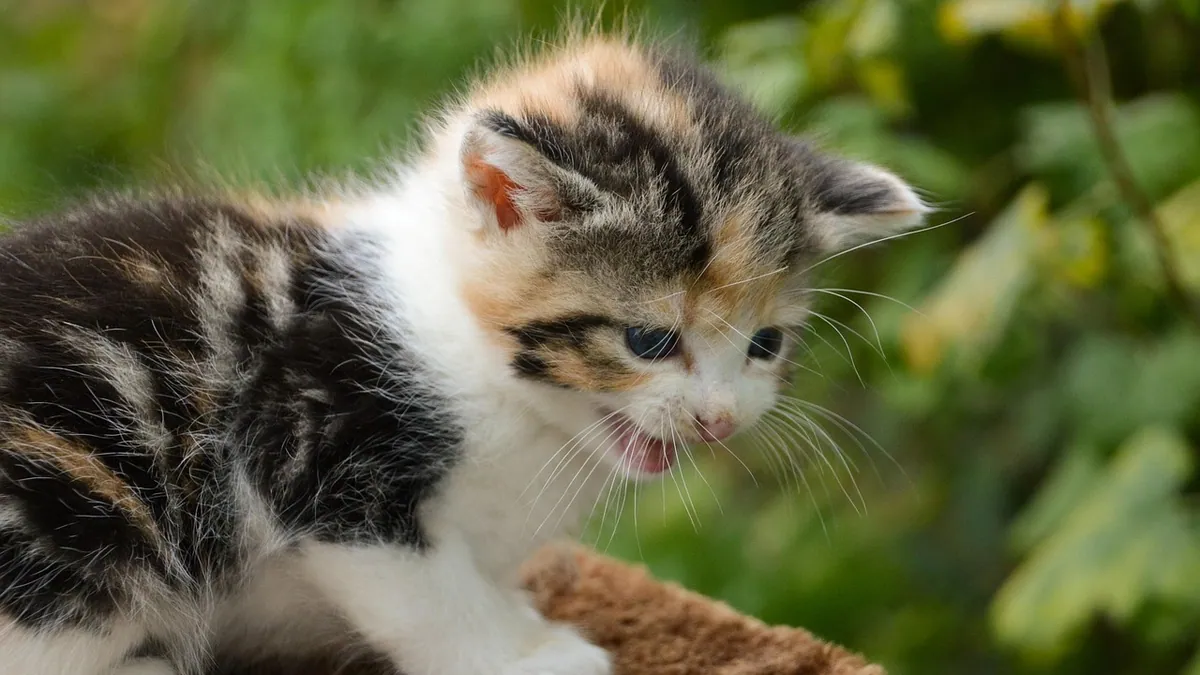
Why does my kitten yell at me? Most of the time, a kitten yells because meowing works. Kittens meow to their mother when they are cold or hungry, and once they grow up they keep meowing at people because it gets results [1]. Hissing is a different signal. It usually means fear or a warning, not a demand.
This article is educational and is not a substitute for veterinary diagnosis or treatment.
Quick Answer
- Meowing is directed at people, not other cats. Adult cats do not meow at each other, so your kitten is talking to you on purpose [1].
- Hunger and play are the two biggest triggers. Kittens meow more when they can see or smell food or a toy but cannot reach it [2].
- Hissing is a threat or defense signal. It means your kitten feels unsafe, not that it is being mean [3].
- Sudden, nonstop, or unusual yowling can be a pain or illness signal and needs a veterinary visit.
- Punishment does not work. It adds fear and can make the noise and hissing worse [4].
Why Does My Kitten Yell So Much? Normal Reasons First
Kittens are loud because they are still learning how to get what they need. Here are the everyday reasons behind most of the noise.
Hunger and feeding schedules
Food is the strongest motivator for meowing in kittens. In a study of cat-human interactions, cats meowed significantly more when they could see and smell food but could not reach it [2]. If your kitten yells every time you walk toward the kitchen, that is a trained response. Your kitten learned that yelling brings the bowl.
Boredom and unmet play needs
Play shares the same brain circuitry as hunting, so a kitten with nothing to chase gets frustrated [2]. A kitten that yells at you in the evening is often asking for a hunt, not a meal. Short, frequent play sessions that mimic stalking and pouncing help a lot.
Attention and social contact
Meowing is a social tool aimed at people [1]. Some kittens yell simply to be picked up, talked to, or followed into another room. This is normal communication, not manipulation.
Breed and individual personality
Some cats are simply more vocal than others. Siamese cats in particular are prone to excessive meowing and yowling [1]. If your kitten is one of these breeds, expect more volume as a baseline.
Hissing at you: fear, not aggression
Hissing is a non-vocal sound made by forced air, and across species it most often serves as a threat or defense display [3]. A kitten hisses when it feels cornered, startled, or overwhelmed. Common triggers include loud noises, unfamiliar people, being picked up too fast, and rough handling. Hissing is information. Your kitten is telling you to back off before it feels forced to swat or bite.
Medical Causes to Rule Out
Sometimes the noise is not a demand. It is a symptom. Fear, anxiety, and stress are among the most common behavioral problems in cats, and they often show up as increased vocalization [4]. Pain and illness can look the same way.
Pain and discomfort
A kitten in pain may yowl, pace, hide, or refuse to be touched. Dental pain, an injury, a foreign object in the mouth, or a urinary problem can all cause sudden loud crying. Any new, intense vocalization with changes in eating, drinking, or litter box use deserves a veterinary exam.
Hunger from a medical cause
Intestinal parasites, poor absorption of food, and other conditions can leave a kitten genuinely hungry even after eating. A kitten that yells for food constantly and looks thin should be checked.
Hormonal and reproductive causes
Adult cats yowl at each other during breeding season, and this sound is longer and more melodic than a regular meow [1]. An unspayed female in heat or an unneutered male may yowl loudly and persistently. Spaying or neutering usually resolves this.
Sensory and cognitive changes
Vision loss, hearing loss, and cognitive changes are more common in older cats, but a young kitten can also have a congenital sensory problem. A kitten that yells when you enter the room, or that startles easily, may not be seeing or hearing you well.
Environmental stress
Changes in the home can trigger loud crying and hissing. New pets, new people, moved furniture, and disrupted routines all count. If your cat's behavior shifted after a change, see Why Is My Cat Suddenly Afraid of Me?.
When Meowing and Hissing Become a Problem
Excessive meowing is partly a personal judgment call, since all cats meow to some degree as normal communication [1]. The behavior crosses into a problem when it affects your sleep, your neighbors, your kitten's welfare, or your bond with the cat.
Watch for these patterns:
- The noise is new, sudden, or much louder than usual.
- Your kitten yells at night and keeps you awake. Night crying has its own causes and fixes, covered in Why Is My Cat Crying at Night?.
- Hissing happens during normal handling, feeding, or play.
- Your kitten hisses at a specific person or pet every time they appear.
- The behavior comes with hiding, appetite changes, or litter box changes.
Aggression in cats is a common welfare concern, and its causes are not fully understood, which is why a professional assessment matters when the behavior is intense or repeated [5].
What to Do Step by Step
1. Get a veterinary check first
Book an exam before you assume the behavior is purely behavioral. Your veterinarian can rule out pain, parasites, dental disease, and other medical triggers. If your kitten is not yet spayed or neutered, ask about timing, since reproductive hormones drive loud yowling [1].
2. Keep a simple log
Write down when the yelling happens, what happened right before, and what you did. Patterns show up fast. You may find the noise always starts 30 minutes before a meal, or only when a certain person visits.
3. Feed on a predictable schedule
If hunger is the trigger, set fixed meal times and stick to them. Do not free-feed in response to yelling, because that rewards the noise. If your veterinarian recommends a specific amount or a feeding plan, follow that guidance. Your veterinarian calculates any medication dose from your kitten's weight and health.
4. Add structured play
Two or three short play sessions a day, each ending with a small treat or meal, mimic the natural hunt-eat-groom-sleep cycle. This is one of the most effective ways to reduce demand meowing tied to boredom.
5. Build a cat-friendly environment
A cat-friendly home gives your kitten control and safe hiding spots. Provide vertical space, scratching posts, quiet retreat areas, and separate resources if you have more than one cat [4]. A kitten that feels safe hisses less.
6. Go slow with handling and new situations
Let your kitten approach you instead of scooping it up. Pair new people and sounds with treats at a distance. Socialization matters for normal behavioral development, and many owners are interested in structured kitten socialization programs but have never heard of them [6]. Ask your veterinarian about local options.
7. Reward quiet, ignore the noise
When your kitten is quiet, give attention, play, or a treat. When it yells for something you are not going to give, wait for a pause before you respond. This teaches that calm behavior works better than volume.
8. Manage multi-cat tension
If your kitten hisses at another cat, separate them and reintroduce slowly. Hissing between cats after a new arrival is common and usually fades with proper introductions. See Cat Hissing at New Kitten: How Long Will It Last? for a step-by-step plan. If a new baby is the trigger, Cat Hissing and Growling at New Baby: How to Manage covers that situation.
What Not to Do
- Do not yell at, hit, or spray your kitten. Punishment increases fear and stress, and fear is already a top behavioral problem in cats [4].
- Do not assume hissing means a bad cat. Hissing is a defense signal, and punishing it removes your kitten's warning system [3].
- Do not reward the yelling with the exact thing it demands every time. Occasional response is fine, constant response builds a louder cat.
- Do not skip the veterinary visit because the behavior seems "just behavioral." Pain and illness can look identical to a demand.
- Do not lock a hissing kitten in a small space as punishment. That raises stress and can escalate to biting.
When to Involve a Veterinarian or Behavior Professional
Call your veterinarian if the vocalization is new, if it comes with appetite or litter box changes, or if hissing appears during routine handling. A certified behavior professional can help when the pattern is intense, when there are multiple cats in the home, or when the behavior has not improved after a few weeks of consistent training and enrichment. Aggression in cats is a recognized welfare and public health concern, so early professional help is reasonable [5]. Fear, anxiety, and stress respond well to a structured plan, and your veterinary team can build one for your kitten [4].
Limitations and When to Contact a Veterinarian
This article covers common patterns only. Individual cases need a veterinarian who can examine your kitten in person.
Contact a veterinarian the same day if your kitten:
- Yowls nonstop or cries in a way that sounds different from its normal meow
- Stops eating, stops drinking, or has not used the litter box normally
- Hisses or growls when you touch a specific body area
- Shows new hiding, pacing, or restlessness
Go to an emergency clinic now if your kitten:
- Cries out while straining to urinate, especially a male kitten
- Has trouble breathing, collapses, or has a seizure
- Is bleeding, has been hit by a car, or has swallowed something dangerous
- Cannot stand or walk normally
For routine concerns like ongoing demand meowing, night crying, or hissing at a new pet, book a regular appointment. Bring your behavior log so your veterinarian can see the pattern.
Frequently Asked Questions
Why does my kitten yell at me when I get home?
Your kitten learned that your arrival predicts food, play, or attention, so it greets you loudly. Meowing is a social signal aimed at people, and it often means "hello" or "I want something" [1]. Try a short play session or a scheduled meal right after you walk in.
Is my kitten hissing at me a sign it will become aggressive?
Not usually. Hissing is a threat or defense display, so it means your kitten feels unsafe right now [3]. Give it space, remove the trigger, and let it come to you. Repeated hissing with swatting or biting is a reason to call your veterinarian or a behavior professional.
Why does my kitten yell more at night?
Night crying often traces back to a shifted sleep schedule, hunger, or boredom, since cats are naturally more active at dawn and dusk. Feed a meal and play before bed to shift the pattern. If the crying is new or comes with other changes, see a veterinarian.
Should I ignore my kitten when it yells?
Ignoring works for demand meowing only if you also reward quiet behavior and meet basic needs like food, play, and a clean litter box. Never ignore a kitten that sounds distressed or in pain. Sudden, intense crying needs a veterinary check, not a training plan.
Will my kitten grow out of the loud meowing?
Some kittens do quiet down as they mature, but vocal habits that get rewarded tend to stick. Breed matters too, since Siamese cats are prone to excessive meowing and yowling [1]. Consistent schedules, play, and enrichment give you the best chance of a quieter adult cat.
Related Articles
- Cat Excessive Meowing: What Is Your Cat Trying to Say?
- Why Is My Cat Suddenly Afraid of Me?
- Why Is My Cat Crying at Night?
- Cat Hissing and Growling at New Baby: How to Manage
- Cat Hissing at New Kitten: How Long Will It Last?
- Why Is My Cat Suddenly Aggressive Towards Other Cats?
- Why Is My Cat So Vocal? Understanding Excessive Meowing
- Why Is My Cat Hissing? What It Means and How to Respond
- Why Do Kittens Meow? Normal Meowing and Silent Meows
References
- Meowing and Yowling. ASPCA Animal Poison Control Center.
- Vocal signals produced by the domestic cat (Felis silvestris catus) in highly motivating contexts. Journal of comparative psychology (Washington, D.C. : 1983), 2026.
- Avian hissing sounds: occurrence, mechanism, ontogeny, function and phylogeny. Royal Society open science, 2025.
- Tools for the Approach of Fear, Anxiety, and Stress in the Domestic Feline: An Update. Veterinary medicine international, 2025.
- Genetic and Environmental Causes of Aggression in the Domestic Cat. Veterinary sciences, 2026.
- Socialising kitties: A quantitative survey of US cat owner attitudes towards kitten and adult cat socialisation programmes. Animal welfare (South Mimms, England), 2025.