Why Do Kittens Meow? Normal Meowing and Silent Meows
By Dr. Zubair Khalid, DVM, MS, PhD ·
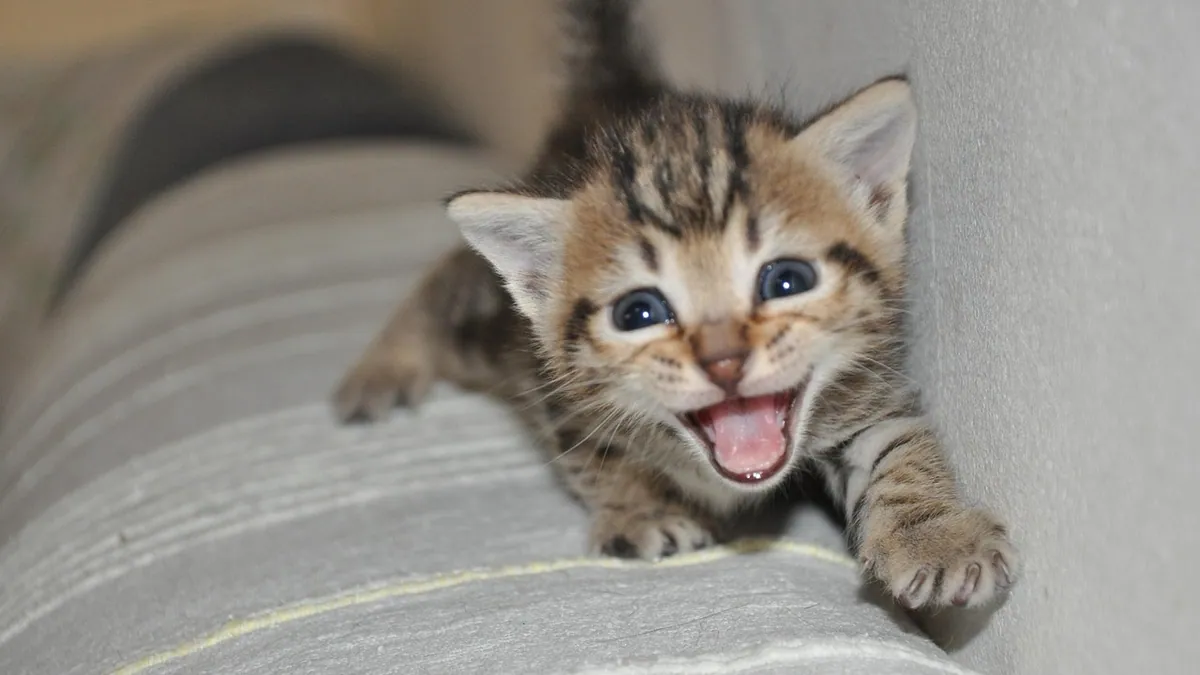
Kittens meow to communicate with people, not with other cats. A kitten may meow for food, warmth, attention, or comfort, so there is usually a reason even when it is not obvious to you. Do kittens meow for no reason? Rarely. Most meowing has a trigger, and silent meows are a normal variation in some cats.
This article is educational and is not a substitute for veterinary diagnosis or treatment.
Quick Answer
- Kittens meow mainly to get their mother's attention for food or warmth, and they keep meowing at people as they grow because it works [1].
- Adult cats do not meow at each other, so meowing is mostly a kitten-to-human or cat-to-human signal [1].
- A silent meow is common and usually means your kitten is vocalizing with little or no sound, often during greeting or when asking for something.
- Some kittens meow very little or not at all, and that can be normal if they are eating, playing, and growing well.
- Sudden increases in meowing, yowling, or meowing with hiding, pacing, or appetite changes need a veterinary check.
Why Do Kittens Meow?
Meowing is a contact call. Kittens meow to let their mother know they are cold or hungry [1]. Once kittens get a bit older, cats no longer meow to other cats, but they continue to meow to people throughout their lives, probably because meowing gets people to do what they want [1]. That is the simple answer to why your kitten meows at you and not at your other cat.
Hunger and mealtime
Food is one of the strongest reasons kittens meow. Most cats like to eat, and they can be quite demanding around mealtimes [1]. Some learn to meow whenever anyone enters the kitchen, just in case food might be coming, and others meow to wake you up to serve breakfast [1]. Research on cat vocalizations found that cats meowed significantly more when they could see and smell food but could not reach it [2]. Your kitten may also beg for human food by meowing [1].
Attention, play, and greeting
Kittens also meow to say hello or to ask for company. Play is a strong motivator, and meowing happens in playful and social contexts too [2]. If your kitten meows when you come home, pick up a toy, or sit down, that is likely a greeting or an invitation to interact.
Stress, change, or discomfort
Meowing can also be a sign that something is wrong [1]. A kitten in a new home, a noisy household, or a shelter may vocalize more. Cats from animal shelters showed more passive behavior and more frequent purring after reuniting with a caregiver, which suggests that environment and attachment affect how cats behave and vocalize [3]. If your kitten is meowing more after a move, a new pet, or a schedule change, stress is a reasonable first guess.
Is it normal for kittens to not meow?
Yes, some kittens are quiet. If your kitten is eating, playing, using the litter box, and gaining weight, a low meow volume or infrequent meowing is usually not a problem. Breed and individual personality both play a role. Some breeds, especially the Siamese, are prone to excessive meowing and yowling [1]. Others are naturally quiet.
Is it normal for kittens to meow without sound?
Yes, a silent meow is usually normal. Your kitten opens its mouth and goes through the motion, but little or no sound comes out. This often happens during greetings or when your kitten wants something and is excited. It can also happen if your kitten has a mild voice change from a respiratory infection, so watch for other signs like sneezing, eye discharge, or a change in appetite.
Medical Causes to Rule Out
Most meowing is behavioral, but a sudden change in vocalization deserves a medical look. Pain, hunger from a medical problem, thyroid disease, high blood pressure, and dental disease can all change how much a cat vocalizes. In adult cats, yowling is a drawn-out, melodic sound, and unlike meowing, adult cats do yowl at one another, especially during breeding season [1]. In a spayed female cat, cyclical vocalization with rolling and posturing can be a sign of leftover ovarian tissue, a condition called ovarian remnant syndrome [4]. That case involved a 2.5-year-old spayed cat with estrus-like behavior every 3 weeks, including vocalization [4].
For kittens, the common medical causes of changed meowing include:
- Upper respiratory infections, which can cause a hoarse or silent meow
- Pain from injury, teething, or a foreign object
- Intestinal parasites or other causes of hunger and weight loss
- Fever or general illness, which often comes with lethargy and poor appetite
If your kitten's meow changes and your kitten also seems tired, is not eating, or is hiding, see a veterinarian. Hiding plus vocalization can be a pain or stress signal. For more on that pattern, see Why Is My Cat Hiding? and Why Is My Cat Suddenly Hiding and Acting Weird?.
When Meowing Becomes a Problem
Excessive meowing is a personal call. All cats are going to meow to some extent, and that is normal communication behavior [1]. Some cats simply meow more than their owners would like [1]. The question is whether the meowing bothers you, disrupts sleep, or comes with other signs of distress.
Watch for these patterns:
- Meowing that starts suddenly in a kitten that was quiet before
- Meowing at night that wakes the household
- Meowing with pacing, drooling, or restlessness
- Meowing that continues even after you meet the need (food, litter, attention)
- Meowing with weight loss, vomiting, diarrhea, or poor coat condition
Cats showing isolation and excessive vocalization had higher cortisol levels in one study, which suggests a link between some vocal behavior and chronic stress [5]. That does not mean every meow is stress, but a clear change in your kitten's vocal habits is worth attention.
If your adult cat's meowing has become a daily problem, Cat Excessive Meowing: What Is Your Cat Trying to Say? walks through the common triggers. Nighttime crying has its own set of causes, covered in Why Is My Cat Crying at Night?.
What to Do Step by Step
1. Keep a simple log
Write down when your kitten meows, what happened right before, and what you did. Patterns show up fast. You may find the meowing clusters around meals, your return home, or a specific room.
2. Meet basic needs on a schedule
Feed measured meals at consistent times. Clean the litter box daily. Provide fresh water. A kitten that is hungry, thirsty, or uncomfortable will meow more.
3. Reward quiet, not noise
If you feed or pick up your kitten every time it meows, you teach it that meowing works. That is exactly why cats keep meowing at people [1]. Instead, wait for a pause in the meowing, then give attention or food. Keep the pause short at first so your kitten can succeed.
4. Add play and enrichment
Play shares a basis with predation and social interaction in cats [2]. A few short play sessions with a wand toy each day can reduce attention-seeking meowing. Indoor cats benefit from litter boxes, hiding places, vertical spaces, and predatory toys [5]. A tired, entertained kitten meows less out of boredom.
5. Manage the environment
Noise is a stressor for cats. In hospitalized cats, stress measures tended to rise with higher noise levels and longer exposure [6]. At home, keep the area around your kitten's bed and litter box quiet. Give your kitten a safe room during parties, storms, or home repairs.
6. Handle night meowing
Do not get up and feed your kitten at 3 a.m. if you want that to stop. Instead, offer a play session and a meal close to your bedtime, then ignore the night meowing. This takes consistency. If your kitten is young, a vet visit first is wise to rule out hunger from a medical cause.
7. Check for pain or illness
If the meowing is new, loud, or different in tone, book a veterinary exam. A physical exam and basic lab work can rule out the medical causes that change vocalization.
What Not to Do
Do not punish your kitten for meowing. Punishment does not teach a kitten what to do instead, and it can increase fear and stress. A scared kitten may hide more, and stress behaviors can raise cortisol over time [5]. If your kitten is suddenly afraid of you, that is a separate problem covered in Why Is My Cat Suddenly Afraid of Me?.
Do not assume a silent meow means your kitten cannot make sound. Most silent meows are normal. But if the silence is new and comes with sneezing, nasal discharge, or a raspy breath, get it checked.
Do not use sprays, shock collars, or loud noisemakers. Noise itself is a stressor for cats [6], so adding more noise can make the problem worse.
Do not free-feed to stop the meowing unless your veterinarian recommends it. Free-feeding often increases begging and makes weight control harder.
Do not assume all meowing is behavioral. A sudden change in a previously quiet kitten can be the first sign of illness.
When to Involve a Veterinarian or Behavior Professional
Call your veterinarian if your kitten's meowing changes in frequency, pitch, or timing, especially if it comes with appetite, weight, or litter box changes. A certified behavior professional can help if your veterinarian finds no medical cause and the meowing is tied to anxiety, attention-seeking, or a stressful home change.
Limitations and When to Contact a Veterinarian
This article covers common patterns, but every kitten is an individual. Your veterinarian needs to examine your kitten to sort out normal meowing from a medical or behavioral problem.
Contact a veterinarian the same day if your kitten:
- Stops eating or drinking
- Has a silent or hoarse meow that started suddenly
- Is hiding and will not come out
- Has vomiting, diarrhea, or weight loss
- Seems painful when touched or picked up
Go to an emergency clinic now if your kitten:
- Is having trouble breathing
- Is crying out in pain
- Collapses or cannot stand
- Has a swollen, painful belly
- Has been hit by a car or had a serious fall
If you think your kitten ate something toxic, call the ASPCA Animal Poison Control Center at (888) 426-4435 or the Pet Poison Helpline at (855) 764-7661. Keep the product container or plant sample with you.
For a routine visit, book an appointment if the meowing is new, has lasted more than a few days, or is disrupting sleep for you or your kitten.
Frequently Asked Questions
Do kittens meow for no reason?
Usually there is a reason, even if you cannot see it. Your kitten may be hungry, bored, lonely, or uncomfortable. Keep a log for a few days and the trigger often becomes clear.
Is it normal for a kitten to meow without sound?
Yes, a silent meow is common and usually harmless. It often happens during greetings or when your kitten is excited. If the silence is new and comes with sneezing or a runny nose, have your veterinarian check for a respiratory infection.
Why does my kitten meow at night?
Night meowing often comes from hunger, boredom, or a schedule that does not match yours. Kittens are also more active at dawn and dusk. A play session and a meal before bed can help, but do not get up to feed your kitten during the night if you want the behavior to stop.
Is it normal for kittens to not meow at all?
Some kittens are naturally quiet, and that can be normal if they are eating, playing, and growing well. Breed matters, since some breeds meow far more than others. If your kitten was meowing and then stops, or seems weak or tired, see a veterinarian.
Can stress make my kitten meow more?
Yes, stress can increase vocalization. Cats in shelters showed more passive behavior and more purring after reuniting with a caregiver, which points to how much environment and attachment affect behavior [3]. Cats with isolation and excessive vocalization also had higher cortisol levels in one study [5]. If your kitten's meowing started after a move or a new pet, reduce noise and give a quiet safe space.
Related Articles
- Cat Excessive Meowing: What Is Your Cat Trying to Say?
- Why Is My Cat Hiding?
- Why Is My Cat Crying at Night?
- Why Is My Cat Suddenly Hiding and Acting Weird?
- Why Is My Cat Suddenly Afraid of Me?
- Why Is My Cat Pacing and Meowing? Anxiety or Medical Issue?
- Why Is My Kitten So Quiet? Quiet Meows Explained
- My Kitten Doesn't Meow: Is That Normal?
- Why Does My Cat Quietly Meow at Me?
References
- Meowing and Yowling. ASPCA Animal Poison Control Center.
- Vocal signals produced by the domestic cat (Felis silvestris catus) in highly motivating contexts. Journal of comparative psychology (Washington, D.C. : 1983), 2026.
- Impact of Living Environment on Attachment Behaviour in Domestic Cats from Private Homes and Shelters. Animals : an open access journal from MDPI, 2025.
- Ovarian remnant syndrome in a 2-year-old cat with inconclusive diagnostics. JFMS open reports, 2026.
- Stress in Indoor and Outdoor Cats: Association between Hair Cortisol Levels, Housing Style, and Guardians' Perceptions of Behavior. Journal of applied animal welfare science : JAAWS, 2026.
- The Influence of Noise Level on the Stress Response of Hospitalized Cats. Veterinary sciences, 2024.