Why Does My Kitten Meow When I Leave the Room?
By Dr. Zubair Khalid, DVM, MS, PhD ·
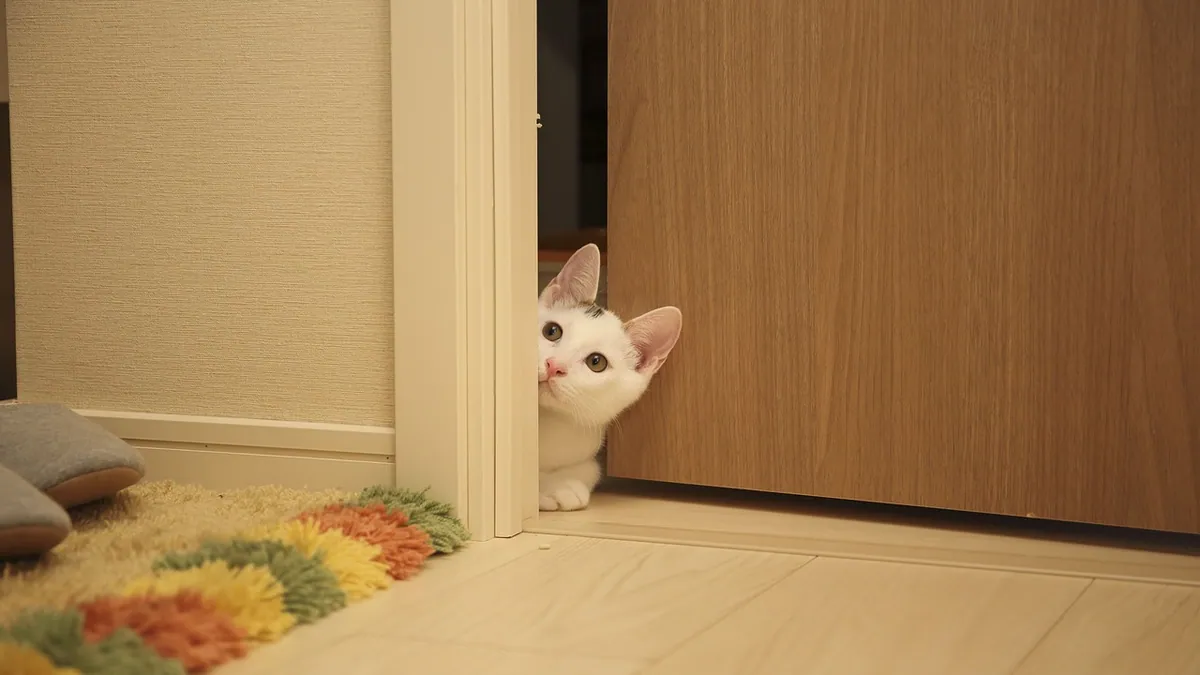
Kittens often meow when you leave the room because they have learned that meowing brings you back. Your kitten may also be hungry, bored, lonely, or uncomfortable being alone. In most young cats this is normal social behavior, but in some kittens it can signal separation-related distress or an underlying medical problem.
This article is educational and is not a substitute for veterinary diagnosis or treatment.
Quick Answer
- Most kittens meow when you leave because they want your attention, food, or play, and meowing has worked before.
- Meowing is a social signal your kitten directs at people, not random noise, and it increases when a kitten is highly motivated for something it can see but cannot reach [1].
- A sudden increase in meowing, especially with hiding, pacing, or appetite changes, needs a veterinary check before you assume it is behavioral.
- You can reduce the behavior by meeting your kitten's needs before you leave, then practicing short, calm departures and returns.
- Never punish meowing with yelling, spraying, or squirting water. Punishment adds stress and usually makes vocalizing worse.
Why Does My Kitten Meow When I Leave the Room?
Meowing is a kitten's main way of asking a person for something. Adult cats meow far less at other cats than they do at humans, and the meow is strongly tied to cat-human interaction [1]. When you walk out of the room, your kitten loses its social partner, its playmate, and sometimes its food source all at once. The meow is the request.
Attention-seeking that has been rewarded
If you have ever turned around, called back, or returned to check on your kitten, the behavior got reinforced. Kittens repeat what works. This is the most common reason a kitten meows at the door or follows you from room to room.
Hunger and feeding schedules
Meowing increases sharply when a cat is motivated by food and can see or smell the food source but cannot reach it [1]. If your kitten meows most often near meal times or when you head toward the kitchen, hunger and routine are likely driving it.
Boredom and unmet play needs
Young cats have a lot of energy and a strong drive to stalk, chase, and pounce. Play behavior in cats shares a foundation with predation and social interaction [1]. A kitten with no outlet for that drive will often use you as the entertainment and protest when you leave.
Social attachment and normal alone time
Cats form attachment relationships with their caregivers, and their behavior changes during separation and reunion. In a study of 82 cat-caregiver pairs, cats showed more physical contact after separations, which points to the caregiver's presence mattering to them [2]. Wanting to be near you is normal. The question is how intense the reaction is and how quickly your kitten recovers.
Separation-related distress
Some kittens do not just want attention. They become genuinely distressed when alone. Cats with insecure attachment styles show different hormonal responses to human interaction than securely attached cats, including higher cortisol or a weaker positive hormonal response [3]. If your kitten meows nonstop, paces, drools, or refuses to eat when you leave, that pattern deserves a closer look.
Medical Causes to Rule Out First
Behavior is sometimes the first visible sign of a physical problem. Before you build a training plan, have your veterinarian examine your kitten, especially if the meowing started suddenly or changed in pattern.
Pain and discomfort
Dental pain, injuries, urinary problems, and gastrointestinal discomfort can all cause vocalizing. A kitten in pain may meow more when moving, when picked up, or when left alone and stressed.
Hunger from parasites or poor absorption
Intestinal parasites and other conditions that interfere with nutrient absorption can leave a kitten genuinely hungry and vocal. Your veterinarian can check a stool sample and body condition.
Hormonal causes in older kittens
Cyclical vocalization in a female cat can sometimes have a hormonal cause. One reported case involved a 2.5-year-old spayed cat with recurring estrus-like behavior, including vocalization, caused by a tiny piece of ovarian tissue left behind after spaying [4]. This is uncommon, but it is a reminder that repetitive, patterned vocalization can have a medical explanation.
Sensory and cognitive issues
Vision or hearing changes, and in older cats cognitive dysfunction, can increase vocalizing and clinginess. These are less common in young kittens but worth mentioning to your veterinarian.
Stress load in the environment
Cats showing excessive vocalization along with isolation have been found to have higher hair cortisol levels, a marker of longer-term stress [5]. That does not prove the meowing is medical, but it does mean a stressed kitten deserves a full look at its environment and health.
If your kitten is also hiding, see Why Is My Cat Hiding?. If hiding comes with litter box changes, read Why Is My Cat Suddenly Hiding and Not Using the Litter Box?.
When Meowing Becomes a Problem
Normal attention-seeking is annoying but manageable. It becomes a welfare concern when it interferes with your kitten's ability to eat, sleep, play, or relax.
Signs that the behavior has crossed into a problem include:
- Meowing that continues for many minutes after you leave and does not settle
- Pacing, drooling, destructive chewing, or house soiling when alone
- Refusing to eat unless you are in the room
- Meowing that wakes you repeatedly at night, which may overlap with Why Is My Cat Crying at Night?
- A sudden change in a kitten that was previously quiet
- Meowing paired with restlessness or constant motion, which can look like Why Is My Cat Pacing and Meowing? Anxiety or Medical Issue?
Kittens are social and their brains are still developing. Some vocal protest is expected. The goal is not a silent kitten. The goal is a kitten that can be alone for reasonable periods without panic.
What to Do Step by Step
1. Get a veterinary exam first
Book a routine visit if the meowing is new, intense, or paired with any physical sign. Your veterinarian will check weight, teeth, eyes, ears, abdomen, and hydration, and will decide whether lab work or a stool check is needed. If your kitten is sneezing or has discharge, see Why Is My Cat Sneezing?.
2. Meet the need before you leave
Feed your kitten on a predictable schedule. A hungry kitten will meow. If your veterinarian has approved a feeding plan, split meals so your kitten is not waiting hours for the next one. Play a focused session with a wand toy or similar prey-like toy before you leave the room. Tired kittens complain less.
3. Build independence in tiny steps
Practice leaving for a few seconds and returning before your kitten starts to meow. Slowly stretch the time. Keep arrivals and departures low-key. A calm hello is better than a big reunion, because big reunions make your absence feel like a big event.
4. Enrich the room you leave behind
Indoor cats do best when their space includes litter boxes, hiding places, vertical spaces, and predatory or hunting-style stimuli [5]. Set up a window perch, a scratching post, a puzzle feeder, and a few rotating toys. A kitten with things to do is less focused on the door.
5. Use sound and scent cues
A white noise machine or soft radio can blur the sounds of you moving around the house. Leaving a worn shirt in your kitten's favorite sleeping spot can add familiar scent. These are comfort measures, not cures, but they help many kittens settle.
6. Keep a simple log
Write down when the meowing happens, how long it lasts, what you did, and whether your kitten ate, played, and used the litter box that day. Patterns become obvious fast. This log is also useful for your veterinarian.
7. Consider a second cat only with care
Some kittens do better with a compatible feline companion. Others become more stressed. There is no reliable rule that fits every kitten, so discuss temperament and introductions with your veterinarian or a certified behavior professional before adding a cat.
What Not to Do
Do not punish the meowing
Yelling, clapping, spraying water, or shaking cans does not teach your kitten what to do instead. It adds stress. Cats showing excessive vocalization and isolation already tend to have higher stress markers [5], so adding punishment works against you.
Do not use forced handling as a fix
Forced interactions between owners and cats have been linked to a stress response, with rising cortisol and falling oxytocin, while passive, low-pressure interactions showed the opposite pattern [3]. If your kitten is already anxious, forcing cuddles will not build confidence.
Do not lock your kitten away for long stretches
Isolation can worsen distress. If you need a safe space, make it a comfortable room with resources, not a bare crate or bathroom, and keep the time short at first.
Do not assume it is "just a phase"
Many kittens do mellow with age and routine. But a kitten that is truly panicking when alone needs help now, not in six months.
Do not skip the medical check because the behavior looks emotional
Vocalization can be the first sign of pain or a hormonal issue [4]. A normal exam gives you a clean starting point for behavior work.
When to Involve a Veterinarian or Behavior Professional
Call your veterinarian if the meowing is new, getting worse, or paired with any change in eating, drinking, litter box use, sleep, or activity. Call sooner if your kitten seems painful, is breathing differently, or is not eating.
Ask for a referral to a veterinary behaviorist or a certified applied animal behaviorist if:
- Your kitten injures itself, destroys property, or soils the house when alone
- Meowing continues despite a consistent routine and enrichment plan
- You feel overwhelmed or are considering rehoming
- Your veterinarian finds no medical cause but the distress is severe
A behavior professional can assess attachment style, environment, and daily routine, then build a plan that fits your kitten. In some cases, medication may be part of the plan. Your veterinarian calculates any dose from your kitten's weight and health, so never use a medication left over from another pet.
Limitations and When to Contact a Veterinarian
This article cannot tell you what is happening with your specific kitten. Individual cases need a veterinarian who can examine your cat, ask questions, and run tests if needed.
Contact a veterinarian the same day if your kitten:
- Stops eating or drinking
- Cries out when touched or moved
- Strains to urinate, urinates outside the box, or has bloody urine
- Vomits repeatedly or has diarrhea
- Seems painful, weak, or unusually quiet between meowing episodes
Go to an emergency clinic now if your kitten:
- Has trouble breathing, open-mouth breathing, or blue gums
- Collapses, has a seizure, or cannot stand
- Has a swollen, painful abdomen
- Is bleeding or has a suspected injury
- Ate something toxic or unknown
For poison emergencies in the United States, call the ASPCA Animal Poison Control Center at (888) 426-4435 or the Pet Poison Helpline at (855) 764-7661. These may charge a consultation fee.
Schedule a routine visit if the meowing is new, has lasted more than a few days, or is affecting your kitten's eating or sleep. Bring your log and a phone video of the behavior. Video is often more useful than a description.
Frequently Asked Questions
Should I ignore my kitten when it meows at the door?
Ignoring can work for mild attention-seeking, but only if your kitten's needs are already met. If your kitten is hungry, bored, or scared, ignoring the meow does not fix the cause. Meet the need first, then reward quiet behavior with calm attention.
Will my kitten grow out of this?
Many kittens do become less vocal as they mature and as routines settle. Some do not, especially if the behavior keeps getting rewarded or if there is underlying anxiety. Early training and enrichment give your kitten the best chance of settling.
Is it bad to let my kitten sleep with me?
No, that is a personal choice and many kittens sleep well next to their owner. The risk is that your kitten may become dependent on your presence to fall asleep. If night crying is the issue, a gradual plan can help.
Can I get another kitten to keep mine company?
Sometimes, but it depends on temperament, age, and how introductions are done. A second kitten can reduce loneliness for some cats and increase stress for others. Ask your veterinarian or a behavior professional before you add a cat.
Does meowing mean my kitten is in pain?
Not usually. Most meowing is social communication aimed at people [1]. Pain is still possible, especially with sudden onset, appetite loss, or sensitivity to touch, so a veterinary exam is the safe first step.
Related Articles
- Why Is My Cat Hiding?
- Why Is My Cat Suddenly Hiding and Not Using the Litter Box?
- Why Is My Cat Crying at Night?
- Why Is My Cat Pacing and Meowing? Anxiety or Medical Issue?
- Why Is My Cat Sneezing?
- Why Is My Cat Suddenly Clingy?
- Why Do Kittens Meow? Normal Meowing and Silent Meows
- Why Is My Kitten Walking Around Meowing? Causes
- Why Is My Kitten Yelling at Me? Meowing and Hissing
References
- Vocal signals produced by the domestic cat (Felis silvestris catus) in highly motivating contexts. Journal of comparative psychology (Washington, D.C. : 1983), 2026.
- Impact of Living Environment on Attachment Behaviour in Domestic Cats from Private Homes and Shelters. Animals : an open access journal from MDPI, 2025.
- EXPRESS: The hormonal effects of owner-cat interactions on pet cats of different potential attachment styles. Journal of feline medicine and surgery, 2026.
- Ovarian remnant syndrome in a 2-year-old cat with inconclusive diagnostics. JFMS open reports, 2026.
- Stress in Indoor and Outdoor Cats: Association between Hair Cortisol Levels, Housing Style, and Guardians' Perceptions of Behavior. Journal of applied animal welfare science : JAAWS, 2026.