Why Is My Cat Hissing? What It Means and How to Respond
By Dr. Zubair Khalid, DVM, MS, PhD ·
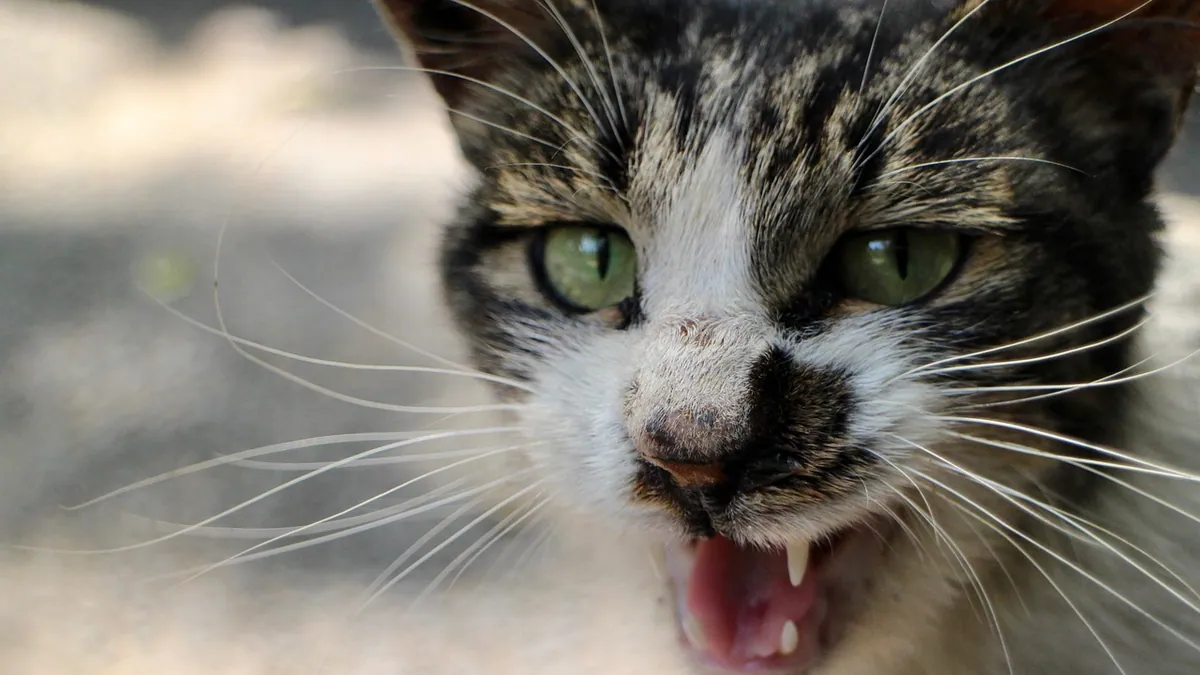
Hissing is one of the clearest signals a cat can give. It means your cat feels threatened, scared, or cornered, and it is asking for space. You can learn how to stop my cat from hissing by removing the trigger and giving your cat control over the situation.
This article is educational and is not a substitute for veterinary diagnosis or treatment.
Quick Answer
- Hissing is a warning, not an attack. Your cat is telling you or another animal to back off before things escalate.
- Punishing a hissing cat makes fear worse and can turn a warning into a bite.
- Most hissing stops when you identify the trigger and give your cat distance, hiding spots, and time.
- Sudden hissing in a cat that was never reactive can point to pain, illness, or a stressful change at home.
- Slow, gradual introductions work far better than forcing cats, guests, or pets to interact.
Why Is My Cat Hissing at Me?
Hissing is a defensive sound. It is produced by forcing air out through a partly open mouth, and it serves as a warning signal in many animals, not just cats [1]. In cats, hissing usually shows up in threat and defense situations, especially when the cat feels trapped or unable to escape [1].
Think of hissing as a stop sign. Your cat is not being mean. Your cat is saying "I do not feel safe right now."
Common Normal Reasons
- Fear or surprise. A sudden noise, a dropped object, or an unexpected touch can trigger a hiss.
- Pain or discomfort. A cat with a sore tooth, an injured leg, or an upset stomach may hiss when handled.
- Resource guarding. Food, a favorite bed, or a litter box can become a point of conflict in a multi-cat home.
- Overstimulation. Some cats hiss when petting goes on too long or touches sensitive areas.
- Territorial stress. A new person, animal, or smell in the home can feel like an invasion.
- Maternal protection. A mother cat with kittens may hiss at anyone who approaches.
Fear, anxiety, and stress are among the most common behavioral problems in domestic cats, and they often show up as hissing, hiding, or avoidance [2]. Cats have emotional systems that differ from ours, which makes their signals easy to misread [2].
How Do Cats Hiss?
A hiss is a burst of air, not a vocal cord sound. The cat opens its mouth, forces air through a narrow opening, and produces that sharp, snake-like noise. It is a warning that can be used alone or with a growl, a swat, or flattened ears.
Medical Causes to Rule Out Before You Focus on Behavior
Any sudden change in behavior deserves a veterinary look. Cats are good at hiding pain, and hissing can be the first visible sign.
Conditions That Can Cause Hissing
- Dental disease or oral pain. Chewing, yawning, or being touched near the face may trigger a hiss.
- Arthritis or back pain. A cat that hurts when lifted may hiss instead of running away.
- Hyperthyroidism or other metabolic disease. These can increase irritability and restlessness.
- Vision or hearing loss. A cat that cannot see or hear you coming may hiss out of startle.
- Neurological problems. These are less common but can change how a cat responds to touch or sound.
- Pain after surgery or injury. Any recent procedure or trauma is a reason to call your vet.
Aggression in cats has both genetic and environmental contributors, and the research on causes is still developing [3]. That means a full picture, including a physical exam and a history of your cat's environment, matters more than any single explanation.
If your cat hisses when you touch a specific body part, when eating, or when jumping, book a veterinary visit before assuming it is purely behavioral.
When Hissing Becomes a Problem
Hissing is normal communication. It becomes a problem when it is frequent, intense, or paired with other signs.
Warning Signs That Need Attention
- Hissing at everyone, including familiar people
- Hissing that starts suddenly in a cat with no history of it
- Hissing with growling, swatting, or biting
- Hissing that keeps a cat from eating, using the litter box, or moving around the home
- Hissing that lasts for days after a change
- Hissing directed at a specific person or animal with no improvement
A cat that hisses and then hides is stressed. A cat that hisses and then lunges is a bite risk. Both need a plan.
How to Stop My Cat From Hissing: Step by Step
You cannot train a cat to stop hissing with punishment. You can change the situation so the cat no longer feels the need to hiss.
1. Identify the trigger. Write down what happens right before each hiss. Is it a sound, a person, a specific cat, a location, or a time of day? Patterns show up fast.
2. Give your cat an exit. Never corner a hissing cat. Make sure there is always a clear path to a hiding spot, a high perch, or another room.
3. Add vertical space. Cat trees, shelves, and window perches let cats get away from each other without conflict. In multi-cat homes, vertical space often reduces tension more than anything else.
4. Separate resources. Use one litter box per cat plus one extra, placed in different areas. Feed cats in separate spots. Provide multiple water bowls and scratching posts.
5. Use calm, passive interaction. Passive interactions, such as sitting quietly near your cat, were linked to increased oxytocin and decreased cortisol in pet cats, while forced interactions showed the opposite pattern [4]. Let your cat come to you.
6. Go slow with changes. New furniture, new schedules, and new people all count as changes. Introduce them one at a time when possible.
7. Reward calm behavior. Toss a treat when your cat is relaxed and ignoring the trigger. Do not reward the hiss itself. Reward the moments before and after.
How to Stop My Cat From Hissing at My Other Cat
Hissing between cats is common, especially after a change in the home. It often means the cats are negotiating space, not that they hate each other.
- Do not force them together. Forced proximity raises stress.
- Reintroduce slowly. Start with scent swapping. Rub a cloth on one cat and let the other smell it, then switch.
- Feed on opposite sides of a closed door. Move the bowls closer over days or weeks as long as both cats stay relaxed.
- Use a barrier. A baby gate or a screen door lets cats see each other without contact.
- Watch body language. Ears back, flattened whiskers, and a tucked tail mean back up.
- Keep sessions short. End on a calm note.
If the hissing continues for weeks or one cat is hiding or not eating, a veterinary behaviorist can help. For kittens specifically, see Cat Hissing at New Kitten: How Long Will It Last?.
How to Stop My Cat From Hissing at My New Cat
A new cat in the home is a major change. Hissing at the newcomer is normal in the first days to weeks.
- Set up a safe room. The new cat stays in one room with food, water, litter, and hiding spots.
- Swap scents daily. Scent is how cats learn each other without contact.
- Do not rush the door. Rushing introductions is the most common reason introductions fail.
- Supervise all contact. Even after they seem calm, watch for staring, blocking, and chasing.
- Expect setbacks. A hiss after a good week does not mean you failed.
How to Stop My Cat From Hissing at Guests
Guests often trigger hissing because they are unfamiliar, loud, or move quickly.
- Tell guests to ignore the cat. No reaching, no picking up, no staring.
- Give your cat a room away from the action. Set up a quiet space with a bed, litter, and water.
- Let the cat choose contact. If your cat comes out, let it approach on its own terms.
- Use treats. A guest can toss a treat from a distance without making eye contact.
- Keep visits short at first. A calm ten minutes beats a stressful hour.
If your cat hisses at a new baby in the home, the same rules apply, plus extra supervision. See Cat Hissing and Growling at New Baby: How to Manage.
Hissing at Nothing
Some cats hiss at walls, corners, or empty space. This can be a response to a sound you cannot hear, a smell, or a reflection. It can also be a sign of pain, vision changes, or neurological issues. If it happens once, note it. If it repeats, call your vet. For more on this pattern, see Cat Hissing at Nothing: When to Worry About Hallucinations or Medical Issues.
What Not to Do
- Do not punish. Yelling, spraying water, or hitting a hissing cat increases fear and can turn a warning into a bite.
- Do not force interaction. Picking up a hissing cat or holding it near the trigger makes things worse.
- Do not assume it is dominance. Cats are not trying to be the boss. They are trying to feel safe.
- Do not lock cats in a room together to "work it out." This raises the risk of injury and long-term conflict.
- Do not ignore sudden changes. A cat that never hissed before and now hisses daily needs a vet visit.
- Do not use punishment-based training tools. They damage trust and do not teach the cat what you want.
When to Involve a Veterinarian or Behavior Professional
Call your veterinarian if hissing starts suddenly, comes with other behavior changes, or happens when your cat is touched in a specific area. Pain and illness are common causes of new aggression, and a physical exam is the first step.
Ask for a referral to a veterinary behaviorist or a certified applied animal behaviorist if:
- Hissing continues after medical causes are ruled out
- There is biting, fighting, or injury in a multi-cat home
- Your cat is hiding, not eating, or avoiding the litter box
- You feel unsafe handling your cat
- You have tried gradual introductions for weeks with no progress
Medication is sometimes part of a behavior plan. Several oral medications have been studied for reducing fear and defensive behavior in cats, including gabapentin, pregabalin, trazodone, and others [5]. Your veterinarian calculates the dose from your cat's weight and health, and these drugs are used alongside behavior changes, not instead of them.
Limitations and When to Contact a Veterinarian
This article covers general information. Your cat's individual case needs a veterinarian who can examine your cat and review its history.
Contact a veterinarian the same day if:
- Your cat hisses and then stops eating or drinking
- Hissing is paired with vomiting, diarrhea, or limping
- Your cat hisses when you touch a specific body part
- Hissing starts after a fall, a fight, or a new medication
Go to an emergency clinic now if:
- Your cat is struggling to breathe
- Your cat is crying out, pacing, or unable to settle
- Your cat has a wound, swelling, or bleeding
- Your cat cannot walk or is dragging a limb
- Your cat has a seizure or sudden collapse
Schedule a routine visit if:
- Hissing has increased over weeks
- Your cat hides more than usual
- Your cat avoids people or other pets it used to accept
- You want help building a behavior plan
If your cat is also vocal at night, that can be a separate issue. See Why Is My Cat Crying at Night?. For cats that meow far more than usual, see Cat Excessive Meowing: What Is Your Cat Trying to Say?.
Frequently Asked Questions
Should I hiss back at my cat?
No. Hissing back can escalate the situation and damage trust. Your cat is already stressed. Respond by giving space, not by adding more threat.
How long does it take for a cat to stop hissing at a new cat?
It varies widely. Some cats settle in days, others take weeks or months. Progress is measured by calmer body language, not by the absence of every hiss.
Can a cat hiss and still be friendly?
Yes. A cat can hiss in one moment and seek affection later the same day. Hissing is a response to a specific trigger, not a permanent personality trait.
Does hissing always mean my cat will bite?
No. Hissing is a warning that comes before a bite in many cases. A cat that hisses is giving you a chance to back off. Ignoring the warning raises the risk of a bite.
Is it normal for a cat to hiss at food or a toy?
It can be. Some cats hiss over food, treats, or a favorite toy because they are guarding a resource. If it happens often, feed your cat in a quiet, separate space and talk to your vet about the pattern.
Related Articles
- Cat Hissing at New Kitten: How Long Will It Last?
- Cat Excessive Meowing: What Is Your Cat Trying to Say?
- Cat Hissing at Nothing: When to Worry About Hallucinations or Medical Issues
- Cat Hissing and Growling at New Baby: How to Manage
- Why Is My Cat Crying at Night?
- Why Is My Cat Sneezing?
- Why Does My Cat Growl? Normal or Warning Sign?
- Is It Normal for Cats to Hiss While Playing?
- Why Is My Kitten Yelling at Me? Meowing and Hissing
References
- Avian hissing sounds: occurrence, mechanism, ontogeny, function and phylogeny. Royal Society open science, 2025.
- Tools for the Approach of Fear, Anxiety, and Stress in the Domestic Feline: An Update. Veterinary medicine international, 2025.
- Genetic and Environmental Causes of Aggression in the Domestic Cat. Veterinary sciences, 2026.
- EXPRESS: The hormonal effects of owner-cat interactions on pet cats of different potential attachment styles. Journal of feline medicine and surgery, 2026.
- Oral use of anxiolytic, sedative, and anaesthetic medications in domestic cats (Felis catus): A scoping review. Veterinary journal (London, England : 1997), 2026.