Why Is My Kitten Just Staring? What Staring Means
By Dr. Zubair Khalid, DVM, MS, PhD ·
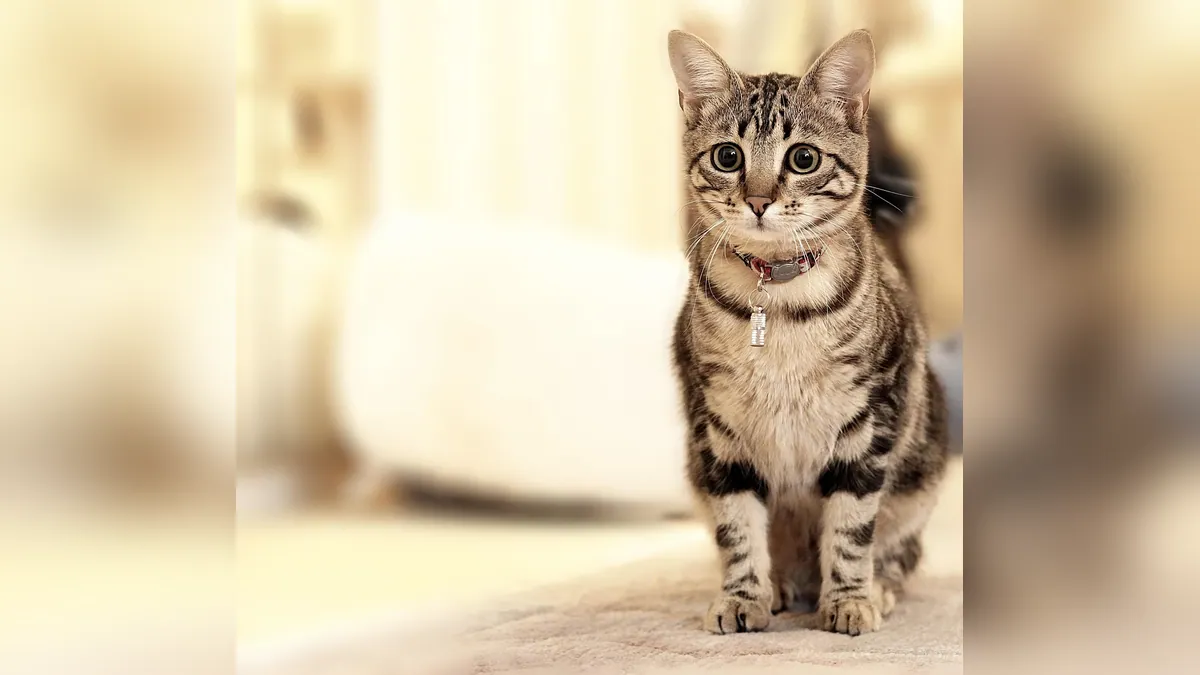
Why is my kitten just staring? Most of the time, a kitten who stares is doing something completely normal: watching a bug, listening to a sound you cannot hear, or waiting for you to move. Staring becomes a concern when your kitten cannot be interrupted, looks confused or unsteady, or does it for long stretches every day.
This article is educational and is not a substitute for veterinary diagnosis or treatment.
Quick Answer
- A healthy kitten staring at a spot, at you, or into space is usually focused on a sound, a smell, a shadow, or movement you may not notice.
- Staring is the most common conflict signal between cats, reported at least daily in 44.9% of multi-cat households in one survey [1]. If you have more than one cat, a hard stare often means tension, not illness.
- Frequent laser pointer play is linked to staring obsessively at lights or reflections and other repetitive behaviors in cats [2][3]. If your kitten stares at walls or ceilings after laser play, that habit may be the cause.
- A stare you cannot break with a toy, a treat, or your voice, especially with twitching, drooling, or collapse, can be a seizure and needs same-day veterinary care.
- Kittens who stare and also bump into things, miss toys, or startle easily may have a vision problem and need an exam.
Why Is My Kitten Just Staring? Normal Reasons First
Kittens are built to notice things. Their survival depends on spotting movement, sound, and small prey. A stare is often just a paused moment of intense attention.
Your kitten is hunting something tiny
A gnat on the ceiling, a dust mote in a sunbeam, a spider behind the curtain. Kittens can track movement that you miss. If your kitten stares at one spot, then pounces or bats at the air, that is play hunting, not a problem.
Your kitten is listening
Cats hear higher frequencies than people do. A mouse in the wall, a device humming, or a neighbor's pet outside can hold a kitten's attention for minutes. The body stays still because movement would give away the hunt.
Your kitten is watching you
Kitten staring at me is one of the most common owner questions, and the answer is usually simple. Your kitten may be waiting for food, watching your face for a cue, or asking for play. Cats learn quickly which human movements predict dinner or a toy.
Your kitten is zoning out
Kitten zoning out, or a brief glassy pause, is common after a big play session or a meal. If your kitten snaps back when you call or shake a toy, this is normal downtime.
Staring between cats means something different
In homes with two to four cats, staring was the most frequently observed conflict sign, occurring at least daily in 44.9% of households [1]. A long, hard stare between cats is a warning, not a medical sign. If you are adding a kitten to a home with an adult cat, watch for staring, chasing, and stalking, and read Introducing New Kitten before you put them together.
Medical Causes of Staring in Kittens
When a stare does not fit play, sound, or another cat, your veterinarian will consider a short list of medical causes.
Seizures and staring spells
Some seizures in cats are subtle. A kitten may freeze, stare, twitch an ear or whisker, drool, or paddle a paw. Focal seizures can last seconds and be easy to miss. A stare that you cannot interrupt, that comes in clusters, or that ends with confusion or wobbliness needs same-day veterinary care.
Vision loss or eye problems
A kitten with failing vision may stare at nothing because the world has gone blurry or dark. You may also see a bumped nose, missed jumps, or a reluctance to move in dim light. A third eyelid that stays up is another eye sign that needs an exam, covered in Cat Third Eyelid Showing Why.
Pain or nausea
Cats in discomfort often go still and stare. Dental pain, belly pain, and nausea can all look like a quiet, fixed kitten. If your kitten also hides, stops eating, or vomits, read Why Is My Cat Hiding? and call your veterinarian.
Neurologic and developmental problems
Rarely, kittens have structural brain problems, infections, or toxin exposure that cause staring, head pressing, circling, or balance loss. These signs are serious and need prompt care.
Compulsive staring linked to laser play
Laser pointers let a kitten chase without ever catching. That unfinished hunt may build frustration. In two surveys, more frequent laser play was linked to staring obsessively at lights or reflections, chasing lights or shadows, spinning, and tail chasing [2][3]. Indoor-only cats and young cats aged 1 to 2 years were more likely to show these repetitive behaviors [3]. If your kitten stares at walls, ceilings, or reflections after laser sessions, cut back on the laser and end play with a real toy your kitten can catch.
When Kitten Staring Becomes a Problem
Normal staring is brief, flexible, and easy to interrupt. Problem staring has a pattern.
- You cannot break the stare with a toy, treat, or your voice.
- The stare lasts more than a minute or two at a time.
- It happens many times a day, every day.
- Your kitten stares at walls, ceilings, or reflections even when nothing is there.
- Staring comes with twitching, drooling, lip smacking, or collapse.
- Your kitten stares and then seems confused, wobbly, or tired.
- Staring comes with hiding, appetite loss, or a change in litter box habits.
- Staring between cats leads to chasing, hissing, or blocking doorways [1].
Any one of these moves the behavior from quirky to worth a veterinary call.
What to Do Step by Step
1. Keep a simple log
Write down when the staring happens, how long it lasts, what your kitten was doing before, and whether you could redirect it. Note food, play, and litter box changes. A week of notes helps your veterinarian sort normal focus from a seizure or a behavior problem.
2. Test interruption
Offer a wand toy or a treat. A normal kitten breaks the stare to play or eat. A kitten in a seizure or a trance-like state will not respond. If you cannot interrupt your kitten, that is a red flag.
3. Check the environment
Look for insects, reflections, screens, and humming devices. Move mirrors or turn off screens if your kitten fixates on them. Give your kitten a window perch with something real to watch, like birds or leaves.
4. Build a full hunting routine
Play with a wand toy in short sessions, several times a day. Let your kitten catch the toy at the end. Then feed a meal. This hunt, catch, eat pattern uses your kitten's natural drive and reduces frustration. If you use a laser, always finish with a physical toy your kitten can grab.
5. Add enrichment
Rotate toys so they feel new. Use food puzzles, cardboard boxes, paper bags, and cat trees. Vertical space matters. In a cat café study, cats used elevated structures more during busy times and chose cat-only rooms to reduce stress [4]. Your home can work the same way: give your kitten high spots and quiet rooms to retreat to.
6. Manage multi-cat tension
If staring happens between cats, add separate feeding stations, litter boxes, and resting spots. Use barriers or baby gates so cats can see each other without a face-off. A long stare plus blocking, chasing, or hissing is a conflict pattern, and it was reported more often as the number of cats in the home went up [1]. Ask your veterinarian about a behavior referral if it continues.
7. Rule out vision and pain
Book an exam if staring comes with bumping, squinting, a raised third eyelid, or a change in appetite. Your veterinarian can check the eyes, teeth, and belly in one visit.
What Not to Do
- Do not punish staring. Clapping, spraying, or yelling adds stress and can make hiding, aggression, or fear worse. A kitten that is scared may hide more, and sudden aggression can appear, as described in Cat Sudden Aggression: What Could It Mean?.
- Do not assume staring is always a seizure. Most staring in kittens is normal attention or play.
- Do not assume staring is always normal. A stare you cannot interrupt is not a personality quirk.
- Do not use laser play as your only game. It is linked to repetitive staring and light chasing in survey data [2][3].
- Do not wait weeks to call if your kitten also hides, stops eating, or acts wobbly. Read Why Is My Cat Suddenly Hiding and Acting Weird? and contact your veterinarian.
When a Veterinarian or Behavior Professional Should Be Involved
Call your veterinarian if staring is frequent, hard to interrupt, or paired with any body sign like twitching, drooling, head tilt, circling, or vision changes. Call the same day if your kitten has a first suspected seizure, cannot be roused, or seems painful.
Ask for a referral to a veterinary behaviorist if your kitten stares obsessively at lights or reflections, spins, chases the tail, or cannot settle even with good play and enrichment. These patterns overlap with compulsive behavior, and early help works better than waiting.
Limitations and When to Contact a Veterinarian
This article cannot tell you what is happening in your kitten's brain or eyes. Only a veterinarian who examines your kitten can do that. Individual cases need a veterinarian, and no online guide can replace that visit.
Emergency now: a seizure that lasts more than a few minutes, repeated seizures in a row, collapse, trouble breathing, or a stare with a rigid body and no response to you.
Same day: a first staring spell with twitching, drooling, or confusion, a sudden head tilt, circling, or a kitten who cannot see well enough to eat or walk normally.
Routine visit: staring that happens daily, staring at walls or reflections, staring with hiding or appetite changes, or staring between cats that leads to chasing and hissing.
If you think your kitten ate something toxic, call your veterinarian or a pet poison helpline right away. Your veterinarian will calculate any treatment dose from your kitten's weight and health.
Frequently Asked Questions
Is it normal for a kitten to stare at nothing?
Yes, often. Your kitten may be tracking a sound, a smell, or a tiny insect you cannot see. Normal staring is brief and breaks easily when you offer a toy or treat.
Why does my kitten stare at me?
Your kitten is likely waiting for something. Food, play, and your next move are all reasons a kitten locks eyes with you. A soft, slow blink back is a friendly response.
Why does my cat stare at the wall?
A cat staring at a wall may be listening to something inside it, like a mouse or a pipe. If the staring is frequent, hard to interrupt, or follows laser play, have your veterinarian check your cat.
Can staring be a sign of a seizure in kittens?
Yes. Some seizures are subtle and look like a frozen stare with ear twitching, drooling, or lip smacking. If you cannot interrupt the stare or it happens more than once, seek veterinary care the same day.
Does laser pointer play cause staring problems?
Survey data links frequent laser play to staring obsessively at lights or reflections and other repetitive behaviors [2][3]. If you use a laser, keep sessions short and finish with a toy your kitten can actually catch.
Related Articles
- Why Is My Cat Suddenly Hiding and Acting Weird?
- Why Is My Cat Hiding?
- Cat Third Eyelid Showing Why
- Cat Sudden Aggression: What Could It Mean?
- Introducing New Kitten
- Cat Eyes: Understanding Feline Vision, Common Eye Problems & Care Tips
- Why Does My Cat Stare at Me? What It Means
- Why Does My Cat Wink at Me? What a Slow Blink Means
- How to Tell If Something Is Wrong With Your Kitten
References
- Conflict and affiliative behavior frequency between cats in multi-cat households: a survey-based study. Journal of feline medicine and surgery, 2020.
- Associations between Laser Light Pointer Play and Repetitive Behaviors in Companion Cats: Does Participant Recruitment Method Matter?. Journal of applied animal welfare science : JAAWS, 2024.
- Laser Light Pointers for Use in Companion Cat Play: Association with Guardian-Reported Abnormal Repetitive Behaviors. Animals : an open access journal from MDPI, 2021.
- Cats in a Cat Café: Individual Cat Behavior and Interactions with Humans. Animals : an open access journal from MDPI, 2025.