Is Daylily Pollen Toxic to Cats? Lily Danger Warning
By Dr. Zubair Khalid, DVM, MS, PhD ·
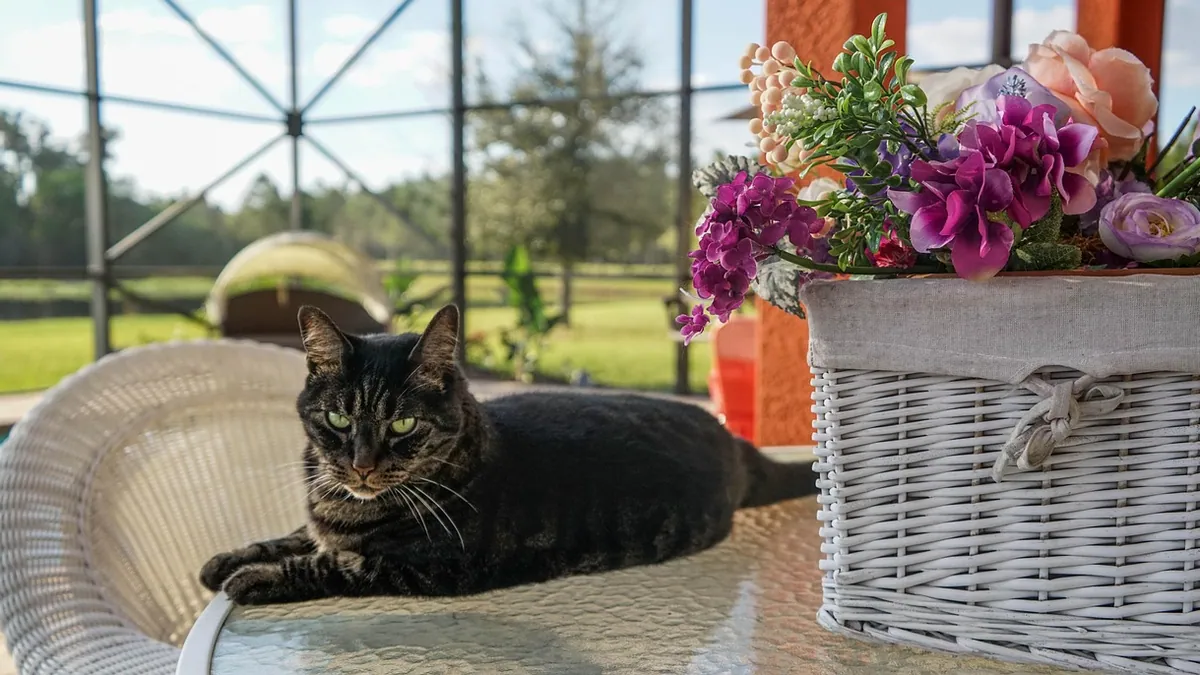
Yes, daylily pollen is toxic to cats. Daylilies are not true lilies botanically, but they carry the same kidney risk for cats, and every part of the plant, including the pollen, can cause severe kidney failure [1]. Even a tiny amount of pollen groomed off the fur or lapped from a vase can be enough to send a cat into a medical emergency [1].
This article is educational and is not a substitute for veterinary diagnosis or treatment.
Quick Answer
- Daylilies (Hemerocallis species) are toxic to cats, and all parts of the plant are considered poisonous, including the leaf, stem, flower, and pollen [1][2].
- Cats are the only species known to be affected by daylily poisoning, so a dog or horse in the same house may be fine while your cat is at serious risk [2].
- Early signs usually appear within 6 to 12 hours of exposure and include vomiting, loss of appetite, lethargy, and dehydration [1].
- Kidney damage can begin within 24 to 72 hours, so a cat that seems fine a few hours after nibbling a petal still needs urgent care [1].
- Call your veterinarian, the ASPCA Animal Poison Control Center at (888) 426-4435, or Pet Poison Helpline at (855) 764-7661 right away. Do not wait for symptoms and do not induce vomiting unless a veterinarian tells you to [2].
Is Daylily Pollen Toxic to Cats?
Yes. Daylily pollen is toxic to cats, and so is the rest of the plant.
The ASPCA lists the orange day lily (Hemerocallis graminea) as toxic to cats, with possible signs of vomiting, inappetence, lethargy, kidney failure, and death [2]. The Pet Poison Helpline groups daylilies with the Lilium and Hemerocallis species, commonly known as the Tiger, Day, Asiatic, Easter, or Japanese Show lily, and states that these plants cause severe acute kidney failure in cats [1].
That grouping matters. When a veterinary toxicologist says "lily," they usually mean true lilies (Lilium species) and daylilies (Hemerocallis species). Both are dangerous to cats, and both are handled the same way in an emergency [1][3].
Which Parts of a Daylily Are Dangerous?
All of them. The leaf, pollen, stem, and flower are all considered poisonous [1]. There is no safe part to let your cat sniff, chew, or walk through.
Pollen deserves special attention because it is easy to miss. A cat brushing past an open daylily can pick up pollen on the face, chest, or paws, then swallow it during grooming. A single anther or a dusting of yellow powder on a whisker is a real exposure, not a harmless mess [1].
What About Vase Water and Cut Flowers?
Vase water is a hidden risk. The toxin in lilies is known to be water soluble, which means it can leach out of stems and flowers into the water they sit in [1]. A cat that drinks from a vase holding daylilies is drinking a liquid that may contain the toxin.
Cut daylilies brought indoors for a bouquet carry the same danger as a plant growing in the garden. If you are not sure whether a bouquet contains daylilies, treat it as toxic until you confirm otherwise. You can read more about which blooms to avoid in Flowers That Are Toxic To Cats.
Is Yellow Daylily Toxic to Cats?
Yes. The color of the flower does not change the risk. Yellow daylilies, orange daylilies, and every other daylily color belong to the same Hemerocallis group, and the ASPCA lists Hemerocallis species as toxic to cats [2].
Owners sometimes assume that only white Easter lilies are dangerous. That is not how this works. A yellow daylily dug up from a neighbor's garden or bought at a farmers market is just as capable of causing kidney failure in your cat [1][2].
The Toxic Principle and What It Does in the Body
The exact toxin has not been identified, but it is known to be water soluble [1]. Because the toxin has not been isolated, there is no antidote and no at-home test. Treatment is supportive and time sensitive.
What veterinarians do know is what happens to the kidney. Kidney damage, specifically renal tubular necrosis, occurs within 24 to 72 hours of ingestion [1]. The renal tubules are the tiny structures inside the kidney that filter and reabsorb fluid. When they are damaged, the kidney loses its ability to concentrate urine and clear waste products from the blood.
This is why a cat can look normal at dinner and be critically ill by the next morning. The injury is happening inside the kidney before outward signs become obvious.
Cats appear to be uniquely sensitive. The ASPCA notes that cats are the only species known to be affected by daylily poisoning, while dogs and horses are listed as non-toxic [2]. The same pattern holds for true lilies, which are toxic to cats and non-toxic to dogs and horses [3].
Signs of Daylily Poisoning and the Timeline
Signs of poisoning often develop within 6 to 12 hours of exposure [1]. Early signs include:
- Vomiting
- Inappetance (not eating)
- Lethargy
- Dehydration
Untreated, signs worsen as acute kidney failure develops [1]. At that stage you may see your cat not urinating at all or urinating too frequently, not drinking or drinking excessively, and inflammation of the pancreas [1]. Rarer signs include walking drunk, disorientation, tremors, and even seizures [1].
A Rough Timeline to Keep in Mind
- 0 to 6 hours: Your cat may show no signs at all. This does not mean the exposure was harmless.
- 6 to 12 hours: Vomiting, drooling, hiding, and refusing food are common first clues [1].
- 24 to 72 hours: Kidney damage (renal tubular necrosis) develops during this window [1].
- 48 hours and beyond: Without treatment, acute kidney failure can progress, and death is possible [2].
A 2025 study in the Journal of the American Veterinary Medical Association followed 112 cats treated after lily exposure. Among cats that developed acute kidney injury, 45 of 96 inpatients (46.9%) and 7 of 16 outpatients (43.8%) were affected, and inpatient cats had a significantly higher survival rate than outpatients (100% versus 86.5%) [4]. That survival gap is one reason veterinarians push for prompt, aggressive care instead of watching at home.
What to Do Right Now
If your cat touched, chewed, or possibly groomed daylily pollen, act immediately.
- Move your cat away from the plant or bouquet. Put the flowers in a closed room, a sealed bag, or outside where your cat cannot reach them.
- Call your veterinarian, the ASPCA Animal Poison Control Center at (888) 426-4435, or Pet Poison Helpline at (855) 764-7661 [2]. These lines are staffed to help you decide whether your cat needs to be seen.
- Do not induce vomiting unless a veterinarian tells you to. Making a cat vomit at home can cause aspiration, and it does not remove toxin that has already been absorbed.
- Bring information with you. If you can, take a photo of the plant or bring the flower with you so the veterinary team can confirm the species.
- Go in even if your cat seems fine. With lily exposure, the absence of symptoms in the first few hours is expected, not reassuring [1].
If your cat is already vomiting, weak, or not acting like herself, skip the phone call and drive to the nearest emergency clinic. For a step-by-step look at this scenario, see Cat Ate Toxic Lily.
Veterinary Treatment for Daylily Exposure
Treatment depends on how much time has passed and how sick your cat is. Your veterinarian will examine your cat, ask what part of the plant was involved and when, and run blood work to check kidney values.
If your cat was seen quickly, the team may try to remove plant material from the stomach. If hours have passed, the focus shifts to supporting the kidneys. That usually means intravenous fluids to keep blood flowing through the kidneys and to correct dehydration. Your veterinarian may also give medications to control vomiting and nausea, and may monitor urine output closely.
Doses of any medication are calculated by your veterinarian based on your cat's weight, kidney values, and overall health. There is no home dose for this situation.
Some cats need hospitalization for a day or more. The 2025 study found that cats treated as inpatients had a higher survival rate than those treated as outpatients, which supports the value of close monitoring during the first 48 hours [4].
Outlook After Daylily Poisoning
The outlook depends on how much was eaten, how fast treatment started, and how badly the kidneys were injured. Cats that receive care within the first few hours generally do better than cats who arrive days later with established kidney failure.
In the 2025 study, 27 of 45 inpatient cats with acute kidney injury (60%) and 4 of 7 outpatient cats (57.1%) had a kidney injury grade that stayed static or improved over time, and inpatient survival was 100% compared with 86.5% for outpatients [4]. Those numbers come from one group of cats and cannot predict what will happen to any single cat, but they do show that many cats recover with treatment.
Some cats that survive lily poisoning are left with long-term kidney damage and need ongoing monitoring. Your veterinarian will want to recheck blood work after the crisis to see how well the kidneys recovered.
Prevention and Safer Alternatives
The simplest prevention is to keep daylilies out of your home and yard entirely. This includes bouquets, potted plants, and cut stems. If a neighbor's daylilies hang over a fence, check whether your cat can reach the flowers or pollen.
Other practical steps:
- Never let your cat drink from a vase, even one holding flowers you believe are safe. Vase water can carry a water-soluble toxin [1].
- Ask before you accept flowers. Tell friends and family that lilies of any kind are not welcome in your home.
- Check bouquets for closed buds. Daylily buds look similar to some safe flowers, so identify each stem before bringing it inside.
- Wash your hands after handling lilies, and keep the flowers in a room your cat cannot enter.
- Choose cat-safe plants for your garden. For ideas, see What Flowers Are Toxic To Cats and Are Lilies Toxic to Cats?.
If you are unsure whether a plant in your home is a daylily, a true lily, or something harmless, ask your veterinarian or a poison control line before your cat has a chance to investigate.
Limitations and When to Contact a Veterinarian
No article can tell you whether your specific cat was exposed or how much toxin she absorbed. Individual cases need a veterinarian who can examine your cat, review the timeline, and run blood work.
Contact a veterinarian the same day if:
- You saw your cat sniff, lick, chew, or groom near a daylily or any lily.
- You found pollen on your cat's face, paws, or chest.
- You noticed bite marks on a leaf, stem, or petal.
- Your cat drank from a vase that held lilies.
Go to an emergency clinic right now if:
- Your cat is vomiting repeatedly.
- Your cat is weak, wobbly, disoriented, or having tremors.
- Your cat has stopped eating or drinking.
- Your cat is urinating much more or much less than usual.
- Your cat is hiding, crying, or difficult to wake.
Schedule a routine visit if your cat had a possible exposure days ago and now seems normal. Blood work can check kidney values and give you peace of mind. Do not assume that a normal-looking cat means a normal kidney.
Frequently Asked Questions
Can a cat get sick from just sniffing a daylily?
Sniffing alone is unlikely to cause poisoning, but sniffing often leads to licking or grooming. Pollen that lands on the nose or whiskers can be swallowed during grooming, and pollen is considered poisonous [1]. If your cat's face touched the flower, treat it as an exposure and call a poison control line.
How long after eating daylily pollen would my cat show signs?
Early signs often appear within 6 to 12 hours of exposure [1]. Some cats show nothing at first, which is why veterinarians do not rely on symptoms alone to decide whether treatment is needed. If you know an exposure happened, seek care before the 6-hour mark.
Is a daylily the same as a true lily?
No, they are different plants, but both are dangerous to cats. Daylilies belong to the genus Hemerocallis, while true lilies belong to the genus Lilium [1][2][3]. Veterinary poison control groups treat both as causes of severe acute kidney failure in cats [1].
Are dogs and other pets at risk from daylilies?
Dogs and horses are listed as non-toxic to daylilies, and cats are the only species known to be affected [2]. That does not mean a dog should eat the plant, but the serious kidney risk described here is specific to cats. Keep all pets away from the flowers anyway.
Can my cat recover from daylily poisoning?
Yes, many cats survive with prompt veterinary treatment, especially when care starts within hours of exposure. In one study, inpatient cats had a higher survival rate than outpatients, and more than half of the cats with kidney injury improved or stayed stable [4]. Recovery depends on how quickly treatment begins and how much damage occurred.
Related Articles
- Are Lilies Toxic to Cats?
- Flowers That Are Toxic To Cats
- Flowers Toxic To Cats
- What Flowers Are Toxic To Cats
- Cat Ate Toxic Lily
- What Plants And Flowers Are Toxic To Cats
- Are Daylilies Poisonous to Cats?
- Are Tiger Lilies Poisonous to Cats?
- Is Lily of the Valley Poisonous to Cats? Scent and Plant
References
- Easter Lilies Are Poisonous To Cats. Pet Poison Helpline.
- Toxic and Non-toxic Plants: Orange Day Lily. ASPCA Animal Poison Control Center.
- Toxic and Non-toxic Plants: Lily. ASPCA Animal Poison Control Center.
- Prevalence of acute kidney injury and outcome in cats treated as inpatients versus outpatients following lily exposure. Journal of the American Veterinary Medical Association, 2025.