Is Cat URI Contagious to Other Cats? How It Spreads
By Dr. Zubair Khalid, DVM, MS, PhD ·
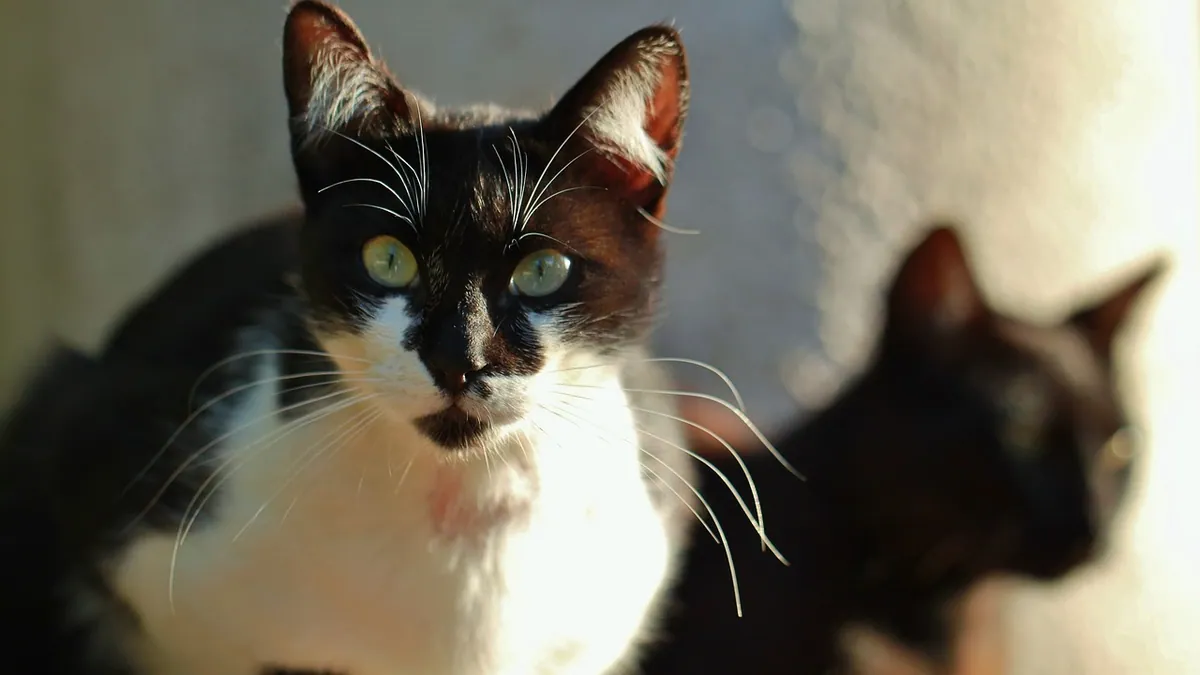
Yes, cat URI is contagious to other cats, and it spreads easily wherever cats share space. The main culprits are viruses and bacteria that move through sneezes, eye and nose discharge, shared bowls, bedding, and even your hands and clothing. In a multi-cat home, one sneezing cat can set off a chain of infections within days.
This article is educational and is not a substitute for veterinary diagnosis or treatment.
Quick Answer
- Cat URI is highly contagious between cats through direct contact, respiratory droplets, and contaminated objects like bowls, toys, and bedding [1][2].
- Feline herpesvirus (FHV) and feline calicivirus (FCV) are the most common viral causes, while Chlamydia felis, Mycoplasma felis, and Bordetella bronchiseptica are bacterial players [1].
- FHV can stay hidden in a cat's body for life, so a recovered cat can shed virus again during stress [2].
- Isolate a sneezing cat right away, ideally in a separate room with its own food, water, litter box, and toys.
- Wash your hands and change clothes after handling a sick cat before you touch the others.
What Is Cat URI in Plain Words
Feline upper respiratory tract infection, or URI, is the cat version of a bad cold that can turn serious. It affects the nose, throat, sinuses, and sometimes the eyes. The term covers several different pathogens instead of one single germ [1].
The most studied pathogen in this group is feline herpesvirus, also called FHV or FHV-1 [1]. Feline calicivirus is the other major virus. Bacteria such as Chlamydia felis, Mycoplasma felis, and Bordetella bronchiseptica can cause infection on their own or pile on top of a viral infection [1][3].
Cats of any age can get a URI, but the disease hits hardest in kittens, seniors, and cats living in crowded or stressful conditions [1].
Signs Owners Notice First
The early signs look a lot like a human cold. You may see sneezing, a runny nose, watery or crusty eyes, and a hoarse meow. Some cats drool or paw at their mouth because their throat hurts.
As it progresses, you might notice:
- Thick yellow or green nasal discharge
- Squinting, swollen eyes, or a cloudy cornea
- Loss of appetite and dropping weight
- Lethargy and hiding
- Fever
- Bad breath or mouth ulcers
Oculonasal discharge (eye and nose drainage) has been linked to FHV exposure in cats [4]. Mouth ulcers and limping are more typical of calicivirus. Eye problems tend to be worse with FHV and Chlamydia.
If your cat stops eating for more than a day, that is a warning sign. Cats who cannot smell their food often refuse to eat, and that leads to rapid decline.
Is Cat URI Contagious to Other Cats? How It Spreads
Yes, and it spreads in more ways than most owners expect. Understanding the routes helps you stop the chain.
Direct cat-to-cat contact
Nose-to-nose greetings, grooming, and shared sleeping spots move germs fast. FHV is transmitted through direct or indirect contact with secretions from infected cats [2]. A single sneeze can launch infectious droplets several feet.
Contaminated objects (fomites)
Bowls, water fountains, litter boxes, blankets, toys, carriers, and even your hands carry pathogens between cats. This is why a cat who never meets the sick cat can still get infected.
Airborne droplets in close quarters
In a small room or a shelter setting, respiratory droplets hang in the air long enough to reach nearby cats. Crowded housing is a known risk factor for URI [1].
Latent virus reactivation
About 80 percent of cats infected with FHV establish lifelong latent infections [2]. That means a cat who looks completely recovered can start shedding virus again after stress, illness, or a move. This is one reason URIs keep coming back in multi-cat homes.
How fast it spreads
In a household with shared bowls and close contact, one infected cat can expose the whole group within days. Shelters see this pattern constantly, which is why URI is such a concern in group housing [1].
Causes and Risk Factors
Several pathogens cause URI, and they often overlap. A 2026 study of cats with rhinitis found Mycoplasma species in 28.3 percent of affected cats versus 5.4 percent of healthy controls [3]. Mycoplasma felis appeared in 21.7 percent of rhinitis cases and in none of the healthy cats [3]. FHV was found in 39.1 percent of cats with rhinitis compared to 8.1 percent of healthy cats [3].
Risk factors that raise the odds of infection or make it worse:
- Crowding (shelters, rescues, multi-cat homes)
- Stress from changes, new pets, or moves
- Young age or advanced age
- Poor nutrition or underlying illness
- Unvaccinated status
- Shared food, water, and litter resources
FHV is the most frequently studied URI pathogen, and sheltered cats make up a large share of research populations [1]. That tells you environment matters as much as the germ itself.
How It Is Diagnosed
Your veterinarian starts with a physical exam and a history of symptoms. They will look at the eyes, nose, mouth, and throat, and check for fever and dehydration.
If the diagnosis is unclear or the cat is not improving, the vet may collect samples. Conjunctival swabbing (swabbing the eye lining) is the most common sampling site in URI research [1]. Nasal swabs are also used.
Polymerase chain reaction (PCR) testing is the most widely used method to confirm which pathogen is involved [1]. PCR can detect FHV, FCV, Mycoplasma, Bordetella, and Chlamydia from a single swab [3]. Results help guide treatment, especially when bacteria are involved.
Keep in mind that a positive test does not always mean that germ is the main problem. Many cats carry more than one pathogen at once.
Treatment Options
There is no single pill that cures viral URI. Treatment focuses on supporting the cat while the immune system fights back.
Supportive care at home
- Keep the nose clear with gentle warm compresses and saline drops
- Run a humidifier or take the cat into a steamy bathroom
- Warm food slightly to boost the smell
- Offer soft, strong-smelling foods like warmed canned food
- Encourage water with broth or a fountain
Medications
Antibiotics are used only when a bacterial infection is confirmed or strongly suspected. They do nothing for viral infections. Your veterinarian calculates the dose from your cat's weight and health status, so never use leftover medication from another pet.
Antiviral eye drops or oral antivirals may be prescribed for severe FHV cases. Your vet will decide based on the exam and test results.
Nutrition and fluids
Cats who stop eating may need appetite support, syringe feeding, or intravenous fluids. Hospitalization is sometimes needed for dehydration or severe eye damage.
If your cat is also showing urinary signs like straining or frequent small urinations, that is a separate problem worth checking. You can read more about why a cat pees in small amounts frequently and about urinary tract infection symptoms in cats.
Recovery, Outlook, and Long-Term Management
Most cats recover from a mild URI in one to three weeks with supportive care. Kittens, seniors, and cats with other illnesses take longer and may develop complications like chronic nasal discharge or corneal damage.
FHV is the long game. Roughly 80 percent of infected cats carry the virus for life in a latent state [2]. Stress can wake it up, causing a relapse of sneezing and eye discharge. Managing stress is part of managing the disease.
Long-term tips:
- Keep a consistent routine and reduce household upheaval
- Maintain good nutrition and fresh water
- Treat other illnesses promptly
- Keep vaccinations current, even if they do not fully block infection
- Watch for early signs so you can act fast
Vaccination reduces the severity of disease but does not always prevent infection. One study found that 82.19 percent of vaccinated cats lacked detectable neutralizing antibodies, showing that immune responses vary widely between individual cats [2]. Another study found neutralizing antibodies in 93.75 percent of unvaccinated cats, which suggests natural exposure is common [2]. In a separate population, only 8 percent of cats had neutralizing antibodies, and seropositivity was not linked to vaccination status [4]. The takeaway is simple: vaccines help, but they are not a force field.
If your sick cat is also acting aggressive toward housemates, that may be pain, stress, or illness-related behavior. Learn more about why a cat might suddenly act aggressive toward other cats.
How Long to Isolate and Practical Quarantine Steps
Isolation is your best tool in a multi-cat home. Here is a workable plan.
| Step | What to Do | How Long |
|---|---|---|
| Separate the sick cat | Own room, door closed | Until symptoms fully resolve plus 7 days |
| Use separate supplies | Own bowls, litter box, toys, bedding | Entire isolation period |
| Hand hygiene | Wash hands, change shirt after contact | Every visit |
| Limit traffic | One caregiver if possible | Entire isolation period |
| Clean surfaces | Diluted bleach or vet-approved disinfectant | Daily |
| Monitor others | Watch for sneezing, eye discharge, appetite loss | 2 to 3 weeks after last exposure |
For FHV specifically, a recovered cat can shed virus again later, so isolation ends when symptoms end, not when the cat feels better for one day. If you have a chronic carrier, keep stress low and watch for flare-ups.
Prevention
Prevention comes down to reducing exposure and boosting resilience.
- Vaccinate all cats according to your vet's schedule
- Quarantine new cats for at least 2 weeks before introductions
- Do not share bowls or litter boxes between new and resident cats
- Wash hands between handling different cats
- Keep litter boxes clean and plentiful (one per cat plus one)
- Reduce crowding and provide vertical space and hiding spots
- Manage stress during moves, renovations, or new pets
If your cat has urinary issues as well, it helps to know what can cause a urinary tract infection in a cat and how to spot the signs of a urinary tract infection.
Limitations and When to Contact a Veterinarian
This article cannot cover every case. Individual cats need a veterinarian who can examine them, run tests, and tailor treatment.
Contact your vet the same day if your cat:
- Stops eating or drinking for more than 24 hours
- Has thick colored nasal discharge that worsens
- Shows squinting, eye swelling, or cloudiness
- Breathes with an open mouth or makes noise while breathing
- Has a fever or feels very warm
- Is a kitten under 8 weeks old with any symptoms
Go to an emergency clinic now if your cat:
- Struggles to breathe or breathes rapidly at rest
- Collapses or seems unresponsive
- Has severe eye pain with a bulging or ruptured eye
- Cannot swallow or is drooling heavily
Call for a routine visit if symptoms are mild but last more than 5 to 7 days, or if other cats in the home start showing signs.
Frequently Asked Questions
Can my cat get URI again after recovering?
Yes, especially with feline herpesvirus. Most cats infected with FHV carry the virus for life in a dormant state, and stress or illness can trigger shedding and symptoms again [2]. Calicivirus and bacterial infections can also recur with new exposure.
How long should I keep a sick cat away from my other cats?
Keep the sick cat isolated until all symptoms are gone, then add about a week of buffer time. For FHV carriers, remember that shedding can restart later, so watch for early signs and separate again if sneezing returns.
Do I need to disinfect everything in my house?
Focus on high-contact items: bowls, litter boxes, bedding, toys, and surfaces the sick cat touches. Wash fabrics in hot water and use a vet-approved disinfectant on hard surfaces. You do not need to fog the whole house, but daily cleaning of shared items matters.
Can I catch a URI from my cat?
No, the pathogens that cause feline URI do not infect people. However, you can carry germs on your hands and clothing, so wash up between cats to avoid passing infection along.
Should I vaccinate my other cats right now if one is sick?
Talk to your veterinarian first. Vaccinating during an active outbreak may not help immediately, and your vet will want to assess each cat's health and timing. In general, keeping vaccines current before exposure is the better strategy.
Related Articles
- Why Is My Cat peeing in small amounts frequently? Feline Idiopathic Cystitis Protocol
- Why Is My Cat Suddenly Aggressive Towards Other Cats?
- Cat Urinary Tract Infection Symptom
- What Can Cause A Urinary Tract Infection In A Cat
- Signs Of A Urinary Tract Infection In My Cat
- What Are The Signs That My Cat Has A Urinary Tract Infection
- Is Feline Herpes Contagious to Other Cats? What to Know
- Is Cat Pneumonia Contagious to Other Cats?
- Is FIP or FIV Contagious to Other Cats?
- Feline Respiratory Infections: Etiology, Zoonotic Potential, and Contagion
References
- A Scoping Review of the Evidence on Prevalence of Feline Upper Respiratory Tract Infections and Associated Risk Factors. Veterinary sciences, 2024.
- Detection of neutralizing antibody to Feline herpesvirus type 1 in cat serum. Comparative immunology, microbiology and infectious diseases, 2025.
- EXPRESS: Detection of Mycoplasma species and respiratory pathogens in cats with rhinitis and healthy cats. Journal of feline medicine and surgery, 2026.
- Tracing feline herpesvirus-1 exposure in domestic cats from Namibia: associations with neutralising antibodies, vaccination, clinical signs, and retroviral status. Veterinary research communications, 2026.