Is Feline Herpes Contagious to Other Cats? What to Know
By Dr. Zubair Khalid, DVM, MS, PhD ·
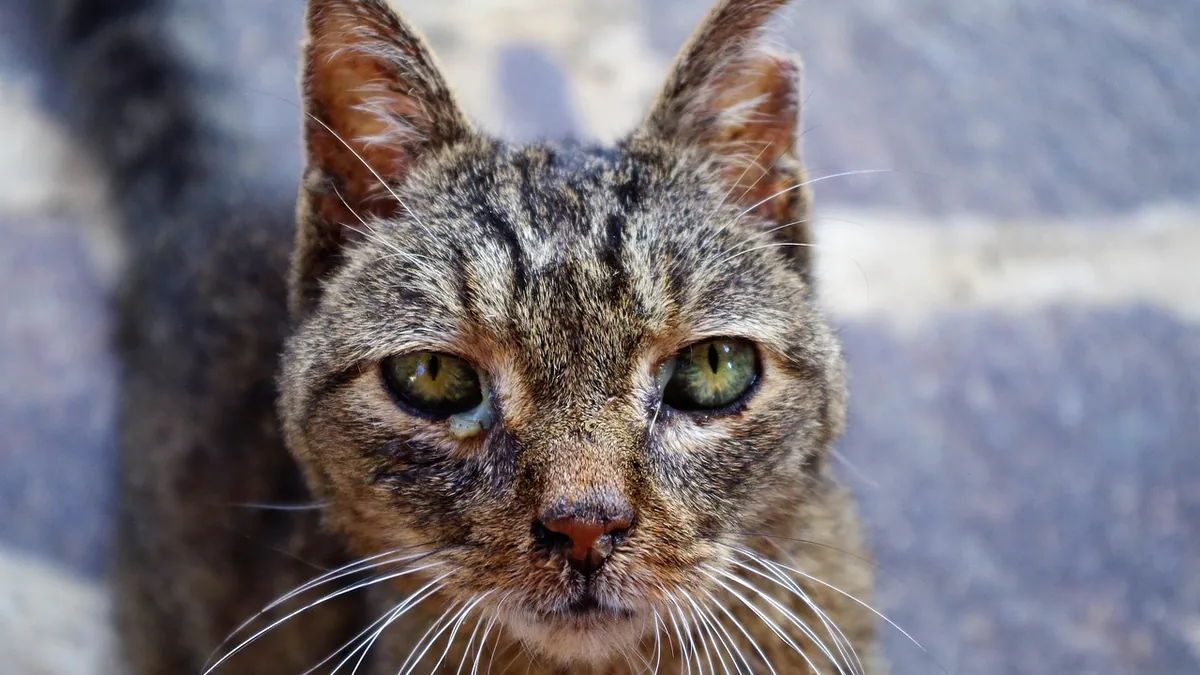
Is feline herpes in cats contagious? Yes, but only to other cats. Feline herpesvirus type 1 (FHV-1) is a cat-only virus, so your dogs, your rabbits, and the humans in your home are not at risk. The cats sharing your home, however, are very much in the picture.
This article is educational and is not a substitute for veterinary diagnosis or treatment.
Quick Answer
- FHV-1 spreads to other cats mainly through direct contact with an infected cat's eye and nose secretions, and sometimes through shared bowls, bedding, or hands [1].
- It does not infect dogs, people, or other species. The virus exclusively affects felines [2].
- Once a cat is infected, roughly 80% stay infected for life, with the virus hiding quietly in nerve tissue and flaring up during stress or illness [1].
- A cat can shed virus and infect housemates even when it looks completely healthy, especially after a stressful event.
- Keeping stress low, separating a sick cat, and washing hands and bowls are the main tools for protecting the other cats in your home.
What Is Feline Herpesvirus in Plain Words?
Feline herpesvirus type 1 is one of the two big causes of what vets call feline upper respiratory disease, along with feline calicivirus [3]. Think of it as the cat version of a cold sore virus. It causes sneezing, runny nose, and eye irritation during active outbreaks, then goes quiet.
The quiet part is what surprises most owners. After the initial infection, about 80% of cats establish a lifelong latent infection [1]. The virus parks itself in nerve tissue and stops making copies. It is not gone. It is waiting.
When something stresses the cat, the virus can wake up and start shedding again. That is called reactivation. A cat in the middle of a reactivation may have mild signs, or none at all, while still passing virus to other cats.
Is Cat Herpes Contagious to Other Cats, Dogs, or People?
This is usually the first question owners ask, and the answer has three parts.
To other cats: yes, easily. FHV-1 is described as a local contact-infectious pathogen, meaning it spreads through close contact instead of through the air across a room [2]. The clinical incidence rate in cats is nearly 100%, particularly in young cats [2]. In other words, almost every cat that meets the virus gets infected.
To dogs: no. Laboratory testing of FHV-1 detection methods showed no cross-reactivity with canine distemper virus, canine parvovirus, canine adenovirus, or canine coronavirus [2]. The virus is built for cats.
To people: no. FHV-1 is a feline virus and does not infect humans. If you have a cold sore, that is a different herpesvirus. You cannot catch herpes from your cat, and your cat cannot catch yours.
One more group worth mentioning: wild cats. FHV is listed among the contagious feline viruses that can threaten free-ranging wild felid populations such as European wildcats [4]. So the virus is not limited to house cats, though your indoor cats are the ones who matter for your household.
Signs Owners Notice
Active FHV-1 infection usually shows up in the upper respiratory tract and the eyes. Common signs include:
- Sneezing, sometimes in long bursts
- Clear, cloudy, or yellow-green nasal discharge
- Eye discharge and squinting
- Red, swollen conjunctiva (the pink tissue around the eye)
- Reduced appetite, often because the nose is stuffed and food does not smell right
- Lethargy and fever
Eye involvement can be more serious than owners expect. In one report, two young cats developed dendritic ulcers and a superficial corneal ulcer after their herpesvirus vaccine, and both needed oral antiviral medication plus hyaluronic acid eye drops [5]. Corneal ulcers are painful and can worsen quickly without treatment.
If your cat has watery or crusty eyes, our guide to eye discharge, herpesvirus, chlamydia, and conjunctivitis walks through what each cause tends to look like.
Sneezing alone is common and often harmless, but sneezing plus discharge plus a cat who will not eat is a different story. This article on cat sneezing a lot helps you sort allergies from infection.
Causes and Risk Factors
FHV-1 spreads through direct or indirect contact with secretions from infected cats [1]. In practice, that means:
- Nose-to-nose greetings and mutual grooming
- Shared food bowls, water bowls, and bedding
- A sick cat sneezing onto a surface another cat then touches
- Your hands, sleeves, or a carrier that has not been cleaned between cats
- A mother cat passing virus to her kittens
Risk factors that raise the odds of infection or reactivation:
| Risk factor | Why it matters |
|---|---|
| Young age | Incidence is highest in young cats [2] |
| Multi-cat household | More close contact and shared items |
| Stress (moving, new pet, boarding) | Triggers reactivation of latent virus [1] |
| Crowded or shelter settings | Constant exposure to shedding cats |
| Other infections | Co-infection with FIV or FeLV was found in 14 of 22 cats with fatal respiratory disease in one study [3] |
| Weakened immunity | Latent virus takes advantage when defenses drop |
That co-infection finding is worth pausing on. In a study of 60 necropsied cats with fatal respiratory disease, 22 had FHV, calicivirus, or both, and 14 of those 22 also carried FIV or FeLV [3]. Herpesvirus alone is usually manageable. Herpesvirus on top of a retrovirus is a much harder fight.
How It Is Diagnosed
Most vets diagnose FHV-1 from the history and physical exam. The pattern of sneezing, eye discharge, and a known stress event is often enough.
When testing is needed, options include:
- PCR testing on a swab from the nose or eye, which detects viral genetic material
- Antigen detection, including newer rapid tests that can identify FHV-1 within 10 minutes from nasopharyngeal or fecal samples [2]
- Blood antibody testing, which shows exposure but not active infection. Neutralizing antibodies were detected in only 8% of 236 cats sampled across Namibia, and positivity tracked with oculonasal discharge instead of vaccination status [6]
That last point matters for owners. A positive antibody test does not prove your cat is currently shedding virus, and a negative one does not rule out latent infection. If your vet wants a fuller picture of what is causing respiratory signs, our article on the feline PCR respiratory panel explains how herpesvirus, calicivirus, and chlamydia are told apart.
Treatment Options
There is no cure that clears FHV-1 from the body. Treatment aims to shorten the outbreak, ease signs, and prevent complications.
Antiviral medication. Oral antivirals are the mainstay for significant eye or respiratory disease. In the two cats with vaccine-strain corneal lesions, treatment with oral antiherpesvirus medication and hyaluronic acid eye drops was started [5]. Your veterinarian calculates the dose from your cat's weight and health status.
Eye drops. Hyaluronic acid drops support the cornea, and other prescription drops may be needed depending on what the vet sees [5]. Never use steroid eye drops on a cat with a herpesvirus corneal ulcer unless your vet specifically prescribes them. In the reported cases, corticosteroid drops had been given before the ulcers were identified [5].
Supportive care. Keeping the nose clear, encouraging eating with warmed or smelly food, and using a humid room can help a congested cat feel better. Your vet may recommend fluids if your cat is dehydrated.
Antibiotics. These do nothing against the virus. They are sometimes used when a secondary bacterial infection is suspected.
Isolation. Separate the sick cat from housemates during an active outbreak. Use separate bowls and litter boxes, and wash your hands between cats.
Recovery, Outlook, and Long-Term Management
Most cats get through an acute FHV-1 episode in one to three weeks with supportive care, though severe cases take longer. The bigger issue is what comes after.
Because roughly 80% of infected cats carry the virus for life [1], you should plan for the possibility of future flare-ups. Most reactivations are milder than the first illness. Some cats shed virus with no signs at all.
Long-term management in a multi-cat home:
- Lower stress where you can. Keep routines steady, provide hiding spots, and introduce changes slowly.
- Keep the sick cat separate during flare-ups. Shedding is highest when signs are active.
- Clean shared items. Wash bowls and bedding, and wipe down surfaces a sneezing cat has used.
- Watch the eyes. Any squinting, cloudiness, or new discharge needs a vet visit.
- Keep other cats healthy. Up-to-date vaccines and retrovirus testing reduce the chance of a severe co-infection [3].
- Feed well and keep weight up. A cat who stops eating during a flare needs veterinary attention.
Vaccination is part of the picture but not a guarantee. In one study, 82.19% of vaccinated cats lacked detectable neutralizing antibodies, while 93.75% of unvaccinated cats had them, which suggests wide individual variation in immune response [1]. Another study found seropositivity was not significantly linked to vaccination status at all [6]. Vaccines reduce the severity of disease and the amount of virus shed, but they do not stop every cat from becoming a carrier.
Prevention
You cannot fully prevent FHV-1 exposure if your cat lives with a carrier, but you can lower the odds and the impact.
- Vaccinate. FHV-1 modified live vaccine is a core vaccine for cats [5]. Talk to your vet about the right schedule for your cat's age and lifestyle.
- Test and isolate new cats. A new cat should be kept separate until a vet has checked them over.
- Quarantine during outbreaks. A cat with active sneezing and eye discharge should not share bowls, beds, or litter boxes.
- Wash your hands. You can move virus between cats on your skin and clothing.
- Reduce stress. Boarding, moving, and new pets are common triggers for reactivation [1].
- Keep retrovirus status current. FIV and FeLV co-infection made respiratory disease more severe in one pathology study [3].
If your cat has a flare that involves the eyes, do not wait it out. Corneal ulcers are treatable but can scar the eye if they are missed.
Limitations and When to Contact a Veterinarian
This article covers general patterns. Your cat is an individual, and only a veterinarian who examines them can decide what is going on and what treatment is right.
Contact a veterinarian the same day if your cat:
- Squints, holds an eye closed, or has a cloudy eye
- Has yellow or green nasal or eye discharge
- Has not eaten for 24 hours
- Seems painful around the face or head
Go to an emergency clinic now if your cat:
- Has trouble breathing, breathes with an open mouth, or makes noise when breathing
- Collapses or seems unable to stand
- Has a sudden swollen, bulging, or bleeding eye
- Is a young kitten with severe lethargy or refusal to nurse
Schedule a routine visit if your cat:
- Has repeated sneezing episodes with no other signs
- Has a housemate recently diagnosed with FHV-1
- Is due for vaccines or a wellness check
- Has chronic eye discharge that comes and goes
Frequently Asked Questions
Can my other cats catch herpes from a cat who seems healthy?
Yes. Latent virus can reactivate and shed without obvious signs, especially after stress [1]. A cat who looks fine can still pass FHV-1 to housemates through close contact or shared items.
Should I separate my cats if one has feline herpes?
Separate them during active outbreaks, when sneezing and eye discharge are present. Use separate bowls, bedding, and litter boxes, and wash your hands between cats. Once signs resolve, full separation is usually not practical or necessary.
Can my dog get feline herpes?
No. FHV-1 is a feline-specific virus, and testing has shown no cross-reactivity with common canine viruses [2]. Your dog is not at risk from your cat's herpesvirus.
Will my cat have herpes forever?
Most likely, yes. Around 80% of infected cats carry the virus for life in a latent state [1]. That does not mean constant illness. It means occasional flare-ups, often triggered by stress or other illness.
Is the herpes vaccine worth it if it does not prevent infection?
Yes, for most cats. The vaccine is a core vaccine for cats [5], and it reduces the severity of disease and viral shedding even when it does not block infection entirely. Individual immune responses vary widely, so ask your vet what schedule fits your cat [1].
Related Articles
- Why Is My Cat having eye discharge? Herpesvirus Chlamydia and Conjunctivitis
- Feline PCR Respiratory Panel: Diagnosing Herpesvirus, Calicivirus and Chlamydia
- Why Is My Cat So Itchy?
- Cat Sneezing a Lot: Allergies, Infection, or Something Else?
- Why Is My Cat peeing in small amounts frequently? Feline Idiopathic Cystitis Protocol
- What Are The Signs That My Cat Has A Urinary Tract Infection
- Is Cat URI Contagious to Other Cats? How It Spreads
- Feline Herpes in Cats: Symptoms, Eyes, and Kittens
- Is Conjunctivitis in Cats Contagious? What to Know
- Feline Herpesvirus 1
- Feline Upper Respiratory Infections (Feline Herpesvirus, Calicivirus, and Bordetella): Etiology, Clinical Signs, Zoonotic Potential, and Therapeutics
References
- Detection of neutralizing antibody to Feline herpesvirus type 1 in cat serum. Comparative immunology, microbiology and infectious diseases, 2025.
- Rapid and sensitive detection of feline herpesvirus-1 using fluorescent microspheres as labels for immunochromatographic test strips. Veterinary research communications, 2026.
- Feline herpesvirus and calicivirus: Occurrence and pathology in cats with respiratory disease. Topics in companion animal medicine, 2025.
- Molecular detection of feline viruses in free-ranging European wildcats (Felis s. silvestris) of the Harz Mountains, Germany. Archives of virology, 2026.
- Corneal Lesions Associated With Feline Herpesvirus-1 Modified Live Vaccine Strain F2 in Two Cats. Case reports in veterinary medicine, 2026.
- Tracing feline herpesvirus-1 exposure in domestic cats from Namibia: associations with neutralising antibodies, vaccination, clinical signs, and retroviral status. Veterinary research communications, 2026.