Weird Cat Breathing Patterns: What's Normal and What's Not
By Dr. Zubair Khalid, DVM, MS, PhD ·
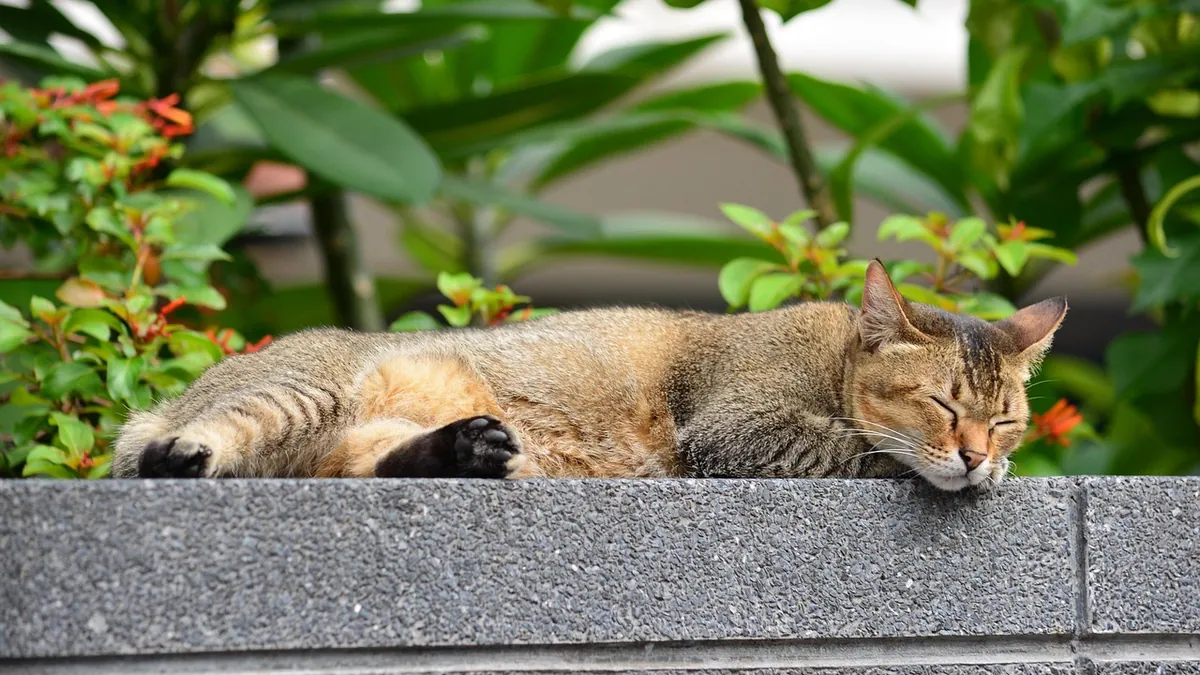
A cat breathing pattern can look strange for many harmless reasons, including purring, dreaming, or simply relaxing in a stretched-out position. Other times, a weird pattern is the first sign that something is wrong with the lungs, heart, or airway. Learning what normal looks like at rest helps you spot the difference early.
This article is educational and is not a substitute for veterinary diagnosis or treatment.
Quick Answer
- A healthy cat at rest usually breathes quietly through the nose with the mouth closed, and you should barely see the chest move.
- Purring can make the body vibrate in a way that looks like fast or odd breathing, so feel the chest with your hand to judge the real rate.
- Open-mouth breathing, breathing with the elbows out, or a neck stretched forward are warning signs, not quirks.
- Count breaths while your cat sleeps or rests quietly. If you count more than about 30 breaths per minute at rest, call your vet.
- Never give a cat human medications or leftover pet drugs for breathing trouble. Get veterinary help instead.
What a Cat Breathing Pattern Normally Looks Like
Normal breathing at rest
A relaxed cat breathes through the nose with the mouth closed. The chest rises and falls gently, and many cats breathe so quietly that you have to watch closely to count. In one intensive care study, the median respiratory rate for cats monitored by camera was 27 breaths per minute, and rates were lower as cats got closer to discharge and felt better [1]. At home, a calm, sleeping cat often breathes slower than that.
What "weird" can look like
Owners describe a lot of different things as weird. You might notice:
- A fast, shallow flutter of the chest
- Deep, exaggerated belly movement
- A pause, then a big breath
- A purring vibration that seems to speed everything up
- Breathing that changes when your cat lies in a certain position
Some of these are normal. A cat breathing pattern when purring is a good example. Purring is a continuous vibration of the throat and body, and it can make the chest look like it is moving faster or more oddly than it really is. Place your hand lightly on the chest and count the actual rise and fall instead of trusting your eyes.
Cat breathing position matters
A cat breathing style and position often go together. Healthy cats rest in curled, loafed, or stretched positions with the head relaxed. A cat that sits with the neck extended, head low, and elbows turned outward is trying to open the airway and expand the chest. That posture is called orthopnea, and it usually means breathing is hard work. Cats in this position often refuse to lie down. If your cat will not settle into a normal resting pose, treat it as a concern.
Main Causes of a Weird Cat Breathing Pattern
Breathing signs can come from the respiratory tract itself or from other organ systems, because the body reacts to low oxygen in a predictable way [2]. When blood oxygen drops, the body tries to compensate by breathing deeper and faster and by increasing heart rate and blood flow [2]. That is why a heart problem or a blood problem can look like a lung problem.
Respiratory causes are the most common reason cats arrive at an emergency room struggling to breathe, followed by heart disease, trauma, and cancer [3]. In that review of 258 severely dyspneic cats, pleural effusion (fluid around the lungs) was present in 39 percent of cases [3].
| Cause | Typical clues | How urgent |
|---|---|---|
| Asthma or airway disease | Coughing, wheezing, fast shallow breathing that comes and goes | Same-day vet visit, emergency if severe |
| Pleural effusion (fluid around lungs) | Quiet, fast, shallow breathing, reluctance to lie down, poor appetite | Emergency |
| Heart disease | Fast breathing at rest, low energy, sometimes hind leg weakness | Emergency or same-day |
| Pneumothorax (air around lungs) | Sudden trouble breathing after a fall or injury | Emergency |
| Upper airway blockage or laryngeal paralysis | Noisy breathing, raspy sound on inhale, voice change | Emergency |
| Pain or stress | Fast breathing with a normal exam otherwise, settles when calm | Routine visit if it persists |
| Fever or infection | Fast breathing with lethargy, warmth, or poor appetite | Same-day vet visit |
Laryngeal paralysis is uncommon in cats but can be life threatening because it blocks the upper airway, and cats with it often arrive with severe breathing difficulty and a noisy inspiratory sound [4]. Trauma matters too. In cats that fell from a height, the average respiratory rate was 53 breaths per minute, and the two cats in visible distress had air around both lungs [5].
Red Flags That Mean Emergency
Some signs mean you should stop reading and call an emergency clinic now.
- Open-mouth breathing in a cat, especially at rest
- Blue, gray, or pale gums and tongue
- Breathing with the elbows out and neck stretched forward
- A rate over 40 breaths per minute at rest that does not settle
- Loud or raspy breathing sounds
- Collapse, weakness, or confusion
- Breathing that suddenly gets worse after a fall or accident
A cat that cannot get enough oxygen may also slow down mentally, and if the brain is starved of oxygen, breathing effort itself can decrease [2]. That means a cat that suddenly seems calmer and quieter is not always improving. If your cat's breathing looks labored, see Cat Difficulty Breathing: Emergency Signs and What to Do. If the rate is high but your cat seems otherwise comfortable, see Cat Breathing Fast: Emergency or Normal?.
What You Can Safely Do at Home While You Wait
Count and record
Count breaths for a full 30 seconds while your cat is asleep or resting, then double it. Write down the number, the time, and what your cat was doing. A written log helps your vet see a trend instead of a single snapshot.
Reduce stress
Keep the room quiet and dim. Do not chase your cat, pick it up repeatedly, or force it into a carrier before you have a plan. Stress raises heart rate and breathing rate, which makes the numbers harder to read and can make a struggling cat worse. A pheromone product may help lower stress during handling and exams, based on a study of healthy cats during cardiovascular examinations [6]. If you already have one at home, using it while you prepare to travel is reasonable.
Position and transport
Let your cat choose its own position. Do not force it to lie flat. Use a carrier with a removable top so your vet can examine your cat without a struggle. Keep the car cool and quiet.
What not to do
Do not give any medication, including human drugs, without veterinary direction. Do not put your cat in a steamy bathroom for long periods, and do not try to clear the nose with anything. If your cat is open-mouth breathing, skip the phone call and go straight to an emergency clinic.
What Your Veterinarian Will Check and Test
Your vet starts with the basics. They will watch your cat breathe from across the room before touching it, because handling can change the pattern. They will count the rate, listen to the heart and lungs, check gum color, and feel the pulse. They will also check for a fever and look at the nose and throat.
Next come tests. Chest X-rays are common and show the lungs, heart size, and fluid. Ultrasound of the chest can find fluid or air around the lungs quickly, and point-of-care ultrasound is used in emergency settings to look for things like air around the lungs and abnormal lung patterns [5]. Blood work checks oxygen-carrying capacity, infection, and organ function. If the upper airway is suspected, your vet may look at the larynx under light anesthesia to see how the vocal folds move, which is how laryngeal paralysis is confirmed [4].
Treatment depends on the cause. Fluid around the lungs may need to be drained. Asthma is often managed with medication. Heart disease needs its own plan. Your vet will calculate any drug dose from your cat's weight and health, so never guess at a dose at home.
Prevention and Monitoring
Know your cat's normal
Pick a calm moment each week and count your cat's resting breaths. Cats with heart or lung disease often benefit from a daily count at home, because a rising trend can show up before your cat acts sick. If your cat has a known heart condition, ask your vet what number should trigger a call. For cats that breathe fast during sleep, see Cat Breathing Fast While Sleeping: When to Worry.
Keep routine care current
Regular exams help catch heart murmurs, dental disease, and weight changes early. Dental problems can also change your cat's breath odor, which is a different issue from breathing pattern. If you notice a new smell, see Why Does My Cat's Breath Smell? or Cat Bad Breath Drooling.
Control weight and environment
Extra weight makes every breath harder. Keep your cat lean, avoid smoke and strong fumes, and use dust-free litter if your cat has airway disease. Follow your vet's plan for any inhaler or oral medication exactly as prescribed.
Limitations and When to Contact a Veterinarian
This article cannot tell you what is wrong with your individual cat. Only a veterinarian who examines your cat can do that.
Call an emergency clinic right now if your cat is open-mouth breathing, has blue or pale gums, is gasping, has collapsed, or is breathing with obvious effort and a stretched neck.
Call your vet the same day if your cat's resting rate is above about 30 breaths per minute, if the pattern changed suddenly, if your cat is hiding more, eating less, or coughing, or if breathing gets worse when your cat lies flat.
Schedule a routine visit if you have noticed a mild change that comes and goes, such as occasional fast breathing during play or a brief odd pattern that resolves when your cat relaxes.
Frequently Asked Questions
Is it normal for my cat's breathing to look weird while purring?
Yes, purring commonly makes the chest and throat vibrate in a way that looks like fast or uneven breathing. Place your hand on the chest and count the real rise and fall. If the rate is normal and your cat is relaxed, the purr is the likely explanation.
Why does my cat breathe fast while resting?
A fast resting rate can be stress, pain, fever, heart disease, or lung disease. Count the rate over 30 seconds while your cat is calm and repeat it later. If it stays high, contact your vet.
What does it mean when my cat sits with its neck stretched out?
That position usually means your cat is working hard to move air. Cats that sit this way often will not lie down and may have their elbows turned out. Treat it as an emergency and go to a clinic.
Can a cat have asthma and still seem fine between episodes?
Yes, cats with asthma often breathe normally between flare-ups and then cough or wheeze during one. Keep track of how often episodes happen and share the log with your vet. Sudden severe episodes still need emergency care.
Should I count my cat's breaths at home?
Yes, a resting count is one of the most useful things you can track. Count for 30 seconds during sleep and double it, then write it down with the date and time. Bring the log to every vet visit.
Related Articles
- Cat Breathing Fast: Emergency or Normal?
- Cat Difficulty Breathing: Emergency Signs and What to Do
- Cat Breathing Fast While Sleeping: When to Worry
- Why Does My Cat's Breath Smell?
- Cat Bad Breath Drooling
- Why Is My Cat Breathing open-mouthed? Feline Asthma & Respiratory Crisis
- Cat Breathing With Belly Moving: Normal or Not?
- How Do Cats Breathe? Normal Rates and Warning Signs
- Uneven or Irregular Breathing in Cats: Causes and Care
- Cat Respiratory Infections: Etiology, Clinical Signs, Zoonotic Potential, and Management
References
- Respiratory rate and breathing pattern in dogs and cats in intensive care units and the value of camera surveillance. The Journal of small animal practice, 2025.
- Introduction to Lung and Airway Disorders of Cats - Cat Owners. Merck Veterinary Manual.
- Emergency Dyspnea in 258 Cats: Insights from the French RAPID CAT Study. Veterinary sciences, 2025.
- Transoral Endoscopic-Assisted Partial Arytenoidectomy as a Treatment for Laryngeal Paralysis in Eight Cats. Animals : an open access journal from MDPI, 2026.
- Point-of-Care Ultrasound and Clinical Findings in 14 Cats With High-Rise Syndrome. Journal of veterinary emergency and critical care (San Antonio, Tex. : 2001), 2026.
- Effects of a synthetic feline facial pheromone analogue (F3, Feliway®) on stress and cardiovascular parameters during clinical examination in cats: a prospective crossover study. BMC veterinary research, 2026.