Cat Respiratory Infections: Etiology, Clinical Signs, Zoonotic Potential, and Management
By Dr. Zubair Khalid, DVM, MS, PhD ·
Key Takeaways
- Feline respiratory infections are primarily caused by viral agents like feline herpesvirus type 1 (FHV-1) and feline calicivirus (FCV), with bacterial pathogens such as Bordetella bronchiseptica and Chlamydia felis also playing significant roles, often as secondary invaders.
- Transmission occurs predominantly via direct contact and aerosolized droplets from sneezing and coughing, with fomites and environmental contamination also contributing, particularly in high-density feline environments.
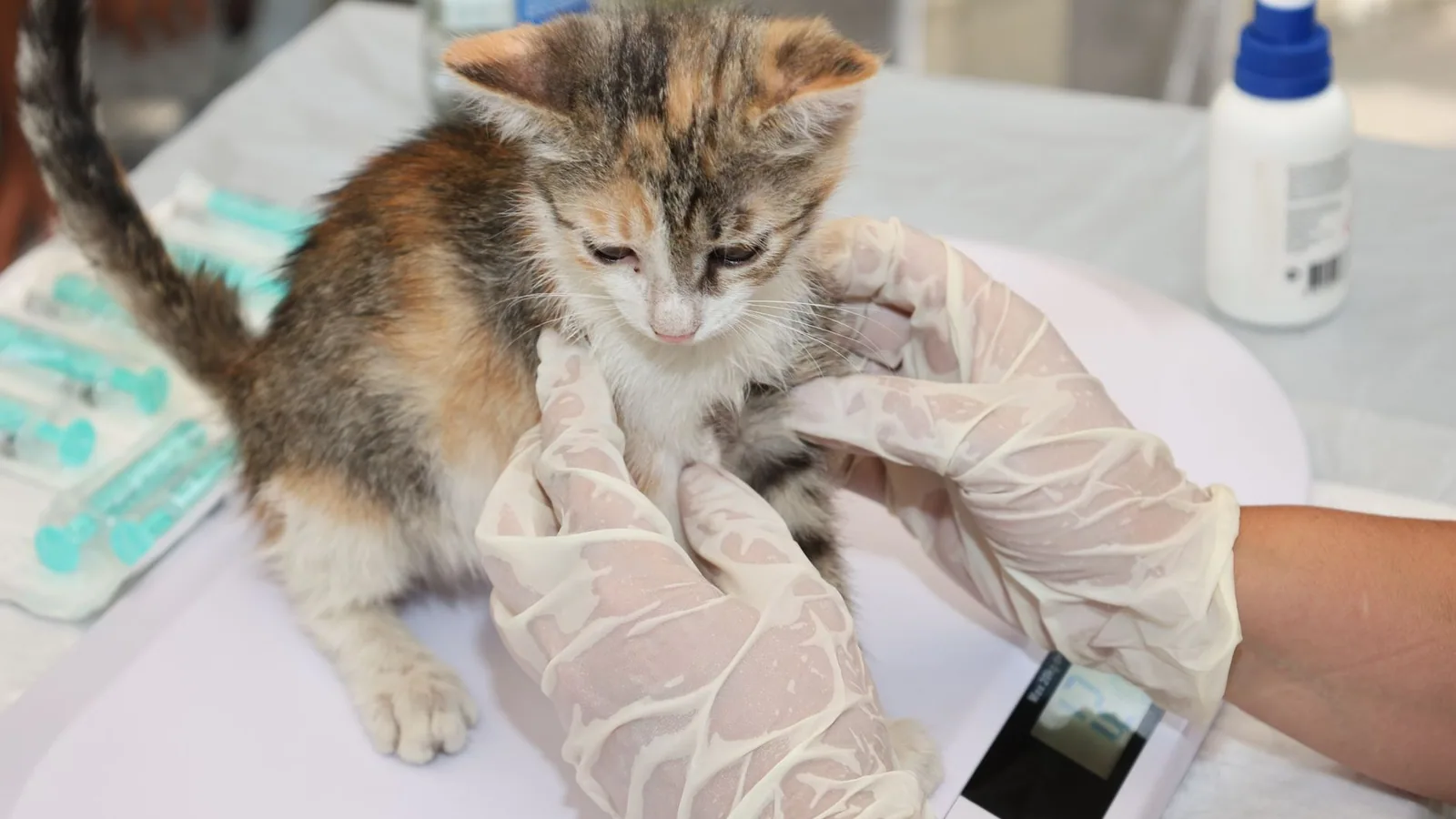
- Clinical signs range from serous to mucopurulent nasal and ocular discharge, sneezing, and conjunctivitis to more severe presentations like oral ulceration, pneumonia, and systemic illness, with FHV-1 often causing severe keratitis and FCV associated with oral lesions.
- Diagnosis relies on clinical signs, history, and laboratory confirmation, with PCR assays being the gold standard for detecting viral and bacterial pathogens, while cytology can identify C. felis inclusion bodies.
- Management involves supportive care (fluid therapy, nutrition, humidification), specific antiviral therapy for FHV-1 (e.g., famciclovir), and antibiotic treatment for bacterial infections (e.g., doxycycline for B. bronchiseptica and C. felis).
- The zoonotic potential is generally low but present, with B. bronchiseptica capable of causing respiratory illness in immunocompromised humans, necessitating standard hygiene practices like handwashing after handling affected cats.
Feline respiratory infections represent a complex disease syndrome with multifactorial etiology, encompassing both viral and bacterial pathogens. These infections are among the most common reasons for veterinary consultations in cats, particularly in multi-cat environments such as shelters, breeding catteries, and boarding facilities [<a href="#ref-1">1</a>]. The clinical presentation ranges from mild serous nasal discharge to severe pneumonia, and the zoonotic potential of certain agents warrants careful consideration in one-health contexts [<a href="#ref-2">2</a>]. This article provides a detailed examination of the etiological agents, transmission dynamics, clinical signs, diagnostic modalities, treatment protocols, and zoonotic risks associated with feline respiratory infections.
Etiology
Viral Pathogens
The two primary viral agents responsible for feline upper respiratory tract infections are feline herpesvirus type 1 (FHV-1) and feline calicivirus (FCV). FHV-1 is an enveloped, double-stranded DNA virus belonging to the family Herpesviridae, subfamily Alphaherpesvirinae [<a href="#ref-1">1</a>]. The virus exhibits a predilection for the mucosal epithelium of the upper respiratory tract and conjunctiva. Following acute infection, FHV-1 establishes lifelong latency in the trigeminal ganglia, with reactivation occurring during periods of stress or immunosuppression [<a href="#ref-2">2</a>]. FCV is a non-enveloped, single-stranded positive-sense RNA virus of the family Caliciviridae [<a href="#ref-1">1</a>]. It demonstrates significant antigenic diversity and is associated with both respiratory disease and oral ulceration. Other viral agents, including feline reovirus, feline influenza A virus, and feline coronavirus, are occasionally implicated but are less prevalent [<a href="#ref-2">2</a>].
Bacterial Pathogens
Primary bacterial pathogens include Bordetella bronchiseptica and Chlamydia felis (formerly Chlamydophila felis). B. bronchiseptica is a Gram-negative, aerobic coccobacillus that colonizes the ciliated respiratory epithelium [<a href="#ref-1">1</a>]. It produces several virulence factors, including a dermonecrotic toxin and a tracheal cytotoxin that disrupt mucociliary clearance [<a href="#ref-2">2</a>]. C. felis is an obligate intracellular Gram-negative bacterium that primarily infects conjunctival epithelial cells, causing conjunctivitis that may extend to the respiratory tract [<a href="#ref-1">1</a>]. Secondary bacterial invaders, such as Pasteurella multocida, Streptococcus spp., Staphylococcus spp., and Mycoplasma spp., frequently complicate viral infections, exacerbating clinical signs [<a href="#ref-2">2</a>].
How Do Cats Get Respiratory Infections
Transmission of feline respiratory pathogens occurs primarily through direct contact with infected cats or fomites. Aerosolized droplets generated by sneezing and coughing are the most efficient route for viral and bacterial spread [<a href="#ref-1">1</a>]. FHV-1 and FCV are shed in high concentrations in ocular, nasal, and oral secretions. B. bronchiseptica is shed in respiratory exudates and can survive in the environment for up to two weeks under favorable conditions [<a href="#ref-2">2</a>]. C. felis is transmitted through direct contact with infected ocular secretions, and the organism can persist in the environment for several days [<a href="#ref-1">1</a>]. Fomite transmission via contaminated food bowls, bedding, grooming tools, and human hands is well documented [<a href="#ref-2">2</a>]. Stressors such as overcrowding, poor ventilation, nutritional deficiency, and concurrent disease significantly increase susceptibility to infection [<a href="#ref-1">1</a>].
Clinical Signs
The clinical manifestations of feline respiratory infections vary depending on the etiological agent, host immune status, and presence of co-infections. Common signs include serous to mucopurulent nasal discharge, sneezing, conjunctivitis, ocular discharge, and fever [<a href="#ref-1">1</a>]. FHV-1 infection typically presents with severe conjunctivitis, corneal ulceration (dendritic ulcers), and profuse serous ocular discharge that becomes mucopurulent with secondary bacterial infection [<a href="#ref-2">2</a>]. FCV infection is characterized by oral ulceration (particularly on the tongue and hard palate), hypersalivation, and a more prominent febrile response [<a href="#ref-1">1</a>]. B. bronchiseptica infection often manifests as a harsh, paroxysmal cough, similar to canine infectious tracheobronchitis, along with nasal discharge and lymphadenopathy [<a href="#ref-2">2</a>]. C. felis primarily causes conjunctival hyperemia, chemosis, and serous to mucopurulent ocular discharge, with minimal nasal involvement [<a href="#ref-1">1</a>]. Severe cases, especially in kittens or immunocompromised adults, can progress to pneumonia, dyspnea, and systemic illness [<a href="#ref-2">2</a>].
Are Cat Respiratory Infections Dangerous
The severity of feline respiratory infections ranges from self-limiting mild disease to life-threatening illness. Mortality is highest in neonatal kittens, geriatric cats, and those with concurrent immunosuppressive conditions such as feline leukemia virus (FeLV) or feline immunodeficiency virus (FIV) infection [<a href="#ref-1">1</a>]. Complications include chronic rhinitis, sinusitis, corneal sequestra, and bronchopneumonia [<a href="#ref-2">2</a>]. FHV-1 infection can lead to permanent corneal scarring and symblepharon formation [<a href="#ref-1">1</a>]. FCV infection may result in a severe systemic febrile syndrome characterized by ulcerative dermatitis, pneumonia, and hepatitis in virulent systemic strains [<a href="#ref-2">2</a>]. Chronic carrier states are common for both FHV-1 and FCV, with intermittent shedding and recrudescence of clinical signs [<a href="#ref-1">1</a>]. Therefore, while many infections resolve with supportive care, the potential for severe outcomes necessitates prompt veterinary intervention [<a href="#ref-2">2</a>].
Diagnostic Approach
Accurate diagnosis relies on a combination of clinical examination, history, and laboratory testing. A complete blood count may reveal neutrophilia with a left shift in bacterial infections or lymphopenia in viral infections [<a href="#ref-1">1</a>]. Cytological examination of conjunctival or nasal swabs can identify intracytoplasmic inclusion bodies characteristic of C. felis infection [<a href="#ref-2">2</a>]. Polymerase chain reaction (PCR) assays are the gold standard for detecting FHV-1, FCV, B. bronchiseptica, and C. felis due to their high sensitivity and specificity [<a href="#ref-1">1</a>]. Real-time PCR allows quantification of pathogen load, which can aid in distinguishing active infection from latent shedding [<a href="#ref-2">2</a>]. Bacterial culture and antimicrobial susceptibility testing are recommended for suspected B. bronchiseptica infections, particularly in cases of treatment failure [<a href="#ref-1">1</a>]. Serological testing is of limited value due to widespread vaccination and latent infections [<a href="#ref-2">2</a>].
flowchart TD
 A["Cat presenting with respiratory signs"] --> B{"Clinical examination"}
 B --> C["Ocular/nasal discharge, sneezing, cough"]
 C --> D["Collect swabs: conjunctival, nasal, oropharyngeal"]
 D --> E{"Diagnostic testing"}
 E --> F["PCR panel: FHV-1, FCV, B. bronchiseptica, C. felis"]
 E --> G["Cytology for inclusion bodies"]
 E --> H["Bacterial culture and sensitivity"]
 F --> I["Positive result"]
 G --> I
 H --> I
 I --> J["Identify primary pathogen"]
 J --> K["Initiate targeted therapy"]
 K --> L["Supportive care + antimicrobials if bacterial"]
 L --> M["Monitor response"]
 M --> N["Resolution or further diagnostics"]
Treatment and Management
Therapeutic strategies are directed at the specific etiological agent and the severity of clinical signs. Supportive care is the cornerstone of management and includes fluid therapy, nutritional support, and humidification to alleviate nasal congestion [<a href="#ref-1">1</a>]. Topical ophthalmic antiviral agents, such as trifluridine or cidofovir, are used for FHV-1-associated keratitis [<a href="#ref-2">2</a>]. Systemic antiviral therapy with famciclovir is effective for FHV-1 infections, particularly in severe cases [<a href="#ref-1">1</a>]. For FCV, no specific antiviral is approved, but supportive care and immunomodulatory therapy (e.g., feline interferon-omega) may be beneficial [<a href="#ref-2">2</a>]. Antibiotic therapy is indicated for confirmed or suspected bacterial infections. Doxycycline is the drug of choice for C. felis and B. bronchiseptica infections, administered for 2-4 weeks [<a href="#ref-1">1</a>]. Azithromycin and fluoroquinolones are alternative options [<a href="#ref-2">2</a>]. Vaccination against FHV-1, FCV, and C. felis is a critical preventive measure, though it does not prevent infection entirely but reduces disease severity [<a href="#ref-1">1</a>]. Environmental management, including reducing stress, improving ventilation, and isolating infected individuals, is essential in multi-cat settings [<a href="#ref-2">2</a>].
Is Cat Respiratory Infection Contagious to Humans
The zoonotic potential of feline respiratory pathogens is generally low but not negligible. B. bronchiseptica is a known zoonotic agent, capable of causing respiratory disease in immunocompromised humans, particularly those with underlying pulmonary conditions or immunosuppression [<a href="#ref-1">1</a>]. Transmission occurs through direct contact with infected respiratory secretions or contaminated fomites [<a href="#ref-2">2</a>]. C. felis has been isolated from humans with conjunctivitis, although documented cases are rare and typically associated with close contact with infected cats [<a href="#ref-1">1</a>]. FHV-1 and FCV are species-specific and do not infect humans [<a href="#ref-2">2</a>]. Standard hygiene practices, including hand washing after handling cats and avoiding contact with ocular or nasal discharge, are sufficient to mitigate zoonotic risk [<a href="#ref-1">1</a>]. Individuals who are immunocompromised, pregnant, or have chronic respiratory conditions should exercise caution when managing cats with active respiratory infections [<a href="#ref-2">2</a>].
Conclusion
Feline respiratory infections are a common and clinically significant disease complex in cats. Understanding the etiological agents, transmission routes, and clinical presentations is essential for accurate diagnosis and effective management. While most infections are self-limiting, severe complications can occur, particularly in vulnerable populations. The zoonotic risk is low but warrants awareness, especially for B. bronchiseptica and C. felis. Comprehensive preventive strategies, including vaccination, environmental management, and prompt veterinary care, are key to reducing the burden of these infections in feline populations.