How Do Cats Breathe? Normal Rates and Warning Signs
By Dr. Zubair Khalid, DVM, MS, PhD ·
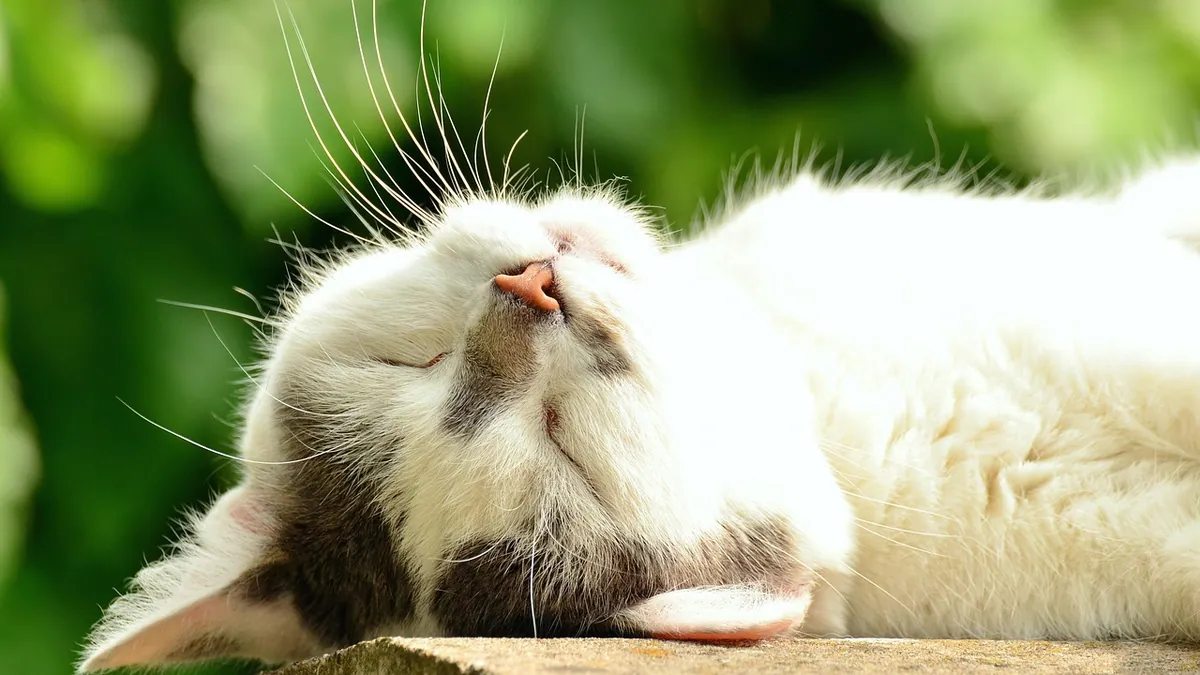
Cats breathe by pulling air through the nose, down the windpipe, and into the lungs, where oxygen passes into the blood. At rest, a healthy cat usually takes 16 to 40 breaths per minute, and you should barely see the chest move. Fast, labored, open-mouth, or noisy breathing is not normal in cats and needs veterinary attention.
This article is educational and is not a substitute for veterinary diagnosis or treatment.
Quick Answer
- A normal resting breathing rate for a cat is roughly 16 to 40 breaths per minute, counted while the cat is calm and asleep or resting.
- In one intensive care study, cats averaged 27 breaths per minute when monitored by camera and 31 breaths per minute when counted at the cage, showing that how you measure changes the number [1].
- Cats breathe quietly with the mouth closed. Open-mouth breathing, wheezing, or a heaving belly at rest is a warning sign.
- Breathing problems in cats are often serious. In one emergency study of 258 severely dyspneic cats, respiratory causes accounted for 33% of cases, cardiac causes 25%, and traumatic and neoplastic causes 21% each [2].
- If your cat is struggling to breathe, keep it calm, do not force its mouth open, and call an emergency clinic right away.
What Normal Cat Breathing Looks Like
A healthy cat breathes through its nose with its mouth closed. The chest rises and falls gently, and you may see a small amount of movement in the belly. You should not hear anything from across the room. Purring, snoring, and the occasional sniffle are separate sounds and usually not breathing distress.
To count the rate, watch your cat while it sleeps or rests quietly. Count each rise and fall of the chest as one breath. Count for 15 seconds and multiply by four, or count for a full 60 seconds for accuracy. Do this a few times over a week so you know your cat's personal baseline.
How you measure matters. In a 2025 study of cats in intensive care, the median breathing rate was lower when measured by camera surveillance (27 breaths per minute) than when counted at the cage (31 breaths per minute) [1]. Cats tend to breathe faster when a person is nearby, especially in an unfamiliar place. That is why home counts, taken when your cat is relaxed, are so useful.
Is It Normal for Cats to Breathe Fast Sometimes?
Yes, in short bursts. A cat that just raced up the stairs, played hard, or is frightened will breathe faster for a few minutes. Heat and pain can do the same. The rate should settle back to normal within a few minutes once the trigger passes and your cat is calm.
What is not normal is a fast rate at rest that stays fast. If your cat is lying still and breathing more than about 40 times per minute, or if the rate is climbing over days, that deserves a call to your veterinarian. A fast resting rate can be an early clue to heart or lung disease. For more on this pattern, see Cat Breathing Fast: Emergency or Normal?.
How Do Cats Breathe Under Blankets?
Cats often burrow under blankets, and this is usually fine. A blanket is not airtight, so fresh air moves in and out as your cat breathes. The bigger risk is heat, not oxygen. Cats can overheat under heavy bedding, especially in a warm room.
If your cat is under a blanket and breathing fast, pull the blanket back and let it cool down. Watch the rate for a few minutes. If it stays high after your cat is uncovered and calm, treat it as a warning sign. If your cat seems to be gasping or pawing at the blanket to get out, get it out right away and call your vet.
Main Causes of Abnormal Breathing in Cats
Breathing changes can come from the nose, throat, airways, lungs, chest cavity, heart, or from pain and stress. The table below groups the common causes with the clues owners tend to notice.
| Cause | Typical clues | How urgent |
|---|---|---|
| Upper airway blockage (nasal discharge, polyps, foreign object) | Noisy breathing, snoring sound, sneezing, mouth breathing | Urgent if the cat cannot breathe through the nose |
| Asthma or bronchitis | Wheezing, coughing, fast breathing after activity | Same-day vet visit, emergency if severe |
| Pneumonia or infection | Fever, cough, lethargy, poor appetite | Same-day vet visit |
| Pleural effusion (fluid around the lungs) | Fast shallow breathing, belly heaving, sitting hunched | Emergency now |
| Heart disease or heart failure | Fast resting rate, cough, weakness, fainting | Emergency now if labored |
| Pneumothorax (air around the lungs) | Sudden fast breathing after trauma or a fall | Emergency now |
| Trauma (falls, car accidents) | Pain, wounds, sudden breathing change | Emergency now |
| Cancer in the chest | Slow onset of fast breathing, weight loss | Urgent vet visit |
| Pain, fever, stress, heat | Fast rate that settles once the trigger passes | Monitor, call vet if it persists |
Pleural effusion, which is fluid buildup around the lungs, is a common finding. In one study of severely dyspneic cats, pleural effusion was present in 39% of cases, with cardiac causes in 38%, respiratory causes in 30%, neoplastic causes in 23%, and traumatic causes in 9% [2]. That is why a vet often reaches for an ultrasound early.
Trauma is another major trigger. In a study of 14 cats with high-rise syndrome (falls from a height), the mean breathing rate was 53 breaths per minute, and two of the 14 cats were in respiratory distress [3]. Both of those cats had bilateral pneumothorax, which is air trapped around both lungs [3]. A sudden breathing change after a fall is always an emergency.
Red Flags That Mean an Emergency
Some breathing signs cannot wait. Call an emergency clinic or head there now if you see any of these:
- Open-mouth breathing at rest. Cats do not pant like dogs unless they are very hot, very stressed, or very sick.
- Belly heaving or a deep push with each breath.
- Breathing with the elbows out and the neck stretched forward.
- Blue, gray, or pale gums and tongue.
- Gasping, choking, or a sudden collapse.
- A resting rate above 40 breaths per minute that does not settle.
- Restlessness, hiding, or a cat that cannot lie down comfortably.
- Breathing that gets worse over minutes, not hours.
If your cat is choking or has something stuck in its throat, keep your hands away from its mouth and get to a vet. See How To Know If Your Cats Choking for the signs. For a broader emergency guide, read Cat Difficulty Breathing: Emergency Signs and What to Do.
What You Can Do at Home While You Wait
Your job at home is to keep your cat calm and get help fast. Stress makes breathing worse, and stress can also make the glottis (the opening to the windpipe) tighten. In newborn rabbits, hypoxia caused the glottis to close and breathing to slow, which shows how much oxygen levels and calm breathing matter [4]. The same principle applies to a struggling cat: less panic, better airflow.
- Keep the room quiet and dim. Turn off loud TV and keep other pets away.
- Do not chase your cat. Let it stay in the position it chooses, even if that is hunched or stretched out.
- Do not force the mouth open or try to look down the throat.
- Do not give any human medication. Many are toxic to cats, and doses must be set by a veterinarian based on your cat's weight and health.
- Carry your cat in a carrier or a box with the top on, and keep the car cool.
- Call the clinic on the way so they can prepare.
If your cat is anxious at the vet, a synthetic feline facial pheromone product may help. In a study of 21 healthy cats, exposure to a synthetic feline facial pheromone analogue (F3) was evaluated for effects on stress and cardiovascular parameters during clinical examination [5]. Ask your vet whether a pheromone spray or diffuser is worth trying for your cat's visits.
What Your Veterinarian Will Check
Your vet will start with the basics: rate, effort, and sound of breathing, plus gum color and heart rate. They will listen to the chest with a stethoscope and feel the belly and chest. They will also ask about the timeline, any coughing, and any recent falls or fights.
Next come tests. Common ones include:
- Chest X-rays to look at the lungs, heart size, and fluid.
- Ultrasound of the chest, which can find fluid or air around the lungs quickly. In the high-rise study, lung and pleural ultrasound diagnosed pneumothorax in five of 14 cats based on loss of lung sliding and a lung point [3].
- Blood work to check for infection, anemia, and organ function.
- Heart tests such as an echocardiogram if heart disease is suspected.
- Airway tests if asthma or a blockage is suspected.
Treatment depends on the cause. Fluid around the lungs may need to be drained. Asthma may need an inhaler or oral medication. Heart failure may need diuretics and other heart drugs. Your vet will calculate every dose from your cat's weight and health, so never guess at home.
Monitoring Your Cat's Breathing at Home
A breathing log is one of the most useful things you can bring to a vet visit. Write down the rate, the time of day, and whether your cat was asleep, resting, or active. Note any coughing, wheezing, or changes in appetite and energy.
Count the rate at the same times each day, ideally when your cat is asleep. A rising trend over several days matters even if each single number looks okay. If your cat has heart disease, your vet may ask you to check the sleeping rate every day. For more on that pattern, see Cat Breathing Fast While Sleeping: When to Worry.
Keep your cat at a healthy weight, avoid cigarette smoke and strong aerosols, and use dust-free litter if your cat has asthma. Keep windows screened so cats cannot fall. If your cat has a chronic condition, keep follow-up visits on schedule. Bad breath or mouth pain can also change how a cat breathes and eats, so dental care matters too. See Why Does My Cat's Breath Smell?.
Limitations and When to Contact a Veterinarian
Normal breathing ranges overlap a lot between cats, and a single number does not tell the whole story. The effort of breathing, the sound, and the trend over time all matter. No article can replace an exam, and individual cases need a veterinarian.
Contact your vet the same day if you notice a resting rate that is higher than usual for your cat, mild coughing, or a rate that climbs over a few days.
Go to an emergency clinic now if you see open-mouth breathing, belly heaving, blue gums, gasping, collapse, or a sudden change after a fall or trauma.
Schedule a routine visit if your cat has a known heart or lung condition and you want to review its monitoring plan.
Frequently Asked Questions
How many breaths per minute is normal for a cat?
A healthy resting cat usually takes about 16 to 40 breaths per minute. Count while your cat is asleep or calm, since stress and activity raise the rate. Learn your cat's own baseline so you can spot changes early.
Why is my cat breathing fast while sleeping?
A fast rate during sleep is more concerning than a fast rate during play, because rest should be the calmest time. It can be an early sign of heart or lung disease. Count the rate for a full minute and call your vet if it stays high.
Can stress make my cat breathe faster?
Yes. Fear, car rides, and vet visits all raise the breathing rate. That is one reason home counts are more reliable than counts taken in a clinic. If the rate settles once your cat relaxes, stress was likely the cause.
Is open-mouth breathing ever normal in cats?
Only in rare situations like extreme heat or heavy panting right after intense play. At rest, open-mouth breathing is a red flag. Call your vet or an emergency clinic right away if your cat is doing it.
What should I do if my cat is breathing hard right now?
Keep your cat calm, keep the room quiet, and do not force its mouth open. Call an emergency clinic and bring your cat in a carrier with the top on. If your cat collapses or its gums look blue, go immediately.
Related Articles
- Why Does My Cat's Breath Smell?
- Cat Breathing Fast: Emergency or Normal?
- Cat Difficulty Breathing: Emergency Signs and What to Do
- Cat Breathing Fast While Sleeping: When to Worry
- How To Know If Your Cats Choking
- Cat Panting or Breathing Fast: What the Vet Will Do and How Much It Costs
- Weird Cat Breathing Patterns: What's Normal and What's Not
- How to Count Your Cat's Breathing Rate at Home
- Cat Breathing Fast While Purring: Normal or Not?
References
- Respiratory rate and breathing pattern in dogs and cats in intensive care units and the value of camera surveillance. The Journal of small animal practice, 2025.
- Emergency Dyspnea in 258 Cats: Insights from the French RAPID CAT Study. Veterinary sciences, 2025.
- Point-of-Care Ultrasound and Clinical Findings in 14 Cats With High-Rise Syndrome. Journal of veterinary emergency and critical care (San Antonio, Tex. : 2001), 2026.
- Hypoxia inhibits breathing and causes the glottis to close in preterm rabbit kittens at birth. Pediatric research, 2026.
- Effects of a synthetic feline facial pheromone analogue (F3, Feliway®) on stress and cardiovascular parameters during clinical examination in cats: a prospective crossover study. BMC veterinary research, 2026.