Cat Breathing With Belly Moving: Normal or Not?
By Dr. Zubair Khalid, DVM, MS, PhD ·
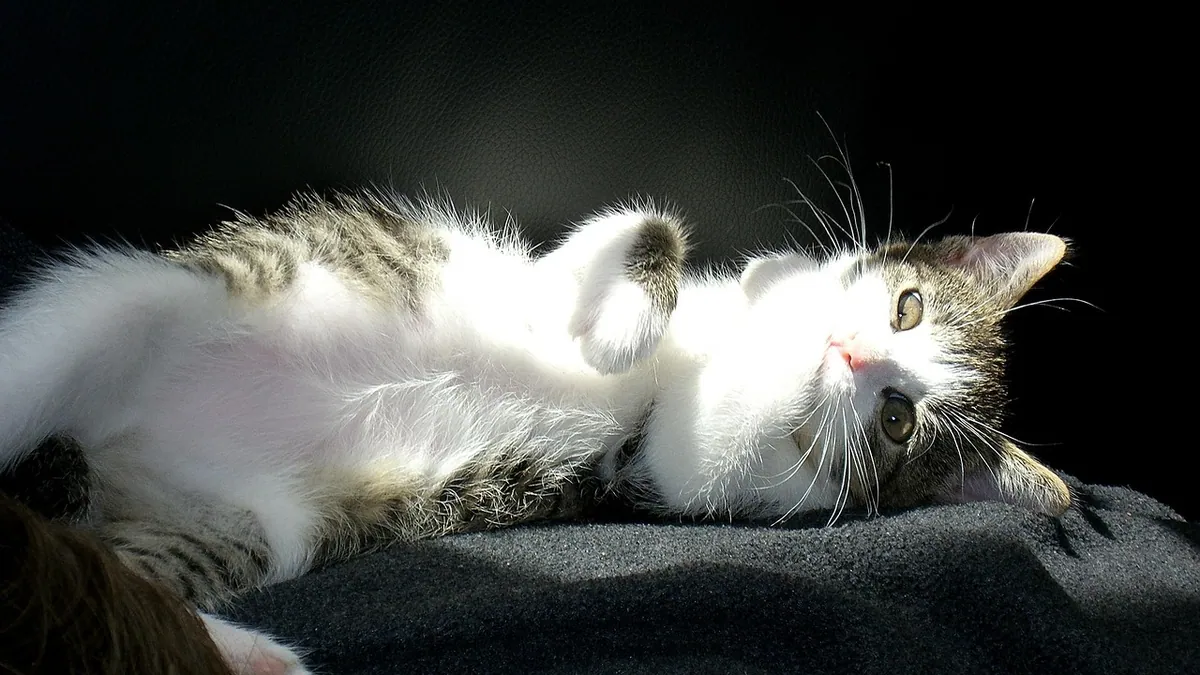
A cat breathing with belly moving can be completely normal. Cats use their diaphragm and abdominal muscles to breathe, so some belly movement is expected, especially when they are relaxed or asleep. The question that matters is not whether the belly moves, but how hard the cat is working to breathe. This article is educational and is not a substitute for veterinary diagnosis or treatment.
Quick Answer
- Mild belly movement during rest or sleep is normal and usually not a concern.
- Labored breathing means the belly moves forcefully and the cat's sides may pull in and out with each breath.
- A normal resting breathing rate for a cat is generally under 30 breaths per minute. Count the breaths when your cat is asleep or calm.
- If your cat is breathing with an open mouth, extending the neck, or using the whole body to breathe, go to an emergency vet now.
- Never give a cat human medications or leftover pet medications for breathing trouble. Some can be toxic or make things worse.
What Belly Breathing Looks Like and What Is Normal
When a cat breathes, air travels through the nose or mouth, down the trachea, into the bronchi, and finally into the tiny air sacs called alveoli, where oxygen enters the blood and carbon dioxide leaves [1]. The diaphragm, a muscle that sits between the chest and abdomen, drives most of this work. When the diaphragm contracts, it pushes the abdominal contents slightly outward, which is why you see the belly rise and fall.
In a healthy cat at rest, you may notice gentle movement in the belly, especially in the area just behind the rib cage. This is called abdominal breathing, and it is a normal part of how cats breathe. Kittens, senior cats, and cats with certain body shapes may show more belly movement than others.
What you want to watch for is effort. Normal breathing is quiet, smooth, and barely noticeable when the cat is relaxed. A cat that is working hard to breathe will show more dramatic movement. The belly may push out and pull in forcefully. The chest and belly may move together in an exaggerated way. You might see the sides of the chest pull inward between the ribs. Some owners describe it as the cat breathing with its stomach or the cat breathing moves whole body.
A useful tool is a resting respiratory rate. When your cat is asleep or lying still, count the number of times the chest or belly rises in 15 seconds, then multiply by four. A rate under 30 breaths per minute is generally considered normal for a resting cat. If the rate is consistently higher, or if it is rising over time, that is a reason to call your vet.
Main Causes of Abnormal Belly Breathing in Cats
Many different conditions can make a cat breathe with more effort and more visible belly movement. Some are mild and treatable. Others are life threatening and need immediate care.
| Cause | Typical clues | How urgent |
|---|---|---|
| Pleural effusion (fluid around the lungs) | Rapid shallow breathing with labored inhalation, weakness, reluctance to lie down | Emergency |
| Heart failure | Increased breathing effort, sometimes with coughing or lethargy | Emergency |
| Asthma or airway disease | Wheezing, coughing, increased effort on exhale | Same day to emergency |
| Pneumonia or infection | Fever, lethargy, nasal discharge, noisy breathing | Same day |
| Chest trauma | Recent fall, hit by car, or fight wound, sudden breathing change | Emergency |
| Tumor in the chest | Gradual increase in effort, weight loss, decreased appetite | Same day to urgent |
| Laryngeal paralysis | Noisy inhalation, voice change, exercise intolerance | Emergency if severe |
| Pectus excavatum (chest wall deformity) | Visible chest depression, increased effort, often in young cats | Urgent, surgical evaluation |
| Pain or stress | Rapid breathing without other signs, resolves when calm | Monitor, call vet if persistent |
Pleural effusion is one of the most common serious causes of labored breathing in cats. It is the buildup of fluid in the space around the lungs. This fluid presses on the lungs from the outside and makes it hard for the cat to inhale air [2]. The signs include respiratory difficulty, rapid shallow breathing with labored inhalation, and weakness [2]. In a large study of 258 severely dyspneic cats, pleural effusion was present in 39% of cases, with cardiac causes accounting for 38% of those effusions, respiratory causes like pyothorax and feline infectious peritonitis for 30%, neoplastic causes for 23%, and traumatic causes for 9% [3]. That same study found that respiratory causes accounted for 33% of dyspnea cases, cardiac causes for 25%, and both traumatic and neoplastic causes for 21% each [3].
Heart failure is another major cause. When the heart cannot pump effectively, fluid can back up into the pleural cavity, a condition called hydrothorax, which is common in cats with congestive heart failure [2]. Cats with heart disease may also have fluid in or around the lungs that makes breathing harder.
Upper airway problems can also change breathing. Laryngeal paralysis is an uncommon but potentially life-threatening condition in cats because it causes upper airway obstruction [4]. Cats with this condition often present with severe dyspnea and inspiratory stridor, a harsh noise when breathing in [4]. Brachycephalic cats, such as Persians and Himalayans, may have anatomical features that make breathing harder, and surgical correction of the nostrils can improve signs in affected cats [5].
Less common causes include pectus excavatum, a chest wall deformity that reduces the space available for the lungs. In one reported case, a young Maine Coon with severe pectus excavatum had increased respiratory effort and needed mechanical ventilation after surgical correction [6]. This is rare, but it shows how structural problems in the chest can affect breathing.
If your cat is breathing fast and you are not sure whether it is an emergency, see Cat Breathing Fast: Emergency or Normal?. If the fast breathing happens mainly during sleep, Cat Breathing Fast While Sleeping: When to Worry can help you sort out what to watch for.
Red Flags That Mean Emergency Now
Some signs mean you should stop reading and go to an emergency veterinary hospital. Do not wait to see if things improve.
- Open mouth breathing. Cats do not pant like dogs when they are healthy. Open mouth breathing in a cat is almost always a sign of serious trouble.
- Neck extended forward and head low. This posture helps open the airway and is a sign of significant distress.
- Blue or pale gums. This means oxygen levels may be dangerously low.
- Breathing rate over 40 breaths per minute at rest, or a rate that keeps climbing.
- Belly pulling in sharply with each breath, or the whole body rocking with each breath.
- Collapse, weakness, or inability to stand.
- Loud or raspy breathing sounds, especially on inhalation.
- Restlessness, pacing, or inability to lie down comfortably.
- Coughing up pink frothy fluid.
If you see any of these, call ahead to the emergency clinic and let them know you are coming. If your cat is struggling to breathe, see Cat Difficulty Breathing: Emergency Signs and What to Do for step-by-step guidance.
Safe Things You Can Do at Home While Waiting
If your cat is breathing with more effort than usual but is not in immediate crisis, there are a few safe steps you can take while you arrange a vet visit.
Keep your cat calm and quiet. Stress makes breathing worse. Put your cat in a quiet room with dim light and minimal handling. Do not chase or restrain your cat unless you must for transport.
Count the resting respiratory rate. Watch your cat's chest or belly for 15 seconds and count each rise. Multiply by four. Write down the number and the time. If you can, count again in 10 to 15 minutes. A rising rate is more concerning than a single high number.
Do not give any medications. Do not give human drugs, leftover antibiotics, or any pet medication without direct instructions from your veterinarian. Doses for cats are calculated by your veterinarian based on your cat's weight and health, and many common human medications are toxic to cats.
Do not put your cat in a carrier that forces it into a cramped position if breathing is already hard. Use a carrier with good ventilation and keep it level. If your cat is open mouth breathing, minimize handling and go straight to the vet.
Keep the environment cool and free of smoke, strong fragrances, and dust. These can irritate airways.
If your cat is coughing or making odd throat movements, it can be hard to tell whether it is a cough or a dry heave. Is My Cat Dry Heaving Or Coughing explains the difference.
What Your Veterinarian Will Check and Test
When you bring your cat in for breathing trouble, your vet will start with a hands-off assessment. They will watch your cat breathe from a distance, check gum color, and listen to the heart and lungs with a stethoscope. They will also count the respiratory rate and note any effort or noise.
Because dyspneic cats are often unable to tolerate additional diagnostic tests upon admission, your vet may need to stabilize your cat first before doing a full workup [3]. This is why they may give oxygen or place a light sedative before taking X-rays.
Common tests include:
- Chest X-rays to look for fluid, masses, heart size, and lung patterns.
- Ultrasound of the chest to detect pleural effusion and guide fluid removal.
- Blood work to check organ function, infection, and oxygen levels.
- Heart evaluation, including an echocardiogram if heart disease is suspected.
If pleural effusion is found, draining the fluid may be necessary to relieve the signs and can help diagnose the underlying problem [2]. However, the outlook for many disorders that cause fluid accumulation in the chest is guarded to poor [2]. Your vet will discuss what they find and what it means for your cat.
If your cat has a mediastinal mass or pleural effusion, imaging helps tell the difference. One study found that measuring the position of the tracheal bifurcation on a lateral chest X-ray can help distinguish a mediastinal mass from pleural effusion in cats [7]. Your vet may use these measurements to guide next steps.
If your cat has abdominal symptoms along with breathing changes, your vet may also recommend imaging of the abdomen. Abdominal Ultrasound in Cats: Normal Findings and Common Abnormalities explains what that test looks for.
Prevention and Monitoring
You cannot prevent every cause of breathing trouble, but you can catch problems earlier.
Know your cat's normal resting breathing rate. Count it when your cat is healthy and asleep. Write it down. Then you have a baseline to compare against when something seems off.
Watch for changes in activity, appetite, and grooming. Cats that are breathing harder often stop grooming, hide more, or eat less. These subtle signs matter.
Keep up with routine vet visits. Heart disease and some lung conditions can be detected early with a good physical exam and listening to the chest.
Manage your cat's weight. Obesity puts extra demand on the heart and lungs. Your vet can help you set a safe weight loss plan if needed.
Reduce airway irritants. Avoid smoking indoors, use dust-free litter if your cat seems sensitive, and keep strong cleaners and fragrances away from your cat's space.
If your cat has a known heart condition or a history of pleural effusion, follow your vet's monitoring plan closely. Report any increase in breathing rate or effort right away.
Limitations and When to Contact a Veterinarian
This article gives general guidance, but every cat is different. Individual cases need a veterinarian who can examine your cat, ask about its history, and run the right tests.
Call your veterinarian the same day if you notice a resting breathing rate over 30 breaths per minute, mild increase in effort that comes and goes, a new cough, or a change in appetite or energy that lasts more than a day.
Go to an emergency veterinary hospital now if you see open mouth breathing, blue gums, collapse, a breathing rate over 40 at rest, belly pulling in sharply with each breath, or any sudden worsening.
If you are unsure, call your vet or an emergency clinic and describe what you see. It is always better to ask than to wait.
Frequently Asked Questions
Is it normal for a cat's belly to move when breathing?
Yes, some belly movement is normal. Cats use their diaphragm and abdominal muscles to breathe, so gentle movement in the belly area is expected, especially when your cat is relaxed or asleep. The concern is effort, not movement itself.
What does labored breathing look like in a cat?
Labored breathing means your cat is working hard to move air. You may see the belly push out and pull in forcefully, the sides of the chest pull inward between the ribs, or the whole body rock with each breath. Open mouth breathing and neck extension are also signs of serious trouble.
Can stress make my cat breathe with its belly?
Yes, stress and pain can increase breathing rate and make belly movement more noticeable. If your cat calms down and the breathing returns to normal within a few minutes, stress is more likely. If it does not settle, call your vet.
Should I count my cat's breaths at home?
Yes, counting resting breaths is one of the most useful things you can do. Count the chest or belly rises for 15 seconds and multiply by four. Do this when your cat is asleep or very calm. A rate under 30 is generally normal. A rate that is rising or staying high is a reason to call your vet.
What should I do if my cat is breathing hard right now?
If your cat is open mouth breathing, has blue gums, is collapsing, or is using its whole body to breathe, go to an emergency vet immediately. Keep your cat calm and minimize handling. Do not give any medications. Call the clinic on the way so they can prepare for your arrival.
Related Articles
- Cat Breathing Fast: Emergency or Normal?
- Cat Breathing Fast While Sleeping: When to Worry
- Cat Difficulty Breathing: Emergency Signs and What to Do
- Is My Cat Dry Heaving Or Coughing
- Abdominal Ultrasound in Cats: Normal Findings and Common Abnormalities
- Why Is My Cat Pacing and Meowing? Anxiety or Medical Issue?
- Labored Breathing in Cats: Causes, Treatment, and When to Worry
- How Do Cats Breathe? Normal Rates and Warning Signs
- Uneven or Irregular Breathing in Cats: Causes and Care
References
- Introduction to Lung and Airway Disorders of Cats - Cat Owners. Merck Veterinary Manual.
- Disorders of the Chest Cavity of Cats - Cat Owners. Merck Veterinary Manual.
- Emergency Dyspnea in 258 Cats: Insights from the French RAPID CAT Study. Veterinary sciences, 2025.
- Transoral Endoscopic-Assisted Partial Arytenoidectomy as a Treatment for Laryngeal Paralysis in Eight Cats. Animals : an open access journal from MDPI, 2026.
- Ala vestibuloplasty for treatment of feline brachycephalic syndrome: a description of the procedure and long-term outcomes in 27 cats. Journal of feline medicine and surgery, 2026.
- Hypoventilation After Placement of an External Splint in a Cat With Severe Pectus Excavatum Managed With Pressure Support Ventilation. Journal of veterinary emergency and critical care (San Antonio, Tex. : 2001), 2026.
- Right lateral thoracic radiographic metrics help discriminate cranial mediastinal masses and pleural effusion in cats. Journal of the American Veterinary Medical Association, 2025.