Uneven or Irregular Breathing in Cats: Causes and Care
By Dr. Zubair Khalid, DVM, MS, PhD ·
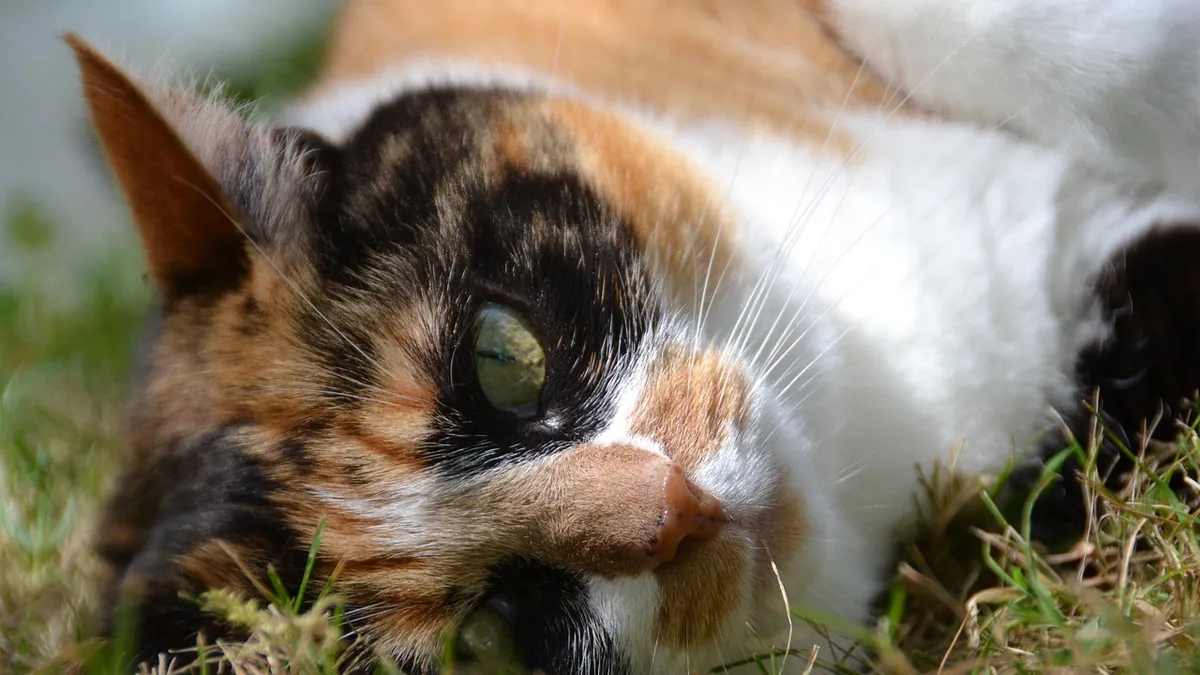
Cat breathing irregular means your cat's breathing pattern is uneven, ragged, or changing in rate and depth instead of staying smooth and steady. A cat at rest normally breathes quietly and evenly, so a pattern that looks different from that deserves attention. Some causes are mild and temporary, but others, like fluid around the lungs or heart failure, need care right away.
This article is educational and is not a substitute for veterinary diagnosis or treatment.
Quick Answer
- A normal resting cat breathes quietly and evenly, usually with the chest moving gently and the mouth closed.
- Uneven or ragged breathing can come from stress, pain, asthma, fluid in the chest, heart disease, or lung damage.
- Breathing that is rapid, shallow, and labored, especially with weakness, points to fluid or disease in the chest cavity and needs urgent care [1].
- Never give your cat human medications or leftover pet drugs for breathing trouble. The veterinarian calculates any dose from your cat's weight and health.
- Count your cat's breaths per minute while it sleeps and record a short video to show your veterinarian.
What Uneven Breathing Looks Like and What Is Normal
Normal breathing in a calm, resting cat is easy to miss. The chest rises and falls in a smooth rhythm, the mouth stays closed, and there is no noise, wheezing, or effort. Cats often breathe faster when they are hot, scared, playing, or in pain, and that faster rate settles once they relax.
Uneven breathing goes by several names owners use. You might describe it as cat breathing uneven, cat breathing different, cat ragged breathing, or cat breathing in two spots. In practice, these usually mean one of a few things. The rate speeds up and slows down without a clear reason. The depth changes, so some breaths are shallow and others are deep. The belly and chest move in a jerky or out-of-sync way. Or the cat pauses between breaths longer than usual.
Some of these patterns are harmless. A cat that just ran up the stairs or got startled will breathe fast for a minute or two. A cat in a deep sleep may take slow, deep breaths. What matters is the pattern when your cat is calm, resting, and undisturbed. That is the pattern worth measuring and describing to your veterinarian.
Main Causes of Irregular Breathing in Cats
Many conditions can change how a cat breathes. Some start in the lungs, some in the chest cavity around the lungs, and some in the heart. Others are short-term responses to stress, heat, or pain.
| Cause | Typical clues | How urgent |
|---|---|---|
| Stress, fear, heat, or pain | Fast breathing that settles when the cat calms, no other signs | Usually not urgent, watch closely |
| Asthma or airway disease | Wheezing, coughing, noisy breathing, open-mouth breathing in severe flares | Same-day to urgent |
| Fluid in the chest cavity (pleural effusion, hydrothorax, chylothorax) | Rapid shallow breathing with labored inhalation, weakness | Emergency [1] |
| Blood in the chest cavity (hemothorax) | Labored breathing after trauma, clotting problems, or tumors | Emergency [1] |
| Chest infection (pleuritis, empyema) | Fever, cough, pain, difficulty breathing | Urgent [1] |
| Congestive heart failure | Acute respiratory distress, often with heart changes on imaging | Emergency [2] |
| Emphysema or chronic lung disease | Labored breathing from trapped air and damaged air sacs | Urgent, needs diagnosis [3] |
| Blood clots linked to heart disease | Sudden distress, weakness, sometimes a swollen or bluish tongue tip | Emergency [4] |
Lung and airway problems
Emphysema in cats usually happens because of another lung disease. It makes it harder to push air out of the lungs, so breathing takes more effort. The most common sign is labored breathing. Because the lung damage is permanent, treatment targets the disease that caused it, and medicines such as bronchodilators and anti-inflammatory drugs can improve breathing [3].
Asthma and other airway diseases can also cause noisy or uneven breathing. If your cat breathes noisily while resting, that pattern can overlap with asthma, pleural effusion, and heart disease, so a veterinary exam matters.
Fluid and air around the lungs
The chest cavity is the space around the lungs. When fluid builds up there, the lungs cannot expand fully. Hemothorax is blood in that space, often from trauma, clotting disorders, or chest tumors. Hydrothorax is clear fluid, usually from problems with blood flow or lymph drainage. Pleural effusion is a type of hydrothorax common in cats with congestive heart failure. Chylothorax is a high-triglyceride lymphatic fluid and is relatively rare. All three cause respiratory difficulty, such as rapid shallow breathing with labored inhalation, and weakness [1].
Draining the fluid can relieve these signs and help identify the underlying problem, but the outlook for many disorders that cause chest fluid is guarded to poor [1]. That is why fast action matters.
Heart disease
Heart disease is a common reason a cat suddenly struggles to breathe. In one reported case, a five-year-old spayed cat came in with acute respiratory distress, and testing showed left-sided congestive heart failure with a thickened heart wall and an enlarged left atrium. The cat improved with treatment, and a year later the heart changes had normalized on imaging. About two years after the first episode, the cat came back with acute respiratory distress and heart failure again [2].
Heart disease can also cause blood clots. One cat with hypertrophic cardiomyopathy and severe left atrial dilation developed a clot that blocked blood flow to the tongue, causing a swollen, bluish tongue tip along with neurologic signs and a heart murmur [4]. Breathing changes can be part of a larger picture like this.
Stress, heat, and pain
Not every change is disease. A frightened cat at the vet, a cat in a hot room, or a cat with a painful injury may breathe faster and less evenly. These patterns usually improve once the trigger is removed. If they do not, treat it as a medical concern.
Red Flags That Make It an Emergency
Some signs mean your cat needs a veterinarian right now. Do not wait to see if things improve overnight.
- Open-mouth breathing at rest. Cats should breathe through the nose when calm.
- Breathing that is rapid and shallow with obvious effort, especially with weakness [1].
- Blue, gray, or pale gums and tongue.
- A swollen, bluish tongue tip, which can point to a clot [4].
- Collapse, stumbling, or inability to stand.
- Breathing that gets worse over minutes, not hours.
- A cat that is gasping, extending the neck, or flaring the nostrils.
If you see any of these, go to an emergency clinic. If your cat is struggling to breathe, read Cat Difficulty Breathing: Emergency Signs and What to Do on the way.
Safe Things You Can Do at Home While Waiting
Your job at home is to keep your cat calm and gather information. Do not try to treat breathing trouble yourself.
- Keep the room quiet, cool, and dim. Stress makes breathing worse.
- Do not hold your cat down or wrap it tightly. Let it choose a comfortable position.
- Count breaths per minute while your cat rests or sleeps. Watch the chest or belly rise and fall.
- Record a 30 to 60 second video of the breathing pattern. This is often more useful to your veterinarian than a description.
- Note the gum color if you can do it safely. Pink is normal, blue or gray is an emergency.
- Do not give human medications, leftover antibiotics, or any drug not prescribed for this cat. The veterinarian calculates the dose from your cat's weight and health.
- Call your veterinarian or an emergency clinic and describe what you see.
If your cat is breathing with its mouth open, that is a crisis sign. See Why Is My Cat Breathing open-mouthed? Feline Asthma & Respiratory Crisis for what to expect.
What Your Veterinarian Will Check and Test
Your veterinarian will start with the basics. They will watch your cat breathe from across the room before touching it, because handling can worsen distress. They will listen to the heart and lungs, check gum color, feel the pulse, and take the temperature.
Next come tests. Chest X-rays show the heart size, lung patterns, and whether fluid or air is around the lungs. Ultrasound of the chest can confirm fluid and help guide drainage. Blood work checks organ function, infection, and markers of heart strain. In the heart failure case described earlier, cardiac troponin I was elevated and rose over the first 24 hours before returning toward normal after treatment [2].
If fluid is found, the veterinarian may drain some of it. This relieves breathing and helps identify the cause [1]. For suspected heart disease, an echocardiogram shows the heart's structure and function. For airway disease, the veterinarian may assess how the lungs respond to bronchodilators and anti-inflammatory drugs [3].
Treatment depends on the cause. Cats with chest fluid may need drainage plus drugs for the underlying problem [1]. Cats with heart failure may need diuretics and other heart medications, and the doses are calculated for each cat [2]. Cats with emphysema are treated for the disease that damaged the lungs [3].
Prevention and Monitoring at Home
You cannot prevent every cause of irregular breathing, but you can catch changes early.
- Know your cat's normal resting breathing rate. Measure it a few times when your cat is healthy and asleep.
- Weigh your cat monthly. Unexplained weight loss or gain can signal heart or lung disease.
- Keep up with wellness visits. A veterinarian can hear early heart murmurs or lung changes before you notice breathing problems.
- Control dust, smoke, and strong scents in the home. These can trigger airway irritation in cats with asthma.
- Watch for coughing, wheezing, or noisy breathing during rest. These can be early clues. See Why Is My Cat breathing noisily while resting? Asthma Pleural Effusion and Heart Disease for more detail.
- Keep a log of episodes with dates, times, and videos. Patterns help your veterinarian decide what to test.
If your cat has a known heart condition, follow the recheck schedule closely. Heart failure can return even after a period of improvement [2].
Limitations and When to Contact a Veterinarian
This article cannot tell you what is causing your cat's breathing pattern. Only a veterinarian who examines your cat can do that. Individual cases need a veterinarian.
Contact an emergency clinic now if you see open-mouth breathing at rest, blue or gray gums, collapse, a swollen or bluish tongue tip, or rapid shallow breathing with weakness [1][4]. These signs can worsen within minutes.
Contact your veterinarian the same day if your cat's resting breathing rate is clearly higher than normal, if breathing looks uneven or ragged for more than a short episode, or if you notice coughing, wheezing, or reduced activity.
Schedule a routine visit if the changes are mild and come and go, or if you simply want a baseline check. Bring your videos and your breathing-rate log.
Frequently Asked Questions
Is uneven breathing in cats always serious?
No, not always. Stress, heat, and pain can change a cat's breathing for a short time, and it usually settles once the trigger passes. Breathing that stays uneven at rest, or that comes with effort, weakness, or color changes in the gums, needs veterinary care.
Can hairballs cause irregular breathing?
Hairballs mainly cause coughing, gagging, or vomiting, not a lasting change in breathing rhythm. If your cat retches and then breathes normally, a hairball is possible. If breathing stays uneven afterward, that points to something else and should be checked.
Does purring change a cat's breathing pattern?
Yes, purring can make the chest and belly move in a way that looks uneven or fast. To get a true reading, count breaths when your cat is asleep and not purring. If the pattern still looks wrong when your cat is fully relaxed, call your veterinarian.
Can dental problems affect my cat's breathing?
Severe dental disease can cause drooling, bad breath, and pain that changes how your cat eats and breathes. It does not usually cause true irregular breathing on its own. If you notice breath odor along with breathing changes, see Why Does My Cat's Breath Smell? and Cat Bad Breath Drooling, and mention both issues at your visit.
Will my cat need oxygen at the clinic?
Sometimes, yes. Cats in respiratory distress often receive oxygen while the team stabilizes them and runs tests. Oxygen support buys time and reduces the work of breathing. Whether your cat needs it depends on the exam, the oxygen level, and the underlying cause, so the veterinarian decides case by case.
Related Articles
- Why Is My Cat breathing noisily while resting? Asthma Pleural Effusion and Heart Disease
- Cat Difficulty Breathing: Emergency Signs and What to Do
- Why Is My Cat Breathing open-mouthed? Feline Asthma & Respiratory Crisis
- Why Does My Cat's Breath Smell?
- Cat Bad Breath Drooling
- Cat Breathing Fast While Sleeping: When to Worry
- Weird Cat Breathing Patterns: What's Normal and What's Not
- Shallow Breathing in Cats: Causes and When It's an Emergency
- Labored Breathing in Cats: Causes, Treatment, and When to Worry
- Bacterial Respiratory Infections in Cats: Etiology, Diagnosis, and Treatment
References
- Disorders of the Chest Cavity of Cats - Cat Owners. Merck Veterinary Manual.
- Recurrent transient myocardial thickening and congestive heart failure in a cat. Journal of veterinary cardiology : the official journal of the European Society of Veterinary Cardiology, 2026.
- Emphysema in Cats - Cat Owners. Merck Veterinary Manual.
- Tongue infarction in suspected lingual artery thromboembolism in a cat with hypertrophic cardiomyopathy. JFMS open reports, 2026.