Dog Breathing Patterns: What's Normal and What's Not
By Dr. Zubair Khalid, DVM, MS, PhD ·
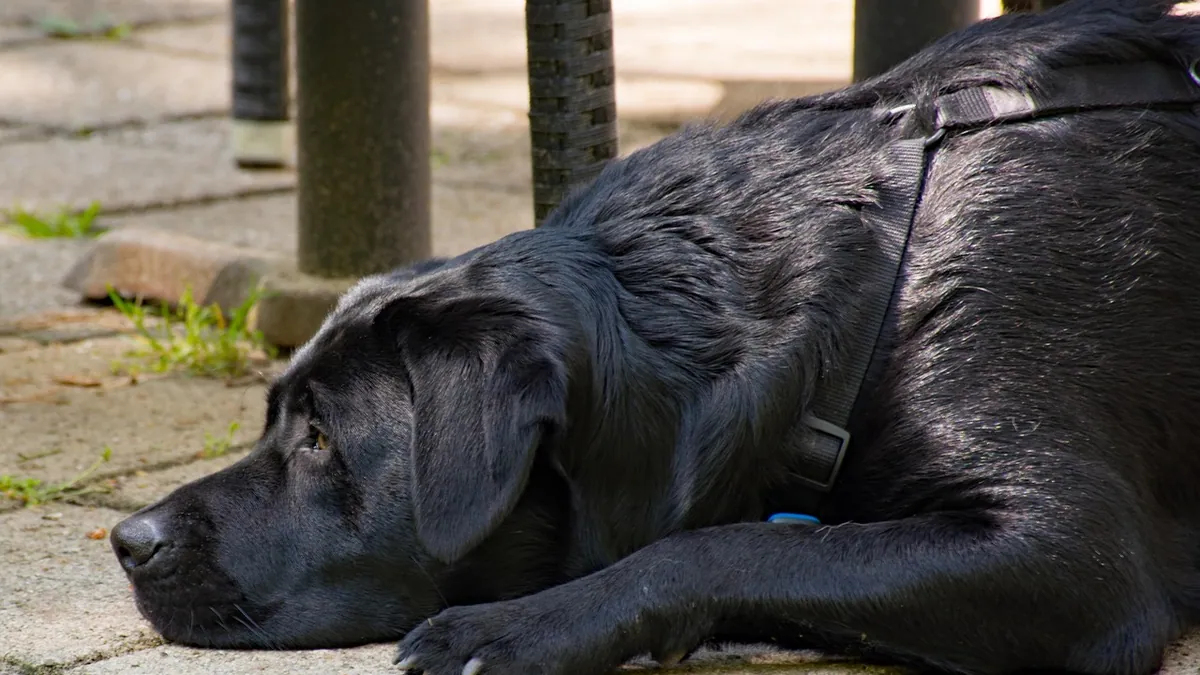
Most healthy dogs breathe quietly through their nose at rest, with a smooth, regular rhythm and no visible effort. Dog breathing patterns can shift with sleep, heat, pain, and disease, so the useful skill is knowing what calm breathing looks like for your dog and spotting the changes that need a veterinarian. This article is educational and is not a substitute for veterinary diagnosis or treatment.
Quick Answer
- Count breaths when your dog is asleep or fully relaxed, not after play or a walk. Each in-and-out cycle counts as one breath.
- Normal resting breathing is quiet, effortless, and regular, with the chest and belly moving gently together.
- A sleeping dog can breathe more slowly than you expect, and camera or audio monitoring in sleeping dogs tracks those slow rates accurately [1].
- Effort matters more than speed. A dog who is working hard to breathe, even at a normal rate, needs urgent care.
- Record a short video of the pattern and count the rate. That gives your vet far more to work with than a description alone.
What Normal Dog Breathing Patterns Look Like
At rest and asleep
A relaxed dog breathes through the nose with the mouth closed. The chest rises and falls smoothly, and the belly moves in and out in time with it. There is no whistling, no wheeze, no nostril flaring, and no visible pulling at the ribs.
Sleeping rates are often lower than owners expect. In one study of sleeping dogs, video-based breath counting matched manual counting closely, with average errors under two breaths per minute [1]. That precision matters because small changes over time can be meaningful.
Awake and alert
An awake, calm dog breathes a little faster than a sleeping one. In intensive care settings, dogs monitored by camera had a median respiratory rate of 30 breaths per minute, compared with 34 breaths per minute when someone stood at the cage [2]. Rates also fell as dogs got closer to discharge, which suggests stress and illness both push the number up [2].
Panting
Panting is normal cooling behavior. Dogs use it to regulate temperature, and the upper airways play a direct role in that process [3]. A dog who has been running, is excited, or is in warm weather will pant with an open mouth and a wide, flat tongue. That pattern should settle within a few minutes of rest and shade.
Heat changes the picture fast. In one study of outdoor walks, when radiant heat load rose above a certain threshold, respiratory rates jumped from roughly 47 to 374 breaths per minute and dogs drank far more water [4]. Panting that does not slow down after cooling is a warning sign.
What a breathing chart should actually track
A simple log beats a memorized chart. Write down the rate, whether the mouth is open or closed, whether the belly moves more than the chest, and whether your dog is asleep, resting, or active. Add the time of day. Patterns across days tell your vet more than any single number.
Dog Breathing Patterns and What They Mean
Fast breathing (tachypnea)
Fast breathing with a normal effort level often reflects pain, fever, anxiety, heat, or early heart or lung disease. Fear alone can cause panting and trembling in dogs [5]. If the rate stays high while your dog is calm and cool, it deserves a same-day call.
Slow breathing
A slow rate in a deeply sleeping dog is usually fine. A slow rate in a dog who is weak, unresponsive, or has blue-tinged gums is an emergency.
Abdominal effort
Watch the belly. If the abdomen pushes out hard with each breath while the chest barely moves, the diaphragm and abdominal muscles are doing extra work. Diaphragmatic function is central to breathing, and dogs in respiratory distress show measurable differences in how the diaphragm contracts and relaxes compared with normal dogs [6]. A strong abdominal component usually means the lower airways or lungs are struggling.
Paradoxical breathing
Paradoxical breathing means the belly pulls in when the chest expands, or the two move in opposite directions. It looks wrong the moment you see it. This pattern suggests the airway or chest wall is not working normally, and it needs emergency evaluation.
Cheyne-Stokes-like breathing
This pattern is a cycle of deep, fast breaths that gradually become shallow and slow, sometimes with a pause, then repeat. It reflects an unstable breathing drive and is most often seen in dogs who are very ill, sedated, or have brain or heart problems. Treat any pause in breathing as an emergency.
Noisy or obstructed breathing
Snoring, snorting, and harsh upper airway sounds are common in flat-faced breeds. Brachycephalic obstructive airway syndrome shares features with obstructive sleep apnea in people, and severely affected dogs can develop low oxygen levels over time [7]. If your flat-faced dog snores loudly, tires quickly, or gags while breathing, that is a medical issue, not a breed quirk.
Table: Causes of Abnormal Breathing
| Cause | Typical clues | How urgent |
|---|---|---|
| Heat stress or heavy exercise | Open-mouth panting after activity or sun exposure, settles with cooling [4] | Urgent if it does not settle in minutes |
| Pain or anxiety | Panting with trembling, pacing, hiding, normal gums [5] | Same-day vet visit |
| Brachycephalic airway syndrome | Loud snoring, snorting, gagging, exercise intolerance in flat-faced breeds [7] | Same-day to urgent, depending on severity |
| Heart failure | Fast resting rate, cough, trouble settling at night, abdominal swelling | Emergency if struggling to breathe |
| Pneumonia or lung disease | Cough, fever, fast shallow breaths, reduced appetite | Same-day to emergency |
| Diaphragmatic or chest wall problem | Belly pulling in while chest expands, marked effort [6] | Emergency now |
| Brain or metabolic cause | Cheyne-Stokes-like cycles, pauses, confusion, weakness | Emergency now |
| Airway foreign body or collapse | Sudden harsh noise, gagging, distress during or after eating | Emergency now |
Red Flags That Mean Emergency
Call an emergency hospital now if you see any of these.
- Gums that are blue, gray, or white instead of pink.
- Breathing with the elbows out, neck stretched forward, or head held low.
- Belly pulling in while the chest expands (paradoxical pattern).
- Pauses in breathing, or a cycle of deep breaths fading to shallow ones.
- A resting rate that stays high while your dog is calm and cool.
- Collapse, staggering, or a dog who will not lie down.
- Open-mouth breathing in a cat-like posture with a wide-eyed, panicked look.
- Sudden severe distress after eating, chewing, or vomiting.
Do not wait to see if it passes. Minutes matter when oxygen delivery fails, because the exchange of oxygen and carbon dioxide in the alveoli is what keeps every organ working [3].
What You Can Safely Do at Home While You Wait
Keep your dog calm and cool
Move your dog to a quiet, air-conditioned or shaded space. Offer small amounts of water. Do not force drinking. Keep children and other pets away.
Count and record
Count breaths for 15 seconds and multiply by four, or count for a full minute if you can. Note whether the mouth is open, whether the belly moves more than the chest, and whether there is noise. A short phone video from the side is ideal.
Do not give medications
Never give human cough syrups, antihistamines, sedatives, or leftover pet medications. Your veterinarian calculates any drug dose from your dog's weight and health status. Guessing can make breathing worse.
Handle gently
Keep the collar loose or remove it if it presses on the throat. Carry small dogs instead of using a leash that pulls. Avoid anything that raises stress, because fear itself increases breathing effort [5].
Know your transport plan
Call ahead so the clinic can prepare oxygen. If your dog is struggling, drive directly and have someone else call. Keep the car cool.
What Your Veterinarian Will Check and Test
History and observation
Your vet will ask when the pattern started, what it looks like at rest and asleep, and whether anything makes it better or worse. Your video and log are genuinely useful here.
Physical exam
Expect gum color, capillary refill, chest listening, pulse quality, and a hands-on check of the throat and chest. Your vet will also watch the pattern from across the room before touching your dog, since handling changes breathing.
Oxygen and imaging
Pulse oximetry, chest X-rays, and sometimes ultrasound are common next steps. Ultrasound of the diaphragm is increasingly used to assess how well that muscle is working in dogs with breathing difficulty [6].
Monitoring tools
Wireless harnesses can track respiratory rate, heart rate, and temperature in hospitalized dogs, and they correlate well with manual measurement, though individual readings vary enough that they support instead of replace hands-on checks [8]. Camera surveillance is another option, and it tends to record lower rates than cage-side observation because it captures calmer moments [2].
Bloodwork
Blood gas, blood counts, and chemistry panels help separate lung disease from heart disease, anemia, and metabolic causes.
Prevention and Daily Monitoring
Know your dog's baseline
Measure resting breathing once a week when your dog is asleep. Write it down. A personal baseline is more useful than any general chart.
Use technology wisely
Home audio and video tools can estimate sleeping breathing rates with good accuracy [1]. They are helpful for trends, not for diagnosis. If the trend rises, call your vet.
Manage heat and exercise
Walk in the cool parts of the day. In hot, sunny conditions, radiant heat can push breathing rates dramatically higher and increase water needs [4]. Watch for heavy panting that does not settle.
Keep the airway healthy
Maintain a healthy weight, avoid tight collars, and treat dental and nasal disease early. If your dog has chronic bad breath along with noisy breathing, that combination deserves a veterinary look. See Dog Bad Breath: When Is It More Than Just Doggy Breath? and Dog Bad Breath: When It's More Than Just a Dental Issue.
Watch the whole dog
Breathing changes rarely happen alone. If your dog is also slowing down, read Dog Lethargy: How to Tell If It's Serious and Dog Lethargy: When Is It Serious?. If the fast breathing shows up mainly at night, see Dog Breathing Fast While Sleeping: Normal or a Problem?.
Follow up on chronic conditions
Dogs with heart or airway disease need scheduled rechecks, not just visits when things look bad. Ask your vet what resting rate should trigger a call.
Limitations and When to Contact a Veterinarian
No article can tell you what your individual dog's breathing means. Only a veterinarian who examines your dog can do that.
Call an emergency clinic immediately for blue or gray gums, paradoxical breathing, breathing pauses, collapse, or a dog who cannot settle because of breathing effort.
Call your regular veterinarian the same day for a resting rate that is clearly above your dog's normal baseline, new coughing, noisy breathing that has worsened, or panting that does not stop after cooling and rest.
Schedule a routine visit for a slow drift upward in sleeping rate over weeks, mild exercise intolerance, or snoring that has gotten louder in a flat-faced breed.
Frequently Asked Questions
How do I count my dog's breathing rate correctly?
Count each full in-and-out cycle as one breath while your dog is asleep or fully relaxed. Count for 15 seconds and multiply by four, or count for a full minute for accuracy. Repeat on several different days so you have a real baseline instead of a single snapshot.
Is belly breathing in dogs always a bad sign?
No, gentle belly movement is part of normal breathing in many dogs. The concern is a strong abdominal push with very little chest movement, or a belly that pulls inward while the chest expands. That kind of effort suggests the diaphragm or lower airways are struggling and needs prompt veterinary attention.
Can stress or fear change my dog's breathing pattern?
Yes, fear commonly causes panting, trembling, hiding, and flattened ears in dogs. Intense or repeated exposure to frightening situations can escalate into phobia and make a dog more prone to aggression. If panting only happens around a specific trigger, tell your vet, because behavior and medical causes often overlap.
Does a flat-faced dog's snoring need treatment?
Often yes. Brachycephalic obstructive airway syndrome causes real airway obstruction, and severely affected dogs can develop low oxygen levels over time. Loud snoring, snorting, gagging, or tiring quickly during walks are signs to discuss with your vet instead of accept as normal for the breed.
Are home breathing monitors accurate enough to rely on?
They are useful for spotting trends, not for making diagnoses. Home audio and video methods estimate sleeping breathing rates closely enough to be helpful, and hospital harnesses track rates well on average. Individual readings can still vary, so use the numbers to decide when to call your vet, not to replace an exam.
Related Articles
- Dog Breathing Fast While Sleeping: Normal or a Problem?
- Dog Bad Breath: When Is It More Than Just Doggy Breath?
- Dog Lethargy: How to Tell If It's Serious
- Dog Lethargy: When Is It Serious?
- Dog Bad Breath: When It's More Than Just a Dental Issue
- Is My Dog's Panting a Sign of Pain or Just Anxiety?
- My Dog's Breathing Seems Weird: When to Worry
- Normal Dog Breathing Rate: How to Count and Interpret
- Dog Breathing Problems: Causes and When to Worry
- Canine and Feline Respiratory Infections: Etiology, Transmission, Zoonotic Risk, and Diagnostic Approaches
- Multiplex Real-Time RT-PCR for Differential Diagnosis of Canine Infectious Respiratory Disease Complex (CIRDC): Panel Design, Validation, and Clinical Utility
References
- Audio and video nearables for monitoring respiratory rate in sleeping dogs. Scientific reports, 2025.
- Respiratory rate and breathing pattern in dogs and cats in intensive care units and the value of camera surveillance. The Journal of small animal practice, 2025.
- Introduction to Lung and Airway Disorders of Dogs - Dog Owners. Merck Veterinary Manual.
- Cool and safe walks: heat stress threshold for domestic dogs living in hot and sunny regions. International journal of biometeorology, 2026.
- Targeted lipidomics showed altered serum phosphatidylcholine levels in fearful dogs. PloS one, 2026.
- M-Mode and Tissue Doppler Ultrasonographic Assessment of Diaphragmatic Function in Dogs With and Without Respiratory Distress. Animals : an open access journal from MDPI, 2025.
- Canine brachycephalic obstructive airway syndrome as a model for studying the effects of obstructive sleep apnea during pregnancy. Animal models and experimental medicine, 2026.
- Validation of Wireless Harness for Measuring Respiratory Rate, Heart Rate, and Body Temperature in Hospitalized Dogs. Veterinary sciences, 2025.