Why Is My Rabbit Staring at Me? What It Means
By Dr. Zubair Khalid, DVM, MS, PhD ·
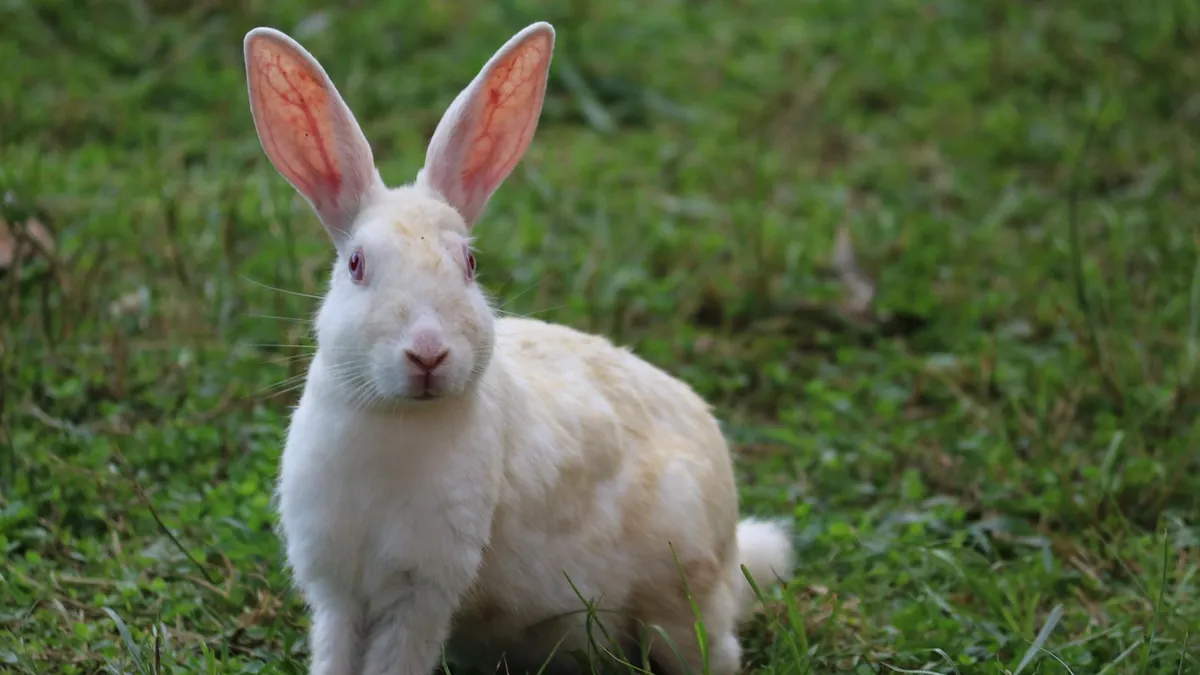
Rabbits stare for many ordinary reasons, and most staring is a normal part of how a prey animal watches its surroundings. A rabbit that freezes and looks at you is often just checking whether you are a threat, a source of food, or something worth ignoring. This article is educational and is not a substitute for veterinary diagnosis or treatment.
Quick Answer
- Staring is usually vigilance, not aggression. Rabbits are prey animals, and their eyes are built to scan a wide field of view for movement [1].
- A relaxed stare comes with loose ears, soft eyes, a normal body posture, and a rabbit that will eat or move if you offer a treat.
- A frightened stare comes with a crouched or flattened body, ears pinned back, a thumping foot, or a rabbit that bolts when you move.
- A painful or sick rabbit may stare without responding to food, sit hunched, grind its teeth, or stop grooming.
- If staring comes with weight loss, eye discharge, head tilt, or a sudden change in appetite, book a veterinary visit.
Why Does My Rabbit Stare at Me?
Rabbits are a prey species. Their survival depends on spotting movement early and deciding fast whether to freeze, hide, or run. A rabbit that stops and stares at you is doing exactly what its nervous system is designed to do. It is gathering information.
Rabbits also have a wide field of best vision compared with many mammals, and their hearing and vision work together to point their attention at anything that might matter [1]. That is why your rabbit may snap its head toward a sound and then lock its eyes on you. You are the thing it is evaluating.
Normal reasons your rabbit stares
- You are the food person. Rabbits learn routines fast. If you appear at the same time each morning or evening, your rabbit may sit at the cage door and stare because staring has worked before.
- It is watching for movement. A rabbit in a quiet room will track you as you walk past. This is scanning behavior, not a challenge.
- It is resting with its eyes open. Rabbits can rest and even sleep with their eyes open. A still, quiet rabbit with a relaxed body may simply be dozing.
- It is curious. A new object, a new smell, or a change in the room can hold a rabbit's attention for a long time.
- It wants something. Rabbits may stare to ask for food, a cage mate, or time out of the enclosure. Watch what happens right after the stare. If you usually feed or open the door, the stare is a request.
- It is bonding. A rabbit that sits near you, stares, and then flops over or closes its eyes is comfortable. That is a good sign.
Why does my rabbit just stare at me and not move?
A frozen stare is the classic rabbit response to something uncertain. Freezing makes a small animal harder to notice. If your rabbit freezes when you enter the room but relaxes once you sit down, it is reading your behavior and deciding you are safe. If it freezes every time you approach, it may not yet trust you, or something in the room (a smell, a sound, another pet) may be worrying it.
Why does my rabbit wink at me?
A slow blink or a one-eyed wink is usually a relaxed signal, not a medical problem. Rabbits often narrow or close their eyes when they feel safe, especially during grooming or a quiet rest. A true wink is brief. If one eye stays partly closed, waters, or looks cloudy, that is different and needs a veterinary exam.
Medical Causes to Rule Out
Staring can also be a sign that something is wrong. Pain and illness change behavior in rabbits, and owners often notice the change before they notice a specific symptom. A welfare assessment framework for rabbits tracks clinical, behavioral, and physiological markers together because no single sign tells the whole story [2].
Pain or discomfort
A rabbit in pain may sit hunched, stare into space, grind its teeth, or stop moving normally. Dental disease, gut stasis, urinary problems, and joint pain are common causes. A rabbit that stares and will not eat is a rabbit that needs to be seen.
Eye and vision problems
Rabbits can develop eye discharge, corneal ulcers, cataracts, and other eye disease. A rabbit that stares with one eye partly closed, rubs its face, or bumps into objects may have a vision problem. Eye changes in any species deserve a prompt exam, and the same urgency applies to rabbits.
Parasites and skin disease
Chronic infestation with the mite Psoroptes ovis reduced locomotor activity by 23.2%, chin marking by 38.3%, and exploratory activity by 31.2% in male rabbits in one study [3]. A rabbit with ear mites or skin mites may become quieter, less interactive, and more likely to sit and stare. If you see head shaking, ear crusts, or hair loss, have your veterinarian check for parasites.
Systemic illness
Rabbits hide illness well. A rabbit that stares more than usual, eats less, produces smaller droppings, or seems dull may have a systemic problem. Any rabbit that stops eating for more than a few hours should be seen the same day.
When Staring Becomes a Problem
Staring by itself is rarely a problem. The context matters more than the behavior.
Signs the stare is fear, not calm
- Ears pinned flat against the head
- Body pressed low to the floor
- Eyes wide with the whites visible
- Loud thumping of a hind foot
- A rabbit that bolts, lunges, or grunts when you move closer
A rabbit showing these signs is stressed. Repeated stress can affect health and behavior over time, so it is worth changing how you approach and handle your rabbit.
Signs the stare is pain or illness
- Hunched posture with the belly pressed to the floor
- Grinding or clicking teeth
- No interest in favorite foods
- Droppings that are small, few, or absent
- Weight loss, drooling, or a wet chin
- Head tilt, circling, or loss of balance
Any of these signs means a veterinary visit, not a wait-and-see approach.
Signs the stare is a vision problem
- One eye partly closed or cloudy
- Discharge, redness, or swelling around the eye
- Bumping into walls or furniture
- Startling easily when you approach from one side
What to Do Step by Step
1. Watch before you act
Sit quietly a few feet away and observe for a few minutes. Note your rabbit's ears, body posture, breathing, and whether it eats. This tells you whether the stare is relaxed or tense.
2. Check the basics
Make sure your rabbit has fresh hay, clean water, a clean litter area, and a place to hide. Poor husbandry is a common reason rabbits feel stressed. In a survey of 529 rabbit owners, most reported high knowledge of rabbit care, but that knowledge did not always match what they actually did at home [4]. Good intentions are not the same as good setup.
3. Build trust slowly
Sit on the floor at your rabbit's level. Let the rabbit come to you. Offer a small piece of a favorite green or a pellet by hand. Do not reach over the rabbit's head. Move slowly and talk softly. Repeat this daily for short sessions.
4. Add enrichment
Rabbits need things to do. Provide tunnels, cardboard boxes to chew, hay racks, and safe toys. Environmental enrichment was one of the areas linked to higher perceived owner knowledge in the Croatian survey, which suggests many owners already know enrichment matters [4]. Enrichment gives your rabbit something to watch and explore besides you.
5. Give a safe retreat
Every rabbit needs a hide box or covered area it can reach at any time. A rabbit that can hide when it feels unsure is less likely to stay frozen in fear.
6. Keep a routine
Feed, clean, and interact at similar times each day. Predictability lowers stress for prey animals.
7. Track changes
Write down when the staring started, what happens before and after, and any other changes in eating, droppings, or activity. This record helps your veterinarian.
8. Rule out medical causes first
Before you treat staring as a behavior problem, have your rabbit examined. Pain, dental disease, and parasites can all change behavior. A rabbit welfare assessment looks at physical, behavioral, and environmental measures together for exactly this reason [5].
What Not to Do
- Do not punish your rabbit. Yelling, hitting, or squirting water will make fear worse. Punishment does not teach a prey animal to trust you.
- Do not force interaction. Picking up a frightened rabbit or chasing it around the room increases stress.
- Do not assume it is just a phase. A sudden change in staring or activity can be the first sign of illness.
- Do not rely on myths. A staring rabbit is not "plotting" against you and is not being stubborn. It is responding to its environment.
- Do not skip the vet because the behavior seems small. Rabbits hide pain, and small changes often come before big ones.
If you want to read more about how rabbits communicate, see Understanding Rabbit Behavior: Body Language and Vocalizations. If you have a dog at home whose behavior has also changed, What Does It Mean When Your Dog's Behavior Changes covers a similar approach for a different species.
When to Involve a Veterinarian or Behavior Professional
Call your veterinarian if the staring is new, if it comes with any change in eating, droppings, or activity, or if your rabbit seems painful or withdrawn. A rabbit that stops eating needs same-day care.
Ask for a referral to a veterinarian who treats rabbits or a certified behavior professional if your rabbit shows fear, aggression, or stress that does not improve with changes at home. A behavior professional can help you build a plan that fits your rabbit's temperament.
Limitations and When to Contact a Veterinarian
This article cannot tell you what is happening with your specific rabbit. Only a veterinarian who examines your rabbit can do that.
Contact a veterinarian the same day if your rabbit:
- Stops eating or drinking
- Produces no droppings or very small droppings
- Sits hunched and will not move
- Grinds its teeth loudly
- Has a wet chin, drooling, or facial swelling
- Shows eye discharge, cloudiness, or a partly closed eye
- Has a sudden change in behavior, including more staring
Go to an emergency clinic now if your rabbit:
- Breathes with its mouth open
- Collapses or cannot stand
- Has a seizure or sudden head tilt with circling
- Bleeds from the mouth, nose, or rear
- Strains to urinate with no urine produced
Schedule a routine visit if your rabbit:
- Stares more than usual but still eats and acts mostly normal
- Has mild ear or skin crusting
- Seems to see or hear less well than before
- Has slowly changed how much it interacts with you
Frequently Asked Questions
Is it normal for a rabbit to stare at its owner?
Yes, staring at a familiar person is normal for most rabbits. It usually means your rabbit is watching you, waiting for food, or simply keeping track of movement in the room. A relaxed body and normal appetite are good signs that nothing is wrong.
Why does my rabbit stare at me and then run away?
That pattern usually means fear or uncertainty. Your rabbit is watching you to decide if you are safe, then retreating when it feels unsure. Give it space, sit on the floor, and let it approach you on its own terms.
Can staring mean my rabbit is angry?
Rabbits do not get angry in the human sense, but they can feel threatened. A rabbit that stares with flattened ears, a low body, or a thumping foot is frightened, not angry. Back off and give it a quiet place to settle.
Does a staring rabbit need to see a vet?
Not always. If your rabbit eats, drinks, moves, and passes normal droppings, staring alone is not a reason for an urgent visit. If staring comes with appetite loss, pain signs, eye changes, or a sudden behavior shift, call your veterinarian.
How can I get my rabbit to stop staring at me?
You usually do not need to stop it. Build trust with slow, quiet interactions and daily enrichment so your rabbit has other things to focus on. If the staring is constant and tense, have your rabbit checked for pain or illness first.
Related Articles
- Understanding Rabbit Behavior: Body Language and Vocalizations
- Rabbit GI Stasis Signs
- My Rabbit Bit or Peed on Me: What Does It Mean?
- Why Is My Rabbit Licking or Biting Me? Behavior Explained
- Why Does My Rabbit Thump or Growl at Me?
- Managing Aggression and Social Stress in Rabbits
References
- Sound localization acuity, use of cues, and vision in rabbits and five rodents: implications for evolution. Journal of comparative physiology. A, Neuroethology, sensory, neural, and behavioral physiology, 2026.
- A rabbit is not a mouse: a framework for the initial welfare assessment and long-term monitoring of genetically altered laboratory rabbits. Frontiers in veterinary science, 2026.
- Psoroptes ovis Infestation Impairs Sexual Behavior and Reduces Testosterone Levels in Male Rabbits. Acta parasitologica, 2026.
- Perceived Rabbit Care Knowledge Does Not Consistently Align with Owner-Reported Husbandry Practices: A Survey of Pet Rabbit Owners in Croatia. Animals : an open access journal from MDPI, 2026.
- A Welfare Assessment Tool to Harmonize Care and Management for Research Rabbits. Animals : an open access journal from MDPI, 2026.