Why Is My Rabbit Licking or Biting Me? Behavior Explained
By Dr. Zubair Khalid, DVM, MS, PhD ·
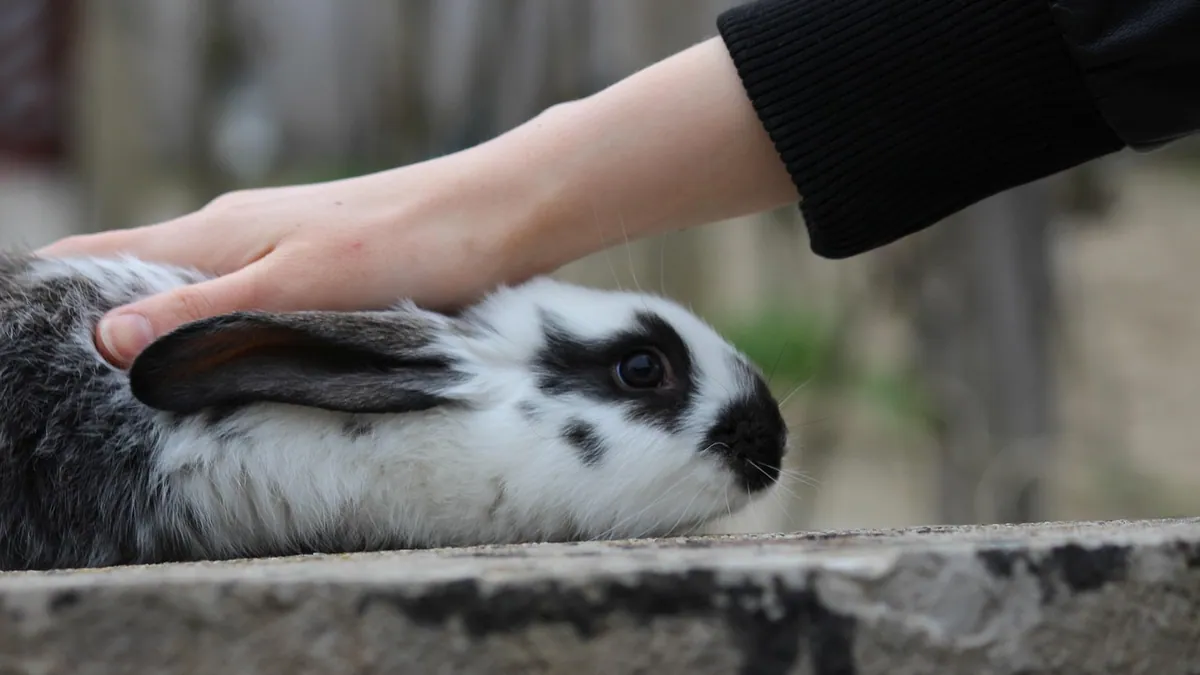
Rabbits lick people most often as a form of social grooming and affection, a behavior they also use with bonded rabbit companions. Biting usually means something different. It is communication, and it often signals fear, pain, frustration, or a request for you to stop what you are doing. This article is educational and is not a substitute for veterinary diagnosis or treatment.
Quick Answer
- Gentle licking and nibbling on your clothes or skin is usually grooming or affection, not aggression.
- A hard bite is communication. It often means fear, pain, or "stop that," and it deserves a look at the situation, not punishment.
- Never hit, flick, or yell at a biting rabbit. Punishment increases fear and makes biting more likely.
- Rule out pain and illness first, especially if biting is new or sudden.
- Give your rabbit space, enrichment, and a calm routine, then use gentle handling and food rewards to shape calmer behavior.
Why Is My Rabbit Licking Me?
Licking is one of the clearest friendly signals a rabbit gives. Rabbits groom themselves and their bonded partners, and they will groom a trusted human the same way. When your rabbit licks your hand, arm, or clothing, it is often treating you as part of its social group.
Grooming and affection
Rabbits are social animals that live in groups in the wild, and grooming keeps those bonds strong. A rabbit that grooms you is comfortable enough to include you in that circle. Some rabbits lick once and move on. Others groom a sleeve or a pant leg for minutes at a time. Both are normal.
Grooming behavior also shifts with the environment. In one study, rabbits kept under warmer conditions showed less self-grooming and more inactivity, which shows that comfort and temperature affect how much grooming happens at all [1]. A rabbit that suddenly stops grooming or grooms constantly may be responding to something in its surroundings.
Taste, texture, and salt
Your skin carries salt from sweat, and lotions, soap, and fabric softener leave residues. A rabbit may lick your hand simply because it tastes interesting. This is usually harmless. If your rabbit licks a lot after you use a new lotion or cleaner, wash your hands and see if the behavior settles.
Attention seeking and learned behavior
Rabbits learn fast. If licking your hand once led to petting, treats, or attention, your rabbit will try it again. This is normal learning, not manipulation. The same principle works in reverse, which is why calm, consistent responses matter so much.
If you want a broader picture of what your rabbit is telling you with its ears, posture, and sounds, see Understanding Rabbit Behavior: Body Language and Vocalizations.
Why Does My Rabbit Bite Me?
Biting is a message. The job is to figure out which message.
Fear and defensive biting
Rabbits are prey animals. A hand reaching into a cage, a sudden grab, or a loud noise can trigger a defensive bite. This type of bite is often fast and paired with a tense body, flattened ears, or a lunge.
New environments raise stress, and stress changes behavior. In one study, rabbits placed in a novel open field showed increased locomotion on the first exposure, then shifted toward reduced movement on the second [2]. That pattern shows how strongly unfamiliar settings shape rabbit behavior. A rabbit that bites in a new room or after a move may simply be overwhelmed.
Pain and illness
A rabbit in pain may bite when handled or touched in a sore spot. Dental disease, ear problems, arthritis, and skin issues are common causes of new irritability. Any sudden change in temperament deserves a veterinary exam.
Hormones and territory
Unneutered rabbits, especially females, can become territorial and nippy as hormones rise. Spaying or neutering often reduces this behavior, but it is not a guaranteed fix on its own. Talk with your veterinarian about timing and risks.
Nipping to communicate
A light nip is often a request. Your rabbit may nip to say "put me down," "move your hand," or "I want the treat now." This is different from a hard, defensive bite, and it responds well to training.
Cage and food guarding
Some rabbits guard a cage, a litter box, or a food bowl. Reaching in while your rabbit is eating is a common trigger. Feed on a schedule, and let your rabbit eat in peace.
Medical Causes to Rule Out First
Before you treat biting as a training problem, rule out health issues.
- Dental pain: overgrown molars and sharp points cause mouth pain, drooling, and irritability.
- Ear infection: head tilt, scratching, and sensitivity to touch near the head.
- Arthritis and spine pain: reluctance to move, grumpiness when lifted.
- Skin problems: mites, fleas, wounds, or abscesses that hurt when touched.
- Digestive discomfort: reduced appetite, small or missing droppings, hunched posture.
A rabbit that was calm for years and now bites needs a veterinary visit, not a stricter training plan. Pain is a common and easily missed cause of behavior change in small mammals.
When Licking or Biting Becomes a Problem
Licking is rarely a problem on its own. It becomes one when it is constant, focused on one spot, or paired with hair loss, redness, or broken skin. Excessive grooming can point to skin irritation, parasites, or stress.
Biting is a problem when it breaks skin, happens without warning, targets children, or increases over time. Track when it happens. Note the time of day, what you were doing, and what your rabbit did right before. Patterns make the cause much easier to find.
What to Do: Step by Step
Step 1: Get a veterinary exam
Book a checkup for any new or worsening biting. Ask about dental health, ears, joints, and skin. If your rabbit is unneutered, discuss spaying or neutering.
Step 2: Read the body language
Watch for a tense body, ears pinned back, a thumping foot, a raised tail, or a low crouch. These are warnings. Respect them and give space. Most bites happen after a warning that was missed.
Step 3: Change how you approach
Move slowly. Approach from the side, at your rabbit's level, not in published veterinary research. Let your rabbit come to you. Scoop with one hand under the chest and one under the hindquarters, and support the back legs.
Step 4: Use positive training
Pair your hand with treats. Offer a small piece of greens or a pellet when your rabbit stays calm near your hand. Reward calm behavior and ignore nipping by calmly withdrawing your hand for a few seconds. This teaches that gentle contact earns rewards and nipping ends the interaction.
For a structured plan, see Rabbit Behavior Training.
Step 5: Build enrichment and space
Boredom and cramped housing drive nipping. Give your rabbit room to run, hide boxes, tunnels, chew toys, and safe things to dig. A study of pet rabbit owners found that higher perceived knowledge was linked to better enrichment and housing practices, but many owners still fell short of recommended care [3]. Enrichment is not optional. It is a core part of behavior management.
Step 6: Control the environment
Keep the room quiet and consistent. Sudden changes in temperature, noise, or routine raise stress. Warm conditions in particular reduce grooming and activity and increase inactivity [1]. Keep your rabbit's area comfortable and stable.
What Not to Do
- Do not hit, flick, or shout at your rabbit. Punishment teaches fear, and fear drives more biting.
- Do not grab your rabbit by the scruff or ears.
- Do not pick up a rabbit that is lunging or thumping. Wait for calm.
- Do not assume a bite is "mean." Rabbits do not bite out of spite.
- Do not skip the veterinary exam because the behavior seems minor.
Myths About Rabbit Licking and Biting
One common myth is that a rabbit licking you means it is tasting you to decide if you are food. Rabbits are herbivores, and licking is social grooming, not a taste test.
Another myth is that a biting rabbit is untrainable. Most nipping responds to pain treatment, spaying or neutering, better handling, and reward-based training.
A third myth is that rabbits bite for no reason. There is almost always a trigger, even if you did not see it. Look at the seconds before the bite.
When to Involve a Veterinarian or Behavior Professional
Call your veterinarian for any new biting, especially if it appears suddenly in an adult rabbit. Ask about pain, dental disease, and hormone status. If your veterinarian finds no medical cause, ask for a referral to a veterinarian who focuses on behavior or a certified behavior professional who works with rabbits.
Medication is sometimes part of a behavior plan. One study in rabbits found that a single oral dose of trazodone at 20 mg/kg produced measurable plasma levels and behavioral effects [4]. This is a research dose, not a home dose. Only a veterinarian should decide whether medication is appropriate and calculate the dose from your rabbit's weight and health.
Limitations and When to Contact a Veterinarian
This article covers common patterns, but every rabbit is an individual. A veterinarian who examines your rabbit is the only one who can diagnose a medical cause or prescribe treatment.
Contact a veterinarian the same day if your rabbit:
- Bites hard enough to break skin
- Stops eating or produces few or no droppings
- Shows drooling, head tilt, or trouble walking
- Bites when you touch a specific body area
Go to an emergency clinic now if your rabbit:
- Is breathing hard or open-mouth breathing
- Collapses, has a seizure, or cannot stand
- Has heavy bleeding from a bite wound
- Shows severe bloating or a hard, painful belly
Book a routine visit if biting is mild but new, if your rabbit is unneutered, or if you want help building a training plan.
Frequently Asked Questions
Does licking mean my rabbit loves me?
It usually means your rabbit accepts you as a social partner and is grooming you. Rabbits groom bonded companions, and a human can fill that role. It is a good sign, though it does not guarantee your rabbit wants to be picked up.
Why does my rabbit nip me and then run away?
A quick nip followed by running away is often a warning or a request for space. Your rabbit may have felt crowded, startled, or handled in a way it disliked. Give it room and let it approach you on its own terms.
Should I punish my rabbit for biting?
No. Punishment raises fear and stress, and stressed rabbits bite more. Instead, withdraw calmly, note the trigger, and reward calm behavior with treats and gentle contact.
Can spaying or neutering stop biting?
It often reduces hormone-driven territorial biting, especially in females. It is not a cure for every case. Pain, fear, and handling problems still need their own solutions.
My rabbit only bites at feeding time. What should I do?
Feed on a set schedule and avoid reaching into the bowl while your rabbit eats. Place food down and step back. If guarding continues, ask your veterinarian about a behavior plan.
Why is my rat licking me?
If you also keep rats, licking in rats is typically grooming and social bonding, similar in function to rabbit grooming. Species differ in details, so check guidance written for rats specifically.
How do I stop my rabbit from biting my clothes?
Clothing nipping is often play, attention seeking, or a request to move. Offer a chew toy or a treat when your rabbit nips fabric, and redirect to a toy. Keep sessions short and reward calm behavior.
Is a light nibble the same as a bite?
No. A light nibble is usually communication, such as "put me down" or "give me that." A hard bite is more serious and often reflects fear or pain. Treat them differently, and never punish either one.
Related Articles
- Understanding Rabbit Behavior: Body Language and Vocalizations
- Rabbit Behavior Training
- Why Does My Rabbit Bite? Normal Behavior or Problem?
- Why Does My Rabbit Keep Biting Me? Causes and Fixes
- Why Is My Rabbit Licking Everything? Causes and Meaning
- Managing Aggression and Social Stress in Rabbits
References
- Impact of different controlled temperature and humidity conditions on the behaviour, posture and spatial needs in fattening rabbits. Frontiers in veterinary science, 2025.
- Crossing the comfort zone: rabbit appeasing pheromone enhances acclimation to a novel environment. Frontiers in veterinary science, 2026.
- Perceived Rabbit Care Knowledge Does Not Consistently Align with Owner-Reported Husbandry Practices: A Survey of Pet Rabbit Owners in Croatia. Animals : an open access journal from MDPI, 2026.
- Pharmacokinetics and behavioural effects of a single oral dose of trazodone in rabbits. Veterinary anaesthesia and analgesia, 2025.